Le Gosier is the town where people always ask me the same question: “How much does an Airbnb really earn here, and is it worth paying for a property manager?” After several years managing furnished rentals across Bas-du-Fort, the town centre and Saint-Félix, here are some concrete figures rather than inflated yield promises. A well-run Airbnb property management service in Le Gosier shouldn’t be judged on the percentage it takes, but on the net margin left in your pocket at year’s end.
This article breaks down the real profitability of a holiday rental in Le Gosier: occupancy rates, nightly prices by area, the forgotten costs, and the value added by delegated rental management. These are ranges observed on the Gosier market in 2026, not a national average copied from somewhere else.
Why Le Gosier remains a market apart in Guadeloupe
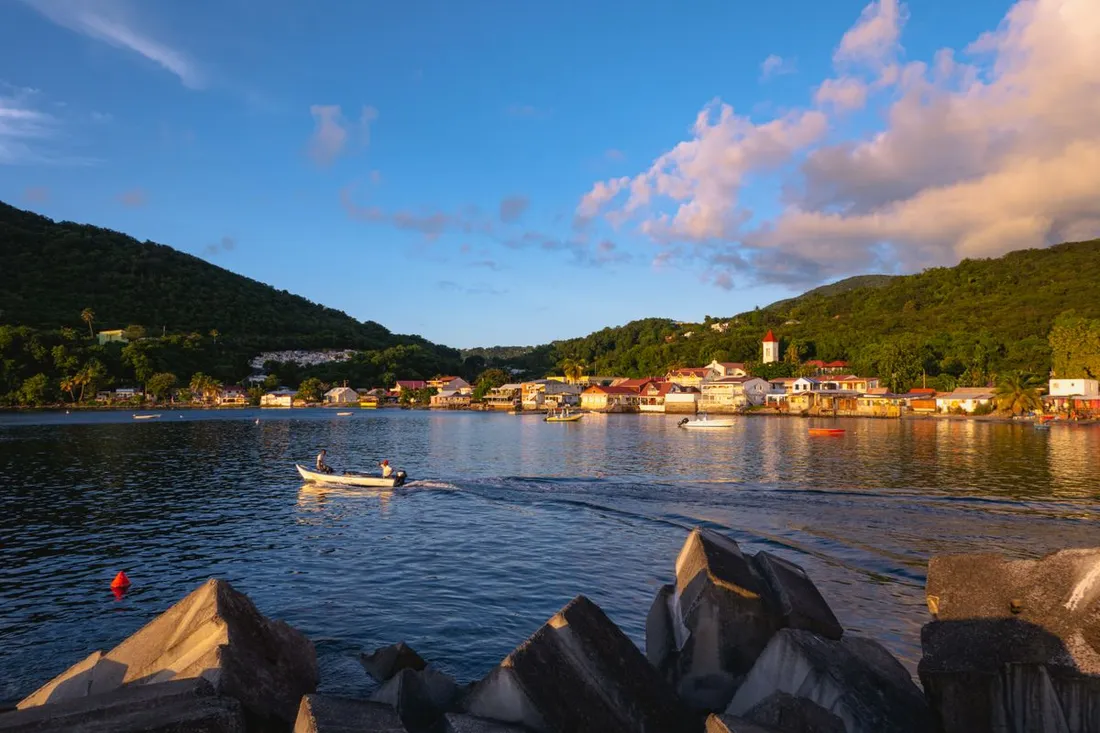
On Grande-Terre, the limestone wing of Guadeloupe with its turquoise beaches (a butterfly-shaped archipelago, with Pointe-à-Pitre as its economic hub), Le Gosier holds a strategic position: 15 minutes from Pôle Caraïbes airport, right up against the Pointe-à-Pitre urban area, and turned toward seaside life with La Datcha beach and Îlet du Gosier just 600 metres offshore.
The result: demand that never collapses entirely, even outside the dry season (December to April, the Caribbean carême). Three profiles come together all year long:
- leisure tourists from mainland France, mostly from December to April and in summer;
- the business clientele tied to Pointe-à-Pitre, steady and largely indifferent to the seasons;
- families from across the archipelago and visitors in transit between islands (Les Saintes, Marie-Galante).
That’s why Le Gosier holds up better than purely seasonal towns. To get your bearings, our complete guide to Guadeloupe places each area in context.
Bas-du-Fort, the town centre, Saint-Félix: three micro-markets
People talk about “Le Gosier” as a single block, but profitability shifts from one neighbourhood to the next:
- Bas-du-Fort. Marina, sea-view residences, restaurants within walking distance. The most liquid area: an apartment rents quickly and for a high price, but land is expensive and the housing stock is mostly co-owned (copropriété).
- The town centre and Pointe de la Verdure. The seaside heart, La Datcha beach. Strong demand, but dense competition and night-time noise to check depending on the exact address.
- Saint-Félix. More residential, with more houses featuring a garden or pool. Nightly rates a notch lower, but longer stays and a more careful family clientele.
Occupancy rates in Le Gosier, season by season
Occupancy is the heart of the matter, far more than the headline price. For a well-managed, well-reviewed rental:
- High season (December to April): 80 to 90%. January to March often exceed 85%, with fully booked weeks during school holidays and carnival.
- Summer (July–August): 65 to 80%, as local clientele and families offset the departure of long-haul tourists.
- Shoulder season and wintering period (May–June, September–November): 40 to 60%. This is where everything is decided: business and archipelago clientele sustain activity that 100% leisure towns simply don’t have.
Over the year, a seriously managed property reaches 60 to 70% average occupancy; managed alone, remotely and without optimisation, it often drops to 45–55%. That 15-point gap is exactly where a property manager pays for itself.
Nightly prices: what a furnished rental actually earns
Realistic ballpark figures for 2026:
- Studio or one-bedroom without sea view: €55 to €80 in high season, €45 to €65 in shoulder season.
- One- or two-bedroom with sea view or near the marina (Bas-du-Fort): €85 to €130 in high season, €65 to €95 in shoulder season.
- House with garden or pool (Saint-Félix): €120 to €200 depending on capacity, with a premium on week-long family stays.
To these add cleaning fees charged to the guest (€35 to €70) and, on higher-end properties, a security deposit. To benchmark your positioning, see the properties on our Guadeloupe rentals page.
Profitability calculation: a worked example
Let’s take a two-bedroom with sea view in Bas-du-Fort, sleeping 4, managed by a property manager.
Annual assumptions:
- weighted average price: €95 per night;
- occupancy rate: 65%, or roughly 237 nights;
- gross accommodation revenue: ≈ €22,500.
Annual costs to deduct (the part everyone always forgets):
- full-service property management: 20% of revenue before tax, i.e. ≈ €4,500;
- host-side platform fees (OTA): ≈ 3% of revenue, i.e. ≈ €675;
- co-ownership charges, rental share: €1,200 to €2,000;
- non-occupant landlord insurance with climate cover: €250 to €400;
- property tax: €800 to €1,500;
- electricity, water, internet, subscriptions: €1,500 to €2,200;
- linen, consumables and minor upkeep: €800 to €1,200;
- air-conditioning maintenance and anti-salt-corrosion measures: €300 to €600.
Once everything is added up, what’s generally left is a net margin of €9,000 to €12,000 per year, or 5 to 8% of the property’s value: the realistic order of magnitude for the yield of a well-located Airbnb in Guadeloupe. Not the “double digits” some people sell, but something solid and recurring.
The management commission: a cost or an investment?
The natural reflex: “20% is €4,500 I could keep.” Except that calculation overlooks the effect of management on the revenue itself. An active property manager generates gains on three levers:
- Occupancy: responsiveness (replies in minutes, not hours), a synchronised multi-platform calendar, filling the shoulder-season gaps.
- Price: genuine dynamic pricing, raised for carnival, the Route du Rhum or school holidays, instead of putting up with empty nights.
- The rating: impeccable cleaning, attentive welcome, on-the-ground assistance. Reviews climb, and reviews drive bookings up.
In concrete terms, moving this property from 50% to 65% occupancy means roughly €5,000 in additional revenue: the commission therefore doesn’t “cost” €4,500, it largely pays for itself. Provided you choose a property manager who works on yield, not just key handovers.
The costs specific to Le Gosier that catch amateurs out
Three line items consistently come as a surprise:
- Salt corrosion. In Bas-du-Fort as at La Verdure, the sea air attacks air conditioners, locks and metal furniture two to three times faster than on the mainland: budget for replacement and preventive upkeep.
- The cyclone season. From June to November, peaking in August–September. A spell on alert triggers cancellations, outages and damage: hence the well-calibrated insurance and a precautionary cash reserve.
- Co-ownership charges. Le Gosier’s housing stock is mostly co-owned (pool, security, green spaces): a share to factor in from the very first calculation, never after the fact.
On the regulatory side (change of use, co-ownership rules, town-hall registration), Le Gosier being a densely built town, secure your paperwork upstream before your first listing.
Optimising your profitability in Le Gosier with Hostel Toucan
At Hostel Toucan, we support owners of furnished rentals across the entire archipelago, and Le Gosier is one of our most active markets. Our approach: maximise your occupancy and your average price while protecting the property from local hazards (salt, humidity, cyclone season). Dynamic pricing, synchronised calendar, professional cleaning and linen, on-site photo inventories, preventive maintenance: everything aims for the best possible net margin.
For guests, our properties book directly, with no platform fees, with free cancellation up to 7 days before arrival and WhatsApp assistance 7 days a week on the ground. Browse the properties on our Guadeloupe rentals page, or entrust us with your apartment through our owners area: a personalised profitability simulation always beats an average.
FAQ
What net profitability can you expect from an Airbnb in Le Gosier?
Reckon on a net margin of €9,000 to €12,000 per year for a properly managed two-bedroom with sea view in Bas-du-Fort, or 5 to 8% of the property’s value, with all costs deducted (management, co-ownership, insurance, property tax, energy, upkeep). The “double-digit” yields advertised elsewhere generally ignore salt corrosion and co-ownership charges.
What is the average occupancy rate of a holiday rental in Le Gosier?
A well-reviewed, actively managed property reaches 60 to 70% over the year, with 80 to 90% in high season (December to April) and 40 to 60% in shoulder season. Managed alone, remotely and without optimisation, it often falls to 45–55%: those 15 points are what a high-performing property manager recovers.
Is a property manager taking 20% commission worth it?
Yes, in most cases, because it should be judged on the final net margin, not on the percentage taken. By gaining 15 points of occupancy and optimising prices, a good property manager generates additional revenue that largely pays for its own commission, while freeing up your time. The right comparison is the commission against your result managing solo, not against zero.
Which Le Gosier neighbourhood is the most profitable to rent out?
Bas-du-Fort offers the best liquidity and the highest nightly rates (marina, sea views), but expensive land and heavy co-ownership charges. Saint-Félix, more residential, offers slightly lower nightly rates but longer stays and a careful family clientele. The town centre captures strong seaside demand, provided you check for night-time noise depending on the address.