Planning your trip and wondering whether your licence is enough, what the roads are really like, and what awaits you once you’re behind the wheel? Good news: driving in French Guiana is both administratively simple and practically demanding. French Guiana is a French overseas department and region (DROM), so some of the rules will feel familiar. But the environment is nothing like a drive between Paris and Lyon. Here’s everything a visitor needs to know before hitting the road, from someone who drives here all year round.
Is your licence valid in French Guiana?
This is the question we hear most often, and the answer is reassuring.
French and European licences
Since French Guiana is fully French territory, your French driving licence is valid with no formalities whatsoever. No exchange, no declaration, no waiting period. It’s exactly as if you were driving in mainland France. The same goes for a licence issued in a European Union or European Economic Area country: it’s recognised as is.
Non-EU visitors
If you come from a country outside the EU, your national licence is generally accepted for a tourist stay, but it’s strongly advised to pair it with an international driving permit (to be requested in your home country before departure). To rent a vehicle, also plan for:
- a valid ID (national identity card or passport);
- a bank card in your name for the deposit;
- a licence held for at least 1 to 2 years depending on the rental company, sometimes 3 years for under-25s.
Driving on the right and road signs
You drive on the right, the road signs are identical to those in mainland France, distances are in kilometres and fuel prices in euros. No disorientation on that front. For the rest of your arrival logistics, our complete guide to French Guiana details everything from the moment you land at Félix-Éboué airport in Matoury.
Why a car is essential
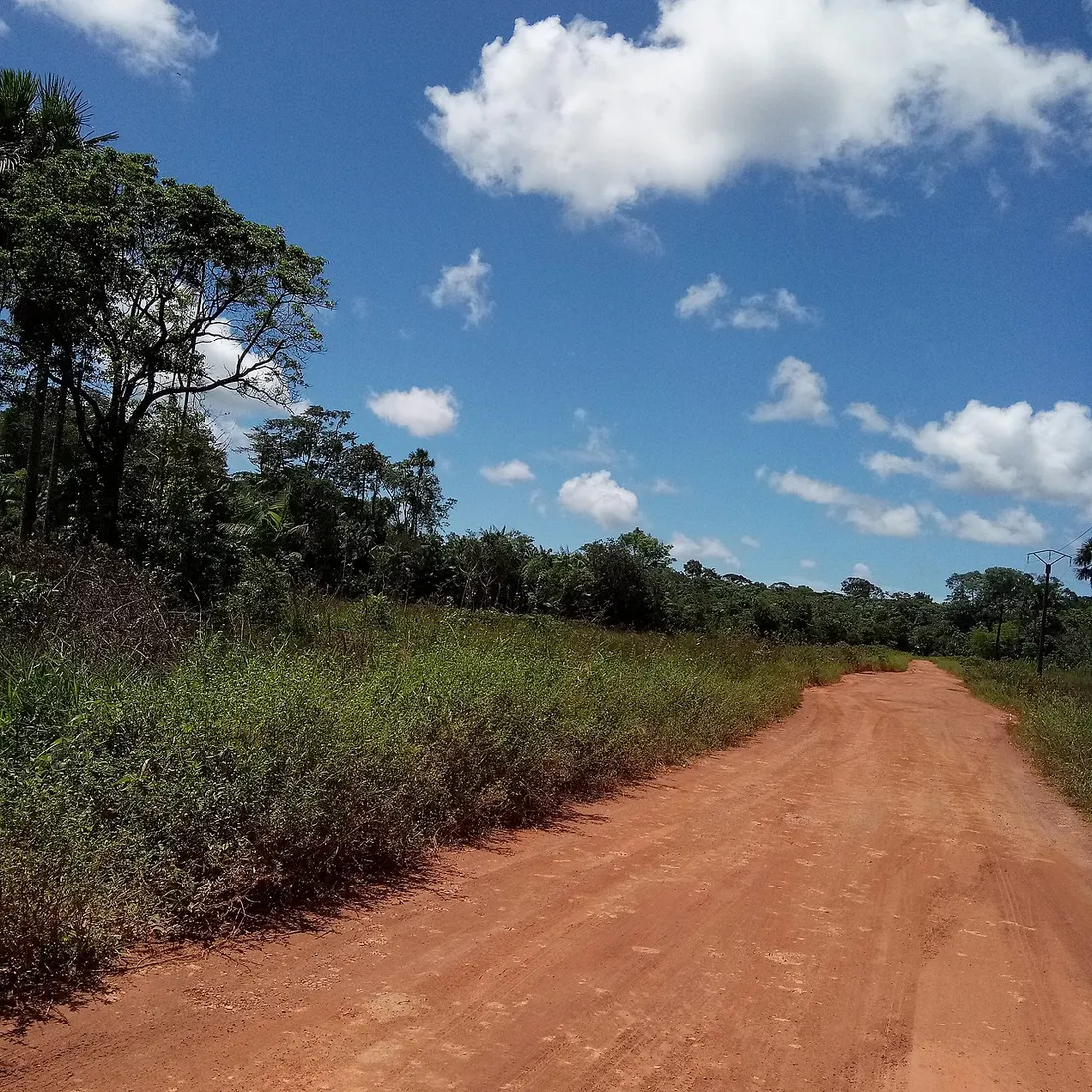
Let’s be frank: without a car, you won’t see much of French Guiana. Public transport between towns is almost non-existent, the natural sites are far apart, and everything hinges on a few major routes.
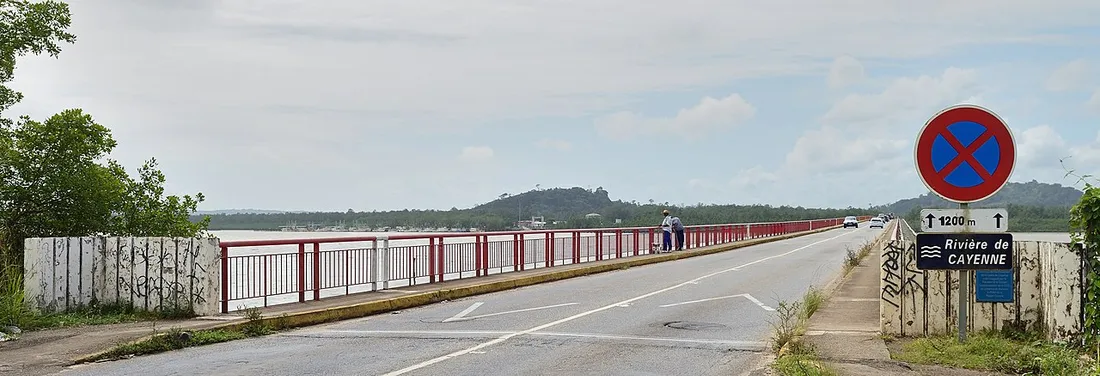
Most of life is concentrated along a coastal strip linked by two national roads:
- the RN1, connecting Cayenne to Saint-Laurent-du-Maroni via Kourou and Macouria;
- the RN2, running from Cayenne towards Régina and the east of the territory.
A few useful distances for planning:
- Cayenne ↔ Kourou: about 60 km, 45 min to 1 hr;
- Cayenne ↔ Saint-Laurent-du-Maroni: about 250 km, 3 hr to 3 hr 30;
- Cayenne ↔ Rémire-Montjoly: 15 min;
- Cayenne ↔ Roura / departure point for the Kaw marshes: allow 1 hr 30 to 2 hr depending on the landing stage.
To visit the Guiana Space Centre in Kourou (free guided tour by reservation), reach the embarkation point for the Salvation Islands, or push on to the penal colony and the Camp de la Transportation in Saint-Laurent, a car is simply unavoidable. Many of our travellers book their accommodation with Hostel Toucan precisely to have a well-located base and secure parking.
Frequent checkpoints on the national roads
This is the point guides often forget but every resident knows: road checkpoints are frequent in French Guiana, far more so than in mainland France.
What to expect
On both the RN1 and the RN2, you’ll regularly come across checks by the gendarmerie, the border police and customs, especially as you approach Saint-Laurent-du-Maroni and the border zone with Suriname. There’s nothing to worry about, it’s the local routine. Always carry:
- your driving licence;
- the vehicle registration document or the rental contract;
- a piece of ID;
- the insurance certificate (usually in the glovebox of rental vehicles).
Alcohol and speed checks are also common. Speed cameras are present on the main roads and at town entrances. The legal limit remains 0.5 g/l of blood, and the speed limits are the same as in mainland France: 50 km/h in town, 80 to 110 km/h outside built-up areas depending on the signs.
Resident’s tip
Keep your documents within reach, stay courteous, turn off the air conditioning and lower your window as you approach a checkpoint: it’s all over in a few minutes. A visitor in order has absolutely nothing to fear.
Local driving habits to anticipate
Beyond the paperwork, it’s the driving style that surprises newcomers most. Here’s what you need to take on board.
Looser… and less predictable driving
- Bold overtaking: on single-carriageway stretches of the national roads, some drivers overtake even with limited visibility. Anticipate, and never force it.
- Short following distances: people will sometimes tailgate you. Stay steady, don’t brake sharply.
- Plenty of two-wheelers: scooters and motorbikes weave through traffic, including at night with sometimes faulty lighting. Check your blind spots systematically.
- Pedestrians and cyclists at the roadside, especially near towns like Macouria, Roura or Awala-Yalimapo.
Weather and road conditions
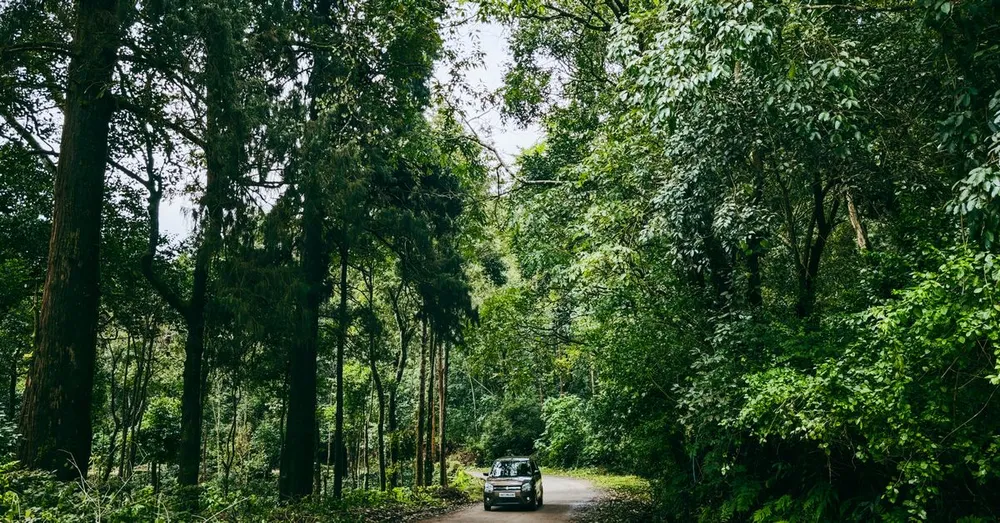
The equatorial climate changes everything. During the rainy season (December to July), downpours are violent and sudden: the road becomes slippery in seconds and visibility drops. Ease off the accelerator. The dry season, from mid-July to mid-November, is by far the best time to drive with peace of mind and enjoy the must-sees.
Watch out too for potholes after heavy rain, speed bumps that are sometimes poorly signposted at village entrances, and animals crossing at nightfall.
Driving at night: avoid if possible
This is our firmest recommendation. Avoid long journeys at night, especially on the RN2 and the isolated stretches of the RN1. Sparse street lighting, animals on the road, fatigue: organise your visits so you’re back before sunset, which falls fast and early at these latitudes (around 6:30 pm all year round).
Renting and filling up: the practicalities
Vehicle rental
Book your car in advance, especially in high season and around the Ariane 6 or Vega launch dates, when demand soars. The agencies are concentrated at Matoury airport and in Cayenne. To explore the tracks leading to certain natural sites (Kaw marshes, the edge of the Nouragues), a vehicle with a bit of ground clearance is welcome, but a standard model is fine for 90% of journeys on the national roads.
Fuel and budget
Service stations are plentiful along the coast, much rarer as soon as you move away from the RN1 axis. Fill up before any long journey west or east: between two towns, you can drive a long way without a pump. Budget for fuel comparable to mainland France, around €1.70 to €1.90 per litre depending on the period.
Plan your stay with Hostel Toucan
Once the question of the road is settled, all that remains is to choose a comfortable, well-located base to set out towards Kourou, the Salvation Islands, the Cayenne market or the Place des Palmistes. At Hostel Toucan, a 100% Guianese concierge and holiday rental service, we offer you:
- direct booking with no platform fees;
- free cancellation up to 7 days before arrival;
- WhatsApp assistance 7 days a week for your practical questions, including on car rental and itineraries.
Discover our accommodation in French Guiana to book with complete peace of mind. And if you own a property here, see how we manage it for you on our owners page.
With a valid licence, the right reflexes at checkpoints and driving suited to the terrain, you hold the keys to a successful Guianese stay. Safe travels and enjoy your trip.
FAQ
Is my French driving licence valid in French Guiana?
Yes, completely. French Guiana is a French overseas department and region: your French or European licence is valid there with no formalities, exchange or delay, exactly as in mainland France. You drive on the right and the road signs are identical.
Are road checkpoints frequent in French Guiana?
Yes, more so than in mainland France. The gendarmerie, customs and border police carry out regular checks on the RN1 and RN2, especially near the Saint-Laurent-du-Maroni border zone. Always carry your licence, vehicle registration or rental contract, ID and insurance certificate. A visitor in order has nothing to fear.
Do you absolutely need a car to visit French Guiana?
Yes. Public transport between towns is almost non-existent and the sites are far apart. Without a car, it’s very hard to reach Kourou, Saint-Laurent-du-Maroni, the Kaw marshes or the landing stages. Renting remains the most practical solution, to be booked in advance in high season.
What’s the best time to drive in French Guiana?
The dry season, from mid-July to mid-November. The roads are less slippery and visibility much better than in the rainy season, when violent, sudden downpours make the road dangerous. Also avoid long night journeys all year round.