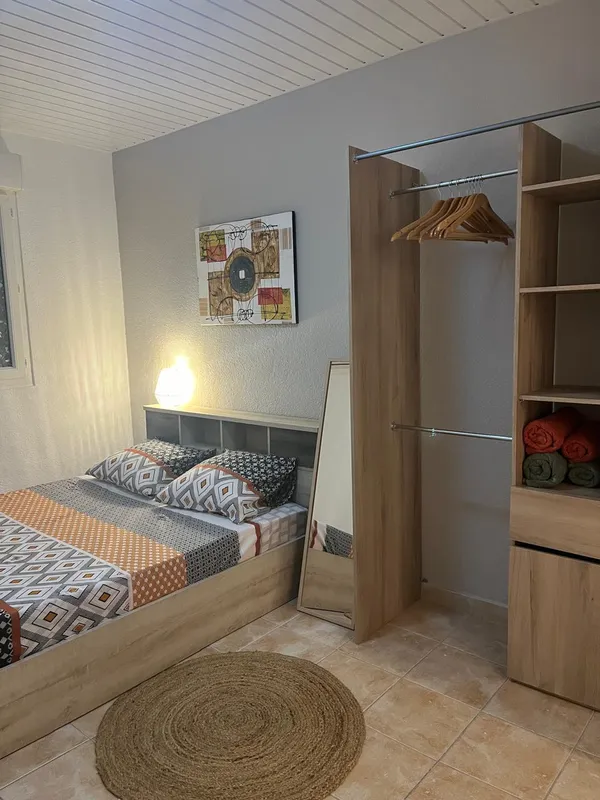

You need to house a team in French Guiana: technicians on a site in Kourou, consultants on assignment in Cayenne, staff reinforcements in Saint-Laurent-du-Maroni, or crews working on a remote site along the river. The first question that reaches the procurement department or the finance director is always the same: how much will it cost, and how do we budget for it properly? Between the advertised nightly rate, the real length of the assignment, the number of people, the extra charges and the accounting constraints (invoice, VAT, expense claims), running the simulation quickly turns out to be less straightforward than it looks.
This article gives you a method for building an accommodation budget estimate for a team in French Guiana, with figures presented strictly as indicative benchmarks. The goal is not to sell you a magic number, but to help you set the right variables, avoid nasty surprises and obtain a corporate quote that will stand up to scrutiny from your accounting department. We focus on what sets professional para-hotel accommodation apart from a simple peer-to-peer rental: an invoice in the company’s name, VAT that may be recoverable where applicable, payment by bank transfer, and terms designed for long stays.
Why housing a team in French Guiana deserves its own simulation
Housing one person for two nights and housing six people for three months are two entirely different exercises. A team’s budget behaves differently from that of an individual trip, for several concrete reasons specific to French Guiana.
First, the conventional hotel offer is limited and concentrated in a few hubs: Cayenne and its urban area (Rémire-Montjoly, Matoury), Kourou for everything revolving around the Guiana Space Centre, and Saint-Laurent-du-Maroni in the west. As soon as an assignment lasts several weeks or involves several staff members, the cumulative hotel bill becomes heavy, and the hotel-room formula shows its limits (no kitchen, no workspace, no shared team life).
Then there are the activity peaks linked to the space sector, major construction projects or field campaigns, which create seasonal pressure on availability. Accommodation that looks affordable in a quiet period can become scarce around a launch or during a busy season.
Finally, a team has needs that a solo traveller does not: units large enough or numerous enough, a kitchen to keep meal costs under control, parking for company vehicles, and sometimes immediate proximity to a specific site. All of this weighs on the simulation.
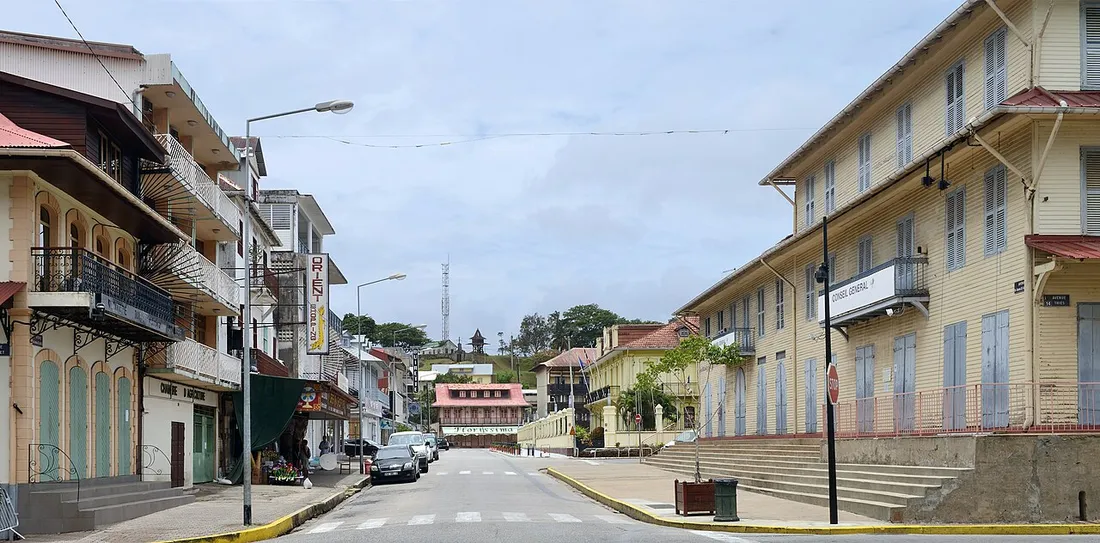
The variables that make up the budget
Before producing a figure, list the variables. This is the most important part: a team accommodation budget is a multiplication of several factors, and an error on any one of them throws off the entire total.
- The number of people and the desired arrangement (individual rooms, shared accommodation, separate units by team or by grade).
- The total duration of the assignment, distinguishing confirmed nights from possible extensions.
- The location: Cayenne, Rémire-Montjoly, Matoury, Kourou, Saint-Laurent-du-Maroni, or proximity to a specific site.
- The period: high or low season, presence of a major event, space launch context.
- The type of accommodation: apartment, house, villa, several units grouped together.
- The extra charges: cleaning, linen, utilities (water, electricity, air conditioning, internet), parking, any applicable tourist tax.
- The accounting framework: need for a company invoice, VAT regime, payment method.
An order of magnitude, for guidance only
The ranges below are indicative and vary considerably depending on the season, the location and the standard of the property. They are there to frame an initial reflection, not to lock in a price. Only a tailored quote gives a reliable figure.
- On short stays in periods of high demand, the cost per person per night tends to be higher.
- On long stays, the average cost per night generally drops appreciably: this is the main lever for savings for a team.
- The larger the team and the more it is grouped in a single property or a set of units, the more the pooling of fixed charges (cleaning, internet, parking) improves the unit cost.
As an indicative approach, to estimate a first order of magnitude you can start from an average cost per person per night, multiply it by the number of people and then by the number of nights, and add a margin for extra charges. This gross total is a starting point, to be compared afterwards with a real quote.
Simulation method, step by step
Here is a simple framework for building your internal estimate before you even request a quote.
1. Set the base assumption
Fix the number of people, the start date, the expected duration and the area. Note whether the duration is firm or liable to change: in French Guiana, construction or field assignments often slip by a few days to a few weeks.
2. Calculate the volume of nights
Multiply the number of people by the number of nights. Six people over 30 nights represent 180 person-nights: it is this volume, not the price of a single night, that structures the budget.
3. Apply a cost range per night
Use a low and a high indicative range rather than a single figure. That gives you a minimum and a maximum budget, far more useful for internal approval than a flat amount.
4. Add the extra charges and utilities
Plan a line for cleaning, linen, utilities (including air conditioning, a significant item in the Guianese climate) and parking. On long stays, check whether utilities are included or re-invoiced.
5. Factor in the accounting framework
This is where the choice of provider counts. An invoice in the company’s name, potentially recoverable VAT and payment by bank transfer change the real net cost borne by the company, beyond the advertised price.
Company invoice, VAT, expense claims: what really changes the net cost
Two offers at the same advertised price can carry a very different net cost for the company. The difference lies in the accounting and tax treatment.
The invoice in the company’s name
An invoice issued in your company’s name, with the SIREN number and the legal particulars, is easily justified in the accounts and secures the deductibility of the expense. This is a frequent friction point with peer-to-peer rentals, which often issue nothing more than a simple receipt in an employee’s name.
VAT
Depending on the nature of the service and your tax regime, VAT on professional accommodation may in some cases be recoverable. This point depends on your tax situation: we cannot guarantee a universal treatment, and it is wise to confirm it with your accountant. What is certain is that a properly invoiced para-hotel service makes this analysis easier, whereas a bare or informal rental does not allow it.
A compliant expense claim
When staff members pay up front and are reimbursed afterwards, a clear invoice, dated, for the right amount and in the right name makes the expense claim indisputable. That avoids back-and-forth with the accounts department and rejected receipts.
Payment by bank transfer
Payment by bank transfer, with the possibility of an instalment schedule on long assignments, fits a company’s payment circuits. It avoids tying up an employee’s bank card for several thousand euros and simplifies accounting reconciliation.