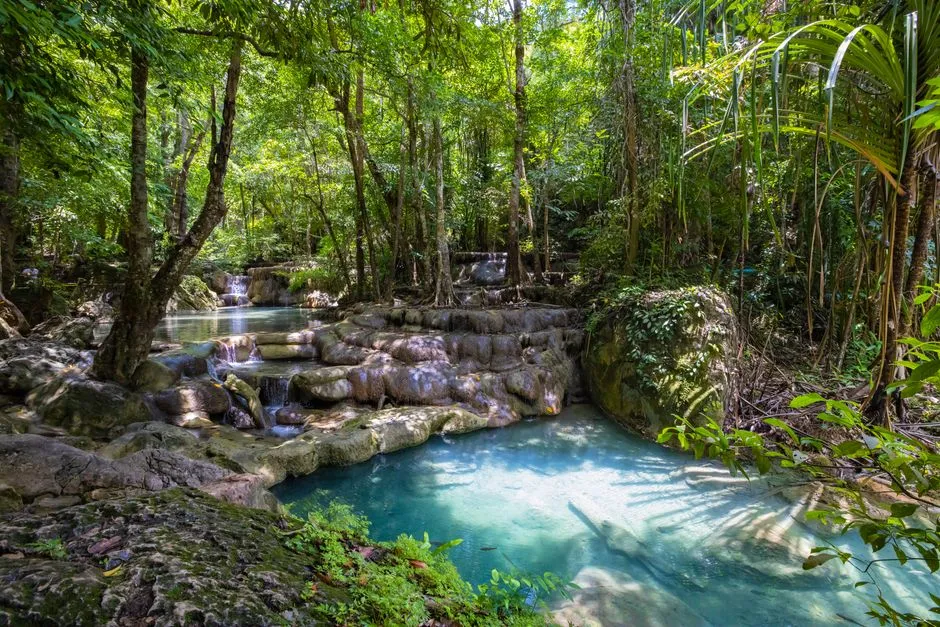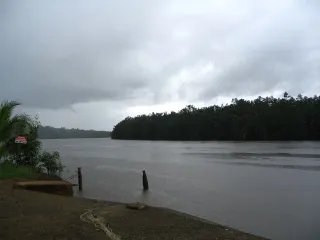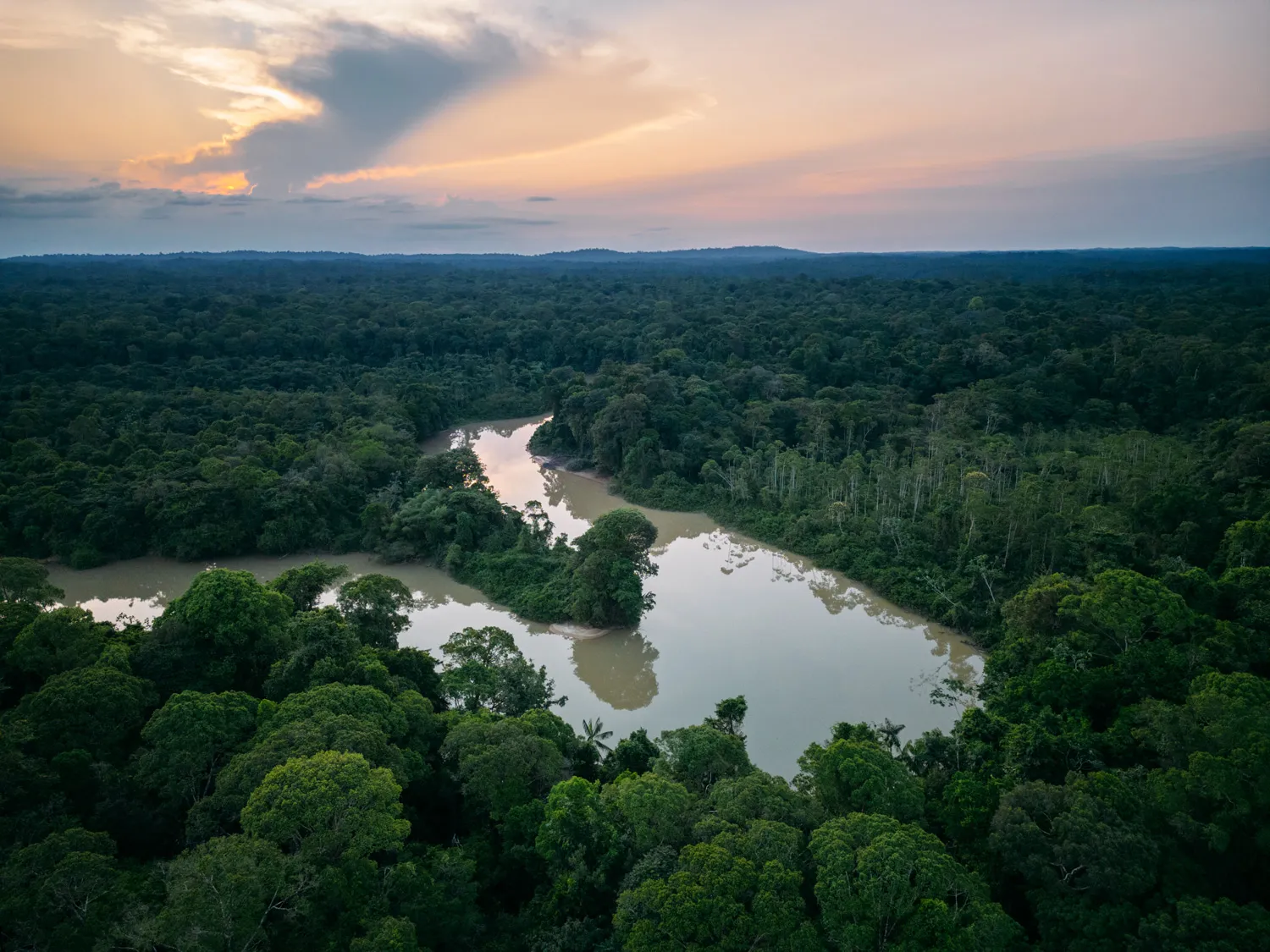
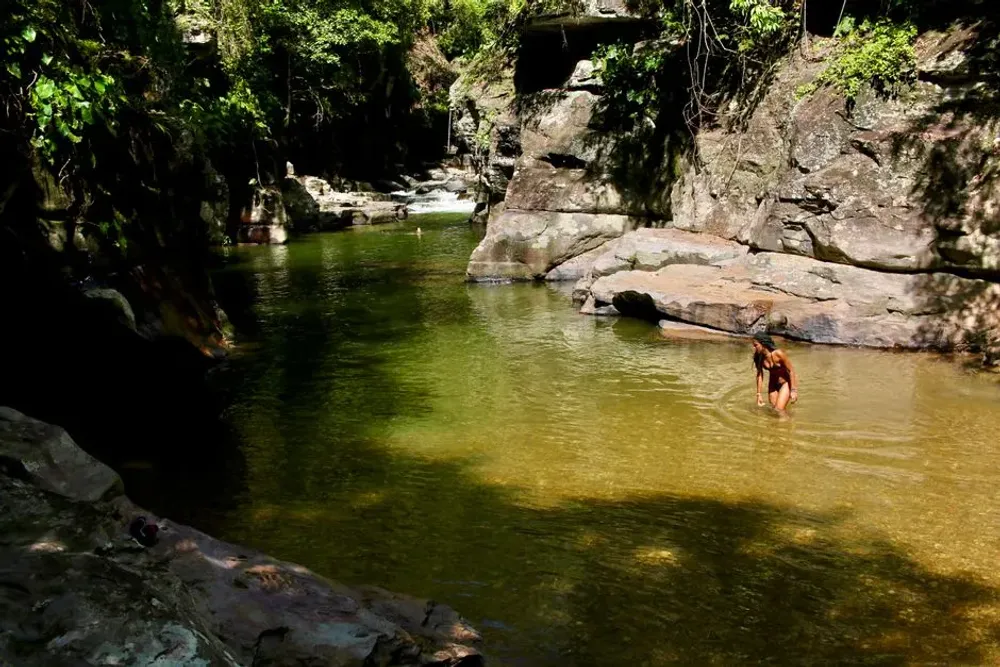
In French Guiana, the word “creek” (crique) doesn’t mean a small sheltered cove like in mainland France. Here, a creek is a freshwater river winding beneath the canopy, often the colour of brewed tea because of the tannins, with natural pools where you plunge in to escape the tropical mugginess. For the residents of Cayenne, Matoury or Kourou, the weekend creek is a genuine ritual: you load up the cooler, gather the family and friends, and head off to spend the day with your feet in the water. Here is our resident’s guide to understanding this ritual, choosing the best accessible creeks and, above all, swimming without nasty surprises.
What is a creek in French Guiana?
The term comes from Guianese Creole and refers to any freshwater course, from a small stream to a river several metres wide. The water is generally cool, sometimes dark (so-called “black” water, loaded with organic matter), sometimes clear and lively depending on the flow and the nature of the soil. Unlike the coastal ocean, often muddy and laden with silt from the Amazon and therefore poorly suited to swimming, creeks offer clean, refreshing water.
Why Guianese people love the weekend creek
The equatorial climate quickly takes its toll: constant heat around 28–32 °C and high humidity all year round. The creek is nature’s air conditioning. On Saturdays or Sundays, whole families settle along the banks from early morning, fire up a barbecue, sling a hammock between two trees and spend the day alternating between swimming, napping and snacking. It’s free, sociable and deeply rooted in local culture. If you’re staying in French Guiana, getting invited to a creek, or simply discovering one, is among the most authentic experiences the territory has to offer.
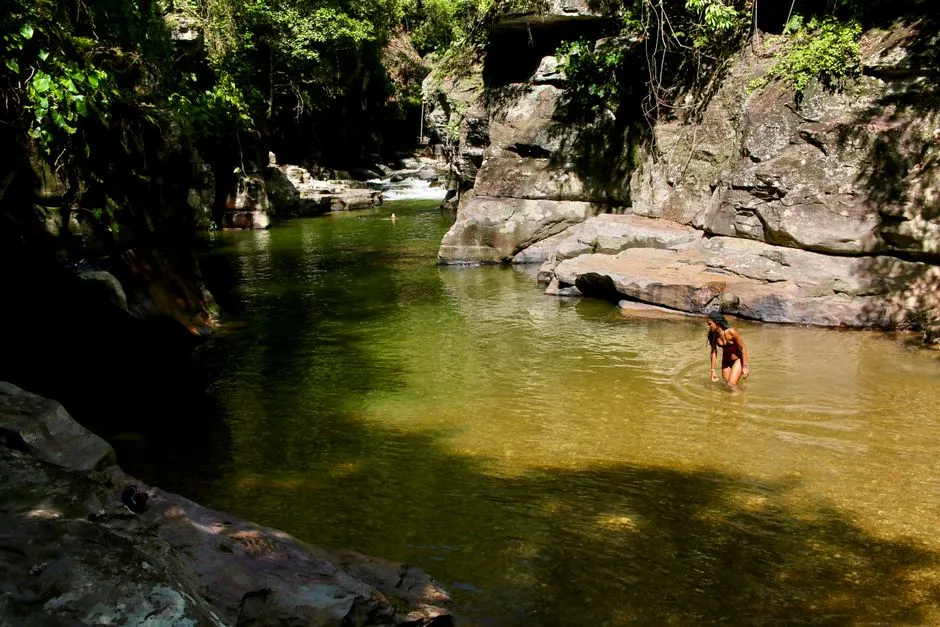
Our best accessible creeks near Cayenne
Not all creeks are equal in terms of access. Some require several hours of walking or a dugout canoe; others are less than an hour’s drive from the main towns. Here is a realistic selection for a first weekend, bearing in mind that a car is essential in French Guiana. Where you sleep matters as much as which creek you pick: from Villa Su Zen In, with its garden and pool in Cayenne, Roura is less than an hour’s drive away.
Crique Gabrielle (Roura)
About forty minutes from Cayenne via the eastern road, Crique Gabrielle is a family classic. Shallow pools in places, cool water, shady banks: ideal with children. Reckon on roughly 35 km from the centre of Cayenne. Arrive early at the weekend, as the car park fills up fast.
The clearings and creeks along the Cacao road (Roura)
Heading towards Cacao, the Hmong village renowned for its Sunday market and its phở soup, several creeks dot the road. It’s a chance to combine swimming with cultural discovery. Plan for the whole day: 1 hr 15 to 1 hr 30 of driving from Cayenne, around 75 km.
Crique Patate and the Kourou area
On the Kourou side (about 60 km and 1 hour from Cayenne), several freshwater spots are popular. Handy if you combine it with the free visit to the Guiana Space Centre or an Ariane 6 launch. Ask locally about the state of access, as some trails vary with the season.
Falls and creeks towards Saint-Laurent-du-Maroni
Further west (250 km, around 3 hours’ drive from Cayenne), the Saint-Laurent-du-Maroni region offers magnificent “sauts” (rapids) and creeks, often paired with a dugout-canoe excursion on the Maroni River. Save this one for an extended weekend.
The essential safety rules
Swimming in a creek is generally safe, provided you respect a few rules that every resident knows. The Amazonian wilderness does not forgive carelessness.
Current and rapids
This is risk number one, far ahead of wildlife. After heavy rain, a creek’s flow can triple within a few hours and turn a peaceful pool into a trap. The “sauts” — those zones of rapids and waterfalls — are particularly treacherous: the rocks are slippery and the back-currents powerful.
- Never swim alone, especially in an unfamiliar creek.
- Avoid swimming during or just after a heavy storm.
- Check the depth and the strength of the current before getting into the water.
- Watch children at all times, even in calm areas.
- Never jump from a rock without having checked the depth and the absence of submerged obstacles.
Electric eels and wildlife
The electric eel (actually a fish, the Cayenne eel or electric knifefish) is present in some creeks. It can deliver an impressive shock, but it’s elusive and flees commotion. The right instinct: don’t poke under rocks or in the mud with bare hands, and avoid very stagnant, murky waters where it hides. Freshwater stingrays exist too: shuffle your feet as you walk along the bottom rather than planting your foot firmly down — that way they move aside on their own. As for caimans and anacondas, they remain rare in frequented creeks and flee from humans; the noise of a group keeps them at a distance.
The golden rule: ask locally
No map replaces a resident’s advice. A creek’s condition changes with the season and the rains. The best time to enjoy the creeks is the dry season, from July to late November: the water is clearer, the banks accessible and the current manageable. In the rainy season, some creeks become dangerous or impassable. Our Hostel Toucan team knows the spots of the moment and will gladly point you towards safe creeks depending on the weather during your stay.