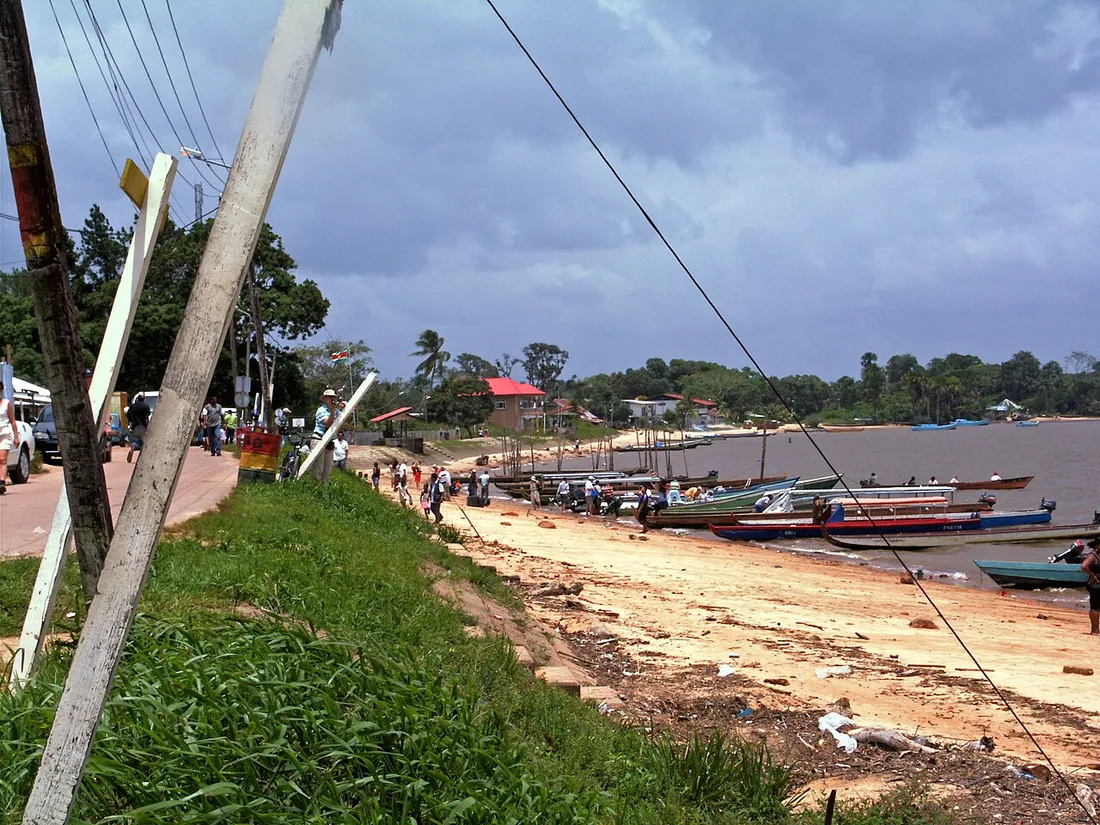

From the banks of the Maroni, you can see Albina with the naked eye: less than two kilometres of brown water separate French Guiana from Suriname. On paper, going to Suriname from French Guiana is one of the easiest cross-border getaways in South America — and one of the most confusing if you arrive unprepared. After several years spent in French Guiana and a good dozen crossings, here is the complete guide: ferry or pirogue, Suriname tourist card, and how to organise a two- to four-day extension to Paramaribo, the UNESCO-listed capital.
Why cross the Maroni into Suriname?
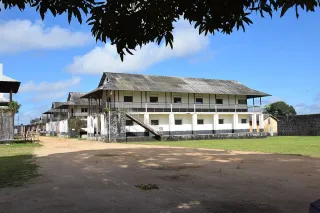
Saint-Laurent-du-Maroni is already a highlight of any French Guiana trip, with the Camp de la Transportation and the river’s unique atmosphere. But crossing the border completely changes the scenery in thirty minutes:
- A different cultural world: Dutch as the official language, Sranan Tongo in the streets, a blend of Javanese, Hindustani, Creole and Chinese heritages.
- Paramaribo, a wooden historic centre inscribed as a World Heritage Site, about 140 km from Albina.
- A markedly lower cost of living: a full meal for 5-8 €, a decent hotel night for 30-45 €.
- No time difference: Suriname runs on the same time as French Guiana (UTC-3), so the extension won’t disrupt your rhythm.
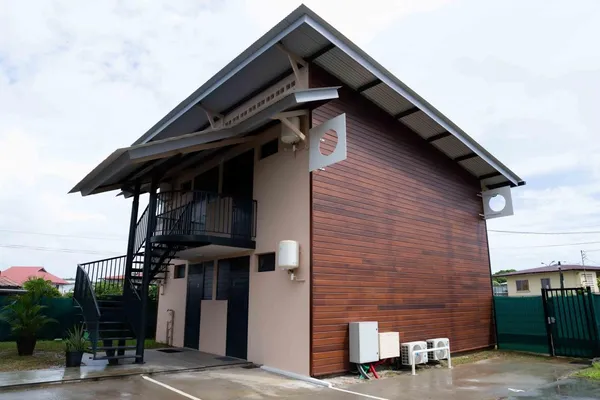
It’s the ideal mid-trip excursion, especially during the dry season (July to late November), when the tracks on the Suriname side are in better condition. Most travellers slot it into a stay based in Cayenne, at the tropical-wood apartments of the Cayenne Chic residence, at the other end of the RN1, before driving up the coast to the Maroni.

Going to Suriname from French Guiana: ferry or pirogue?
There are two options for crossing the Saint-Laurent Maroni border: the international ferry or the pirogue. Both leave from the town of Saint-Laurent, but they aren’t equal depending on your profile.
The international ferry La Gabrielle
The ferry links the Saint-Laurent landing to Albina in about 30 minutes. It’s the official option and the only one possible if you cross with a vehicle.
- Indicative fares: around 4-5 € per pedestrian, 35-45 € for a car (one way), a bit more for a loaded 4x4. Payment in euros on the French side.
- Frequency: 2 to 3 rotations a day on weekdays, reduced service on weekends and public holidays in both countries. Schedules change with the tides: check them the day before at the harbour master’s office or the Saint-Laurent tourist office.
- Time to allow: arrive 45 minutes before departure for the PAF (border police) check on the French side, then count on 20 to 40 minutes of immigration at Albina.
My field tip: if you plan to push on to Paramaribo, leave your rental car in Saint-Laurent. Most rental contracts in French Guiana forbid leaving the territory, and in Suriname you drive on the left — two good reasons to continue by local minibus.
The pirogue: fast, frequent, but one golden rule
Motorised pirogues shuttle back and forth all day between the two banks, for 3 to 5 € per person and about 10 minutes of crossing. It’s the everyday means of transport for residents of both banks.
The absolute golden rule: get your passport stamped before and after. The pirogue sometimes drops you at a jetty with no control point. But without an exit stamp from the French PAF and an entry stamp from Suriname immigration at Albina, you are in an irregular situation — with a fine and guaranteed complications on the way back or during a check in Paramaribo. Explicitly ask the boatman to drop you at the Albina control point.
Formalities: passport, tourist card and vaccine
This is the point that surprises travellers the most: French Guiana is French, but Suriname is a sovereign state with its own entry rules.
- Passport mandatory, valid at least 6 months after the date of entry. An ID card, sufficient to come to French Guiana from mainland France, does not allow you to cross the border.
- Suriname tourist card (e-Tourist Card): French nationals must obtain it online on Suriname’s official immigration portal, ideally at least 72 hours before the crossing. Count on about 50-55 USD (45-50 €) for a single entry valid for 90 days. Print it: the mobile network at Albina is unreliable.
- Yellow fever vaccine: already mandatory for French Guiana, it is also required by Suriname. Keep your yellow booklet with your passport.
- Return to French Guiana: frequent PAF checks on the RN1 between Saint-Laurent and Kourou (Iracoubo checkpoint). A stamped passport is essential.
Health-wise, antimalarial treatment is generally not necessary for a round trip to Paramaribo along the coast, but repellent and long sleeves in the evening remain the basics, as everywhere on the Guianas plateau.