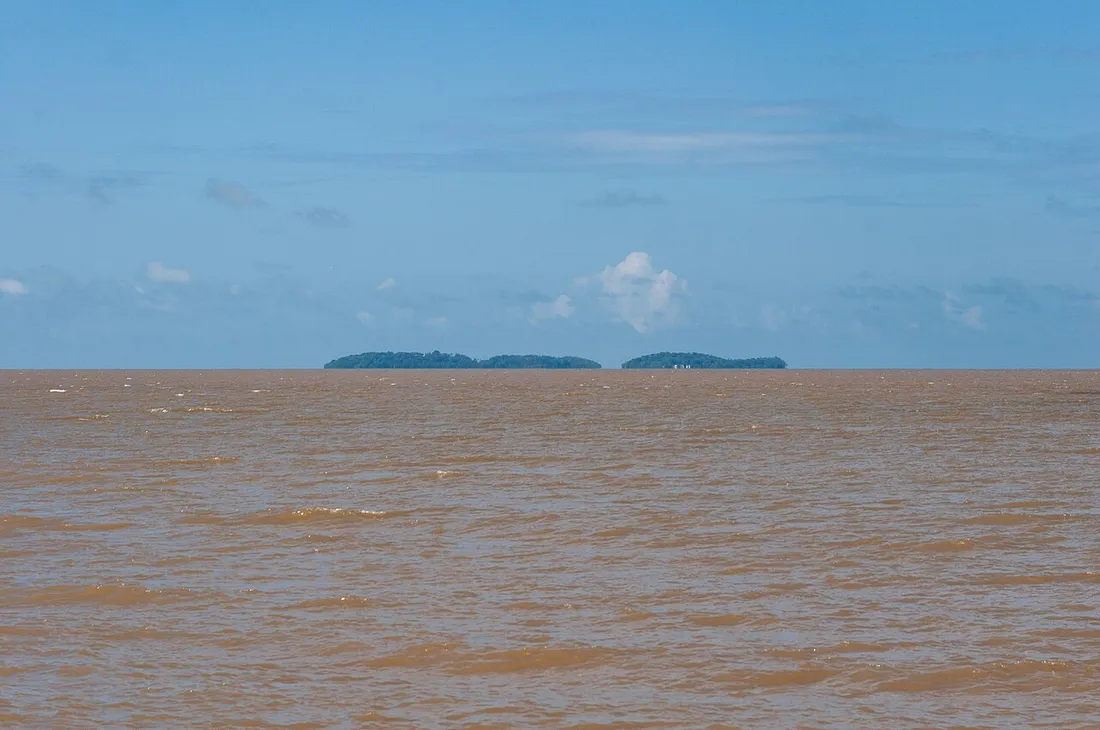
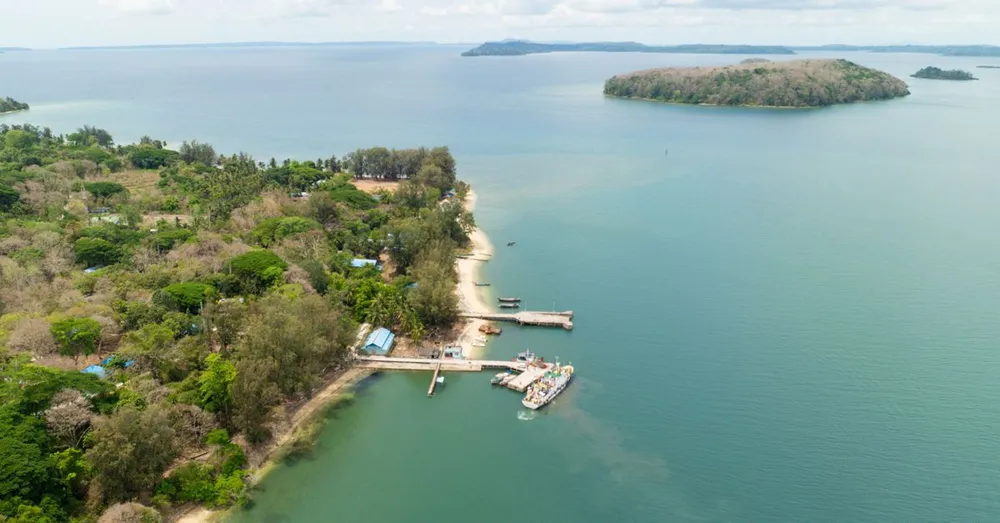
About a dozen kilometres off the coast of Kourou, three small islands set on the Atlantic tell one of the darkest and most fascinating chapters in French Guiana’s history. Here at Hostel Toucan, we send our travellers to the Îles du Salut almost every week, and we’ve come to know by heart the little details that make the difference between a great outing and a wasted day. It’s also the most sought-after excursion in French Guiana, and the one people most often miss out on for not having booked in time. Here’s our complete how-to, tested and re-tested in the field: how to get there, which boat to choose, what to see once you arrive and how to book with peace of mind.
Why the Îles du Salut are truly worth the trip
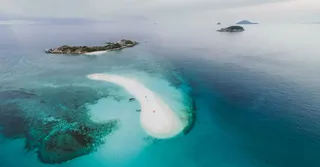
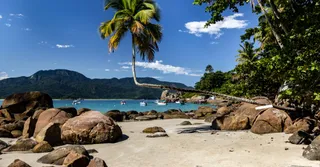
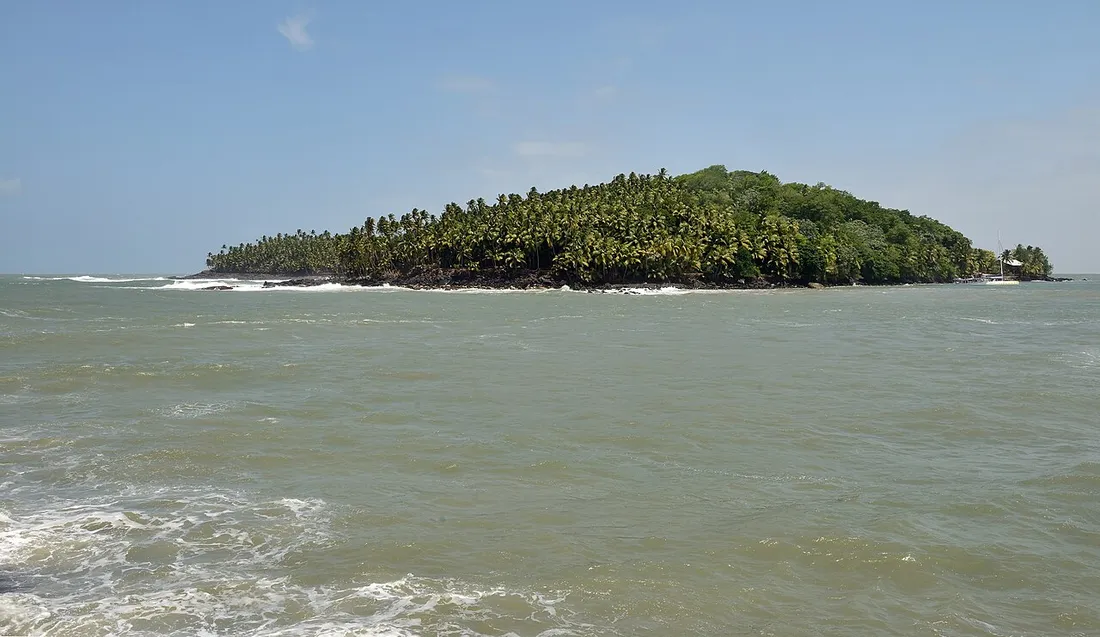
The Îles du Salut archipelago is made up of three islets: Île Royale (the largest, where the shuttle lands), Île Saint-Joseph (the wildest, with its former solitary-confinement prison) and Île du Diable (Devil’s Island, off-limits to landings, famous for having held Captain Alfred Dreyfus). Between 1852 and 1953, it was one of the most feared penal colonies in France. Today it is the best-preserved former penal colony in French Guiana, but the atmosphere has changed completely: ruins overrun by vegetation, coconut palms, turquoise waters and an incredibly visible wildlife.
This is an excursion to the Îles du Salut that we recommend to our travellers almost without fail, because it combines three rare things: a powerful historical heritage, trails accessible to everyone, and genuine immersion in nature, all less than an hour by boat from Kourou.
How to get there: departing from Kourou
All public departures leave from Kourou, about 60 km from Cayenne (allow 50 minutes to 1 hour of driving; a car is essential in French Guiana). From Félix-Éboué Airport (Matoury), allow 1h15. The jetty is located at Pointe des Roches, and it’s only usable when the tide is high enough: departure times therefore shift every day, sometimes 7:00 a.m., sometimes 8:30 a.m. Only the boat company knows the exact time for your date.
There’s no public shuttle leaving every hour here: only a handful of companies run the crossing. The boats are regularly full several days in advance during the dry season or on Ariane launch weekends.
Local tip: arrive at the jetty 30 minutes before departure. The car park fills up, and boarding is done in order of arrival. A coffee gulped down in a rush because you’re running late is a bad way to start a beautiful day.
Sailing catamaran or fast shuttle: our comparison
Two families of boats share the crossing. The choice depends on your profile and your priorities.
The sailing catamaran: the crossing for pleasure
This is the option we recommend to most of our travellers, especially for a first visit.
- Duration: 1h15 to 1h30 of crossing, sails out if the trade winds cooperate.
- Fare: €49 to €59 round trip per adult, around €35 to €42 for children, often with coffee and juice offered on board.
- Typical schedule: departure between 7:30 and 8:30 a.m. depending on the tide, return from the island around 4:00–5:00 p.m. You’ll have 5 to 6 hours on site.
- Comfort: bow nets to stretch out on, shade, decent stability, sometimes dolphins escorting you.
Downsides: the duration (nearly 3 hours at sea over the day) and seats that go fast, since the catamarans take 30 to 60 passengers maximum.
The fast shuttle: efficient and a bit sporty
The fast launches and rigid inflatables reach Île Royale in 40 to 50 minutes.
- Fare: €45 to €55 round trip, so practically the price of the catamaran.
- Advantage: more time on the island for the same day, and more flexibility if you’re staying overnight (some companies accept a return on day +1 or +2 at no extra cost, to be confirmed at booking).
- Drawback: it’s a bumpy ride. The mouth of the Kourou river and the open sea can be choppy, especially from December to February. Those with fragile backs, pregnant women and very young children should prefer the catamaran. Bring a waterproof bag: the sea spray shows no mercy to phones.
Our verdict as regulars
- Family discovery day: catamaran, without hesitation.
- Photographers and walkers who want to maximise time ashore: fast shuttle on the first departure.
- Overnight on the island: fast shuttle on the way out, catamaran on the way back if possible; some companies sell a one-way trip for around €30.
A final option, the private boat charter (€450–600 for the day for 6 to 10 people): worthwhile for a fixed group or for a tailor-made schedule, for example a launch watched from the sea.
What to see and do once there
Île Royale: the heart of the visit
This is where you land. A main trail loops around the island in 1h30 to 2h of leisurely walking. On the programme:
- The penal colony church, surprisingly well preserved, with paintings made by a convict.
- The lighthouse, the former warders’ quarters and the hospital.
- The Bassin des Bagnards (Convicts’ Pool), a natural pool carved into the rock, now home to fish.
- Magnificent viewpoints over Île du Diable, which you watch from afar (landing is forbidden there for safety reasons, the currents being violent). From the north coast of Île Royale, barely 200 metres away, the cabin assigned to Dreyfus still stands.
Île Saint-Joseph: the most moving
Reachable on foot at low tide from certain points, or by small tender depending on the operators, Saint-Joseph holds the ruins of the solitary confinement quarters, where punished convicts were locked away. The open-air cells, overrun by the roots of strangler figs, give off a striking atmosphere. It is, according to many of our travellers, the most powerful moment of the day.
Please note: the tender only crosses the channel to Saint-Joseph if the sea allows it. If the solitary-confinement quarters and their reclaimed nature are your priority, explicitly ask the company whether the Saint-Joseph rotation is planned on the day of your outing.
The wildlife: keep your eyes open
The Îles du Salut are a little animal paradise. You’ll easily come across:
- agoutis and pacas scurrying through the undergrowth,
- squirrel monkeys (saïmiris), often curious,
- macaws and many seabirds,
- sea turtles sometimes visible from the boat or the coves,
- and, in the water, plenty of multicoloured fish.
A quick reminder: never feed the animals. An agouti accustomed to being hand-fed ends up rummaging through bags and turns aggressive.
Swimming: be careful
The water is tempting, but be careful. Swimming in the open sea is dangerous because of the currents and the occasional presence of sharks. You should swim only in the Bassin des Bagnards on Île Royale, the only safe spot. It’s enough to cool off after the walk.
When to go: tides, weather and season
A crossing to the Îles du Salut hinges as much on the calendar as on the choice of boat.
- Dry season (mid-July to mid-November): calmest sea, clear skies, clearer water around Anse Legoff. It’s the best window, and therefore the most in demand: dry trails and blue skies guaranteed.
- Main rainy season (April–June): crossings maintained but wetter; the showers pass quickly, and the island stays magnificent under the mist.
- December–February: heavier swell, this is when the fast shuttle bounces around the most.
- Tides: at low tide, the Kourou jetty dries out, hence departures brought forward or delayed. Companies publish their schedules by the month; always reconfirm the day before by phone (dialling code +594) or WhatsApp.
In the rainy season, crossings can sometimes be cancelled due to swell, and the paths become muddy. If your stay falls in the wet season, keep a day of leeway in your itinerary in case the outing is postponed.
Why book in advance
Three reasons not to improvise:
- Limited capacity: between 12 and 90 seats depending on the boat. On a dry-season Saturday, everything is full 3 to 7 days ahead.
- The tides call the shots: departure times vary every day depending on whether the jetty is usable.
- Launch days: when Ariane 6 or Vega lifts off from the Guiana Space Centre, the crossings are taken by storm (and sometimes suspended, as the archipelago lies within the safety zone). Check the launch schedule before locking in your date.
In practice: book by phone or online as soon as your stay dates are set. In high season, on weekends and on launch days, allow 1 to 2 weeks in advance; on weekdays and in the rainy season, 2 to 3 days are generally enough. In any case, reconfirm the departure time the day before, as it varies with the tide.