You are putting together a field mission in French Guiana: a fauna and flora inventory in the rainforest, river monitoring, an impact assessment, a reforestation project, an environmental inspection or logistical support on a remote site. Between Cayenne, Kourou, Saint-Laurent-du-Maroni and the tracks leading to the inland communes, accommodation logistics quickly weigh as much as the scientific equipment. A team spending several consecutive weeks in the field needs a stable base, a genuinely controlled budget and — often the sticking point — a clean invoice in the organisation’s name for accounting and expense claims.
This is exactly where para-hotel accommodation comes into its own: the comfort and flexibility of a furnished home, with the administrative rigour expected by a company, a consultancy, a laboratory or a public body. This article reviews local realities and the points to secure before booking, with all figures given purely as a guide.
Understanding the French Guiana context for field missions
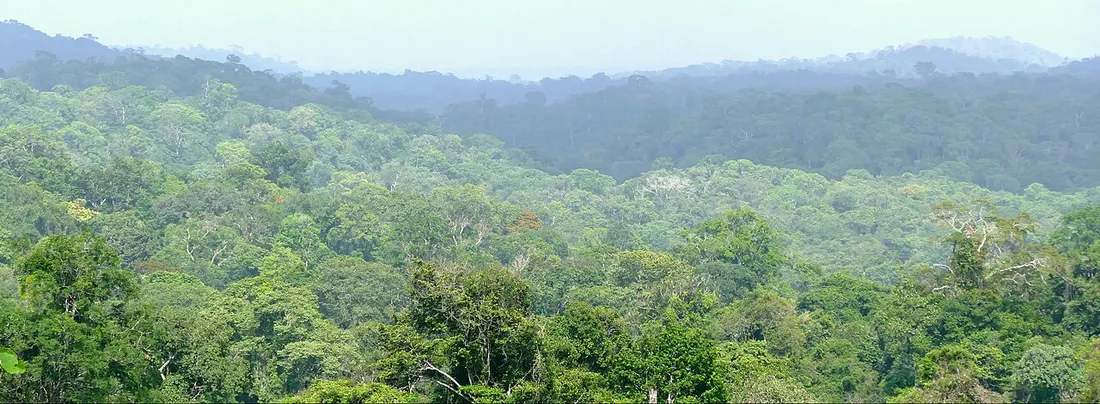
French Guiana is not a uniform territory. An environmental mission can take place on the urbanised coast or deep in the rainforest, and accommodation needs to be planned differently depending on where the working days start.
The coast: Cayenne, Rémire-Montjoly, Matoury, Kourou
The Île de Cayenne area (Cayenne, Rémire-Montjoly, Matoury) concentrates most services: Félix Éboué airport in Matoury, 4x4 rental agencies, hardware stores, laboratories, government offices. Many teams base their logistics here even when the fieldwork is elsewhere, accepting the back-and-forth. The residential neighbourhoods of Montabo, Montjoly and Baduel offer a quiet setting close to shops, well suited to a stay of several weeks.
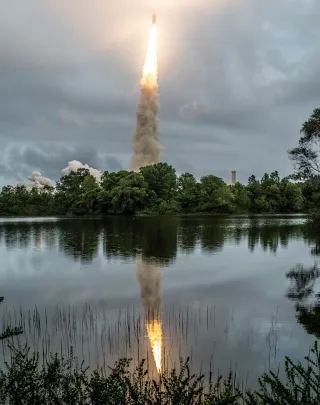
Kourou is a natural staging point for missions heading west and along the central coast, and for everything revolving around the Space Centre and the Îles du Salut.
The West: Saint-Laurent-du-Maroni
Saint-Laurent-du-Maroni, on the Maroni river, serves as a rear base for missions towards the Guiana Amazonian Park from the west, the lower Mana, the historic rice fields and the border areas. It is an important logistical support town, with its own shops and services.
The interior and remote sites
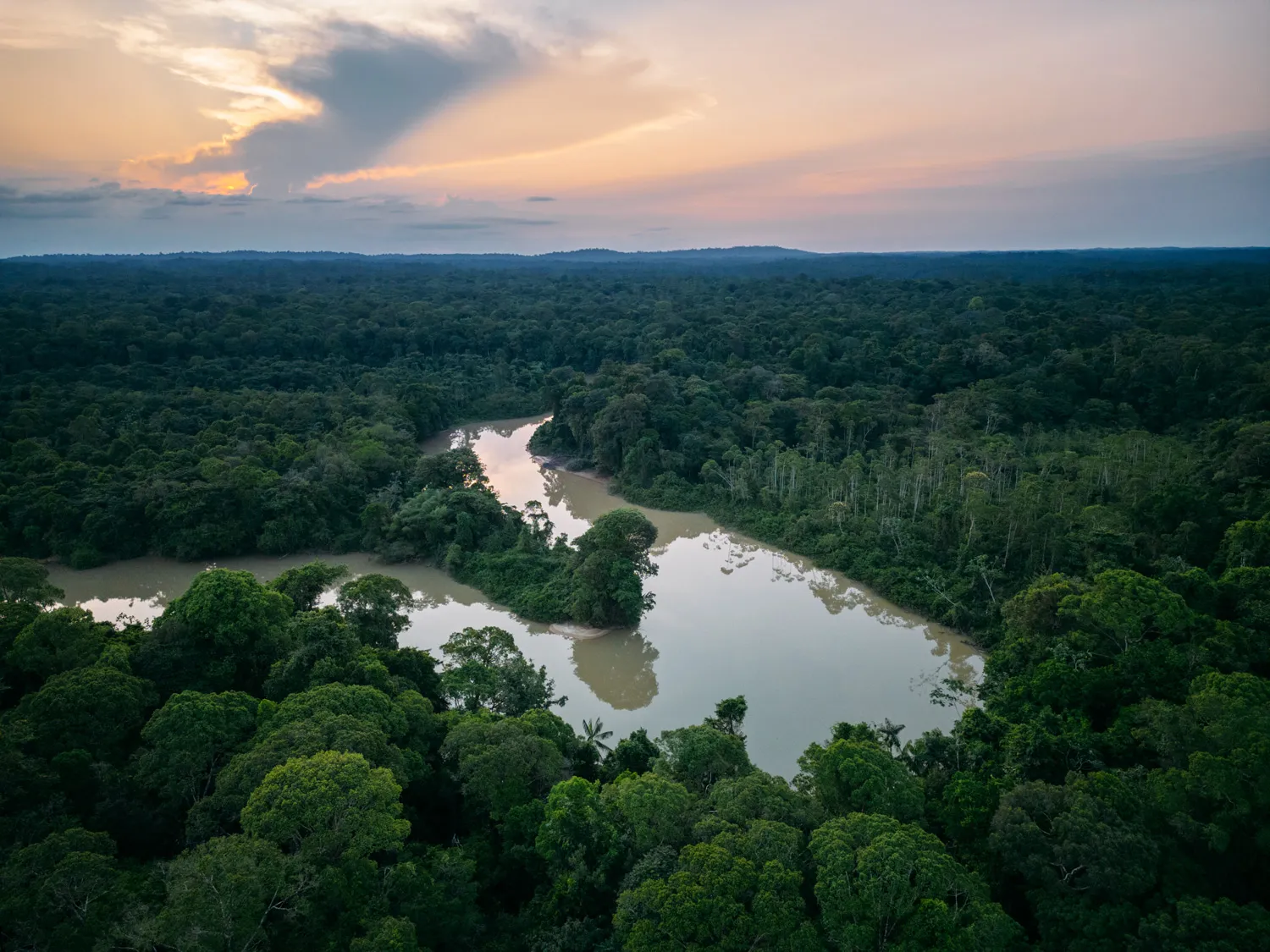
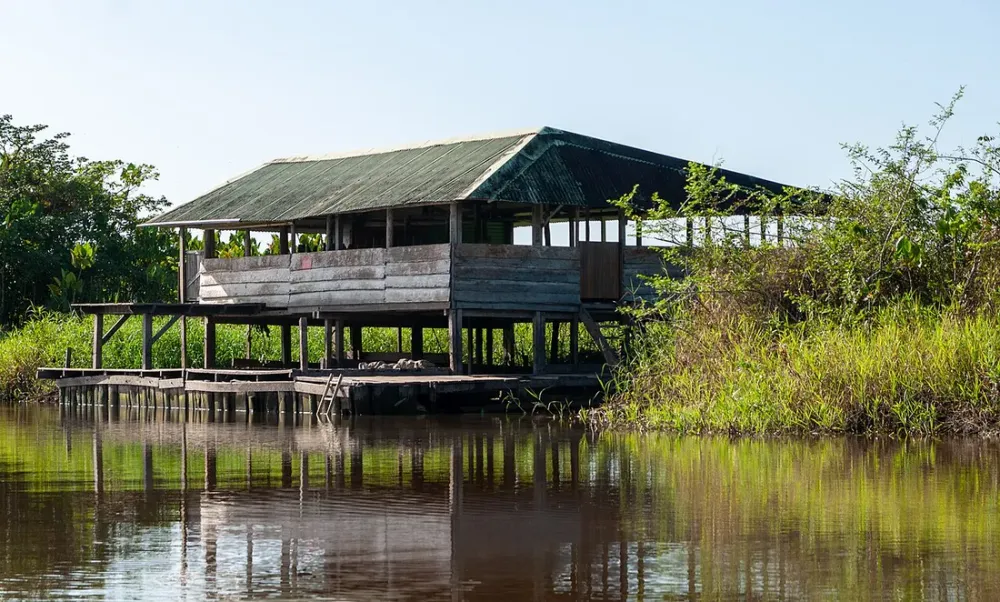
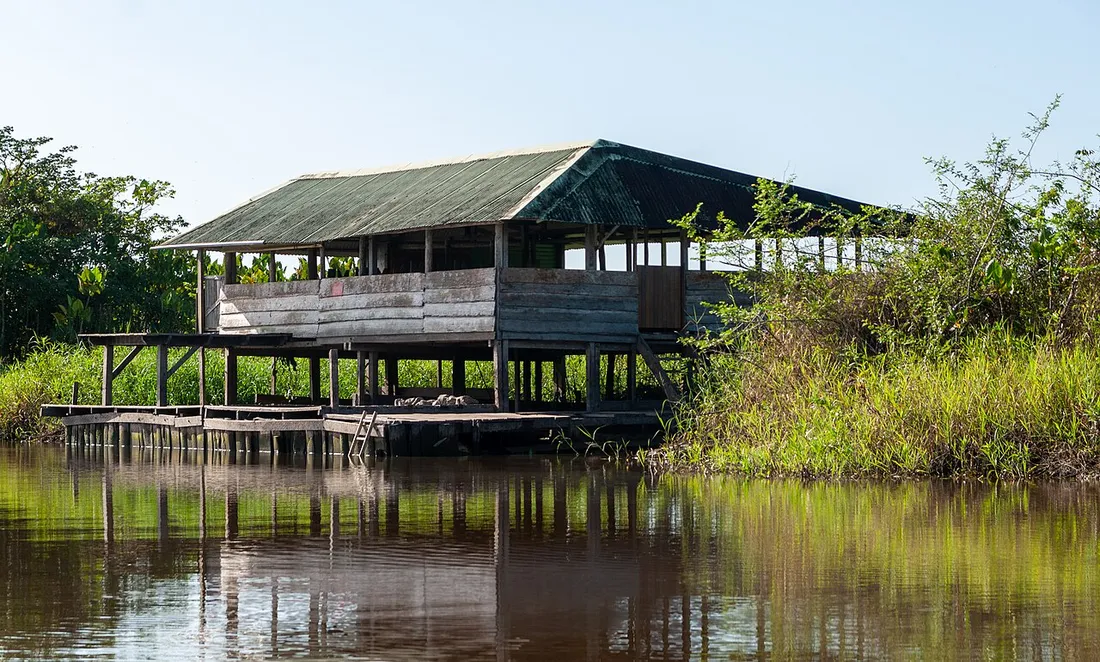
For the inland communes (Maripasoula, Papaïchton, Grand-Santi, Saül, Camopi, Trois-Sauts, Régina, Saint-Georges de l’Oyapock), you leave the conventional accommodation model behind: access is usually by plane (domestic airlines) or dugout canoe, and lodging means a carbet, a traditional case, a homestay or a work camp. Para-hotel accommodation then makes full sense before and after the mission: the night before flying out of Cayenne, the fallback base for the support team, housing for staff shuttling to and from the coast.
Why professional accommodation changes everything on a mission
A corporate or institutional mission does not face the same constraints as a leisure trip. Three requirements come up systematically.
- Accounting compliance: the expense must be backed by a proper invoice, in the organisation’s name, with the expected legal details.
- Predictability: on a mission lasting several weeks, you want a clear rate, a firmly booked property and no unpleasant surprises.
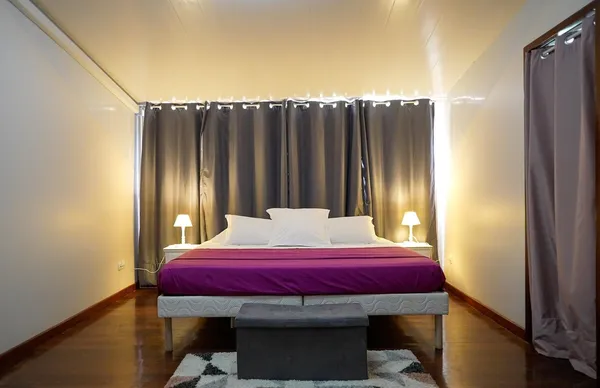
- Team productivity: real beds, a kitchen to handle meals and the irregular hours of fieldwork, space to store and dry equipment, and a connection to upload data.
Para-hotel accommodation meets all three needs by combining a furnished home (independence, kitchen, living space) with professional handling of invoicing and payment.
The para-hotel difference: invoice, expense claims, VAT
This is the heart of the matter for a mission manager or an accounts department.
An invoice in the company’s name
Unlike a direct booking between private individuals, a para-hotel operator issues an invoice made out to your organisation (company, consultancy, association, laboratory, local authority). In practical terms, this means:
- Your company’s name and address appear on the document.
- The SIREN/SIRET number and, where relevant, your internal purchase order or mission reference can be shown.
- The stay dates, the nature of the accommodation service and the amount are itemised.
This invoice is the document that makes the expense defensible in the accounts and feeds cleanly into the employee’s expense claim or the mission budget.
An expense claim that goes through without friction
Too many missions run into incomplete supporting documents on their return: a handwritten receipt, a booking in a private individual’s name, no VAT breakdown. With a properly drawn-up para-hotel invoice, the employee submits a single clean document and the finance team signs it off without back-and-forth. On a long mission, that is a real saving in administrative time.
VAT and the para-hotel regime
Para-hotel accommodation differs from simple furnished rental in that it comes with hotel-type services (for example linen provision, cleaning, guest reception), which places it under the VAT regime applicable to accommodation. For a VAT-registered organisation, an invoice that shows VAT clearly is an important part of the file.
Please note: tax rules and deductibility depend on your own situation and on the nature of the mission. Rates, VAT liability and any possible VAT recovery should be confirmed with your accountant or finance department. This article does not constitute tax advice.
Payment by bank transfer
Companies and public bodies rarely rely on an employee’s personal credit card for a stay lasting several weeks. Payment by bank transfer against an invoice fits standard procurement channels: purchase order, invoice, transfer, accounting reconciliation. It also guarantees that no employee has to front large sums out of their own pocket.
Long stays: think in weeks, not nights
Environmental missions often run over several weeks, sometimes in rotations (one team leaves, another arrives). The per-night model of conventional hotels is neither the cheapest nor the most practical.
The advantages of a long-stay furnished home
- Controlled cost: extended stays generally allow more favourable terms than an accumulation of hotel nights, to be discussed case by case depending on duration and season.
- Meal independence: a fully equipped kitchen changes everything for teams working unusual hours (pre-dawn departures, late returns from the field).
- Work and equipment space: a table for processing data, room to dry and store gear, often an outdoor area.
- Stability: the same home from the start of the mission to the end, which simplifies logistics and team life.
Seasonal guidance (indicative)
In French Guiana, the rainy season runs roughly from December-January to June-July (with a drier spell known as the “petit été de mars” around March), and the dry season from July-August to November. Forest conditions, the state of the tracks and access to remote sites vary considerably with this seasonality, which shapes mission periods and therefore accommodation demand. Rates can vary by season; it is wise to book early for busy periods (as a guide, the peak fieldwork season falls mainly in the dry season).