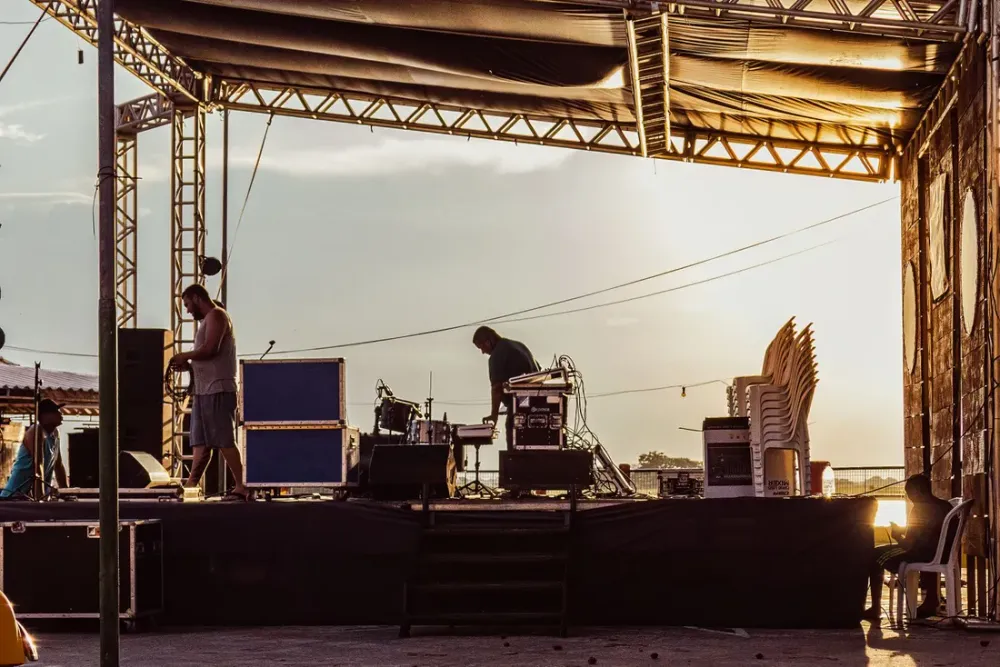
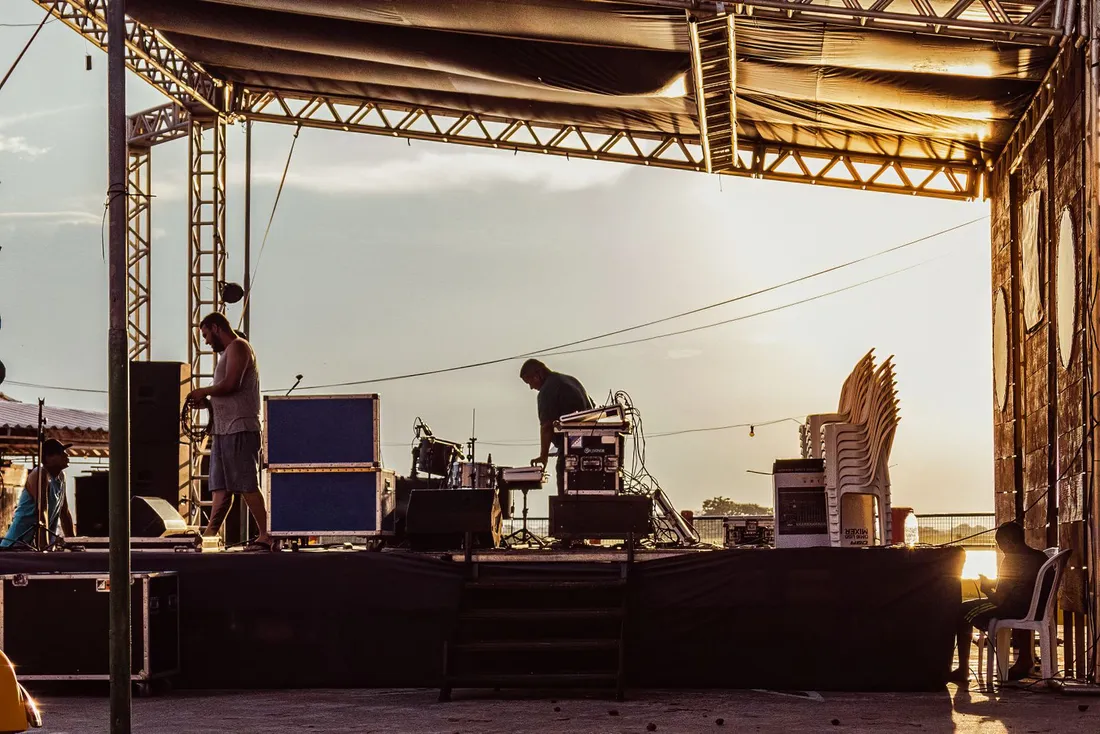
Organising an event in Martinique — a film shoot, a festival, a trade show, a construction project, a seminar or a sporting season — almost always means housing a team: technicians, artists, contractors, sales reps, workers or seasonal staff. Yet accommodating a professional group does not follow the same rules as a holiday stay. You need a clean invoice in the company’s name, compliant supporting documents for expense reports, payment by bank transfer, proper VAT handling and, often, sliding-scale rates for long stays. This is precisely the territory of para-hotel accommodation, halfway between a hotel and a holiday rental. This guide takes stock, in concrete and local terms, of how to house your teams in Martinique under conditions genuinely suited to a business.
Why standard accommodation falls short for a professional group
Most consumer solutions were designed for the leisure traveller, not for companies. The result: as soon as you are dealing with a team of several people over several weeks, the friction piles up.
- Invoicing. Many platforms only issue a receipt in the traveller’s name, without the legal details an accountant expects (company name, business registration number, VAT where applicable).
- Payment. Prepayment by personal card forces the employee to front large sums and then claim reimbursement — cumbersome and poorly regarded in expense reports.
- Duration. Nightly rates blow the budget as soon as a stay runs beyond a few weeks, whereas an event or a construction project often spans one to three months.
- Group logistics. Splitting ten people across ten scattered bookings, with unsynchronised check-ins, turns coordination into a headache.
- The legal framework. A hotel invoices correctly but is expensive over time; a peer-to-peer rental costs less but fails to tick the accounting boxes.
Para-hotel offerings aim precisely at combining the best of both worlds: the comfort and price of a whole home, with the administrative rigour of a professional supplier.
The para-hotel difference: a genuine B2B relationship
Para-hotel accommodation is not simply a furnished rental. It is an activity that provides hotel-style services (reception, cleaning, linen and so on) and that, above all from a corporate client’s point of view, behaves like a professional supplier.
Invoice in the company’s name
You provide the company name, address and business registration number: the invoice is issued in the company’s name, with the required legal details. Your accountant has a usable document to record the expense, with no improvising or approximate receipts.
Compliant expense reports
When an employee travels, the expense report must be backed by a proper document. A well-drafted accommodation invoice (dates, number of people, service provided, amount excluding and including tax) ticks the expected boxes for both an internal audit and a tax inspection. No more platform screenshots that are hard to justify.
Payment by bank transfer
Payment by bank transfer (with the option of a deposit followed by the balance) avoids tying up a personal or corporate card for several thousand euros. The financial flow stays clear, traceable and attached to the company rather than to the employee.
VAT and recovery
Depending on the host’s tax regime and the nature of the service, the invoice may show VAT. In Martinique, the applicable VAT rate differs from mainland France; rates and recovery conditions depend on your situation and on that of the provider. The key point: ask up front for a detailed invoice showing net, VAT and gross amounts, and confirm the treatment with your accountant. We deliberately remain cautious here — deductibility depends on many factors and cannot be generalised.
Understanding Martinique’s geography to house your teams properly
Housing a group efficiently starts with choosing the right area based on the event location and travel times. Martinique is small, but the terrain and rush-hour traffic (particularly around Fort-de-France and the ring road) quickly stretch journey times.
The centre and the Fort-de-France conurbation
Fort-de-France, Le Lamentin (home to Aimé Césaire airport) and Schoelcher concentrate economic activity, government offices and a large share of venues and infrastructure. For a seminar, a trade show at the Palais des Congrès de Madiana (Schoelcher) or a corporate assignment, staying here cuts travel time. Le Lamentin is strategic for teams taking back-to-back flights or covering the whole island.
The southern coastal area
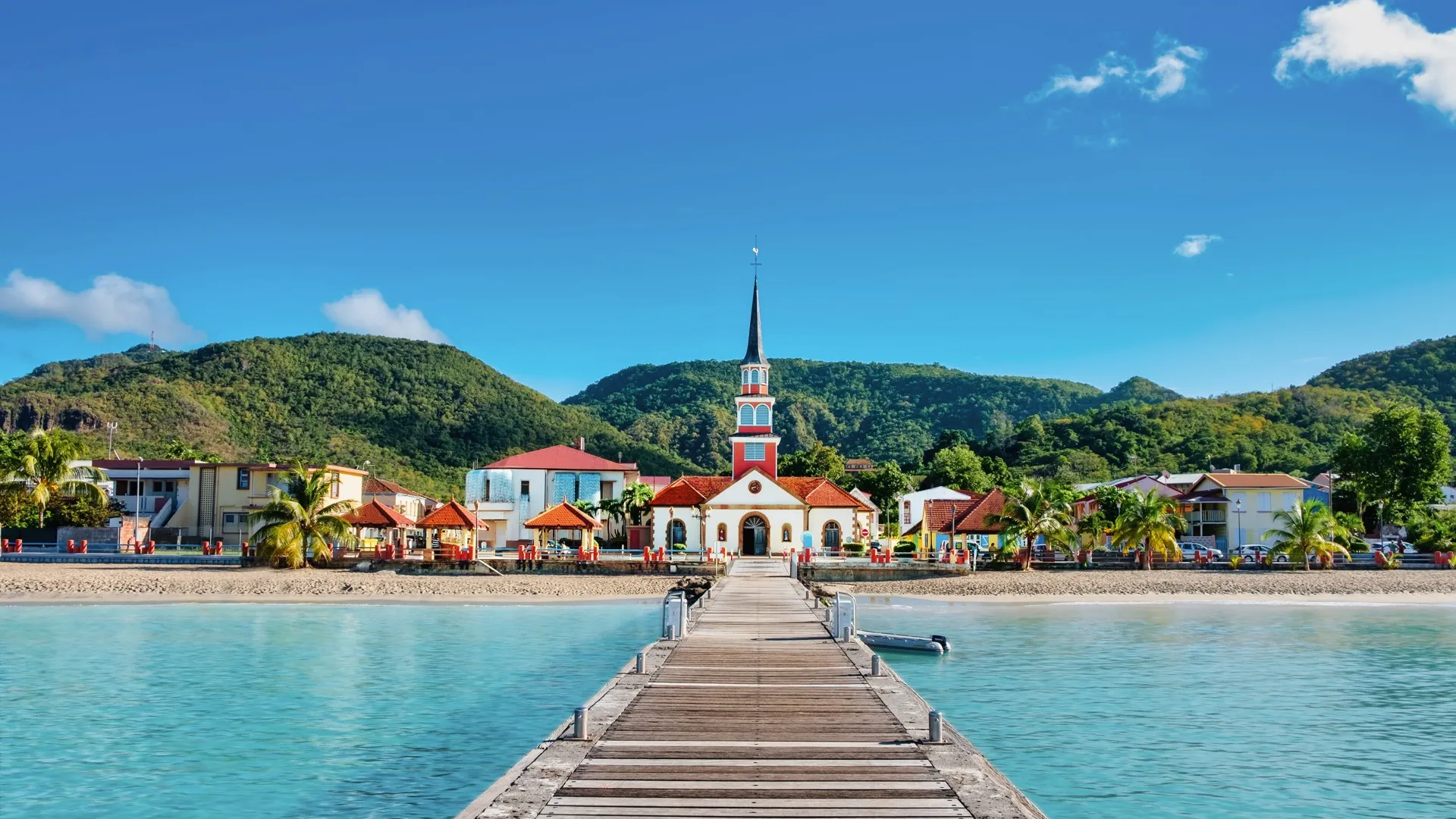
Les Trois-Îlets, Sainte-Anne, Le Diamant, Sainte-Luce and Le Marin form the tourist heart of the south. It is the ideal area for a seaside event, a film shoot, an incentive operation or a stay combining work with pleasant surroundings. Le Marin, with its large marina, is essential for anything involving boating and yachting service providers.
The north and the Caribbean coast
Saint-Pierre, Le Carbet, Le Prêcheur and the northern peninsula suit projects linked to heritage, Montagne Pelée, hiking or shoots in natural settings. Distances are longer and the supply scarcer: worth anticipating if your team has to travel to the centre every day.
The Atlantic side and the north-east
La Trinité, Le Robert, Le François and Le Vauclin (Atlantic coast) are relevant for construction projects, technical work or events on this side of the island. They offer a good compromise between quiet, price and proximity to business zones.
What it costs: indicative benchmarks
There is no universal rate: the price depends on the season, the size of the properties, the level of service and the duration. Here, purely as an indication and without commitment, is the pricing logic to bear in mind.
- The season matters a great deal. The tourist high season in Martinique runs roughly from December to April (the dry period known as carême); rates are higher then. The wetter low season (hivernage, from June to November) often allows more flexible terms.
- Length of stay brings the nightly rate down. For a long stay (several weeks to several months), a sliding monthly rate is generally far more advantageous than adding up nights.
- Grouping creates savings. Housing a team in the same property, or the same cluster of properties, simplifies logistics and may open the door to group pricing.
- Utilities may or may not be included. Water, electricity, internet, cleaning, linen: ask what is covered by the package so you can compare genuinely equivalent offers.
The right reflex: describe your requirement precisely (number of people, dates, area, duration) and ask for a costed corporate quote rather than working from the advertised nightly rate. You can browse our properties to get a sense of the types available.
Long stays: the real strength for an event or a construction project
Many professional operations run over several weeks: a festival season, a renovation project, a deployment assignment, a sales campaign. Over these durations, long-stay para-hotel accommodation becomes clearly more relevant than a hotel.
The concrete advantages of a long stay:
- A sliding monthly rate instead of a stack of nightly charges.
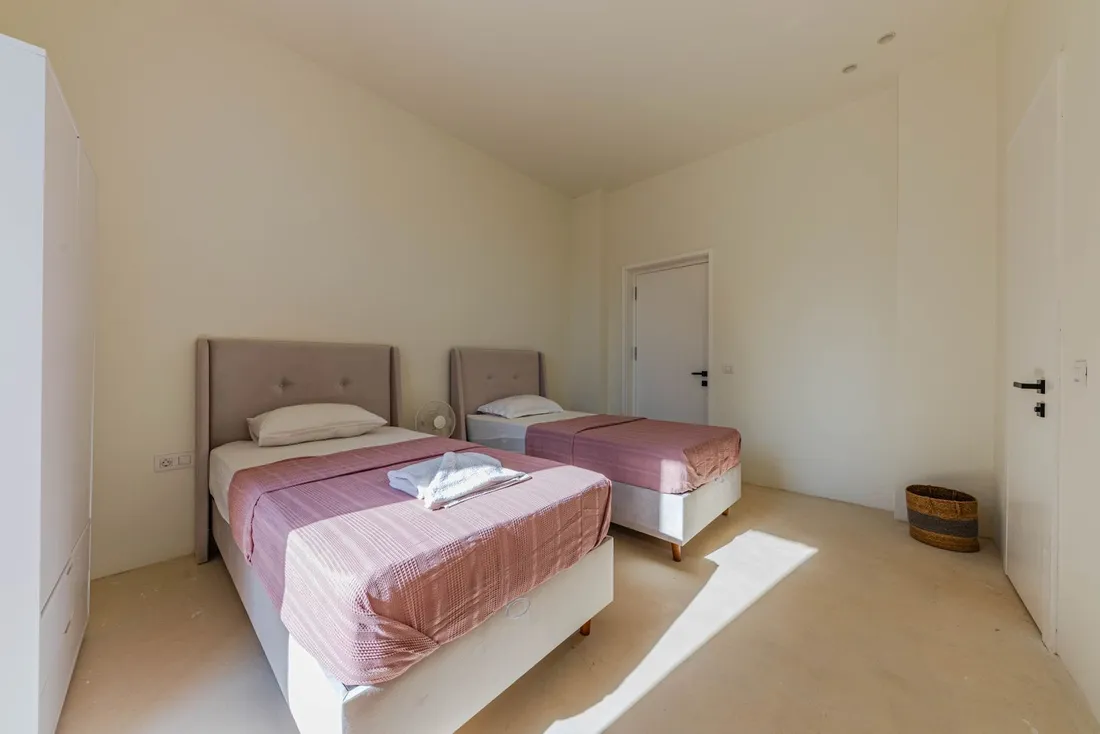
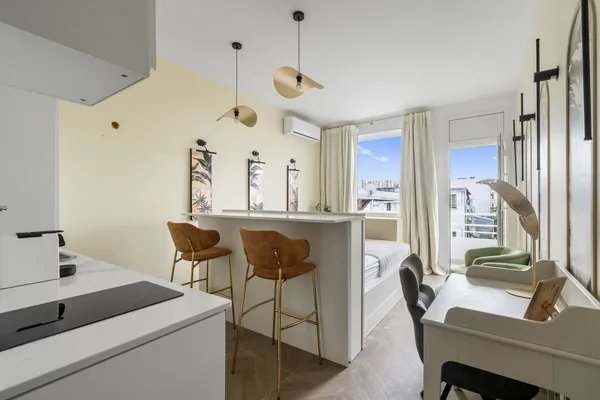
- A whole home: a fitted kitchen for preparing meals (savings on eating out), living space, sometimes several bedrooms to spread out a team.
- Stability: the same address for the whole assignment, with no changing accommodation every week.
- A single point of contact on the host’s side for the entire stay, which simplifies adjustments (extensions, date changes, staff replacements).
- Consolidated invoicing covering the period, easier for accounting to read.
For a construction project or technical work, proximity to the work site and parking (vans, equipment) are often just as important as comfort. Worth specifying as soon as you request a quote.