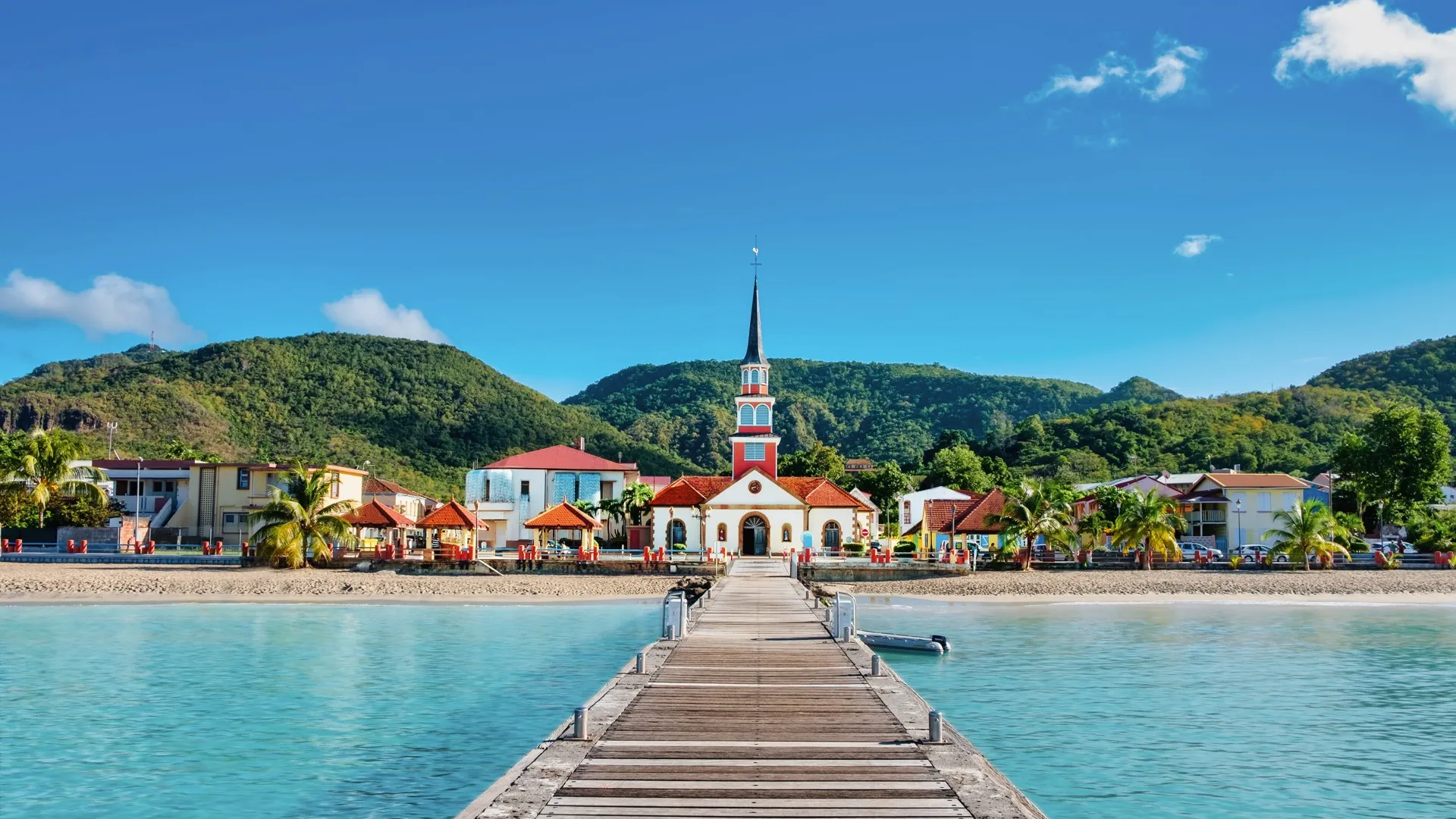

Are you preparing a job transfer, a life change or simply a full-scale trial run in Martinique? Three towns hold most of the urban life in the centre of the island: Fort-de-France, the prefecture; Le Lamentin, home to the airport and the business district; and Schœlcher, the university and residential town lining the northern shore of the bay. These three towns form an almost unbroken urban continuum around the bay of Fort-de-France, yet each has its own atmosphere, advantages and constraints. Picking “the right neighbourhood” is not about an absolute ranking: it depends on your job, your budget, your lifestyle and whether you have school-age children. This guide reviews the local realities, town by town, to help you decide where to unpack when you arrive from mainland France.
At Hostel Toucan, we support newcomers all year round: many begin with a temporary rental while they scout the neighbourhoods before signing a long-term lease. That is often the smartest strategy, and we come back to it at the end of this article.
Understanding the Geography of the Centre: the Bay “Triangle”
Before comparing the towns, you need to picture the map. Fort-de-France, Le Lamentin and Schœlcher sit right against one another around the bay of Fort-de-France, the largest natural harbour in the Lesser Antilles. You can drive from one to the next in a few minutes, but straight-line distances are deceptive: the terrain, the traffic jams and the single main roads stretch journeys out considerably.
A few useful landmarks:
- Fort-de-France: the historic administrative and commercial centre, commercial and marina port, cultural heart of the island.
- Le Lamentin: the second economic hub, with Aimé Césaire airport, the industrial and retail zone of La Jambette / Californie / Place-d’Armes, and vast residential neighbourhoods up in the hills.
- Schœlcher: a coastal town north of Fort-de-France, home to the Schœlcher university campus, sought-after residential areas and quick access to the northern Caribbean coast.
Most administrative and service jobs are concentrated in Fort-de-France; most logistics, retail and industrial activity is in Le Lamentin. Schœlcher plays mainly the residential and student card.
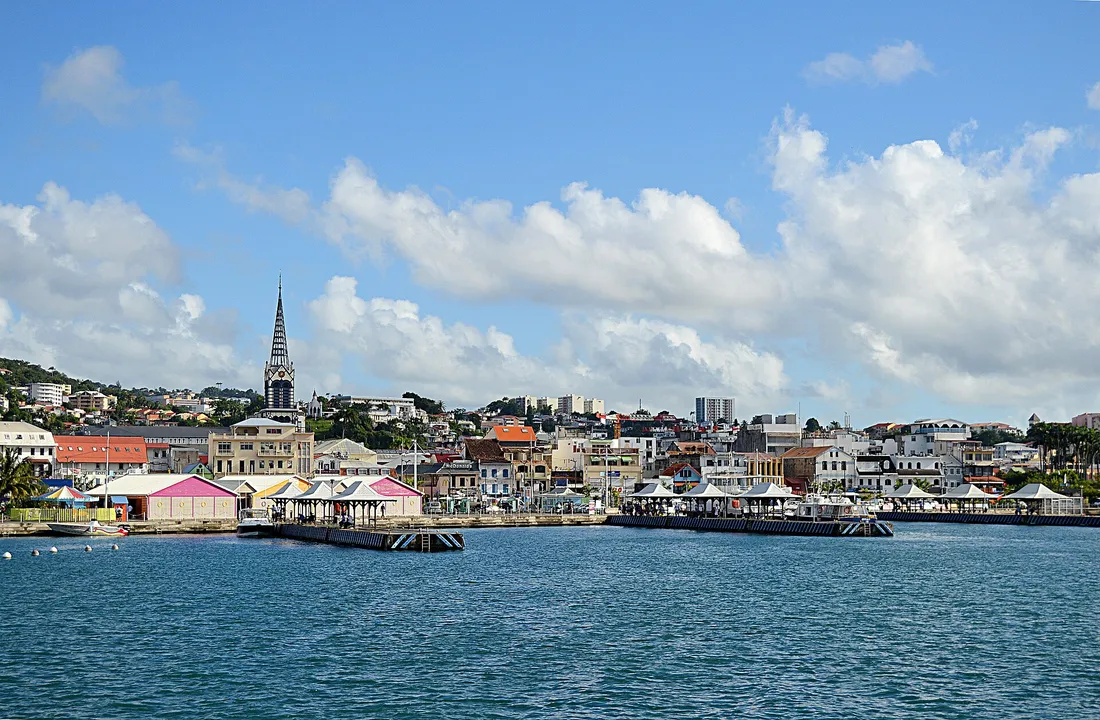
Fort-de-France: an Intense but Contrasting Urban Heart
Fort-de-France is the prefecture and the most populated town on the island. It is the near-compulsory stop for administrative matters, the courts, the major institutions and a good share of cultural life (Aimé Césaire theatre, Schœlcher library, covered markets, the redeveloped Savane waterfront).
The Upsides
- Everything is walkable in the historic centre: public services, shops, markets, waterfront.
- Dense cultural and community life, restaurants, bars, events.
- A varied rental market, from town-centre flats to houses up in the heights.
Points to Watch
- The town centre suffers in places from a certain commercial decline and chronic parking problems.
- Some working-class neighbourhoods (Terres-Sainville, Volga-Plage, Sainte-Thérèse, Trénelle-Citron) have a mixed reputation; as everywhere, reality varies from one street to the next, which is why it pays to visit in person before signing.
- Rush-hour traffic, especially on the road towards Le Lamentin, can be very painful.
Who Is It For?
Fort-de-France suits those working in the administration or services of the centre, who want city life without depending entirely on a car, and who enjoy the buzz. The hillside neighbourhoods (Didier, Redoute, Cluny, Tivoli) are more residential, green and sought after, with rents to match.
Le Lamentin: the Practical, Family-Friendly Hub
Le Lamentin is often the “logistics” choice par excellence. This is where you find the airport, the island’s main retail zone (the shopping centres of Place-d’Armes, Génipa, Californie, La Galleria), many businesses and services, as well as the Martinique teaching hospital (Pierre-Zobda-Quitman site).
The Upsides
- Maximum convenience: hypermarkets, DIY chains, car dealerships, services — everything is concentrated and reachable by car.
- Close to the airport, handy for anyone flying often to mainland France or the neighbouring islands.
- Extensive residential neighbourhoods in the hills (Long-Pré, Palmiste, Petit-Manoir, Acajou, Vieux-Pont, Gondeau) offering houses with gardens, often more affordable per square metre than the Schœlcher coastline.
- Central position: you can reach both the north and the south of the island via the expressway (RN5, A1 motorway).
Points to Watch
- The town is large and very spread out: life without a car is complicated.
- Some areas near the airport and the industrial zone are noisy or unappealing.
- Traffic jams on the ring road and at the entrances to Fort-de-France can be heavy morning and evening.
- Part of the town lies in wetland / plain, making it sensitive to heavy rain.
Who Is It For?
Le Lamentin is ideal for families looking for a house with a garden and easy access to shops and schools, and who accept a life built around the car. It is also a good pick for anyone working in the business zone or at the teaching hospital.
Schœlcher: Residential, Student-Friendly and Facing the Sea
Schœlcher borders the north of the bay and stretches along the Caribbean coast. It is a town with two faces: highly residential and sought after along the shore and the heights near Fort-de-France, quieter and more “natural” as you head up towards Case-Pilote and the north.
The Upsides
- A prized living environment: close to the sea, beaches (Anse Madame, Anse Gouraud), the marina, a lively waterfront at weekends.
- The Schœlcher university campus (Université des Antilles): student life, a supply of small flats, a young atmosphere in certain areas (Batelière, Ravine Touza).
- Popular residential neighbourhoods (Terreville, Fond Lahaye, Anse Madame, Château-Boulogne) with views over the bay.
- Quick access to Fort-de-France and the northern Caribbean coast (Case-Pilote, Bellefontaine, Le Carbet).
Points to Watch
- Rents along the coast and in sea-view neighbourhoods are among the highest in the centre of the island.
- The single coastal road (RN2) can be heavily congested at rush hour, as it funnels all traffic from the northern Caribbean coast.
- Some hillside neighbourhoods are out of the way and, here too, require a car.
Who Is It For?
Schœlcher appeals to executives, academics, students and families who prioritise a coastal setting and closeness to the sea, even at a higher rent. It is often the first “love at first sight” choice for newcomers from mainland France.
Quick Comparison: Which Profile for Which Town?
Here is an indicative summary, to be adapted to your real situation:
- Working in central administration or services, no children: Fort-de-France (centre or heights) to keep journeys short.
- Family with a car, budget and convenience first: Le Lamentin (residential neighbourhoods in the hills).
- Chasing the setting and the sea, with the budget for it: Schœlcher (coast or nearby heights).
- Student or young professional: Schœlcher (campus) or Fort-de-France (centre).
- Frequent trips to mainland France: Le Lamentin, a few minutes from the airport.
None of these towns is objectively “better”: the right choice is the one that minimises your daily journeys and matches your housing budget.