You have just learned that you are being relocated to French Guiana, and the first big logistical question is already on the table: should you look for a furnished or an unfurnished home? More than 7,000 km from mainland France, this choice is anything but trivial. It shapes your moving budget, how quickly you can move in, how flexible your set-up will be, and even your peace of mind during those first few weeks, which are often packed with starting a new job, getting the utilities connected and dealing with paperwork.
Unlike a move within mainland France, shipping your furniture to French Guiana means a sea container, with delays of several weeks and costs that weigh heavily. The furnished/unfurnished decision therefore hinges as much on financial criteria as on practical and personal ones. This article helps you decide based on your situation: length of assignment, household composition, relocation budget and the level of comfort you are looking for. The figures given are indicative only: prices vary widely depending on the town, the neighbourhood and the season.
Furnished or unfurnished: the real differences in French Guiana
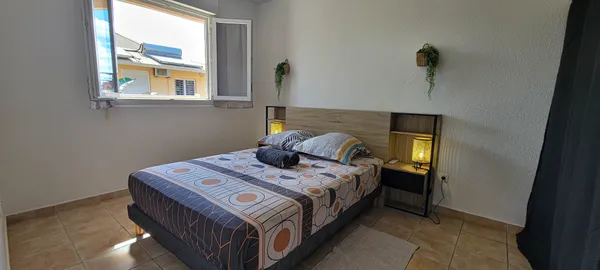
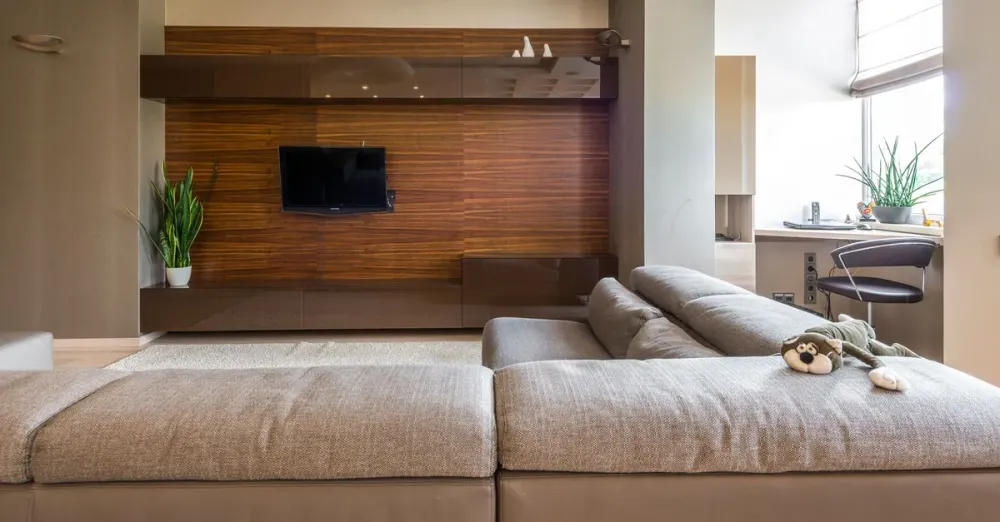
An unfurnished home (known as “nu”, or bare) is rented without any furniture: you bring everything, from bedding to appliances. A furnished home comes equipped with everything you need to live in it straight away: bed, table, chairs, storage, kitchen equipment, fridge, often a washing machine and sometimes air conditioning.
In mainland France, the difference is mostly a matter of comfort. In French Guiana, it takes on an extra dimension because of the remoteness:
- Furniture is expensive to ship. A sea container from mainland France represents a significant budget and a delay of several weeks between collection and delivery at Dégrad des Cannes (the port of Rémire-Montjoly).
- Buying locally costs more. New appliances and furniture are generally more expensive than in mainland France because of the octroi de mer (dock dues) and import charges. A second-hand market does exist (local community groups, house-clearance sales by people ending their assignment), but supply is more limited.
- The climate wears equipment down. Equatorial humidity and heat take their toll on electronics, untreated wooden furniture and linen. Equipment already suited to the local climate (as in a well-maintained furnished rental) is a real asset.
The two legal frameworks
In terms of the lease, national rules apply in French Guiana too:
- Unfurnished rental: 3-year lease (renewable), tenant’s notice period generally 3 months (reducible to 1 month in certain cases, notably a professional relocation), security deposit of 1 month’s rent excluding charges.
- Furnished rental: 1-year lease (or 9 months for a student), tenant’s notice period of 1 month, security deposit of up to 2 months’ rent excluding charges.
The bail mobilité (mobility lease: 1 to 10 months, non-renewable, with no security deposit) is a third option that is particularly well suited to relocations and temporary assignments: it applies to furnished homes and is aimed precisely at people on professional mobility.

The real cost: beyond the advertised rent
Comparing a furnished rent to an unfurnished one is not enough. Furnished is almost always more expensive per square metre, but unfurnished comes with equipment costs that are often underestimated when doing the maths.
What “unfurnished” costs you on top
For an unfurnished home, expect to add to the rent:
- The purchase or shipping of all appliances (fridge, washing machine, possibly air conditioners) and furniture.
- Sea freight for your belongings if you have them shipped from mainland France: several thousand euros for a container, as an indication, depending on volume and provider.
- The waiting time: between shipping and delivery, expect several weeks during which you will still need somewhere to live and at least a minimum of equipment.
- Installation (assembly, setting up, disposal of packaging).
What “furnished” costs you on top
Conversely, furnished generally means:
- A higher rent (often in the region of 10 to 30 % above an equivalent unfurnished property, an indicative range that varies a great deal depending on the standard).
- A potentially larger security deposit (up to 2 months excluding charges).
- Less freedom to decorate: you live with the landlord’s furniture, for which you are liable if anything is damaged.
The calculation therefore comes down above all to the length of your stay. For a short assignment (a few months to a year), furnished is almost always the better value once equipment and shipping costs are factored in. For a long-term set-up (several years, or permanently), unfurnished becomes attractive again, especially if you already own furniture and plan to stay.
How long are you staying? The decisive criterion
The expected length of your stay in French Guiana is the first filter to apply.
Short assignment (up to 12-18 months)
Furnished or the bail mobilité are almost always the obvious choice. Shipping a container only to leave a year later makes no financial sense, and the time saved on arrival is precious when you are juggling a new job and administrative formalities. You drop your bags and you are up and running immediately.
Medium-term set-up (2 to 4 years)
This is the grey area. Two strategies coexist:
- Fully furnished for simplicity, accepting a slightly higher rent and avoiding any major purchases.
- Unfurnished + equipment bought locally that you resell before leaving (the turnover of people on assignment feeds an active second-hand market in French Guiana).
Long-term or permanent set-up
If you see yourself here for the long haul, or are even considering buying, unfurnished rental regains the advantage: you invest in a living environment that reflects who you are, you spread the cost of quality furniture suited to the climate, and you settle down.
Where to live: Cayenne, Kourou, Saint-Laurent and around
The rental market in French Guiana is concentrated, tight and very uneven from one area to another. Your place of assignment strongly influences the choice.
The Cayenne area
Cayenne and its outskirts (Rémire-Montjoly, Matoury) concentrate most administrative, hospital and service jobs. Demand is strong and supply limited, which pushes rents up.
- Central Cayenne: the Village Chinois, Cabassou and Montabo districts (residential, close to the sea and the university) or the historic centre. Practical without a car, but limited supply.
- Rémire-Montjoly: highly sought after for its quality of life (Montjoly and Zéphir beaches, recent developments), often upmarket and more expensive.
- Matoury: close to Félix Éboué airport and the Balata shopping area, a good price/accessibility compromise, but a car is virtually essential.
Kourou
Home to the Guiana Space Centre, Kourou attracts many people on relocation (CNES, ArianeGroup, subcontractors, gendarmerie, education). The market there is distinctive, with a large share of furnished homes aimed at temporary assignments. Many new arrivals start out in furnished accommodation while they look for something better.
Saint-Laurent-du-Maroni and the West
The territory’s second hub, growing fast (healthcare, education, administration). Rental supply is scarcer there, and “turnkey” furnished properties are particularly sought after by seconded staff, for want of immediate alternatives.
In every case, bear in mind that French Guiana experiences a genuinely tight rental market: good properties go quickly. Planning ahead from mainland France, even if it means securing temporary accommodation first, avoids nasty surprises.
The middle way: temporary accommodation on arrival
Between the moment you land in Cayenne and the day you move into your permanent home, several weeks often go by. Finding a place remotely from mainland France remains difficult: in-person viewings reassure landlords, and many properties are only let after a meeting.
Hence the appeal of temporary furnished accommodation for the first few weeks. This step allows you to:
- View properties on the spot before committing to a long lease, and avoid a disappointing “rented from photos” experience.
- Compare neighbourhoods in real conditions (commute, atmosphere, shops, schools for the children).
- Take delivery of your container calmly if you have opted for unfurnished, without sleeping among the boxes.
- Absorb the unexpected: a lease that is delayed, building work, a postponed move-in date.
That is precisely what our accommodation offers: furnished, fully equipped homes designed for a friction-free arrival, whether you stay a few nights or several weeks. A comfortable base from which to organise your move at your own pace.