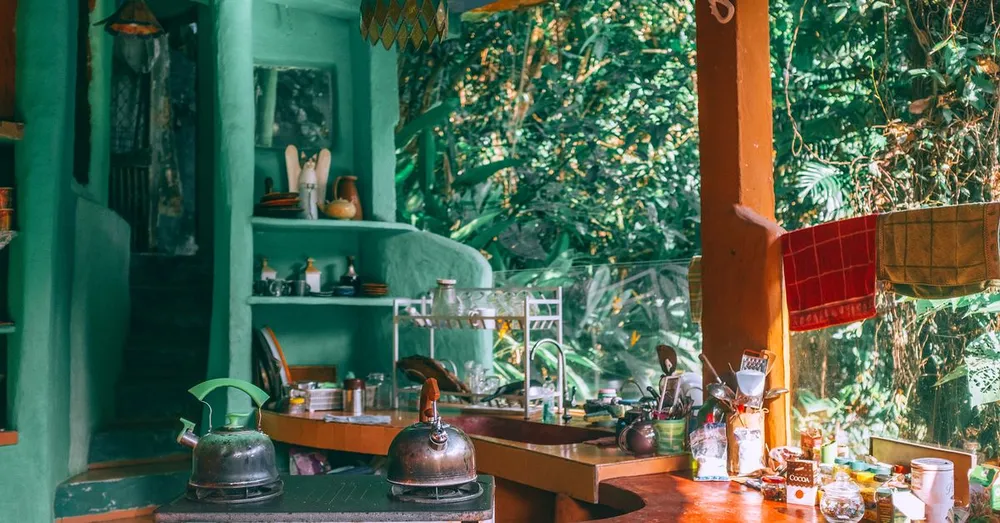
A gîte filled with the aroma of a simmering colombo, a basket of local fruit waiting on the welcome table, an accras workshop on the very first evening: in Guadeloupe, the culinary experience has become the single best way to set a holiday rental apart. After several years supporting food-and-travel hosts between Sainte-Anne, Le Moule and Deshaies, I see it clearly: a property that tells a Creole-cooking story rents for more and stays empty less often. There remains one subject many owners underestimate, and it is the focus of this guide on the taxation of culinary gîtes in Guadeloupe: classified tourist-furnished status, the boosted micro-BIC allowance specific to the overseas departments, and reporting obligations. The good news is that the butterfly-shaped archipelago offers a more favourable tax landscape than mainland France.
Important: this article is for educational purposes. Rates and ceilings change each year in the finance law; always validate your structure with a chartered accountant who specialises in the overseas departments.
Why the Culinary Experience Changes Your Gîte’s Value
Guadeloupe, a French overseas department shaped like a butterfly between the limestone Grande-Terre and the volcanic Basse-Terre, is far more than a simple beach destination. Its roughly 380,000 inhabitants live a Creole culture in which the meal is central, and that is exactly what today’s traveller is looking for: tasting rums from Marie-Galante, sharing a goat colombo, a guided tour of the local-fruit market. On the properties we manage, this dimension translates into:
- a nightly rate 10 to 25% higher than an equivalent furnished rental with no service;
- a higher occupancy rate in the shoulder season;
- more 5-star reviews, which boost visibility and direct bookings.
But this added value has a flip side: as soon as you charge for extra services or offer a guest table, you step beyond a simple bare rental. For the tourist geography that draws your future food lovers, our complete guide to Guadeloupe details the must-sees, from the Cousteau Reserve to the distilleries of the island of a hundred windmills.

Classified Tourist-Furnished Status: The Tax Key
Classified or Not, the Gap Has Become Enormous
Since the micro-BIC reform, the gap between classified and non-classified furnished rentals has become the foremost optimisation lever. For a non-professional furnished landlord (LMNP) under the micro-BIC regime:
- a classified furnished rental enjoys a high flat-rate allowance on revenue (around 71%, with a generous ceiling);
- a non-classified furnished rental is limited to a reduced allowance (around 30%, with a lowered ceiling).
At equal revenue, a classified gîte therefore keeps a far larger share of untaxed income. For an owner collecting €18,000 in annual rent in Saint-François, that means several thousand euros less in taxable base each year.
How a Furnished Rental Is Classified in Guadeloupe
Classification ranges from 1 to 5 stars, rests on a grid of roughly 130 criteria (equipment, cleanliness, accessibility, services) and requires a visit from a Cofrac-accredited body. The decision is valid for five years and appears on your listings. Budget €150 to €250 for the visit, quickly recouped. A gîte with a genuinely well-equipped kitchen, essential to the culinary experience, naturally ticks many of the criteria.
The Boosted Overseas Micro-BIC Allowance: The Guadeloupean Bonus
This is where Guadeloupe widens the gap with mainland France. On top of the micro-BIC allowance tied to classification, taxpayers fiscally domiciled in the overseas departments benefit from a boosted allowance on income tax. The principle: once your rental income is folded into the household and the tax calculated, this boosted overseas allowance reduces the tax owed, within an annual ceiling of around €2,450 for Guadeloupe, higher than on the mainland.
The effect is cumulative: a generous flat-rate allowance on revenue on one side, a boosted tax reduction on the other. In practical terms, on a 3-star classified gîte in Sainte-Anne collecting €22,000 a year (strong demand in the dry season, December to April), the gap in net yield after tax compared with the same non-classified property often reaches several points.
Micro-BIC or Actual-Cost Regime: Which to Choose for a Gourmet Gîte
A gîte offering services (linen, welcome baskets, cooking workshop) generates significant expenses. Two options:
- The micro-BIC regime: simple, with no heavy accounting, ideal if your expenses stay below the flat-rate allowance. With a classified furnished rental, it is often the right choice at the outset.
- The actual-cost regime: you deduct your expenses (loan interest, works, kitchen equipment) and, above all, you depreciate the property and the furnishings. For a heavily equipped gîte, depreciating the kitchen and appliances often wipes out most of the taxable income in the early years.
My field rule: switch to the actual-cost regime as soon as your expenses and depreciation exceed the micro-BIC allowance. A culinary gîte reaches that threshold faster than a standard rental.

Guest Table and Culinary Services: Watch the Para-Hotel Tipping Point
Offering a culinary experience means crossing a subtle line. With a simple furnished rental, you are exempt from VAT; but by stacking up services, you can tip over into para-hotellerie. The tax authority applies this classification as soon as you regularly provide, in addition to accommodation, at least three of the following four services:
- breakfast;
- regular cleaning during the stay;
- the provision of household linen;
- the reception of guests.
A one-off guest table is not enough to flip your status. But a gîte that serves a Creole breakfast every morning, changes the linen, does the cleaning and personally welcomes its guests ticks the boxes: the VAT analysis and the nature of the income (professional BIC) change. Overseas VAT rates are reduced (8.5% at the standard rate), but the subject deserves precise framing. This is where local support truly makes sense: see how we work on our owners page.
Your Reporting Obligations, Step by Step
A profitable gîte is first and foremost a compliant gîte. The administrative path comes down to four steps.
1. Declare the Furnished Rental at Town Hall
Every seasonal rental must be declared at the town hall (Sainte-Anne, Le Gosier, Deshaies, Le Moule, Saint-François depending on your property) via the dedicated Cerfa form. Some tourist towns also require a registration number to be shown on your listings, and sometimes a change-of-use authorisation in high-pressure zones.
2. Register the Activity and Choose the Regime
Declare the start of your LMNP activity to obtain a SIRET number: this is where you opt for the micro-BIC or the actual-cost regime.
3. Collect and Remit the Tourist Tax
The tourist tax is owed by the traveller, collected by you, then remitted to the local authority. Its amount depends on the town and the classification; with direct bookings, it is up to you to manage it.
4. Declare Your Income Every Year
Your revenue is declared as BIC, with the micro-BIC allowance (according to classification) and then, where applicable, the boosted overseas allowance on the final tax.
My advice: keep all your invoices for kitchen equipment, linen and local produce. Under the actual-cost regime, they feed the depreciation; in the event of an audit, they prove the reality of your activity.
Entrust the Management of Your Culinary Gîte to Hostel Toucan
Managing a food-and-travel gîte from a distance is a full-time job. At Hostel Toucan, we support owners of tourist-furnished rentals across the whole archipelago: help with classification, structuring the culinary offer within the right tax framework, collecting the tourist tax and connecting you with local producers for your welcome baskets.
For travellers, our properties book directly, with no platform fees, with free cancellation up to 7 days before arrival and 7-day WhatsApp support. Browse our properties on the Guadeloupe rentals page, or entrust us with the management of your gîte via our owners area.
FAQ
Is classifying the furnished rental mandatory to offer a culinary experience?
No, but it is strongly recommended for tax reasons: a classified furnished rental enjoys a much higher micro-BIC allowance than a non-classified one since the latest reform. For a culinary gîte, usually very well equipped, classification quickly pays for itself and strengthens credibility with travellers.
How does the boosted overseas allowance work for a landlord in Guadeloupe?
It is an income-tax reduction for taxpayers fiscally domiciled in Guadeloupe, within an annual ceiling of around €2,450, higher than on the mainland. Since your furnished-rental income (LMNP) enters the household income, this allowance indirectly reduces the tax bearing on your rent. Combined with the micro-BIC allowance of the classified furnished rental, the effect is cumulative. Have your situation validated by an overseas chartered accountant.
Should the tourist tax be declared on the workshops and meals offered to tenants?
No. The tourist tax applies only to the accommodation night, not to ancillary services such as a cooking workshop or a meal. Its amount depends on the town and the classification. With direct booking through a concierge service like Hostel Toucan, you collect it from the traveller and then remit it to the local authority; we automate this tracking to keep you compliant effortlessly.