Every year from mid-December onwards, I watch my welcome calendar fill up all at once, planes land packed at Aimé Césaire airport, and the Salines beach in Sainte-Anne line up its towels with military precision. Martinique’s high season is that window from December to April when the island puts on its best weather face — and when, at the same time, everything books up earlier and costs more. As a resident of the island, used to managing seasonal rentals to the rhythm of this seasonality, let me explain what lies behind this period: why it exists, who shows up, and how to keep it from blowing your budget.
Why December–April is high season in Martinique
The reason comes down to a single Creole word: the Carême. That’s what we call the dry season here, which stretches from December to April and is by far the best time to visit Martinique for a beach holiday. Martinique, a French overseas department and region (DROM) with around 360,000 inhabitants, lives to the rhythm of two tropical seasons: the dry Carême, and the humid wet season from June to November. During the Carême:
- The skies stay clear, showers are brief and rare, and humidity drops.
- The trade winds blow and pleasantly cool temperatures that hover between 26 and 32 °C.
- The sea rarely dips below 26 °C and often stays calm on the Caribbean side.
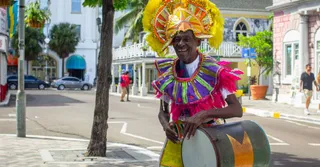
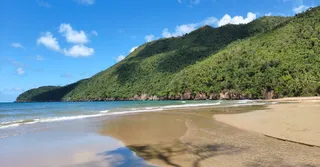
This is exactly the weather a traveller from mainland France comes looking for in the dead of winter. While Paris is freezing, it’s 29 °C on the sand of Grande Anse des Salines. This Caribbean dry season is therefore a tourist magnet, reinforced by a busy events calendar: carnival (February–March), the island’s absolute highlight, and the year-end festivities.
A few practical pointers. Currency: the euro. Languages: French and Creole. Dialling code: +596. Time difference: -5 h in winter and -6 h in summer relative to Paris — an asset, since you arrive “ahead” in the day. Aimé Césaire airport is in Le Lamentin, 15–20 minutes from Fort-de-France, the capital. And once there, a car is strongly recommended to freely reach the southern beaches, the Rum Route or Mount Pelée.
The Carême in simple numbers
To picture why this best time to visit Martinique wins everyone over, here are the benchmarks I give my guests, in indicative rainfall on the Southern Caribbean coast (the most relevant for a beach stay):
- December: 110–130 mm, the dry season settles in, end of month in high demand for the holidays.
- January: 60–80 mm, one of the best months, pleasant trade winds and calm sea.
- February: 50–70 mm, dry and sunny, the month of carnival.
- March: 40–60 mm, the driest month of the year, perfect for hiking.
- April: still very dry in early month, the heat rising gently.
Keep in mind: Martinique has microclimates. Even in the heart of the Carême, the Atlantic North (Saint-Pierre, Le Carbet, La Trinité, Tartane) gets more rain than the Southern Caribbean (Sainte-Anne, Le Diamant, Les Trois-Îlets, Le Marin), where the postcard beaches are concentrated. For a guaranteed sunny stay, the South remains the safe bet.
Who shows up during the tourist high season
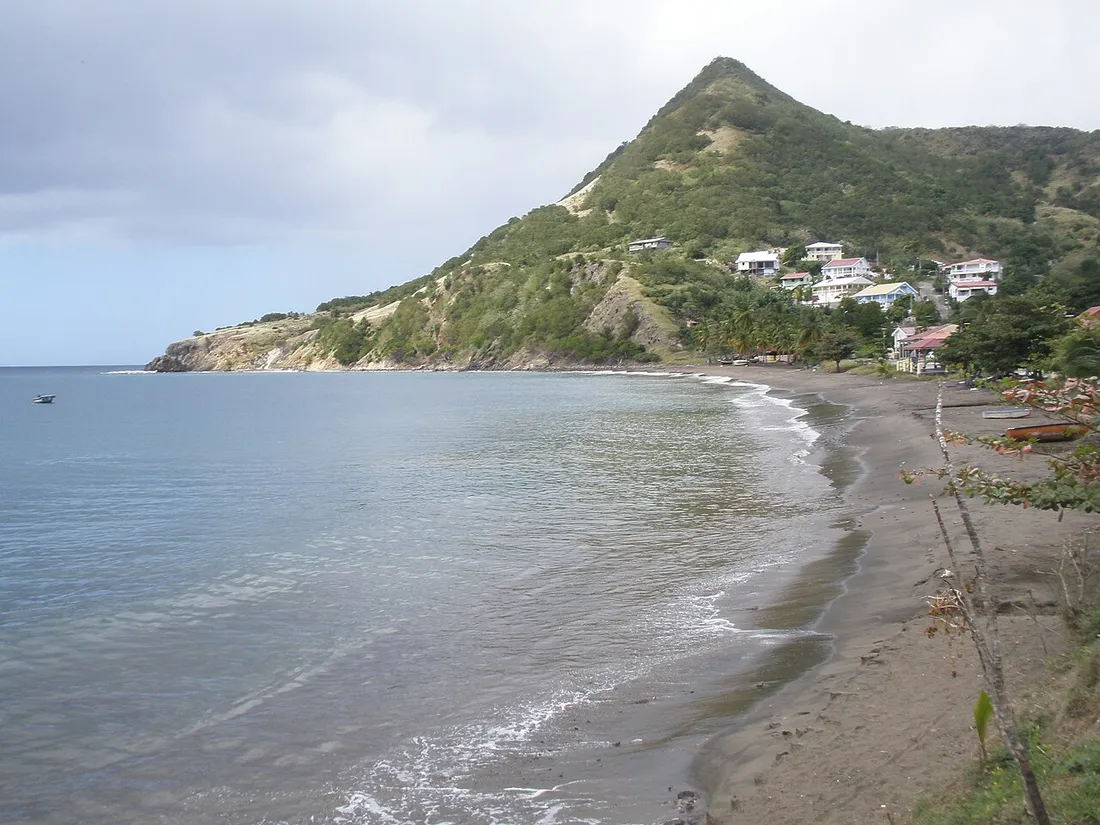
Martinique’s high season isn’t a uniform influx: it overlaps two very distinct clienteles, and that’s what saturates the island so completely.
- Mainland French travellers: this is the bulk of the flow. They schedule their departures around the February school holidays (zones A, B, C) and the year-end festivities, fleeing the metropolitan winter. Families, couples, retired winter visitors who settle in for several weeks.
- North American travellers: less visible but very real, particularly via cruise calls at the Pointe Simon terminal in Fort-de-France and a few air links. They weigh most heavily on the emblematic sites during disembarkation hours (downtown Fort-de-France, distilleries, Balata Garden).
In concrete terms, that means packed Salines on a February Sunday, distilleries (Clément in Les Trois-Îlets, Depaz in Saint-Pierre, Saint-James in Sainte-Marie, La Mauny and Trois-Rivières in the South) watching coach after coach roll in, and car rental becoming a rare commodity. On that front, expect €35 to €55/day in high season, versus €25–35 off-peak — and book your vehicle well in advance, because the fleets go fast. At the Salines, parking is besieged: arriving before 10am spares you a 300-metre walk in the sun.
The sites that get saturated (and how to dodge them)
The experience stays excellent if you play with the timing. My local reflexes:
- The Salines (Sainte-Anne): early morning or late afternoon. At midday in February, it’s a crush.
- Balata Garden: at opening, before the cruise coaches, to enjoy the suspended canopy walkways in peace.
- Mount Pelée and the ruins of Saint-Pierre (UNESCO-listed): on weekdays, and early for the hike before clouds catch the summit.
- Anse Dufour and Anse Noire (black volcanic sand, in Les Anses-d’Arlet): these little coves fill up fast for lack of space; aim for the morning.
- Diamond Rock, the Caravelle peninsula (Tartane), Les Trois-Îlets (land of Joséphine de Beauharnais): spread these visits across the week rather than the weekend.
Crowds and prices: what high season changes for your budget
Here’s the point that generalist guides skim over and that I live from the inside: high season is also a price mechanism. When demand explodes against a limited supply of accommodation, rates climb — that’s the dynamic pricing that applies to nearly all the island’s tourist rentals.
- Occupancy rates for rentals peak between mid-December and mid-April, with two highs: the year-end festivities and the carnival / February holiday period.
- A rental that goes for €1,200 a week in February often drops to €750–850 in September, in the depths of low season. A gap of 30 to 50% is the norm, not the exception.
- On the air side, a Paris–Fort-de-France flight hovers between €450 and €600 return outside school holidays, but climbs to €800–1,000 during the February or year-end breaks.
In other words, in high season it’s not just “more expensive”: it’s more expensive AND scarcer. The best addresses, especially in the seaside South, go 4 to 6 months ahead. For a February stay, aiming for a booking the previous autumn is the right window.
My levers to pay less (without giving up the good weather)
Good news: you can enjoy the Carême without paying the absolute peak rate. What I recommend:
- Shift outside the school holidays. Early December, mid-January or the first half of April offer Carême weather with prices noticeably softer than carnival week.
- Aim for the shoulder seasons. Late November and May are clever in-between periods: still very decent climate on the South coast, with crowds and rates eased off.
- Book early and direct. Locking in the accommodation as early as autumn secures the price before the dynamic-pricing surge, and direct booking avoids platform commissions.
- Weigh up the town. A base in Sainte-Luce, Le Marin or on the Diamant side often works out cheaper than the heart of Les Trois-Îlets, while staying within reach of the beaches.
- Stay flexible on dates. Shifting by a week can change the flight price entirely.
To pin down the right window according to your town’s weather and your budget, our complete Martinique guide details, season by season, what you need to know.
For owners: high season is prepared now
If you own a property on the island, Martinique’s high season is when most of your annual revenue plays out. And it’s prepared in advance:
- Open the calendars early: travellers book the Carême from autumn onwards. A property closed in October misses the first bookings — the most certain ones.
- Set up consistent dynamic pricing: raise the nights over the holidays, carnival and February, smooth out the shoulder seasons so you don’t leave gaps.
- Anticipate the logistics: cleaning, linen and check-in get stretched when turnovers stack up. A well-honed organisation prevents breakdowns.
That’s precisely what we manage for owners: making the most of the property at the right price during high season, with no management burden.
Enjoy Martinique’s high season with Hostel Toucan
High season offers the finest weather of the year, but rewards those who plan ahead. At Hostel Toucan, a concierge service and seasonal-rental specialist in the French overseas departments, we help you secure the right accommodation at the right time, with no nasty last-minute price surprises. Booking direct with us means:
- No platform fees: you pay the fair price, with no hidden commission — a real advantage when rates are already tight.
- Free cancellation up to 7 days before arrival: book early to lock in the best address, without committing hard.
- WhatsApp assistance 7 days a week, in French as in Creole, for the tide schedule, the calmest beach depending on the wind, or the clever slot to dodge the crowd at the Salines.
Browse our Martinique rentals town by town to find your ideal base in the heart of the dry season. High season isn’t something you miss: it’s something you book — and the sooner, the better.
FAQ
When does high season start and end in Martinique?
The tourist high season corresponds to the Carême, the dry season, from December to April. The peaks of attendance fall around the year-end festivities and the carnival / February school holiday period. It’s the best weather of the year (clear skies, trade winds, rare showers), which also makes it the most sought-after and most expensive period.
Why do prices rise so much during this period?
Because demand explodes against a limited supply of accommodation. Most tourist rentals apply dynamic pricing: nights climb over the holidays, carnival and February. A rental at €1,200 a week in February can drop to €750–850 in low season, and a Paris–Fort-de-France flight goes from €450–600 to €800–1,000 during the breaks. Booking early and direct lets you lock in a price before the surge.
What’s the best moment of the Carême to avoid crowds and high prices?
Aim outside the school holidays: early December, mid-January or the first half of April offer Carême weather with crowds and rates softer than carnival week. The late-November and May shoulder seasons are also excellent weather-price compromises on the Southern Caribbean coast.
Do you need to book far in advance for high season?
Yes. For a stay between mid-December and mid-April, the best rentals in the South go 4 to 6 months ahead, and car rental also gets scarce. For February, ideally book as early as the previous autumn. With Hostel Toucan, free cancellation up to 7 days before arrival lets you book early without risk.