
Hostel Toucan — Apartments & Hotels
Menu

Settling in

House sharing in French Guiana: a guide for young professionals and students

Published on July 30, 2026 · by Ismael Samuel

House sharing in French Guiana: a guide for young professionals and students

Are you arriving from mainland France for a job, an internship, a civil-service transfer, or starting your studies at the Université de Guyane? House sharing is often the simplest, most affordable and most reassuring way to find housing in French Guiana, especially during the first few weeks. The rental market is tight, the rent on a studio of your own can weigh heavily on a young professional’s or student’s budget, and sharing a home lets you split the costs while avoiding isolation when you don’t yet know anyone locally. This article gives you concrete benchmarks — neighbourhoods, indicative budgets, paperwork, pitfalls to avoid — to organise your house share between Cayenne, Rémire-Montjoly, Matoury and Kourou, and to handle the gap between your arrival and your permanent move calmly.

Why house sharing appeals when you arrive in French Guiana

Renting on your own in French Guiana means having a solid application file, a guarantor, a security deposit and often several months’ rent in advance, right away. For someone who has just landed and doesn’t yet have local payslips or a working bank account, that’s a real obstacle. House sharing gets around part of these difficulties.

  • Shared budget: rent, electricity, water, internet and sometimes groceries are split between housemates.
  • Faster move-in: an already furnished and equipped home means you don’t have to buy appliances and furniture on day one.
  • Instant network: your housemates usually know the good tips (mechanics, markets, government offices, beaches).
  • Flexibility: some house shares accept shorter leases or staggered arrivals, useful when your dates aren’t set in stone yet.
  • Peace of mind: not living alone is reassuring, especially during the first weeks of discovering the territory.

One word of caution though: house sharing means communal living, a minimum of organisation and clear ground rules. It isn’t only a money-saving choice, it’s a lifestyle.

Jeunes colocataires étudiants et actifs travaillant ensemble autour d'une table dans un appartement lumineux
En colocation, on partage plus qu'un loyer : espace de travail, révisions et vie quotidienne se croisent au fil des journées. — © cottonbro studio / Pexels

Where to look for a house share: the areas to know

French Guiana is not a uniform territory. The right area depends on where you work or study, how much you need a car and what your budget is. Here are the main areas where young professionals and students live.

Cayenne and its centre

Cayenne concentrates government offices, shops, community life and part of the campuses. Neighbourhoods such as the city centre, Montabo, Cabassou or Baduel are sought after for their proximity to the university, the hospital and services. The historic centre offers plenty of buzz but sometimes older housing; Montabo, more residential and close to the coast, appeals to those who want a quieter setting. As a rough guide, a room in a house share in Cayenne usually falls within a broad range depending on the standard, the floor area and whether utilities are included.

Rémire-Montjoly

A popular residential town, Rémire-Montjoly attracts people with its beaches (Montjoly, Gosselin), its greener living environment and its detached-house neighbourhoods. It’s an area favoured by young professionals who work in Cayenne but want more peaceful surroundings. House shares there are often houses with a garden, sometimes a pool. Plan on having a vehicle as a rule, since public transport remains limited.

Matoury and the airport corridor

Matoury is a fast-growing town, close to Félix-Éboué airport and well connected to Cayenne by road. Rents there are sometimes more affordable than in the heart of Cayenne, and there is a genuine supply of shareable houses. It’s a good compromise if you work along the Cayenne-airport corridor or in the business zones.

Kourou

If your job depends on the Guiana Space Centre or space-related activities, Kourou is your anchor point. The town has a young, mobile population, with many people on assignment or fixed-term contracts — a context that favours house sharing and frequent arrivals and departures. Look towards the neighbourhoods near the centre and the residential areas.

Saint-Laurent-du-Maroni and the West

For a job in western French Guiana (healthcare, education, social work, administration), Saint-Laurent-du-Maroni is the reference town. The market there is narrower, and house shares are often found by word of mouth and through local professional networks. Plan further ahead, as supply is scarcer.

What it costs: indicative budget benchmarks

The amounts below are given purely as a guide and vary a great deal depending on the town, the floor area, the condition of the home, the utilities included and the season. Don’t take them as guaranteed prices: always check case by case.

  • Room in a house share: a broad range depending on comfort and location; the price may or may not include utilities.
  • Utilities (water, electricity, internet): to be split between housemates; electricity can climb with air-conditioning use, which is heavy in this equatorial climate.
  • Security deposit: generally the equivalent of one or two months depending on the type of lease.
  • Agency fees: possible if you go through a professional.

Bear in mind the cost of living, which is generally higher than in mainland France on many imported products. House sharing is precisely what helps absorb this reality by pooling certain expenses (subscriptions, large appliances, sometimes basic groceries).

Support schemes worth exploring

Depending on your situation, several schemes can lighten the bill. Look into them in advance:

  • Housing benefits from the CAF, subject to income conditions.
  • Employer schemes (mobility assistance, civil-service relocation bonus, allowances linked to an overseas transfer).
  • For students, grants and support from the CROUS, as well as university housing when places are available.
  • Mobility assistance for arriving from mainland France, to be checked according to your status.

Finding the right house share: method and vigilance

Where to look in practice

  • Local Facebook groups dedicated to housing in French Guiana, Cayenne or Kourou: very active, but stay careful with listings that look too good to be true.
  • Professional word of mouth: colleagues, HR department, other people who have been transferred; this is often the most reliable channel.
  • Local estate agencies and classic classified ads.
  • Student networks and associations on the Université de Guyane campus in Cayenne.

Avoiding scams

A tight market unfortunately attracts fraudulent listings, especially targeting people still in mainland France. A few simple rules:

  • Never pay any money (booking fee, deposit) before you have viewed the property, in person or through a trusted third party on site.
  • Be wary of an abnormally low rent for an ideally located home.
  • Insist on a written lease and a condition report.
  • Verify the identity of the landlord or the main tenant.
  • Refuse payments made only by cash transfer or to a foreign account.
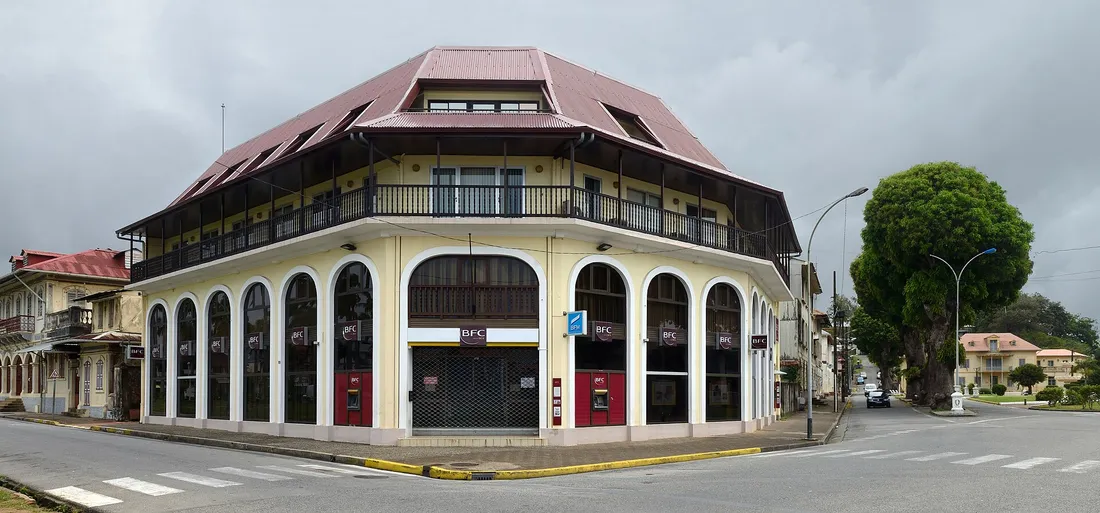
Bâtiment de la Banque française commerciale, place des Palmistes à Cayenne en Guyane
Cayenne, place des Palmistes : le centre-ville concentre commerces, services et une bonne part de l'offre de logements recherchée par les colocataires. — © Cayambe, CC BY-SA 4.0, via Wikimedia Commons

Checklist before signing your house share

Go through these points before committing:

  • I have viewed the property (in person or through someone I trust)
  • The type of lease is clear (joint-and-several house share, individual leases, subletting allowed)
  • The amount of the rent AND the utilities is set out in writing
  • The security deposit and the terms for its return are specified
  • The move-in condition report is planned and signed
  • The split of utilities between housemates is defined
  • The rules of communal living have been discussed (guests, cleaning, noise)
  • The notice period is known (mine and the others’)
  • Home insurance is arranged (compulsory for housemates)
  • I know who to contact if there’s a problem (owner, agency)

Practical life: getting your house share off to a good start in French Guiana

The climate and air conditioning

French Guiana has an equatorial climate: heat and high humidity all year round, with a pronounced rainy season (roughly from December to July, varying from year to year). In practical terms, that means a potentially high electricity bill if the air conditioning runs a lot. In a house share, agree from the outset on air-con use and on how the bill is split. A fan and good natural ventilation bring the cost down.

A car, all but essential

Outside the heart of Cayenne, public transport is limited. Many young professionals and students depend on a car. House sharing sometimes makes it possible to share a vehicle or organise carpooling between housemates working along the same route. Factor this into your choice of area: living in Rémire-Montjoly or Matoury without a car makes life complicated.

Administrative steps not to forget

  • Open or transfer a bank account usable locally.
  • Update your address with the authorities, social security and the tax office.
  • Take out home insurance (compulsory).
  • Register, where applicable, with your new employer or the university.
  • Check your healthcare needs (coverage, a GP on site).

Social life and the setting

French Guiana offers an exceptional setting: Amazon rainforest, rivers, beaches, Creole markets, cultural richness (Creole, Bushinenge, Amerindian, Hmong, Brazilian). House sharing makes integration easier: heading off for a weekend to discover the Îles du Salut, the interior or the savannah is far easier as a group. Make the most of the markets (the one in Cayenne, the one in Cacao), local cuisine and community life to build connections quickly.

Managing the transition: temporary housing before the house share

This is the point many people underestimate. Between the moment you land and the moment you move into your permanent house share, several days to several weeks often go by: time to view places, settle on a home, put together the application file, sign and do the condition report. Signing up for a house share remotely, sight unseen, is risky.

The safest solution is to arrange temporary furnished accommodation for your arrival. This lets you:

  • View house shares in person, without rushing.
  • Scope out the neighbourhoods that really suit you.
  • Avoid the scams tied to remote bookings.
  • Have a comfortable, equipped base from the moment you step off the plane.

This is exactly the kind of need we support at Hostel Toucan. We offer furnished accommodation suited to an arrival from mainland France, for a smooth settling-in period while you look for your house share. If you own a property you’d like to rent out, our property management service takes care of the rental management. For any question about settling in, you can contact us.

Frequently asked questions

Is a house share easy to find in French Guiana?

The market is tight, especially in Cayenne and Rémire-Montjoly. House sharing remains more accessible than renting on your own, but you need to plan ahead, work several channels (local networks, professional word of mouth, agencies) and ideally search on site rather than remotely.

What budget should I plan for a room in a house share?

Amounts vary a lot depending on the town, the floor area, the condition of the home and the utilities included. Treat any range as indicative and always check case by case, including the utilities (electricity and air conditioning in particular) that can push up the total.

Is it better to look for a house share before or after arriving?

It’s safer to secure temporary furnished accommodation on arrival, then look for your house share on site. This avoids remote-booking scams and lets you view properties and choose your neighbourhood with full knowledge of the facts. Discover our accommodation for this transition phase.

Do I need a car in a house share?

Outside the centre of Cayenne, it’s often essential because public transport is limited. House sharing sometimes makes it possible to share a vehicle or organise carpooling, which cuts costs.

What administrative steps should I plan for on arrival?

Compulsory home insurance, updating your address with the authorities, a bank account usable locally, registration with your employer or university, and checking your health coverage. Also look into the available support (CAF, employer schemes, CROUS for students).

In summary

House sharing is the most pragmatic route to housing in French Guiana when you arrive from mainland France, whether you’re a young professional on transfer or a student. Choose your area according to where you work or study (Cayenne, Rémire-Montjoly, Matoury, Kourou, Saint-Laurent), plan your budget with utilities included, stay alert to scams and above all secure the transition period.

To arrive with your mind at ease, book temporary furnished accommodation through our properties: you’ll have a comfortable base for viewing and choosing your house share stress-free. A question about settling into French Guiana? Contact us, and find more practical advice on the blog.

🧭 Which stay suits you?

3 questions, 20 seconds.

Also read