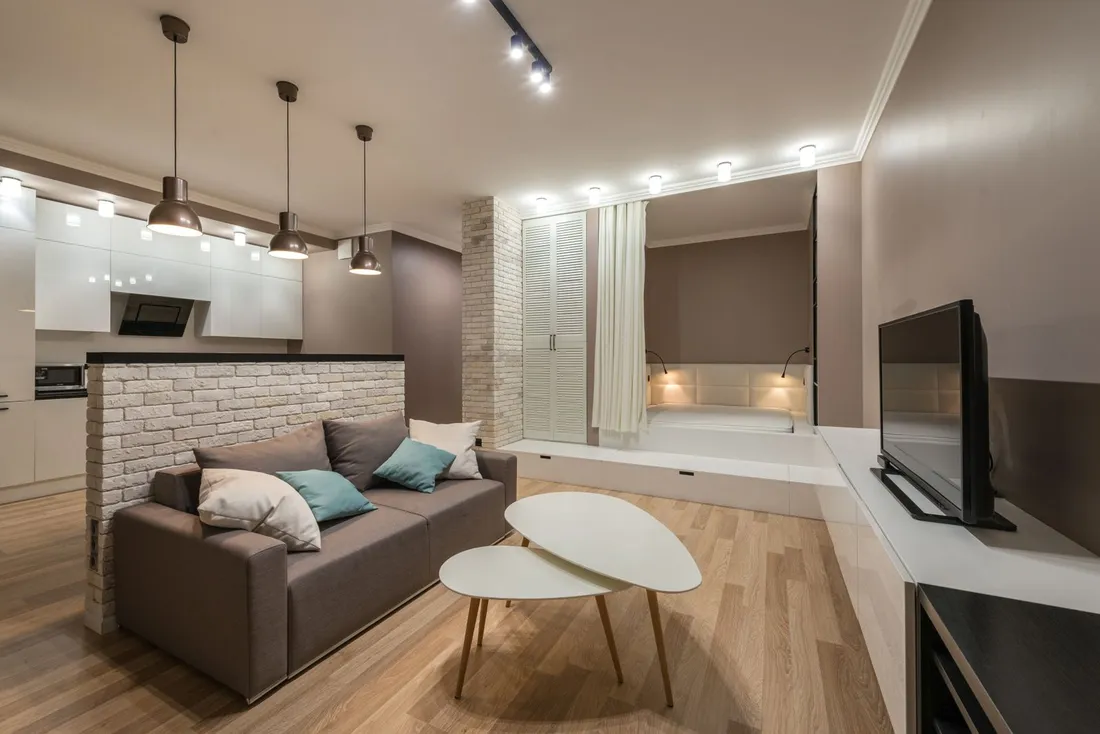

Sending an employee on assignment to Martinique, Guadeloupe or French Guiana raises very concrete questions for an HR department: where to house them, for how long, at what cost, and above all how to obtain proper invoicing in the company’s name. Between a classic hotel, peer-to-peer short-term rentals and para-hotel accommodation, not all options are equal when you need to justify an expense, recover VAT or keep to a budget over several weeks. This article offers a complete HR checklist to organise your teams’ accommodation overseas, with a focus on the advantages of the para-hotel model: company invoice, compliant expense report, payment by bank transfer and degressive long-stay rates.
Why professional accommodation overseas requires specific planning
Housing an employee in the French West Indies or in French Guiana is nothing like a classic mainland trip. Distances, tourist seasonality and accommodation availability create constraints that the HR department must anticipate.
Several factors set these territories apart:
- Strong seasonality: from December to April, the high tourist season strains supply and drives prices up, particularly in Martinique and Guadeloupe.
- Internal distances: in French Guiana especially, between Cayenne, Kourou and Saint-Laurent-du-Maroni, the location of the accommodation determines your employee’s daily commuting time.
- Assignment duration: construction projects, audits, industrial deployments or administrative missions often last several weeks, which makes a hotel expensive and poorly suited to daily life.
- Accounting requirements: an expense incurred for an employee must be justified by a compliant invoice in the company’s name, something not every host provides.
Anticipating these elements avoids nasty surprises: an employee housed too far from the site, a non-compliant invoice rejected by the accountant, or a budget that spirals for lack of a long-stay rate.

Invoice in the company’s name: the non-negotiable point
This is the first HR criterion. A peer-to-peer rental on a mainstream platform rarely delivers an invoice usable in corporate accounting: the receipt is in the traveller’s name, without the host’s business registration number, without a clear VAT mention.
What a compliant invoice must contain
To be accepted by your accounting department and by the tax authorities, a professional accommodation invoice must state:
- Your company’s registered name and address (the client being invoiced).
- The host’s name, address and business registration number.
- The intra-community VAT number where the host is liable for VAT.
- The date and invoice number.
- The precise description of the service (stay dates, address of the accommodation, number of nights).
- The amount excluding tax, the VAT rate and amount, and the total amount including tax.
Para-hotel accommodation, because it is operated by a professional structure, is structurally able to issue this type of invoice. This is a decisive advantage over classic peer-to-peer short-term rentals.
Expense report or direct invoicing
Two arrangements coexist depending on your organisation:
- The expense report: the employee advances the amount, then is reimbursed on presentation of the invoice. Simple, but assumes that the employee has the cash flow and that the invoice is in the right format from the start.
- Direct invoicing to the company: the host invoices the company, settled by bank transfer. No advance for the employee, a clean accounting flow, and simplified bank reconciliation. This is the most comfortable arrangement for a long or recurring stay.
The para-hotel model: what it changes for your HR budget
Para-hotel accommodation sits between the hotel and the short-term rental: a whole, fully equipped home, but operated with associated service provisions and professional invoicing. For an HR department, this combines several advantages.
Professional invoicing and VAT
Because para-hotel activity may be liable for VAT, the invoice issued shows the tax separately. Depending on your company’s situation, this VAT on accommodation services may be deductible under the conditions provided for by the regulations. This point is worth confirming with your accountant, but it represents a notable difference in treatment compared with a rental from a private individual not liable for VAT.
Payment by bank transfer
Settlement by bank transfer, in the company’s name, fits naturally into the company’s supplier payment processes. No more need to pull out a personal bank card or a corporate card on a mainstream platform: the transfer leaves a clean accounting trail, reconcilable with the invoice.
Degressive long-stay rates
For an assignment of several weeks or several months, the hotel quickly becomes the heaviest item in the travel budget. Para-hotel accommodation offered on a long-stay basis generally applies weekly or monthly rates that are far more advantageous than a stack of hotel nights. As an indication, over a stay of several weeks, the cost gap between a hotel room and an equipped home on a long-stay basis can reach a range of 20 to 40% in savings, variable depending on the period, the location and the level of service. These orders of magnitude remain indicative and must be confirmed by a quote.
Employee comfort and productivity
Beyond accounting, accommodation also determines the well-being and efficiency of your employee on assignment. A self-contained home offers advantages that a hotel room does not provide.
- An equipped kitchen to prepare meals, which reduces the catering budget and suits long assignments.
- A quiet workspace, useful for preparing a meeting or handling emails away from the site.
- A washing machine for a stay of several weeks without depending on a laundry service.
- A real living space that limits fatigue and isolation during extended assignments, a factor often underestimated in the success of an overseas trip.
For teams of several people, a home with several bedrooms can also pool costs while keeping everyone their own space, with a single invoice in the company’s name.