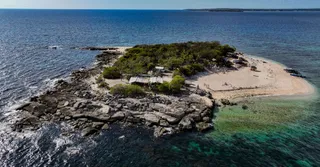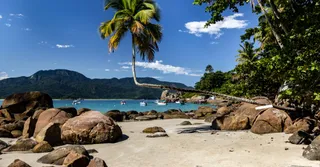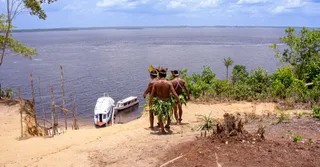
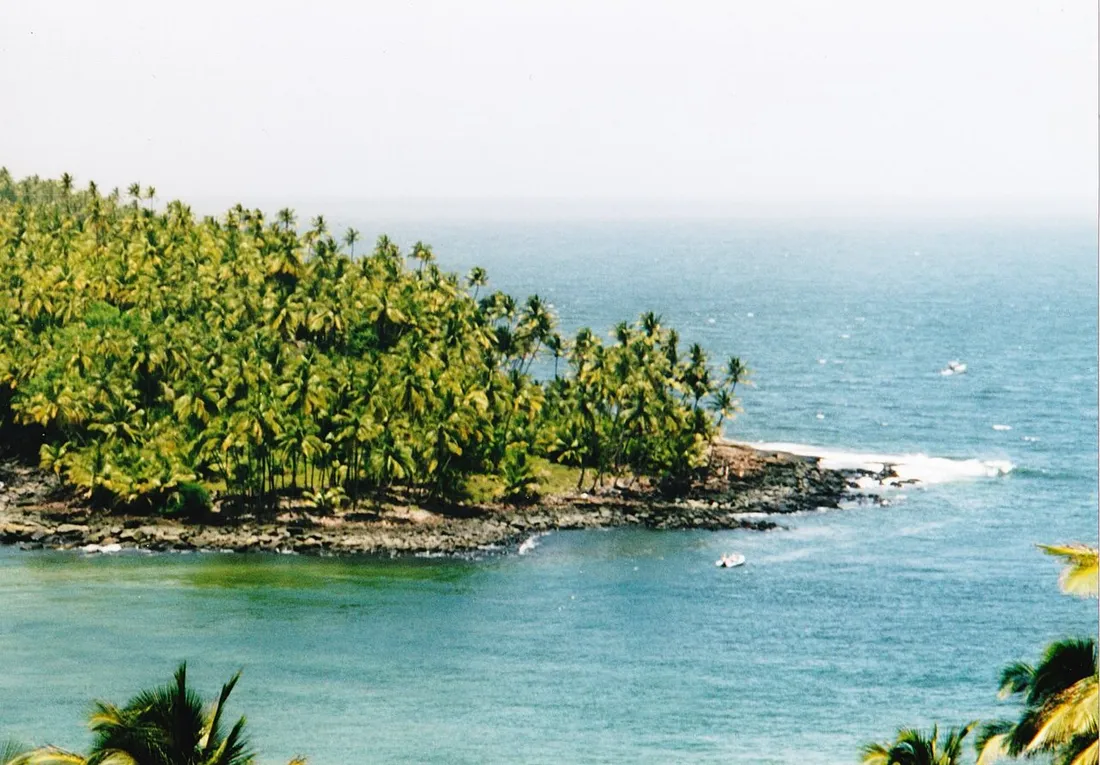
Eleven kilometres off the coast of Kourou, three slivers of land set on the Atlantic hold within them a large part of French Guiana’s memory and beauty. The Îles du Salut, in French Guiana, are cells swallowed by tree roots, coconut palms leaning over turquoise water, and agoutis that cross the trails without fear. I regularly bring our travellers here, and with every crossing comes the same jolt: you come for the penal colony, you leave marked by the whole archipelago.
Here is everything you need to know to plan this getaway from Kourou, understand what you’re visiting, and decide whether an overnight stay is worth the detour. Spoiler: it is.
Understanding the archipelago: three islands, one story
The Îles du Salut archipelago is made up of three islands, and it matters not to confuse them before you book.
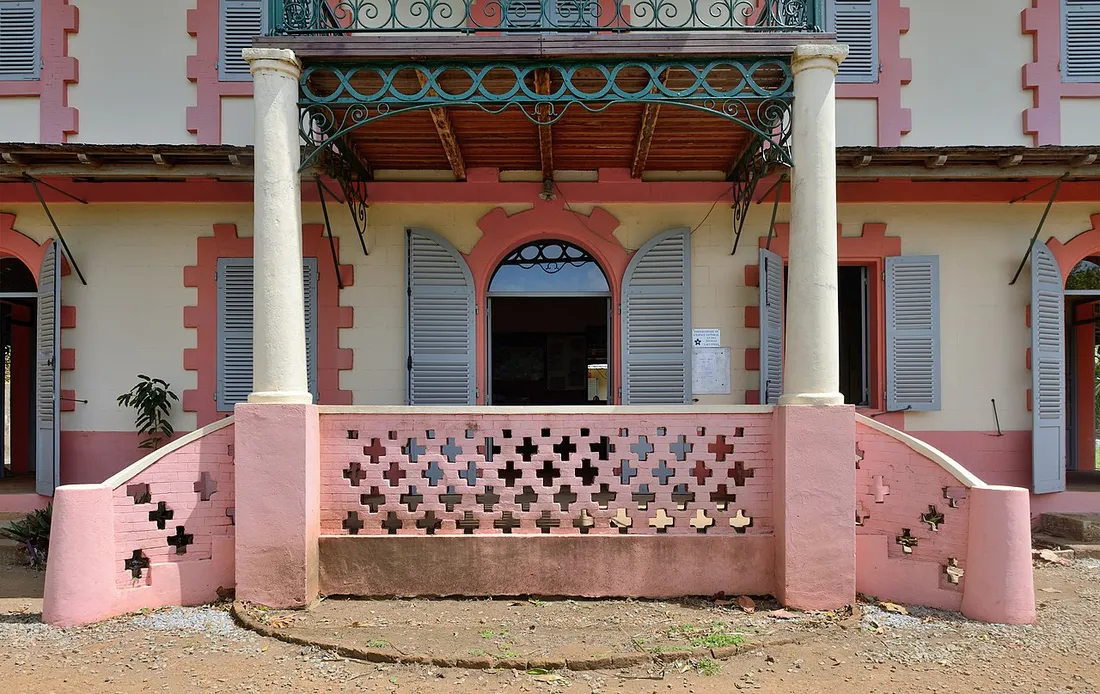
- Île Royale: the largest and most accessible, this is where the boats dock. Here you’ll find the inn, the restaurant, the administrative remains of the penal colony, the chapel and the trail that loops around it in 1h30.
- Île Saint-Joseph: linked by an internal shuttle, it housed the infamous Réclusion, the solitary-confinement cells. Wilder and more silent, it often moves visitors even more than Île Royale.
- Île du Diable (Devil’s Island): the most famous because of Alfred Dreyfus, but off-limits. The currents are too violent to land; you observe it from the northern tip of Île Royale.
The name “Salut” (Salvation) dates back to the colonists who took refuge here in the 18th century to escape the fevers of the mainland. The irony of history is that, from 1852, it became one of the harshest penal colonies in the French Empire.
A penal memory etched into the stone
Between 1852 and 1953, more than 70,000 convicts passed through the penal colony of French Guiana, some of whom ended up on the Îles du Salut, reserved for the heaviest sentences and repeat offenders. Henri Charrière, the author of Papillon, was held here and made the place famous around the world.
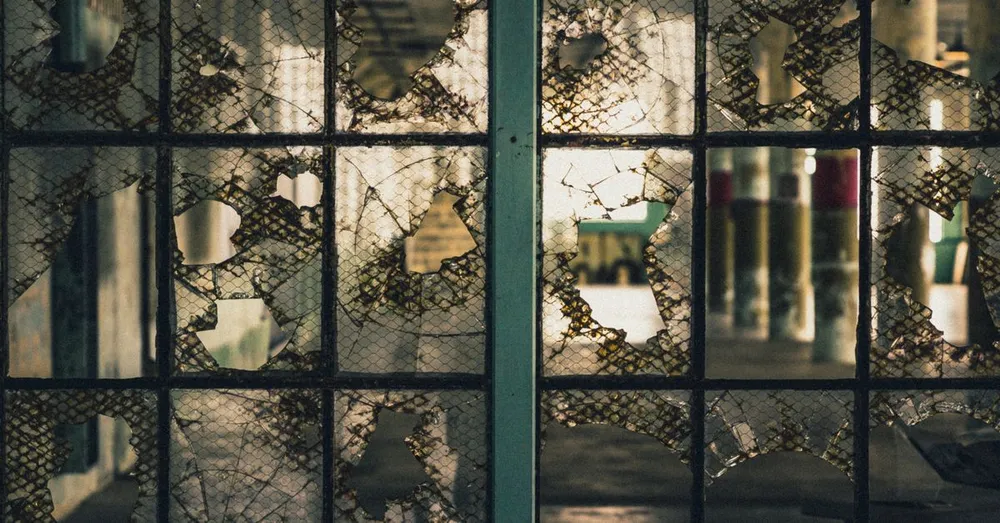
On site, what strikes you is the absence of staging: the buildings decay naturally, strangler figs swallow the walls of the Réclusion, and the silence does the rest. Allow a good half-day to walk both islands with the respect the place demands. A few information boards line the route, but I strongly recommend a guide or some solid reading beforehand: without context, you miss the essentials.
How to get to the Îles du Salut from Kourou
The gateway is Kourou, roughly 60 km and a 1-hour drive from Cayenne and Félix-Éboué airport (Matoury). In French Guiana, a car is essential: plan a vehicle to reach the Space Centre embarkation point / marina.
The catamaran crossing
Several maritime shuttles run the connection. Here are the realistic ballpark figures:
- Crossing time: 1h to 1h15 depending on the vessel and sea conditions.
- Round-trip fare: around €55 to €70 per adult for the day, often a little more if lunch is included.
- Departure: usually around 8am, returning in the late afternoon (4pm–5pm).
- Booking: essential, especially in the dry season and during school holidays. Spots fill up fast.
A local’s tip: the sea can be choppy between the mainland and the archipelago. If you’re prone to seasickness, take a tablet before boarding and settle in at the back, out in the open air.
When to go: aim for the dry season
The best period for French Guiana runs from mid-July to mid-November, the dry season. That’s when the crossings are most stable and the trails the least muddy. In the rainy season, departures are sometimes cancelled due to swell: keep some slack in your schedule. Useful reminder: French Guiana is 5 hours behind Paris in winter and 6 hours behind in summer, handy to know when scheduling your calls before you leave.
Spending the night on Île Royale: the real experience
This is my number-one piece of advice. During the day, Île Royale fills with visitors; but once the last catamaran heads back, the archipelago changes character. The sunset over Île du Diable, the fruit bats at dusk, the starry sky free of light pollution: it’s another journey entirely.
The Auberge des Îles du Salut, set in the former wardens’ house, offers rooms and carbets for hammocks. A few reference points:
- Double room: around €90 to €130 per night depending on comfort.
- Hammock under a carbet: much more affordable, bring your mosquito net or rent one on site.
- Dining: a single restaurant on the island, half-board recommended as there are no shops.
Remember to bring water, a headlamp, an effective insect repellent and cash: the connection and card payments are unreliable.
What to do once you’re there
- Walk the full loop of Île Royale (1h30), watching for agoutis, squirrel monkeys and macaws.
- Cross over to Île Saint-Joseph for the Réclusion and its pools.
- Swim in the convicts’ pool, a natural basin protected from sharks (swimming in the open sea is not advised).
- Observe Île du Diable from the semaphore.
- With a bit of luck, witness an Ariane 6 or Vega launch from the sea: the islands offer a spectacular vantage point on launch evenings.
Fitting the Îles du Salut into a French Guiana trip
The archipelago is all the more enjoyable when it’s part of a wider circuit. From Kourou, you’re ideally placed to string together:
- The free visit to the Guiana Space Centre, to be booked in advance (ID required).
- A trip up to Saint-Laurent-du-Maroni (about a 2-hour drive) and its Camp de la Transportation, the perfect historical complement to the island penal colony.
- A nature outing in the Kaw marshes or a pirogue trip on the Maroni river.
- In season, watching the leatherback turtles at Awala-Yalimapo.
To plan it all, see our complete guide to French Guiana: transport, the yellow fever vaccine (mandatory), seasons and must-sees are all detailed there.
Our accommodation tip
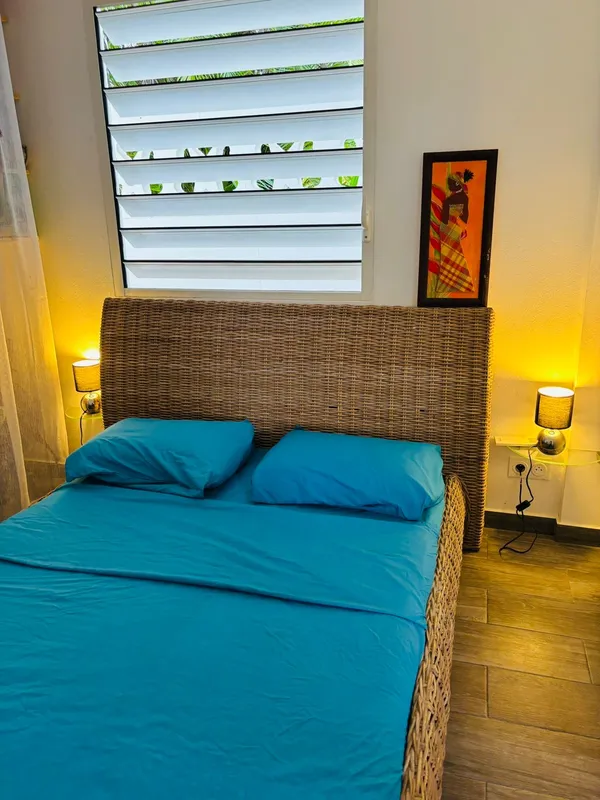
To roam serenely towards the islands, the Kaw marshes or the Maroni, it’s best to have a comfortable base on the Kourou or Cayenne side. At Hostel Toucan, we manage homes for accommodation in French Guiana designed for travellers who explore: strategic locations, parking for your car, and insider tips on the best crossing times.
Booking directly with us means:
- No platform fees: you pay the fair price, with no added commission.
- Free cancellation up to 7 days before arrival, ideal when a crossing depends on the weather.
- WhatsApp assistance 7 days a week, to adjust your programme if the sea picks up or an Ariane launch shifts your plans.
Do you own a property in Kourou, Remire-Montjoly or Cayenne and want to make the most of it with these travellers? Discover our concierge offer for owners.
In short: a getaway not to be missed
The Îles du Salut, in French Guiana, are neither a postcard nor an open-air museum. They are a place of intense memory paired with a natural sanctuary, an hour by catamaran from Kourou. Leave early, aim for the dry season, and if you can, treat yourself to a night on Île Royale: it’s there, when the silence settles back in, that the archipelago truly reveals its story.
FAQ
How long do you need to visit the Îles du Salut?
A day lets you discover Île Royale and pop over to Île Saint-Joseph. But to really feel the atmosphere of the place and enjoy the sunset over Île du Diable, a night at the inn on Île Royale is strongly recommended.
How do you get to the Îles du Salut from Kourou?
Catamaran shuttles leave from the port of Kourou, usually around 8am, for a crossing of about 1h to 1h15. Count on €55 to €70 round trip per adult. Booking is essential, especially in the dry season.
Can you visit Île du Diable, where Dreyfus was held?
No, Île du Diable (Devil’s Island) is off-limits to the public because of very dangerous sea currents. You observe it from a distance from the northern tip of Île Royale, near the semaphore.
What’s the best time to go to the Îles du Salut?
From mid-July to mid-November, during French Guiana’s dry season. The crossings are more stable and the trails less muddy. In the rainy season, some shuttles are cancelled because of the swell.