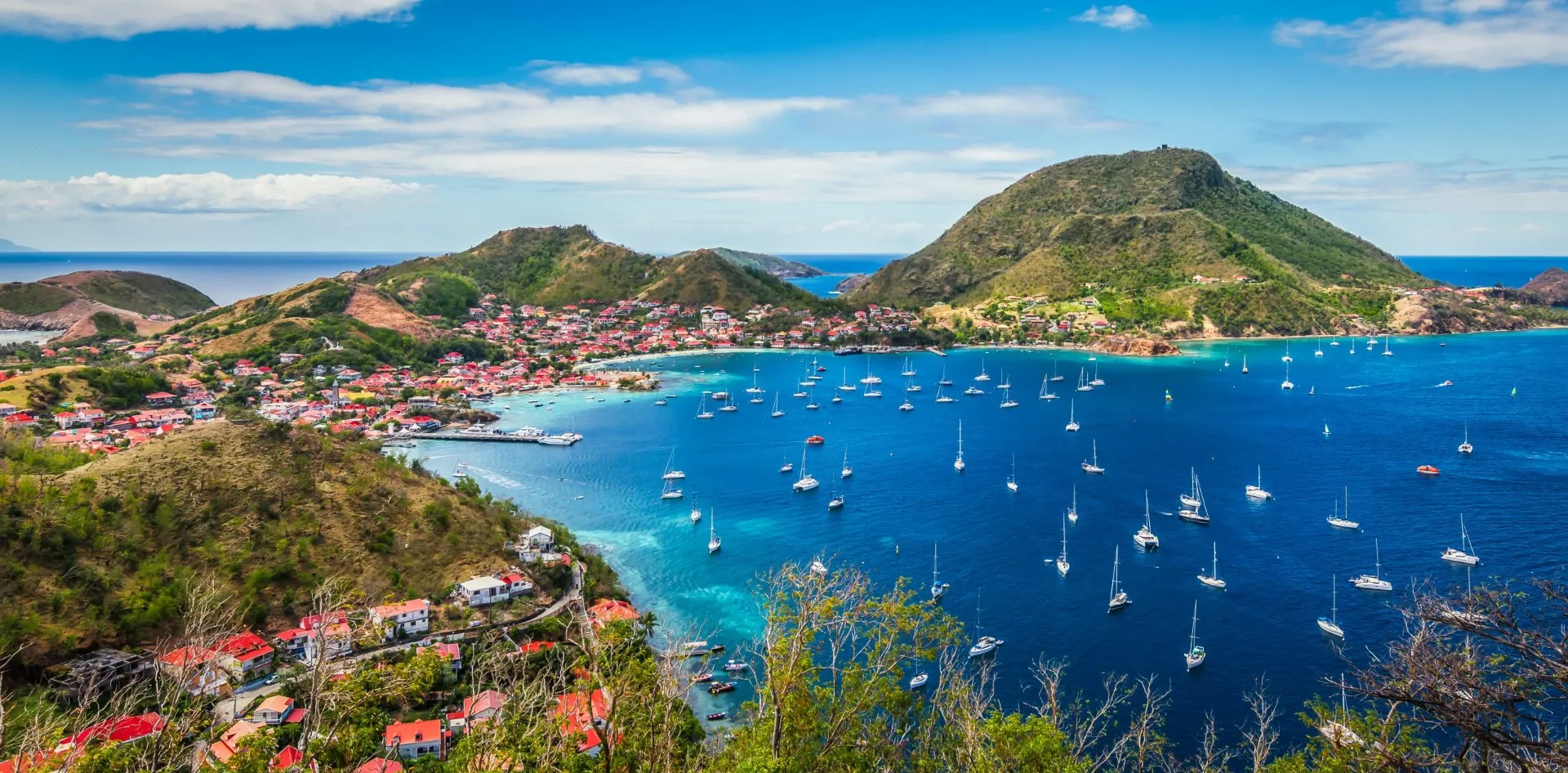
Renting out a vacation property in Guadeloupe means facing risks you simply won’t encounter on the mainland: corroding salt, constant humidity, and above all a hurricane season that runs from June to November. Every year, between June and November, you watch the Meteo France Guadeloupe bulletins the way a captain watches the barometer. After several years managing villas and apartments between Sainte-Anne, Le Gosier and Deshaies, the lesson from the field is clear-cut: a poorly calibrated vacation rental insurance policy in Guadeloupe is the claim that costs you three months of rental income. This guide reviews what genuinely protects an owner-landlord in a hurricane zone: non-occupant cover, hurricane and loss-of-income guarantees, the digital deposit, the inventory check, and managing guest cancellations.
Whether you’re just starting out or taking over a policy inherited from the previous owner, the goal is simple: never discover an exclusion the day the roof blows off.
Why insuring a vacation rental is different in Guadeloupe
In France’s overseas territories, climate risk is not a secondary clause: it’s the heart of the contract. Guadeloupe, a butterfly-shaped archipelago split between Grande-Terre and Basse-Terre, endures steady trade winds, hurricane swells and intense rainfall on the windward coast. A beachfront property in Saint-Francois or Le Moule cannot be insured the same way as a sheltered studio inland.
Three specific factors change everything:
- Salt corrosion. Within 200 metres of the shore, air conditioners, locks and metal furniture age two to three times faster. Some insurers exclude accelerated wear: check it line by line.
- Hurricane risk. The statistical peak falls in August-September. A purple-alert event triggers roof damage, flooding and prolonged power cuts.
- Remoteness and assessment delays. After a major event, loss adjusters are overwhelmed and a roofing contractor may be tied up for several weeks before reaching your site.
For all these reasons, a mainland policy carried over as-is often proves inadequate. Before we go further, our complete guide to Guadeloupe details the geography of risk by town.
Hurricane season: a risk to quantify, not to dread
The hurricane season officially runs from 1 June to 30 November, with a statistical peak in August and September, when the warmest seawater fuels the tropical systems coming off the Atlantic. Most seasons pass without a major direct impact, but when a hurricane strikes the archipelago, the damage is swift and costly.
A few useful benchmarks for an owner:
- The calendar. December to April (the dry season, known locally as the careme) remains the high season, dry and the most profitable; the rainy season concentrates the climate risk.
- The alert system. Meteo France grades warnings from yellow to purple (total lockdown); the shift to orange then red triggers the closure of Pole Caraibes airport and a travel ban.
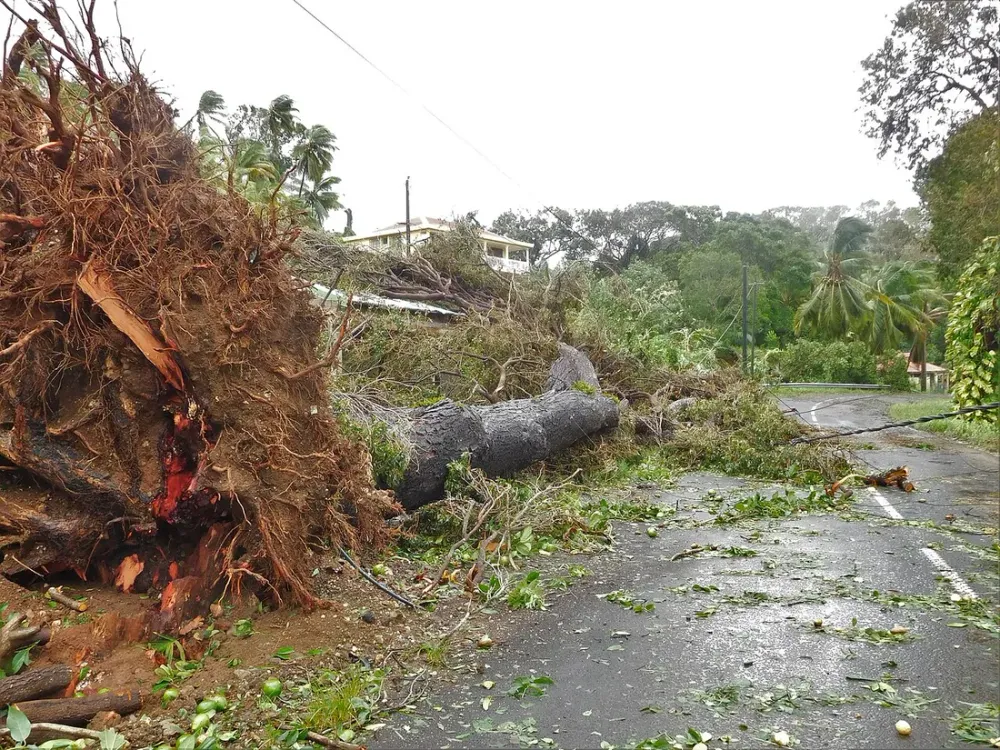
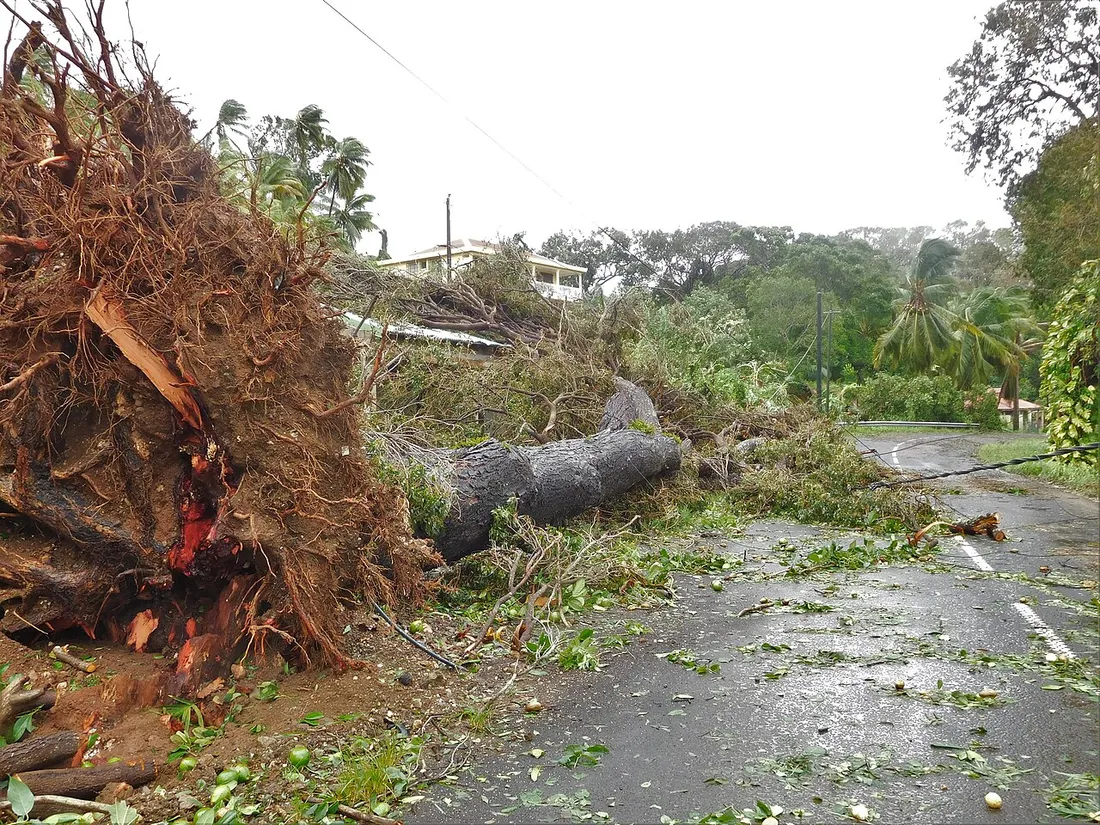
- Typical damage. Roofs torn off by gusts often exceeding 150 km/h, flooding from runoff on the windward coast and in Basse-Terre, water and power cuts lasting several days, vegetation hurled against the bay windows.
Non-occupant cover in Guadeloupe: the non-negotiable foundation
Non-occupant landlord insurance (PNO) is the bedrock on which everything else is built. It covers your property even when no guest is present and the traveller’s own insurance doesn’t apply. In vacation rentals, where homes sit empty between stays (a frequent situation in the rainy season), it’s indispensable.
A good non-occupant policy in Guadeloupe should include:
- the owner’s public liability (a tile falling on a passer-by, for instance);
- damage to property: fire, water damage, broken glass;
- recourse against tenants and neighbours;
- legal-defence cover in the event of a dispute.
On the budget side, expect generally between 180 and 650 euros a year for a vacation rental with climate guarantees, depending on floor area, the value of the furnishings and the distance to the shore. A 45 m2 one-bedroom in Sainte-Anne often runs around 250 to 320 euros a year. A 120 m2 villa with a pool in Deshaies or Le Gosier easily tops 600 euros. Above all, check that short-term rental is explicitly mentioned: a standard non-occupant policy may exclude the frequent turnover of guests.
What non-occupant cover doesn’t always include
Beware of false assumptions. Basic non-occupant cover often leaves out:
- loss of rental income following a claim (an extension to take out separately, see below);
- high-value contents (premium appliances, electronics) beyond a ceiling;
- damage tied to obvious lack of maintenance, a classic by the sea.
Hurricane and flood cover: the heart of the matter
This is where the real differences between policies play out. Hurricane insurance worthy of the name rests on two complementary tiers, which must be clearly distinguished.
Storm cover: what kicks in without waiting for a decree
This is the centrepiece, and yet the most overlooked. Storm-hail-snow cover (TGN), distinct from the natural-disaster scheme, covers damage from violent winds without any prefectoral decree being required. In Guadeloupe, it’s most often this cover that compensates roofs after a hurricane-force gust. Two points to check line by line:
- The wind trigger threshold. Some policies only activate the cover above a high threshold; in a hurricane zone, insist on a low threshold, otherwise destructive but “insufficient” gusts won’t be covered.
- The inclusion of outdoor structures: carbet (open shelter), pergola, garden furniture, pool house, often excluded by default.
The natural-disaster scheme: essential but conditional
Natural-disaster cover is attached to any property-damage policy. It covers flooding and runoff (frequent on the windward coast and in Basse-Terre during heavy rainy-season downpours) as well as ground movement, but it only kicks in after an interministerial decree recognises the state of natural disaster in your town, which can take several weeks. Bear in mind too:
- a statutory excess of around 380 euros for the dwelling, non-buyable, increased if the property is in a town without an approved risk-prevention plan;
- systematically keeping photos, videos and invoices from the moment of the claim, and following the prefecture’s announcements.
My field advice: photograph and date the condition of the roof, gutters and hurricane shutters before each hurricane season. In the event of a claim, this file speeds up compensation and cuts short any suspicion of poor maintenance.
Loss-of-income cover for the overseas territories: the guarantee that saves the season
Here is the heart of the matter, far too often neglected. After a hurricane, your property may be structurally intact yet uninhabitable for several weeks: no electricity, a roof awaiting a contractor, air conditioners out of service. Meanwhile, the rent stops coming in. Loss-of-income cover (or loss of rental revenue) compensates precisely for this loss following a covered claim. In Guadeloupe, its value is multiplied by remoteness: after a major event, a ten-day job on the mainland stretches here to six or eight weeks, the time it takes for roofers to free up and materials to arrive.
My rules for calibrating it well:
- Compensation based on actual income, not a flat rate, drawn from your night-stay records from previous seasons.
- A compensation period of at least six months: some policies stop at three, insufficient overseas. A September claim that leaves the property unusable until December directly eats into the careme, the most profitable period.
For a property generating 1,500 to 2,500 euros of rent per month in season, the extension costs 80 to 250 euros a year: one of the best lines in your budget.
The short-term rental deposit: complementary protection
Insurance covers the structural work and major claims. For everyday matters (broken crockery, a stain on a sofa, damaged equipment), it’s the short-term rental deposit that takes over. And it’s a sensitive subject: too low, it covers nothing; poorly managed, it generates disputes and drags down your reviews.
The ranges I apply in Guadeloupe:
- standard studio or one-bedroom: 300 to 500 euros;
- family villa with equipment: 800 to 1,500 euros;
- high-end property with pool and home automation: 1,500 to 3,000 euros.
The digital deposit, the modern solution
Cashing then returning a cheque or a transfer is cumbersome and a source of friction. The digital deposit (a bank pre-authorisation or card hold via a specialised provider) changes everything:
- no actual charge unless there’s damage;
- automatic release after the check-out inventory;
- complete traceability in case of dispute.
The guest doesn’t have the money frozen on their account, and you keep a guarantee you can call on within 48 hours if needed. It has become the standard we offer owners, precisely to avoid end-of-stay tensions. Discover how we handle this in our owners offer.