Good news before you finish packing: for most travellers coming from mainland France, the question of a mobile plan in Guadeloupe is settled in thirty seconds. Guadeloupe is a French overseas department (DROM), and nearly all mainland plans work here at no extra cost — calls, texts, and data included. But between the dead zones of Basse-Terre, the hidden data caps on certain low-cost offers, and the uneven quality of Wi-Fi in holiday rentals, a few checks are worth making. Here’s what we most often tell our guests on WhatsApp, distilled into one guide.
Mobile plan in Guadeloupe: your mainland plan is (almost always) enough
Overseas departments are treated like mainland France by most French plans. In practice:
- Orange, SFR, Bouygues, Free: unlimited calls, texts, and MMS to and from Guadeloupe, just like in Paris. The local dialling code is +590, but you dial French numbers normally.
- Data: most plans include your data allowance in the overseas departments. Beware, though — some entry-level plans (the €2 or €5/month tiers, low-cost brands like Sosh, B&You, RED) cap overseas data at 10, 15, or 25 GB, even when you get 100 GB on the mainland.
- Free Mobile: the €19.99/month plan generally includes 35 GB usable in Guadeloupe; beyond that, the speed is throttled.
The smart move: before you leave, log into your account and look for the “usage in overseas departments” line in your plan’s details. Two minutes that spare you a €50 surprise bill when you get home.
And if you’re coming from Belgium, Switzerland, Canada, or elsewhere?
Because Guadeloupe is part of the European Union, plans from EU countries benefit from European roaming: data and calls counted as they are at home, within a reasonable usage cap (often 15 to 30 GB). For Swiss, Canadian, or American travellers, roaming can cost €10 to €15 a day as a pass: a local SIM or eSIM becomes worthwhile, more on that below.
Network coverage in Guadeloupe: 4G almost everywhere, 5G on the rise
The Guadeloupe network is generally excellent: the four operators present (Orange Caraïbe, SFR Caraïbe, Digicel, and Free Caraïbe) cover more than 95% of the population in 4G. But the ground tells a different story depending on which wing of the butterfly you’re staying in.
Grande-Terre: very good coverage
On the limestone, beach-resort wing — Le Gosier, Sainte-Anne, Saint-François, Le Moule, Pointe-à-Pitre — you’ll pick up 4G+ almost everywhere, beaches included. The Caravelle beach in Sainte-Anne and the marina in Saint-François offer speeds of 50 to 150 Mbps, more than enough for a video call. 5G has been rolling out since 2023–2024 around Pointe-à-Pitre, Les Abymes, and Le Gosier: you’ll mostly catch it in urban areas. At Pointe des Châteaux, on the far east, the signal stays decent but can flicker between 4G and 3G depending on the operator.
Basse-Terre: stunning nature, temperamental network
This is where things get tricky — and where our guests write to us most. The volcanic wing, home to La Soufrière (1,467 m), the National Park’s rainforest, and the Carbet Falls, has genuine dead zones:
- The Route de la Traversée (D23): long stretches with no signal at all between Petit-Bourg and Pointe-Noire. Download your route offline before setting off.
- The National Park trails: Carbet Falls (45 min to 2 hr of walking depending on the fall), the La Soufrière trail — coverage is nil or intermittent. Tell someone your route; that’s the basic rule local hikers follow.
- The leeward coast: Bouillante and Malendure (departure point for the Cousteau Reserve and the Pigeon Islets) get a decent signal roadside, but it drops the moment you climb into the heights. At Deshaies and on Grande Anse beach, 4G works well in the village, less so in villas isolated on the hillsides.
The islands: Les Saintes, Marie-Galante, La Désirade
Terre-de-Haut (Les Saintes) and the villages of Marie-Galante have 4G coverage; speeds dip in high season when the ferries pour out their visitors. At Petite-Terre, a nature reserve reachable on a day trip (€60–70 from Saint-François), don’t expect much: enjoy the iguanas instead.
Tourist SIM in Guadeloupe: who really needs one?
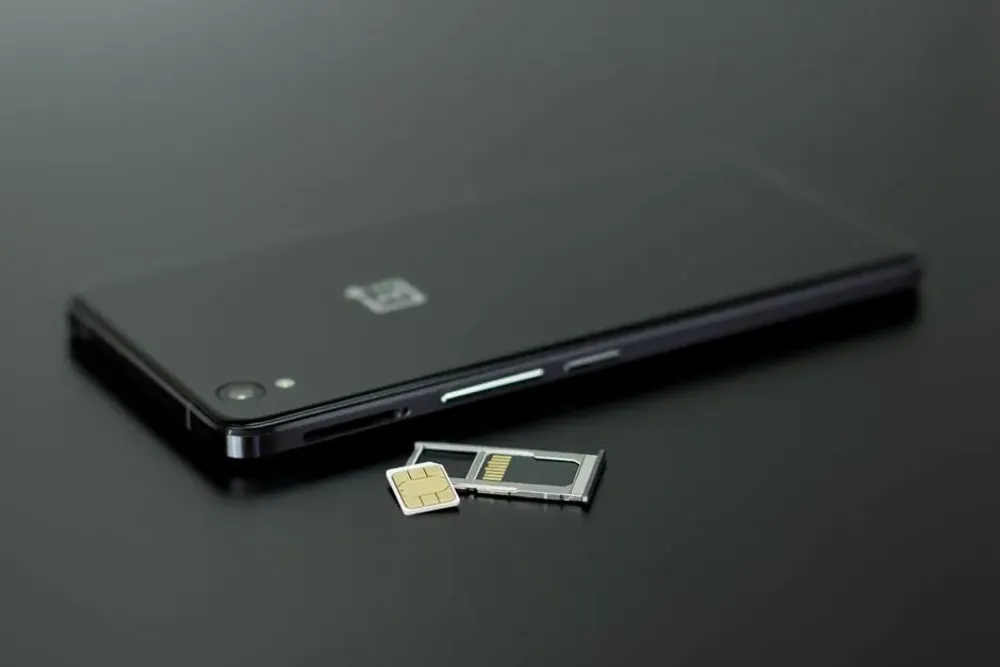
If you have a recent French or European plan, the answer is simple: nobody. For everyone else, a tourist SIM in Guadeloupe is easy to pick up:
- Prepaid Orange Caraïbe or Digicel SIM: available at Pôle Caraïbes airport (Pointe-à-Pitre), in shopping-centre shops (Destreland, Milénis), and at many tobacconists. Reckon on €10 to €20 for 10 to 30 GB valid for 30 days.
- Travel eSIM (Airalo, Holafly, Ubigi): activated before you even land, around €15–35 for 10–20 GB / 30 days. Classic trap: some “France” plans exclude the Caribbean. Look explicitly for “Guadeloupe” or “Caribbean” in the coverage.
- Stays of more than a month (remote work, wintering): a local no-commitment plan with Orange Caraïbe or Free Caraïbe (€10–20/month) remains the most economical.