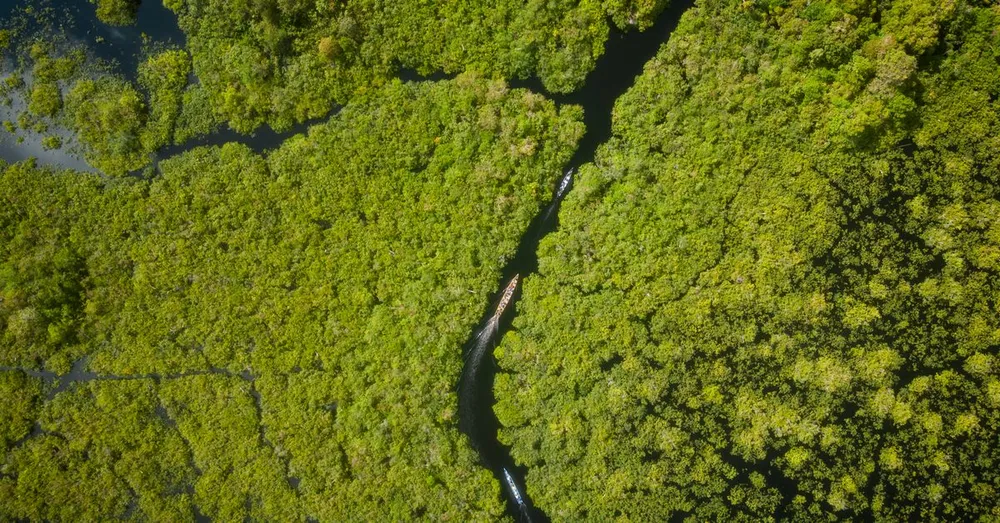
French Guiana is a French overseas department (DROM): you pay in euros, bank cards work and ATMs exist. On paper, nothing changes compared with mainland France. On the ground, the moment you leave the Cayenne–Kourou coastline, the situation shifts dramatically. After guiding hundreds of travellers out of Cayenne, here is our verdict: the question of how to pay in French Guiana is not a logistical detail, it is what separates a smooth road trip from a day wasted hunting for an ATM that simply isn’t there.
Why a bank card isn’t enough in French Guiana
French Guiana covers a territory the size of Portugal for around 290,000 inhabitants, 90% of whom are concentrated on a thin coastal strip. Banking coverage follows the same logic: everything is clustered along the Cayenne – Rémire-Montjoly – Matoury – Macouria – Kourou axis. As soon as you head inland or follow the border rivers, the ATMs can be counted on one hand.
Three realities to take on board before you set off:
- The mobile network is temperamental. Without stable 4G, card payment terminals stop working. Many inland businesses simply don’t have a terminal at all.
- Contactless is not universal. The small carbets, grilled-fish stalls along the riverbanks and markets only take cash.
- On weekends and public holidays, the ATMs in small towns empty out fast and aren’t always refilled before Monday.
Our rule, passed on to every traveller: withdraw cash while you’re still on the coast, never after. Think of Cayenne, Kourou and Saint-Laurent-du-Maroni as your only three real cash filling stations.
How much cash should you plan for?
For a couple on a 4- to 5-day road trip away from the coast, we recommend setting off with €250 to €400 in cash, in varied denominations (many small businesses won’t give change for a €50 note). Expect typical cash spending such as:
- A meal in a carbet or by the river: €12 to €20 per person
- A dugout-canoe crossing on the Maroni: €15 to €40 depending on distance
- A night in a hammock with mosquito net in a carbet: €15 to €25
- A tank of fuel at a bush station: often cash only, plan for €60 to €80
- Amerindian or Bushinenge crafts, roadside fruit: a few euros, always in cash
Map of the last ATMs before the Maroni and the Oyapock
This is the heart of the guide. Here, by direction, are the last points where you can withdraw before ending up in a zone with no reliable ATM.
Heading West: towards Saint-Laurent and the Maroni
The RN1 links Cayenne to Saint-Laurent-du-Maroni, around 250 km and 3 to 3.5 hours of driving.
- Kourou (~60 km from Cayenne): the last major banking hub before a long stretch. Several ATMs, stock up here.
- Sinnamary and Iracoubo: small towns along the way, one or two ATMs each, but don’t count on them on a weekend. Emergency use only.
- Saint-Laurent-du-Maroni: this is your last real withdrawal point before the border. Several banks and ATMs around the centre and the Camp de la Transportation. Beyond that, towards Apatou, Maripasoula or the river villages, assume there’s nothing left. In Maripasoula, reachable mainly by canoe or plane, cash is king and ATMs are rare and often empty.
- Awala-Yalimapo (the leatherback turtles, ~50 km from Saint-Laurent): no reliable ATM. Withdraw in Saint-Laurent before heading up to watch the night-time nesting.
Heading East: towards the Oyapock and Brazil
The Cayenne – Saint-Georges-de-l’Oyapock route runs around 190 km, about 2.5 to 3 hours through the forest.
- Régina: a halfway stop with very limited banking facilities. Don’t bet on it.
- Saint-Georges-de-l’Oyapock: the border crossing with Brazil. There are one or two ATMs, but they are regularly out of service or out of cash, and the area runs largely on Brazilian reais on the Oiapoque side. Withdraw generously before leaving, from Cayenne or Roura.
Heading South and the Kaw marshes
- Roura: the last town with a few facilities before the descent towards the Kaw marshes and the southern tracks. Beyond that, towards Kaw village or Cacao (the Hmong community and its Sunday market), plan for everything in cash. The Cacao market, famous for its pho soup and crafts, runs almost exclusively on cash.
Cash, cards, cheques: where to use what in French Guiana
To make things clear, here is the concrete breakdown by location.
Where cards work without a hitch
- Supermarkets and hypermarkets in Cayenne, Matoury, Rémire-Montjoly, Macouria and Kourou
- Petrol stations along the coastal axis
- Restaurants and hotels in the capital
- Car rental at Félix-Éboué airport (Matoury) — a car is essential in French Guiana, and the rental is of course paid by card
Where cash is mandatory
- The Cayenne market (market square, in the morning) for spices, fish and awara
- The carbets and tables along the Maroni and the Oyapock
- Canoe excursions and certain independent guides
- The markets of Cacao and the inland villages
- Small producers, crafts, fruit sold by the roadside
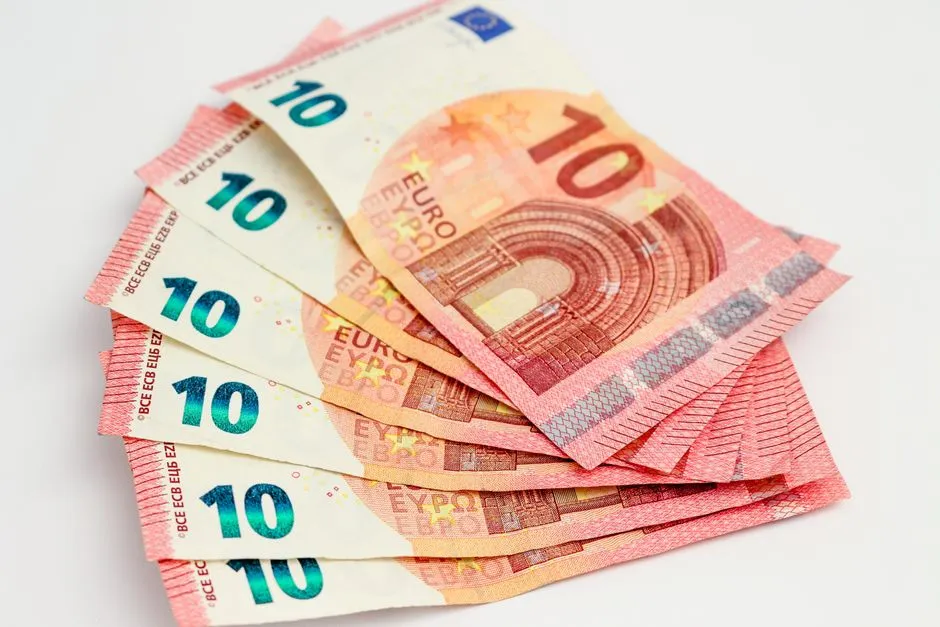
A word on cheques: they still circulate in certain administrations and among a few local providers, but never count on them as a traveller. The cash + card combo covers 100% of situations.
Our local tips so you never run dry
A few reflexes we repeat on every arrival:
- Withdraw right at the airport or on arriving in Cayenne. You’ll easily find ATMs there; it’s your base camp.
- Warn your bank before the trip. Some cards block an overseas withdrawal out of excessive anti-fraud caution. Since French Guiana is in the euro zone, there are in principle no exchange fees or withdrawal commissions as there would be abroad — a real advantage.
- Keep your cash split up: some on you, some at your accommodation. French Guiana is generally calm, but caution is still advisable in Cayenne and Saint-Laurent at night.
- Plan around the season. The best period runs from mid-July to mid-November (dry season): the tracks are passable and excursions more plentiful, so your cash needs go up.
- Photograph the location of the ATMs you pass on the coast: it’ll save you detours later.
- Mind the time difference when reaching your bank in mainland France: -5h in winter, -6h in summer relative to Paris (dialling code +594).
The role of your host
A good local host is your best insurance against trouble. At Hostel Toucan, we tell every traveller, depending on their itinerary, where the last reliable ATMs are and how much cash to plan before heading off towards the Maroni, the Oyapock or the Kaw marshes. This is exactly the kind of detail that transforms a stay.
By booking directly with Hostel Toucan, you avoid platform fees, enjoy free cancellation up to 7 days before arrival, and above all WhatsApp assistance 7 days a week: one message is enough to find out whether a given ATM in Saint-Laurent is working that weekend. Discover our accommodation in French Guiana and plan your itinerary with our complete guide to French Guiana.
Do you own a property on the coast and want to offer it to travellers? Our concierge service takes care of everything: see the owners page.
In summary
Paying in French Guiana is simple on the coast, demanding elsewhere. Remember the essentials: card on the coastline, cash the moment you leave it, and three cash-resupply points you should never pass without filling up — Kourou heading west and south, Saint-Laurent before the Maroni, Cayenne or Roura before the Oyapock. With €250 to €400 in cash in varied denominations and a local host at the end of the line, you’ll explore the river, the leatherback turtles and the Cacao market with a completely free mind. And don’t forget your yellow fever vaccine, mandatory to enter the territory.
FAQ
Do bank cards work everywhere in French Guiana?
No. Cards work without a problem along the coastal axis (Cayenne, Rémire-Montjoly, Matoury, Macouria, Kourou) in supermarkets, petrol stations, hotels and restaurants. But as soon as you leave the coast for the interior or the border rivers, many businesses, carbets and guides only accept cash. Always carry cash away from the coast.
Where can you withdraw money before heading towards the Maroni or the Oyapock?
Heading west and the Maroni, Saint-Laurent-du-Maroni is your last reliable withdrawal point: beyond it (Apatou, Maripasoula, river villages), there are almost no ATMs left. Heading east and the Oyapock, withdraw in Cayenne or Roura before leaving, because the ATMs in Saint-Georges are often out of service or empty. Kourou is also a good resupply point.
How much cash should you plan for a road trip in French Guiana?
For a 4- to 5-day stay away from the coast, plan for €250 to €400 in cash, in varied denominations, as small businesses rarely give change for a €50 note. This covers meals in a carbet (€12 to €20), canoe crossings (€15 to €40), bush fuel stops and local crafts.
Are there withdrawal or exchange fees in French Guiana?
No. French Guiana is a French overseas department in the euro zone, so in principle there are no exchange fees or withdrawal commissions as there would be abroad. Still, remember to warn your bank before the trip, as some cards block an overseas withdrawal for security reasons.