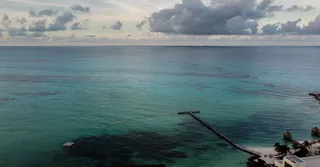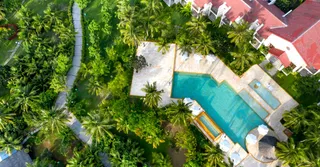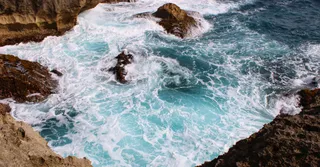
When people talk about rental property in Guadeloupe, everyone names the same towns: Sainte-Anne, Saint-François, Le Gosier, the turquoise beaches of Grande-Terre. Yet on the other wing of the butterfly, a town on the leeward coast draws a loyal clientele that the seaside resorts overlook. Investing in Bouillante in Guadeloupe means betting on niche demand: that of the divers of the Cousteau Reserve and the lovers of geothermal baths. Settled on the volcanic wing of the archipelago, we see this clientele come through all year long. Here’s why this market holds up and what it changes for an owner.
Bouillante, a town apart on the leeward coast
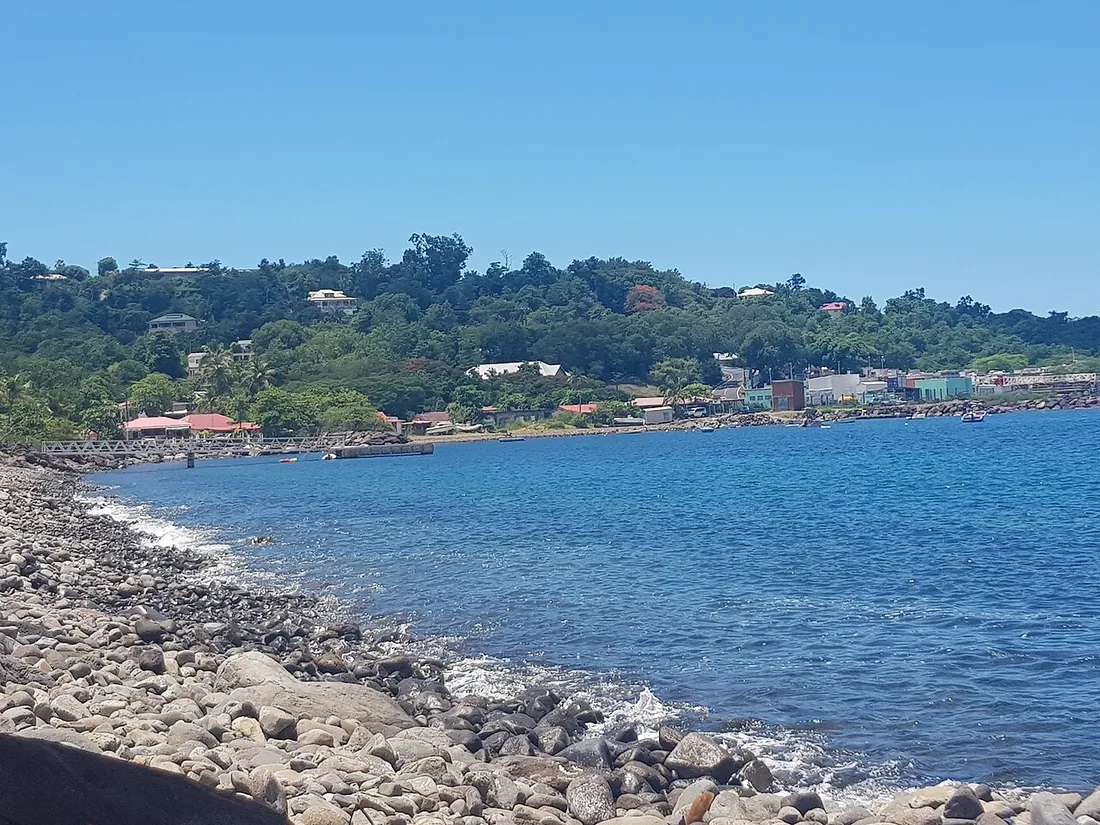
Guadeloupe is a butterfly-shaped archipelago. Grande-Terre, made of limestone, concentrates the lagoon beaches and the seaside life. Basse-Terre, volcanic, is dominated by La Soufrière (1,467 m) and protected by the National Park. Bouillante sits on the western face of this wing, the so-called leeward coast, about 1 hr 15 to 1 hr 30 by road from Pôle Caraïbes airport (Pointe-à-Pitre) depending on traffic. This position shapes a market radically different from the towns of Grande-Terre:
- No mass beach tourism. The sand here is volcanic, grey-black, not turquoise. You don’t come to Bouillante to sunbathe on a postcard.
- An activity clientele, not idleness. People book here to dive, watch cetaceans, bathe in a hot spring, or hike up to La Soufrière.
- A coast sheltered from the trade winds, hence a sea that’s navigable almost all year — a decisive asset for watersports. To place the town within the territory, our complete guide to Guadeloupe sets Bouillante back into its volcanic context.
Diving at Malendure: the prime driver of demand
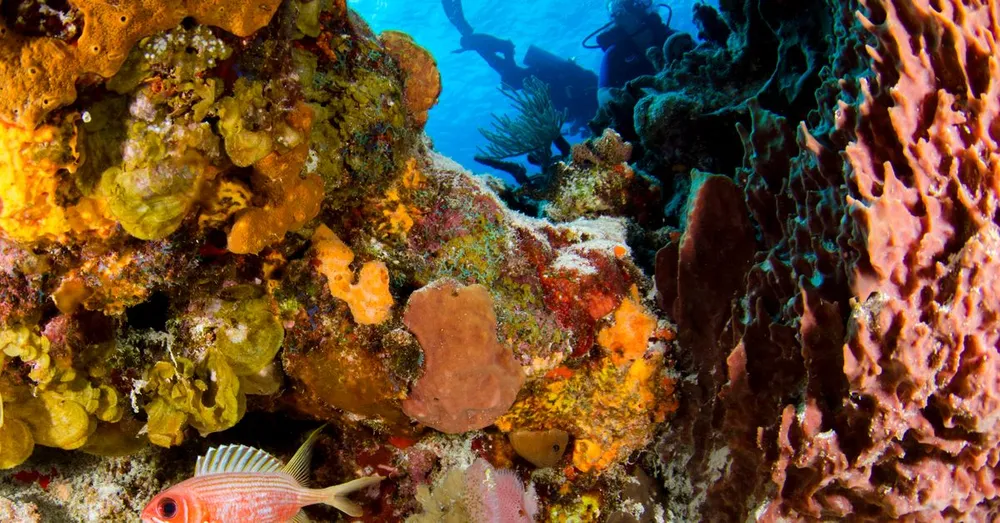
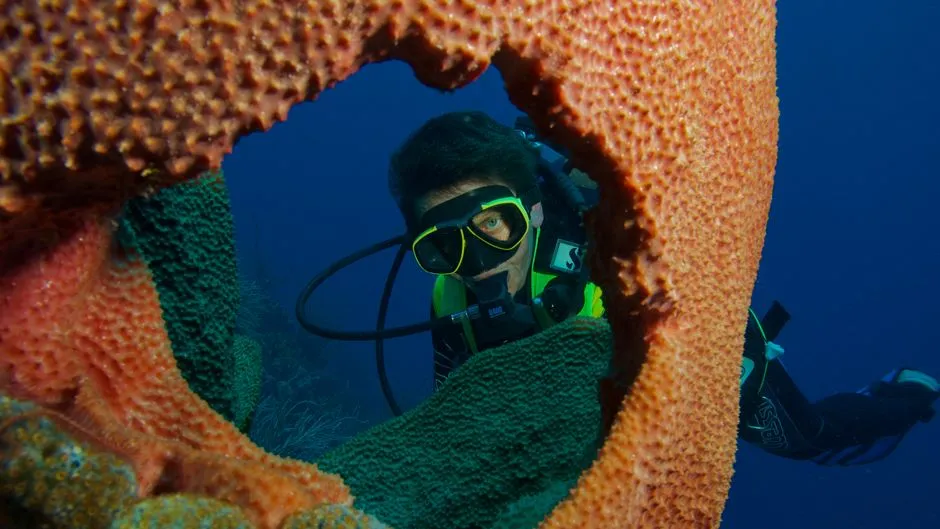
It’s impossible to talk about investing in Bouillante without starting with diving. Malendure beach, in the north of the town, is the departure base of the Cousteau Reserve: the Pigeon Islets, 800 metres offshore, in the marine heart of the National Park. Commander Cousteau filmed here in the 1950s, and the site remains a classic of the French Antilles.
For an owner, what matters is what that reputation generates in bookings. Renting near the diving at Malendure rests on concrete arguments: water at 27–29 °C all year, visibility often above 20 metres, around ten clubs on the beach, and prices among the most affordable in the Caribbean. 2026 ballpark figures:
- Try dive (from age 8): €55 to €65
- Exploration dive (certified diver, equipment included): €50 to €60
- 6-dive package: €270 to €300
- Level 1 / full Open Water certification: €380 to €450 over 3 to 5 days
A diver who books a six-dive package isn’t coming for two nights: they settle in for four to seven days. That’s the profile a host is after, because long stays cut down on turnovers, cleanings, and empty nights — and a place less than 20 minutes from Malendure, with a spot to rinse gear, ticks a box that Grande-Terre travellers never ask for.
Thermal springs and geothermal energy: the year-round argument
The second pillar of demand is hot water. Beneath the skin of Basse-Terre, La Soufrière heats groundwater that wells up on the mountainside and at the ocean’s edge. Bouillante (literally “boiling”) lives up to its name: the town even hosts a geothermal power plant that supplies part of the island with electricity — a unique case in France. For the traveller, this translates into free, wild geothermal baths:
- Le Bain du Curé, at Thomas beach, where a hot spring (38–40 °C) pours directly into the sea.
- The Dolan baths, on the edge of Vieux-Habitants, where hot water mingles with a forest river (30 to 39 °C), plus roadside resurgences known only to locals.
The strategic interest for an investor? This nature tourism in Basse-Terre doesn’t experience the brutal seasonality of the beach. You bathe in a hot spring in July just as in February; diving runs outside of swell episodes; hikers climb La Soufrière all year. Add to that, from January to March, humpback whale watching off Malendure. So many reasons to stay, spread across the year rather than concentrated into six winter weeks.
Seasonality and rent levels: what to expect
Let’s be honest: Bouillante doesn’t rack up the nightly rates of a seaside villa in Saint-François. The purchase price is more modest, the rents too, but demand is better distributed. On the seasonality front, in 2026:
- High season (December to April): the Guadeloupean carême, the dry season. Flat sea, maximum diving visibility, humpback whales offshore. Demand at its peak.
- Off-season (June to November): a relative trough, but diving, hot springs, and hiking maintain an activity that 100% beach towns never know. July–August stays buoyed by the holidays and the diaspora; May and November smooth out the transitions.
On nightly rates, for a well-furnished and well-managed property:
- Studio or one-bedroom near Malendure: €55 to €80/night in off-season, €80 to €130/night in high season.
- House or bungalow with sea view / garden: €110 to €180/night depending on capacity, with a premium on week-long diving stays.
- Annual occupancy rate for a well-managed property: 55 to 70%, the spread of nature activities offsetting the absence of a massive beach peak.
The decisive lever isn’t the postcard view but the proximity to Malendure and diving practicality: outdoor shower, drying space, parking.
Points to watch before investing in Bouillante
Targeting a niche is an asset, but it comes with precautions specific to the leeward coast:
- The tropical climate and salt. Humidity, sea spray, air conditioning, garden: maintaining a property in Basse-Terre easily runs to €2,000–4,000/year. The fight against salt corrosion is not optional.
- The distance to services. Bouillante is 1 hr 15–1 hr 30 from Pôle Caraïbes. Your travellers will need a rental car (€30 to €45/day); your listing must say so.
- Declaration obligations. Renting out a furnished property must be declared at the town hall; the rollout of the 13-character registration number is scheduled by the law of 19 November 2024. The procedure is free, but plan ahead.
- The cyclone season (June to November). Swell, heavy rains, flooding: provide for non-occupant landlord insurance with climate cover.
Our local take on the Bouillante market
After several seasons on the leeward coast, our conviction is simple: the niche is a strength. A diving and nature clientele is more loyal, stays longer, and accepts a non-beach location — provided the property is designed for them (wetsuit dryer, parking, targeted listing). That’s the model we champion at Hostel Toucan. Travellers book our properties directly through our catalogue of rentals in Guadeloupe, with no platform fees, free cancellation up to 7 days before arrival, and 7-day WhatsApp support — handy for booking the right dive club or finding out which geothermal pool is usable after the rains.
On the owner’s side, if you own or are considering a property on the leeward coast, our concierge service for owners takes over: listing, cleaning, tropical maintenance, and tourist tax, with an honest revenue estimate based on comparable properties in Bouillante.
FAQ
Is Bouillante a good town for investing in seasonal rentals?
Yes, provided you accept its niche logic. Bouillante doesn’t generate the nightly rates of a seaside villa in Grande-Terre, but it draws a loyal clientele of divers and nature lovers who stay longer. The purchase price is more accessible and the seasonal spread reduces dependence on the winter peak alone.
What type of property rents best in Bouillante?
A property near Malendure, designed for the diver: outdoor shower, space to rinse gear, parking, and a targeted listing. Studios and one-bedrooms within 20 minutes of the beach do well, as do small houses with a sea view for families of divers. The decisive argument is practicality and proximity to the spots, not the postcard view.
Which season works best for renting in Bouillante?
High season runs from December to April (the carême, dry season): flat sea, maximum diving visibility, and humpback whales offshore from January to March. But the appeal of Bouillante is its spread: hot springs, hiking up to La Soufrière, and diving also work in the off-season, outside of swell episodes. Over the year, a well-managed property reaches 55 to 70% occupancy.
Should you delegate the management of a property in Bouillante?
If you don’t live on site, it’s strongly advised. The distance to the airport, maintenance against salt and humidity, welcoming divers, and collecting the tourist tax all require a responsive local presence. A concierge service rooted in Guadeloupe like Hostel Toucan handles the whole thing and secures your net income, while offering travellers direct booking with 7-day WhatsApp support.