When people talk about rental property in Guadeloupe, everyone names Sainte-Anne, Saint-François or Le Gosier. The famous “Riviera” of southern Grande-Terre, with its turquoise lagoons and villas with pools. But after years of managing properties across the whole butterfly-shaped archipelago, we see a market investors still overlook: the Atlantic coast. And its natural hub is called Le Moule. Investing in Le Moule, Guadeloupe means betting on an authentic town, purchase prices markedly lower than on the Riviera, and a loyal niche clientele — surfers and travellers in search of the real thing. Here is our on-the-ground read, backed by real figures.
Le Moule, the Atlantic wing of Grande-Terre
A quick geography refresher to frame the stakes. Guadeloupe is a French overseas region made up of an archipelago shaped like a butterfly, home to roughly 380,000 people. Its Grande-Terre is the flat, limestone wing with pale-sand beaches. You land at Pôle Caraïbes airport, in Pointe-à-Pitre, the territory’s economic centre.
Le Moule sits on the Atlantic side, in the east of Grande-Terre, about 30 km from Pointe-à-Pitre (a 35- to 45-minute drive via the N5) and some twenty minutes from Saint-François. Once Guadeloupe’s capital in the 18th century, it is today a lively town of around 22,000 inhabitants, with its centre, its university (a satellite of the Fouillole campus), its market and its urban beach at L’Autre Bord.
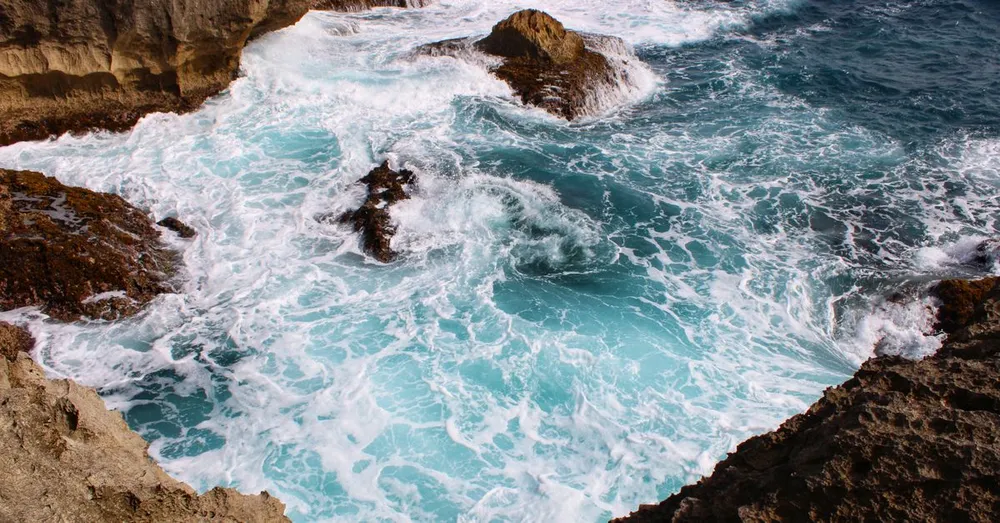
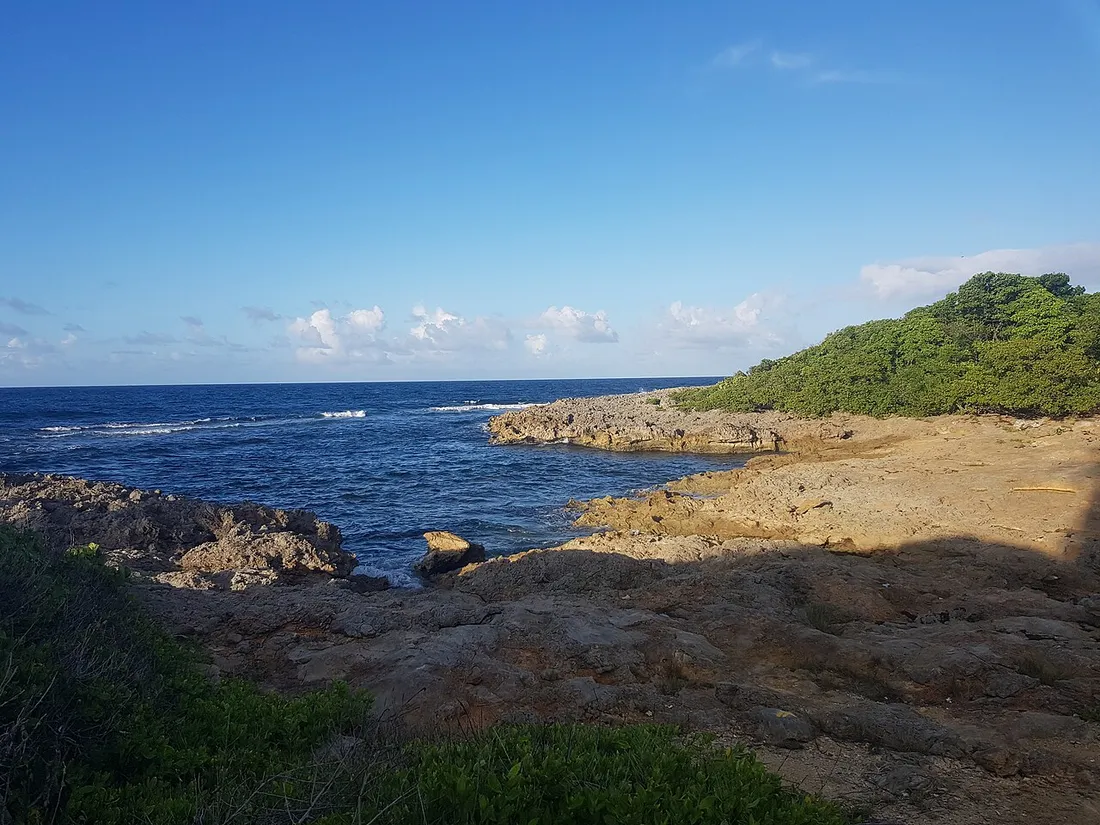
What sets it apart is its exposure to the swell and the trade winds. Where the south offers sheltered, glassy lagoons, Le Moule takes the Atlantic waves head-on. The direct consequence for tourism: fewer hotel complexes, more authenticity, and a different clientele.
Why the Atlantic coast remains underrated
On the southern Riviera, the market is mature — and therefore expensive. A 3-bedroom villa with a pool in Sainte-Anne or Saint-François commonly sells for €450,000 to €750,000. In Le Moule, for a comparable product, you generally stay in a €220,000 to €400,000 range. The gap is huge, and that is precisely the appeal.
A few benchmarks observed on the ground in 2026:
- Price per m²: €2,000 to €2,900/m² in Le Moule, versus €3,500 to €5,000/m² on the southern coast of Grande-Terre.
- Creole house to renovate in the town centre or the outlying sections (Guénette, L’Autre Bord, Sainte-Marguerite): from €140,000 to €230,000.
- Building plot: €60 to €130/m² depending on the view and proximity to the sea, where the south often exceeds €200/m².
Why this discount? First, perception: the Atlantic coast suffers from a reputation for “rough seas” and sargassum. That is partly true — the windward side is the most affected, as we detail in our complete guide to Guadeloupe. But the phenomenon is seasonal and localised, and the beach at L’Autre Bord is cleaned regularly. Then there is the relative distance from the great postcard beaches of the south. For a clear-eyed investor, these “drawbacks” are precisely what keeps prices low and rental competition thin.
A niche clientele: surf and authenticity
This is the heart of the angle. Le Moule does not rent to the same clientele as Sainte-Anne, and that is a strength. Short-term rental in Le Moule targets three clearly identified profiles:
- Surfers and bodyboarders. From December to April, the North Atlantic winter swells fire up the east-coast spots. The L’Autre Bord beach break is one of the best known in Guadeloupe. This “Airbnb surf Guadeloupe” clientele books early, stays long (1 to 3 weeks), and comes back. A home ten minutes from the spot, with an outdoor shower and a board store, stands out instantly.
- Travellers seeking authenticity. Couples and remote workers fleeing saturated seaside zones, wanting to live at the Creole pace, do their market shopping, dine in the lolos.
- The “business and family” clientele. University, events, visits to relatives of residents: year-round demand that secures the shoulder seasons.
In the high dry season (December to April), a well-equipped 2-3 bedroom house rents for €120 to €200 a night in Le Moule, versus €80 to €130 in the low season. That is less than the €250-400 of a Riviera villa, but the purchase entry ticket is half as high: this is where the Atlantic coast’s yield is decided.
The profitability calculation that changes everything
Let the numbers speak through a concrete, realistic case. Take a renovated 3-bedroom Creole house, bought for €240,000 all-in in Le Moule, rented as a tourist furnished property.
- Average nightly rate smoothed over the year: €130 a night.
- Occupancy rate of a well-managed, well-photographed property: 55 to 65%, i.e. 200 to 235 nights.
- Annual gross revenue: €26,000 to €30,000.
- Gross yield: 11 to 12%.
For comparison, the same logic applied to a Saint-François villa at €600,000 that takes in €50,000 in revenue gives a gross yield of around 8%. Le Moule clearly wins, because the entry cost weighs far more than the difference in nightly rate. This is the classic lever of an emerging market: you buy the same revenue-generating capacity for less.
A word of caution, though: an attractive gross yield is not everything. Three line items you should never underestimate:
- Tropical and marine upkeep. The salt and spray of the Atlantic side wear out joinery, ironwork and appliances faster than inland. Budget €3,000 to €5,000/year.
- Sargassum management. Having a local contact who monitors the strandings and adapts communication with travellers is a real safety net.
- Seasonality. The peak is sharp in the dry season. The low season (June to November) does fill up, but at reduced rates: you need a dynamic pricing strategy.
Tax and paperwork: what to anticipate
Le Moule being a French town like any other, the framework is standard: LMNP status, micro-BIC or actual-expenses regime, and a 30% tax abatement for taxpayers resident in the overseas departments. Classification as a tourist furnished rental (the star rating) doubles the micro-BIC allowance and remains strongly recommended.
On the formalities side, declaration at the town hall is mandatory before the first booking. Le Moule currently operates via the Cerfa form no. 14004, with a 13-character registration number set to become general across all towns by the end of 2026 under the law. Also remember the tourist tax, to be collected and remitted to the agglomeration. We detail all of this property by property in our owners support service.
Our local expert advice
Le Moule is not a speculative play: it is a fundamental bet on an underrated town, provided you target it well. Three golden rules drawn from the field:
- Buy near a real asset: the surf spot, the lively town centre, a genuine sea view. A house lost with no specific appeal rents poorly everywhere.
- Visit in the low season to gauge the sargassum and the humidity at the worst time of year.
- Delegate the management to a player present in Guadeloupe: from a distance, the Atlantic coast cannot be steered.
That is exactly the model we offer. Your future travellers book directly through our catalogue of rentals in Guadeloupe, with no platform fees, free cancellation up to 7 days before arrival and 7-day WhatsApp support. On the owner’s side, you delegate check-in, cleaning, maintenance, sargassum and tourist tax. Tell us about your project in Le Moule through our owners page: we will give you an honest revenue estimate, based on comparable properties in the town.
The southern Riviera is beautiful, but it is expensive and already saturated. The Atlantic coast, by contrast, retains a rare margin for growth in Guadeloupe. A word to the wise.
FAQ
Why invest in Le Moule rather than Sainte-Anne or Saint-François?
Because the entry ticket is half as high for comparable rental capacity. In Le Moule, you buy at €2,000 to €2,900/m² versus €3,500 to €5,000/m² on the southern Riviera. Nightly rates are more modest, but the gross yield often climbs to 11-12%, against around 8% in the south, thanks to a far lower acquisition cost.
Is sargassum a barrier to investing on the Atlantic coast?
It is the main point of vigilance, since the windward side is the most exposed. But the phenomenon is seasonal and localised, the urban beach at L’Autre Bord is cleaned regularly, and responsive local management makes it possible to anticipate communication with travellers. Well managed, the sargassum risk is offset by the discount at purchase.
What clientele does a short-term rental in Le Moule target?
Three profiles: surfers and bodyboarders coming for the winter swells (December to April), who book early and stay long; travellers seeking Creole authenticity far from saturated seaside zones; and year-round demand linked to the university and family visits. It is a loyal niche clientele, less volatile than on the classic tourist spots.
What gross yield can you expect by investing in Le Moule?
For a 3-bedroom house bought at around €240,000 and rented as a tourist furnished property at €130 a night with 55 to 65% occupancy, gross revenue reaches €26,000 to €30,000 a year, i.e. a gross yield of 11 to 12%. You then need to deduct the tropical and marine upkeep (€3,000 to €5,000/year) and factor in the marked seasonality to estimate the net yield.