Hostel Toucan — Apartments & Hotels
Menu

Nature

Kaw Mountain: the waterfall trail for photographing dart frogs

Published on November 15, 2025 · by Ismael Samuel

Kaw Mountain: the waterfall trail for photographing dart frogs

As you drive from Cayenne toward Roura, the road climbs gently up to a plateau cloaked in a forest so dense it seems to breathe. It is here, on Kaw Mountain, that French Guiana reveals one of its most secret faces: a damp, slippery hike, dotted with waterfalls and home to tiny frogs whose colors stop you in your tracks. For a nature photographer, it is a rare playground in France. Here is how I approach this range after walking it many times, camera around my neck and boots on my feet.

Why Kaw Mountain is worth the trip

Kaw Mountain is no spectacular summit: it peaks at around 300 meters. It is not a single peak either, but a long forested ridge separating the coastal plateau from the marshes. Three hundred metres may sound modest, yet in equatorial forest every metre of elevation counts: the humidity, the heat and the clay soil quickly turn an ordinary slope into a serious effort.

Its real treasure is its biodiversity. The range is part of the Kaw-Roura marshes nature reserve, one of the largest protected wetlands in France, which shelters one of the richest ecosystems on the Guiana Shield and overlooks the famous Kaw marshes. Black caimans, giant otters, hoatzins, elusive jaguars and a birdlife that would make any European ornithologist turn pale with envy all live here.

But what draws macro-photography lovers are the dart frogs: these poisonous frogs, no bigger than a fingernail, whose skin displays blue, yellow, orange or speckled patterns. Their toxicity, signaled by these vivid colors (it’s called aposematism), makes them easy to approach: they don’t flee, they warn. For a photographer, that’s a godsend.

What you come here for:

  • waterfalls and forest streams in a primary-forest setting
  • several species of colorful dart frogs, active by day
  • a unique soundscape: insects, curassows, howler monkeys in the distance
  • soft, diffused light ideal for photography, with no harsh sun
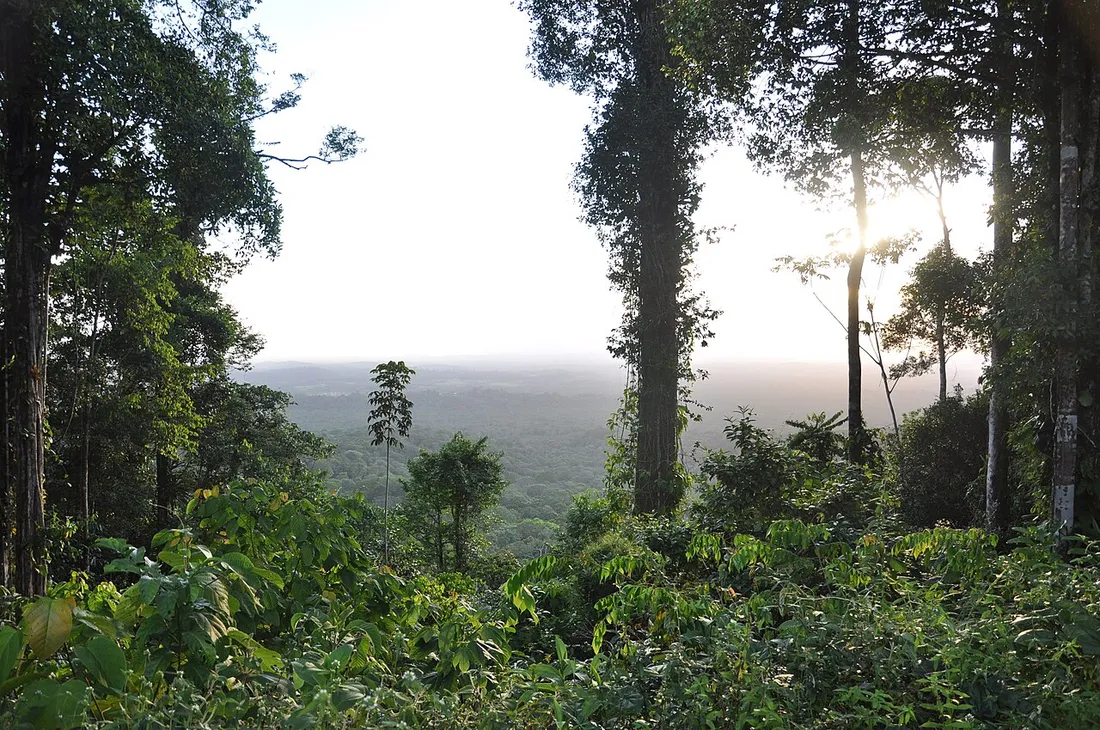
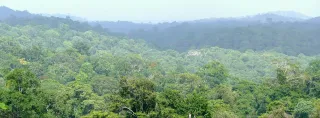
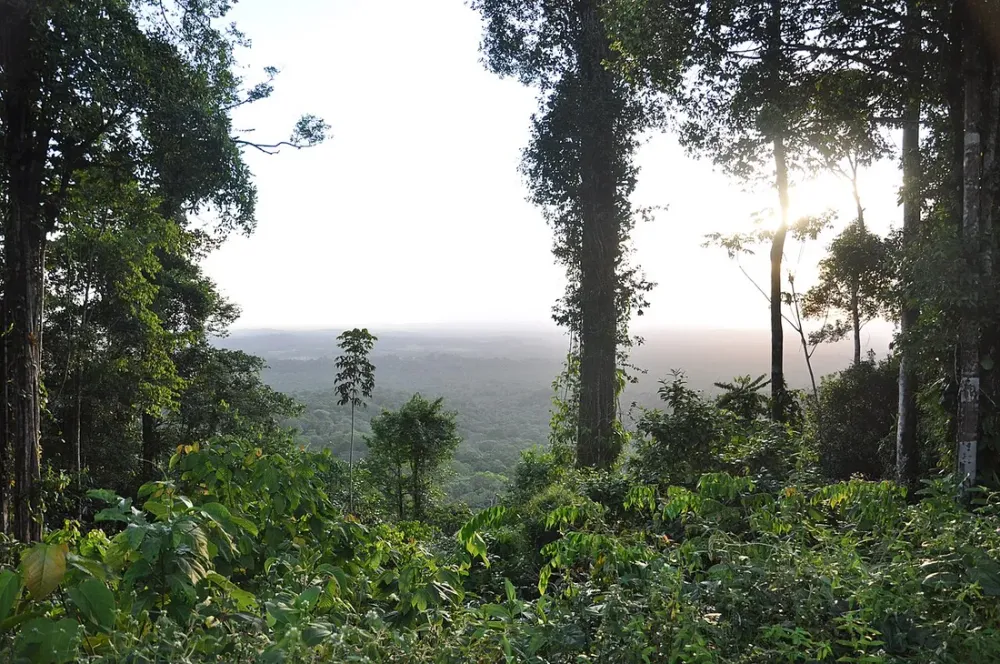
Vue depuis la montagne de Kaw sur la canopée de la forêt tropicale guyanaise au lever du jour
Panorama sur la forêt depuis la montagne de Kaw, en Guyane. — © Esperanto2000 (Wikimedia Commons, CC BY-SA 3.0)

The waterfall trail: what to expect

Hike profile

The trail descending toward the range’s streams and small waterfalls is short but demanding. On average, count on:

  • distance: 4 to 6 km round trip depending on the loops
  • duration: 3 to 4 hours with photo stops (and you stop a lot)
  • elevation gain: 150 to 250 m, but on very slippery terrain
  • difficulty: moderate because of the mud and roots, not the slope

The watchword is wet. The ground stays waterlogged even in the dry season, the lateritic clay sticks to your soles, and some stretches near the waterfalls require using your hands. Add a humidity level that often reaches 90% and the effort becomes far more demanding than the profile suggests. This is no Sunday stroll: it’s a true immersion in equatorial forest.

Several routes criss-cross the range. Beside the waterfalls, a marked trail links the welcome carbet to a viewpoint over the marshes, and more experienced hikers can string together longer loops deep in the forest.

The forest you walk through

The trail crosses an authentic primary rainforest: giant kapok trees with spectacular buttress roots, lianas as thick as an arm, wassaï palms and a dark understorey where light struggles to reach. Even between two frogs, keep your eyes open:

  • columns of leaf-cutter ants carrying their neatly cut leaves
  • blue morphos that burst out like shards of sky
  • with a little luck and a lot of silence, an agouti or a tamandua (anteater)
  • in the early morning, the sonic ballet of toucans and macaws above the canopy

When to go for photography

The best window to visit French Guiana is the dry season, from July to late November. The tracks are passable, the storm risk drops and the forest stays accessible. Paradoxically, the dart frogs remain visible all year round because they love the ambient humidity of the leaf litter.

For the frogs, favor:

  • the early morning (7 am - 10 am), when the air is cool and the frogs active
  • the late afternoon, just after a shower, when they sing
  • the areas near water and piles of dead leaves, their refuges

Photographing dart frogs: my field method

I learned the hard way that you don’t photograph a 2 cm frog like a landscape. Here’s what I bring and how I go about it.

The gear that makes all the difference

  • a macro lens (90 or 105 mm) or a recent smartphone’s macro mode
  • a ring or off-camera flash with a diffuser: under the canopy, it’s dark
  • knee pads or a plastic bag to kneel in the mud
  • a microfiber cloth: humidity constantly fogs up the lenses
  • a headlamp to spot the shining eyes in the litter

The right reflexes

  1. Approach slowly: dart frogs don’t flee, but a sudden shadow makes them jump.
  2. Get down to their level: the shot is won at ground level, never shooting down.
  3. Never touch a frog with bare hands: their skin secretes toxic alkaloids. Observe, photograph, don’t grab.
  4. Mind the background: a blurred green leaf behind the frog beats any artificial bokeh.
  5. Bracket your flash: underexpose slightly to saturate the colors without blowing out the yellow.

One detail that makes all the difference: rain. A frog beaded with droplets after a shower is the image you’ll bring home and frame.

Sleeping on the ridge: the carbet at the end of the world

To be on the trail at first light without driving in the middle of the night, the other option is to sleep up there. On the heights of Kaw, a few equipped carbets let you spend the night deep in the forest, a hammock slung under a roof of sheet metal or leaves, with no electricity and no signal: a single point perched on the ridge, open to the void, where you fall asleep cradled by the forest.

How it works in practice

  • A hammock is mandatory: you sleep in a hammock with a mosquito net, never directly on the ground. Many operators provide one; otherwise budget 30 to 50 € to buy one in Cayenne.
  • A rain tarp: essential even in the dry season, a night-time downpour is always possible.
  • Meals: often cooked over a wood fire by the guide (simplified awara broth, fish, Creole rice).
  • Prices: a guided outing with a night in a carbet generally runs between 80 and 150 € per person, meals and guiding included. The carbet alone, self-guided, is sometimes available for 10 to 20 € a night.

Waking up in the canopy

For a photographer, this is the moment that justifies the whole night. Just before dawn, mist rises from the marshes and drowns the forest below. The Kaw ridge then emerges like an island above a white ocean. The first rays set the treetops ablaze, the howler monkeys let out their cavernous roar and, within minutes, the whole canopy awakens, right when the frogs start moving in the litter below.
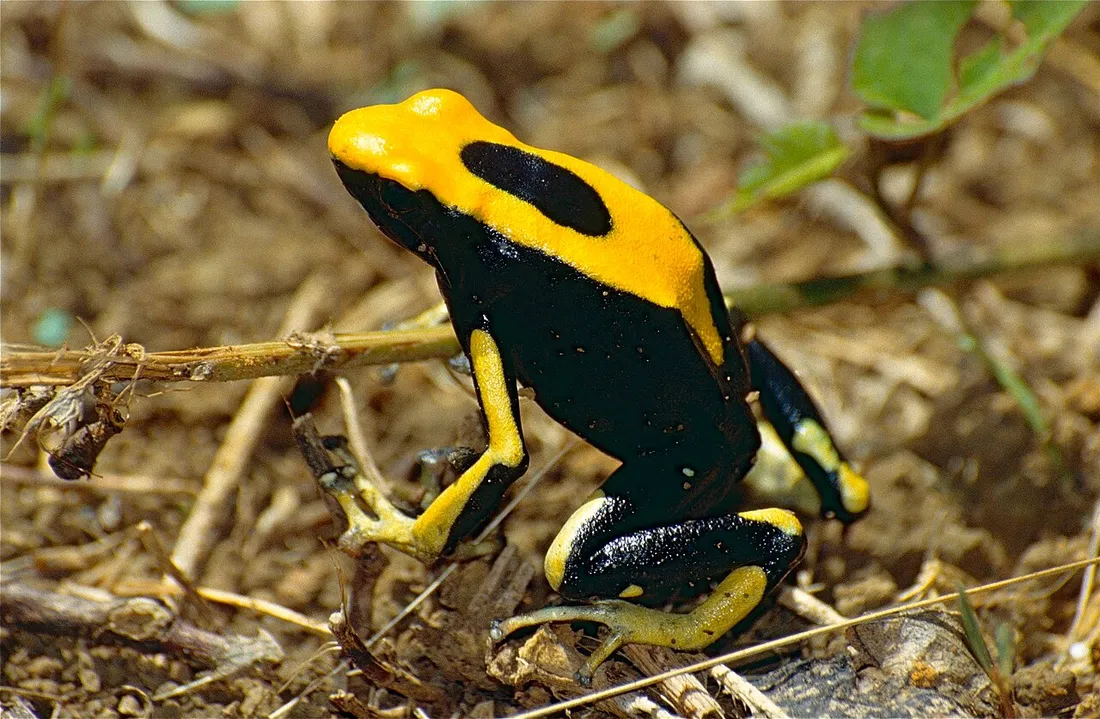
Grenouille dendrobate Dendrobates tinctorius jaune et noire de Guyane posée sur le sol forestier
Le dendrobate à tapirer (Dendrobates tinctorius), grenouille emblématique des forêts de Kaw. — © Bernard DUPONT from FRANCE (Wikimedia Commons, CC BY-SA 2.0)

Access, safety and logistics from Cayenne

How to get there

A car is essential in French Guiana, and even more so for Kaw: no public transport serves the site. From Cayenne, count on roughly 1 hr 15 to 1 hr 30 of driving along the RN2 then the road to Kaw (the D6), via Roura. The Kaw road is paved then becomes rougher, the final stretch a track winding along the ridge: stunning, but narrow and slippery after rain. A slightly raised vehicle is comfortable but not mandatory in the dry season.

Practical markers:

  • Cayenne - Kaw distance: about 60 to 70 km
  • arrival airport: Félix-Éboué, in Matoury, about 20 minutes from the RN2
  • fuel: fill up in Roura, the last reliable point
  • mobile coverage: patchy on the plateau, tell someone your itinerary
  • currency: the euro, French Guiana being a French overseas department-region

Leave early in the morning: the low light over the marshes below, seen from the ridge road, is one of the most beautiful in French Guiana.

Safety and regulations

The range is part of a protected area: stay on the marked trails, take nothing, don’t feed the wildlife. The yellow fever vaccine is mandatory to stay in French Guiana, and a good mosquito repellent is non-negotiable here. Carry at least 2 liters of water per person, there is no drinkable water point on the range.

The rest of the local’s checklist:

  • high-cut hiking boots, already broken in, that can get soaked and hold up in the mud
  • a headlamp with spare batteries: night falls fast and sharp around 6:30 pm
  • a first-aid kit, and antimalarial treatment on medical advice
  • waterproof bags to protect camera gear, electronics and documents from the humidity

Ideally, set off accompanied by a local naturalist guide: they’ll show you frogs you’d never have spotted alone, read the animal tracks, know where to sling the hammocks and know the real state of the trails. Several Guianese operators offer day outings or overnight carbet trips departing from Cayenne or Roura.

To combine with your visit to Kaw:

  • a nighttime outing by pirogue on the Kaw marshes to see the black caimans
  • a detour to the Hmong village of Cacao and its Sunday market
  • a day at the Guiana Space Centre in Kourou (free visit)
  • the Salvation Islands, a former penal colony set on the Atlantic
  • Saint-Laurent-du-Maroni and its transportation camp, then a journey up the Maroni river by pirogue
  • the Cayenne market and Place des Palmistes for the Creole atmosphere

You’ll find more itinerary ideas in our complete guide to French Guiana.

Where to stay to tackle Kaw at daybreak

The secret to a great photo session at Kaw is to set off early. But from the center of Cayenne, the drive wastes precious morning time. The ideal is to stay between Cayenne, Remire-Montjoly, Matoury and Roura, as close as possible to the Kaw road, so you can drive in the dark and reach the trail at dawn.

At Hostel Toucan, we offer well-located seasonal rentals in French Guiana for ranging across the east of the territory, designed for adventure travellers: parking for your rental vehicle and space to dry your gear when you come back down. Booking with us means:

  • a direct booking with no platform fees: you pay the fair price
  • free cancellation up to 7 days before arrival, handy when the tropical weather decides for you
  • WhatsApp assistance 7 days a week for your last-minute questions: track conditions, a good guide, schedules

Our hosts know the terrain and can point you to the right operator for Kaw. And if you own a property in the region, discover how we showcase it on our owners page.

Recap to nail your outing

  • Ideal season: July to late November, but dart frogs visible all year
  • Time: early in the morning or after a shower
  • Gear: macro + diffused flash + shoes that can get soaked
  • Golden rule: you look, you photograph, you never touch
  • Logistics: car, fill up in Roura, water, repellent, local guide
  • To go further: a night in a carbet on the ridge, for the mist at dawn

Kaw Mountain doesn’t hand its treasures to those in a hurry. But for whoever agrees to kneel in the mud and wait, it delivers images few travelers bring back from France: an electric-blue frog perched on a glistening leaf, in the heart of the Amazon forest. Prepare your gear, lock in your stay, and let Kaw surprise you.

FAQ

Is Kaw Mountain accessible without a guide?

Yes, the main trails are marked and freely accessible, but a local naturalist guide is strongly recommended. They spot the dart frogs camouflaged in the litter, know the real state of the trails after rain and enrich the outing enormously. For photography, it’s a real time-saver.

Are the dart frogs of Kaw dangerous?

Their skin secretes toxic alkaloids signaled by their vivid colors. They pose no danger as long as you don’t touch them and don’t bring your hands to your mouth or eyes. The rule is simple: you observe and photograph, you never handle the animal.

How long does the Kaw waterfall hike take?

Count on 3 to 4 hours for 4 to 6 km round trip, with the many photo stops. The slippery, muddy terrain slows progress far more than the elevation gain, which is moderate. Plan for water, repellent and shoes that can get soaked.

How much does a night in a carbet on Kaw Mountain cost?

A guided outing with a night in a carbet, meals and guiding included, generally costs between 80 and 150 € per person. Self-guided, some carbet nights are available for around 10 to 20 €. Plan for a hammock with a mosquito net, provided by most operators.

How do you get to Kaw Mountain from Cayenne?

By car, essential in French Guiana: count on roughly 1 hr 15 to 1 hr 30 and 60 to 70 km via the RN2 then the D6 through Roura, where you’ll make your last fuel stop. Staying nearby, between Cayenne, Remire-Montjoly and Roura, lets you set off at dawn when the frogs are most active.

Also read