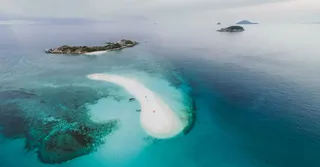
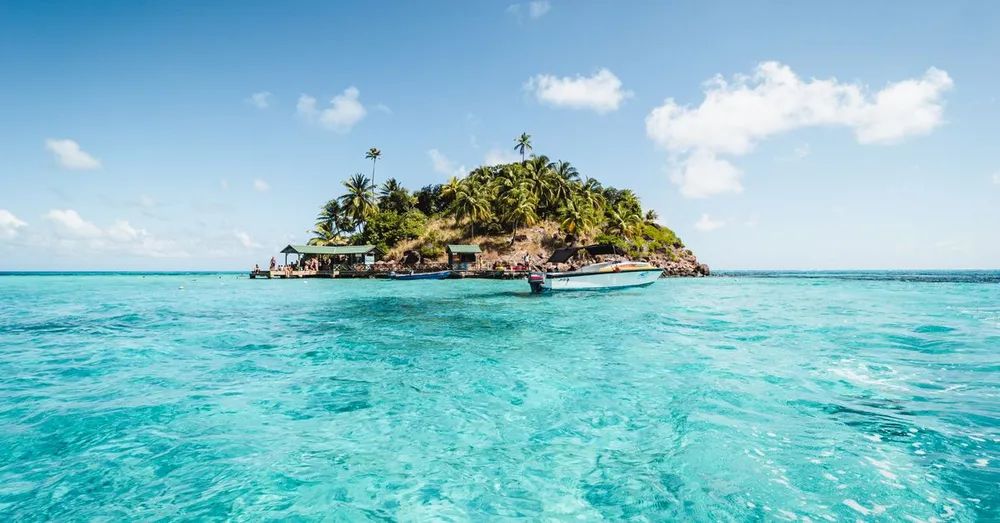
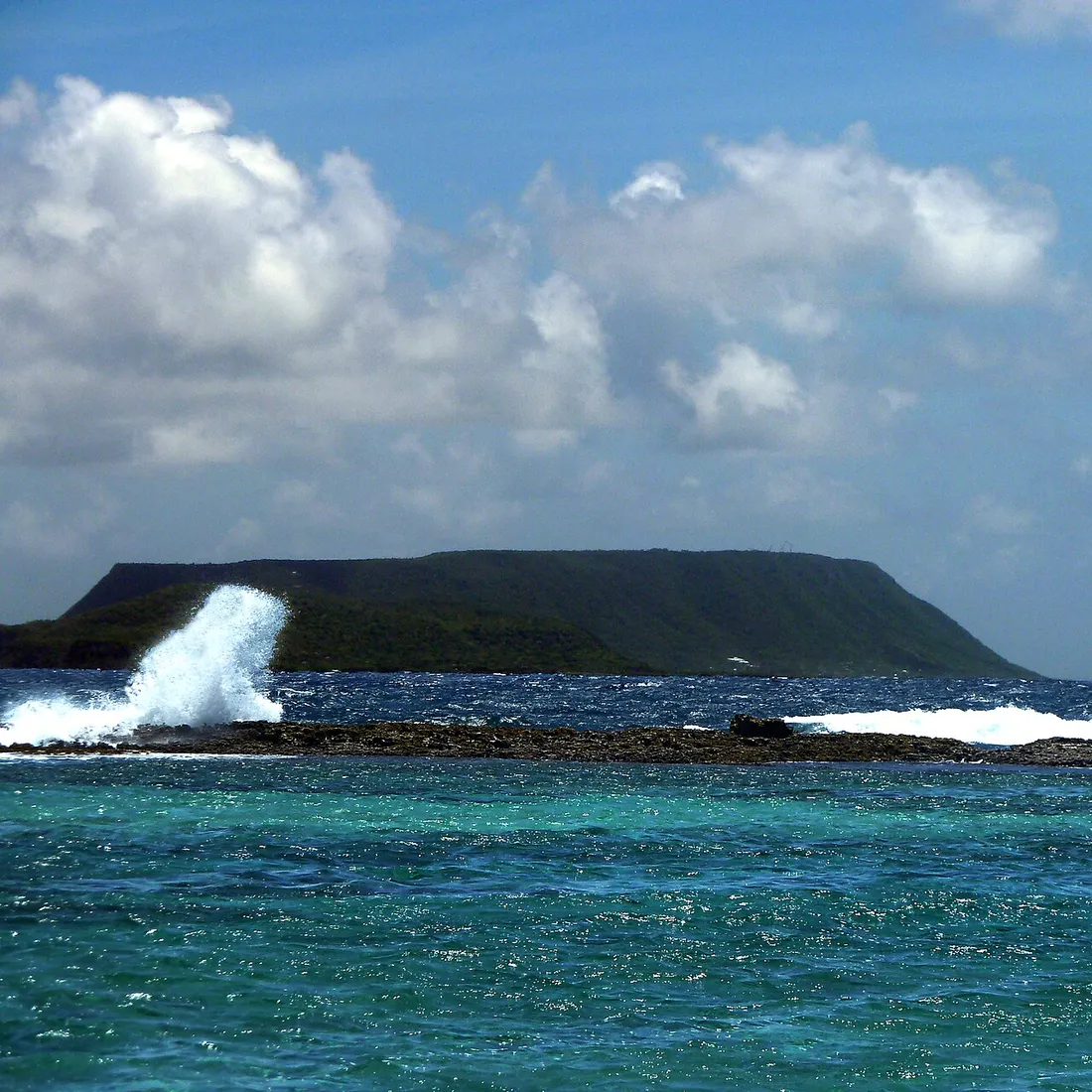
Set on the horizon, east of the Pointe des Châteaux, a long flat silhouette never fails to intrigue travellers gazing out from the tip of Grande-Terre. That ochre-coloured strip of land is La Désirade, the most discreet of the dependencies in the Guadeloupe archipelago. While Les Saintes and Marie-Galante draw the bulk of day-trippers, this arid island, just 11 kilometres long, remains largely overlooked. And that is precisely what makes it one of Guadeloupe’s best-kept secrets, and one of the most refreshingly different days out you can treat yourself to from Saint-François.
Why La Désirade is still Guadeloupe’s forgotten island
When Christopher Columbus spotted this land in 1493 after a long crossing, he named it “Desiderata”, the longed-for island. The irony of history is that today it is the great forgotten corner of Caribbean tourism. With barely 1,500 inhabitants strung out along a single coastal road, La Désirade has held on to an atmosphere that seaside Grande-Terre, and even Marie-Galante, have partly lost.
Several reasons explain this seclusion. The island is arid: exposed to the trade winds, it gets little rain and feels more like a semi-desert steppe dotted with candle cacti and agaves than like the tropical forest of Basse-Terre. For a long time it was also a place of exile, home to a leper colony until the middle of the 20th century, which left a lasting mark on its isolation. And finally, no regular tourist air link serves it: you come by boat, and only if you really mean to.
It is this combination, aridity, isolation, low visitor numbers, that creates an against-the-grain experience here. No hotel complexes, no crowded beaches: an unspoilt coastline, fishermen coming home at dawn, and a silence rarely found in the Caribbean.
Ferries from Saint-François: schedules and fares
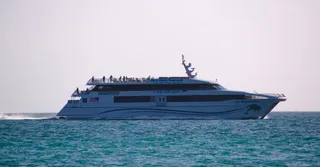
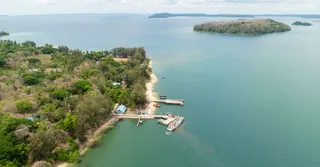
The gateway to La Désirade is the marina at Saint-François, on the south-east coast of Grande-Terre. The sea crossing links the port of Saint-François to that of Beauséjour, the island’s main town.
Crossing time and frequency
- Duration: around 45 minutes at sea, sometimes choppy as the channel is exposed to the Atlantic swell. Anyone prone to seasickness would do well to take a tablet before departure.
- Frequency: generally two crossings a day in high season. A morning departure around 8:00 a.m. from Saint-François, and a return in the late afternoon around 4:00–4:30 p.m. from Beauséjour. Times vary depending on the operators (l’Express des Îles and the local ferries) and the season; it is always best to check the day before.
- Booking: essential during the dry season (December to April) and at weekends, as places are limited.
Budget to plan for
- Adult return ticket: expect around €30 to €35 per person.
- Child fare: around €18 to €22.
- Remember to bring cash: on the island, bank cards are not accepted everywhere and there is only a limited number of cash machines.
A resident’s tip: aim for the morning boat to make the most of the whole day. A trip to La Désirade is not something to rush, the whole point being precisely to slow down.
The geological reserve: the island’s little-known treasure
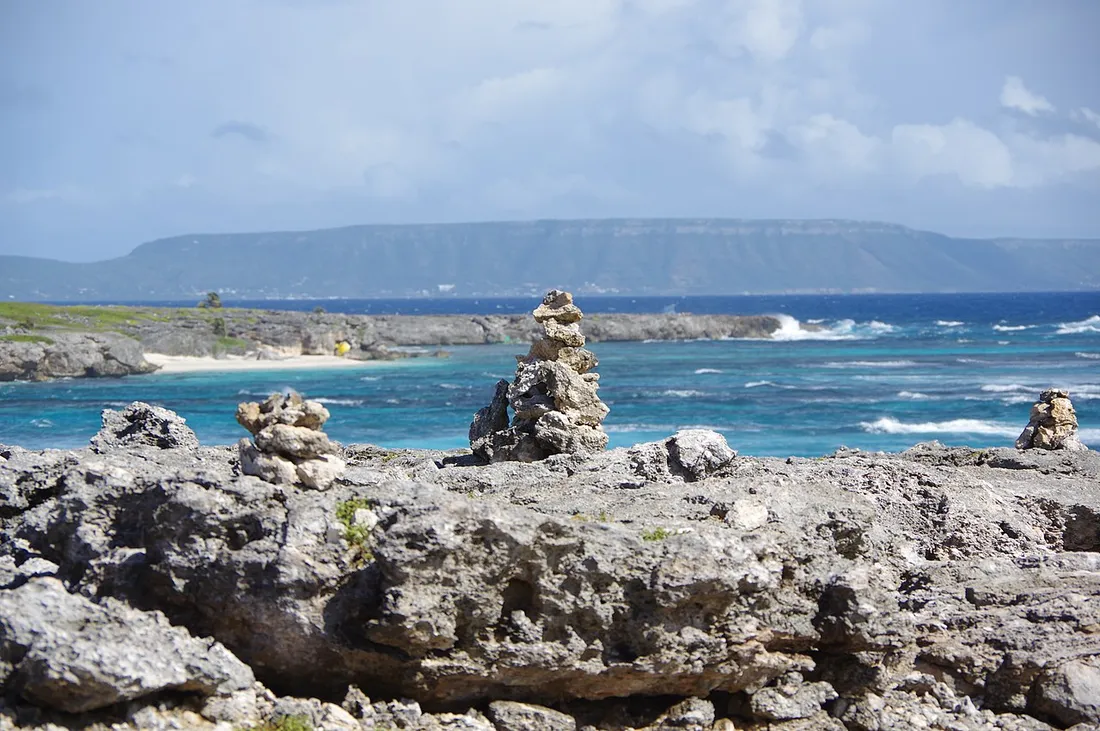
Here is La Désirade’s best-kept secret, the one most day-trippers know nothing about: the island is home to the La Désirade National Geological Nature Reserve, created in 2011. It is one of the only sites in the Lesser Antilles where rocks nearly 145 million years old, dating from the Jurassic, come to the surface.
In concrete terms, La Désirade is the oldest geological bedrock in the French Antilles. While the Soufrière of Basse-Terre rises to 1,467 metres and bears witness to recent volcanism, La Désirade tells the deep history of the Antillean arc. Here you can observe pillow lavas, radiolarites and plutonic rocks that fascinate geologists the world over.
For the curious visitor, two ways in:
- The Montagne Blanche trail, the island’s highest point at 273 metres, offering a 360° panoramic view over the Atlantic, Petite-Terre to the south and Grande-Terre to the west.
- The summit plateau, reached on foot or by electric cart, lined with information panels explaining how the island formed.
Even without any scientific background, walking on these rocks knowing they predate the birth of the Caribbean as we know it has something vertiginous about it.
What else to do during a day on La Désirade
Once you step ashore at Beauséjour, the island reveals itself slowly. Here are the must-sees of a successful day trip.
Getting around
The island has only one main road, which runs along the south coast for about ten kilometres. Several options:
- Scooter or electric cart hire at the port: around €25 to €40 for the day. It is the handiest way to reach the eastern beaches.
- Bicycle for the sporty types, bearing in mind that the sun beats down hard and shade is scarce.
- Shared taxi for occasional journeys.
The beaches not to miss
- Plage du Souffleur, at the entrance to the town, ideal for a first quiet swim.
- Plage de Fifi, sheltered and family-friendly, perfect for snorkelling.
- Plage à Fanfan and the eastern tip of the island, wilder, often deserted, where you feel like you are at the end of the world.
The heritage
- The cotton works and the remains of the old leper colony at Baie-Mahault, poignant reminders of the island’s isolated past.
- The Calvaire chapel and its viewpoint.
- The small seafront cemetery, facing the ocean, with a particular emotional charge.
Eating well
La Désirade lives off fishing. Make the most of it by tucking into grilled fish, a conch fricassee or spiny lobster in one of the seafront restaurants in the town. Expect €20 to €30 for a full meal facing the Atlantic.
When to come and how to organise your stay
The best time to visit La Désirade is the dry season, from December to April. The sea is gentler for the crossing, the sunshine is at its peak and the vegetation, arid though it is, takes on lovely golden hues. Avoid the cyclone season (August–October), during which crossings may be cancelled.
A few practical reminders for travellers coming from mainland France:
- Time difference: -5h in winter, -6h in summer compared with Paris.
- Currency: the euro, since La Désirade is part of a French overseas department.
- Languages: French and Guadeloupean Creole.
- Dialling code: +590.
- Arrival airport: Pôle Caraïbes, in Pointe-à-Pitre, then the road to Saint-François (about 45 minutes).
Most travellers fit La Désirade in as a day trip within a stay based on Grande-Terre. Setting up your base camp in Saint-François or Sainte-Anne makes it easy to combine the Pointe des Châteaux, Caravelle beach and a crossing over to the forgotten island.
Planning your getaway with Hostel Toucan
To venture out to La Désirade and the rest of the archipelago, the choice of where you stay makes all the difference. At Hostel Toucan, we offer holiday rentals ideally located on Grande-Terre, close to the marinas where the ferries depart. Book directly, with no platform fees, with free cancellation up to 7 days before arrival and WhatsApp support 7 days a week to help you line up your boat times, your outings and the best local addresses.
To go further, take a look at our complete guide to Guadeloupe, browse our rentals in Guadeloupe, and if you own a property on the archipelago, discover our concierge service for owners.
La Désirade does not give itself away at first glance. You have to be willing to push on out to it, to cross that arm of sea that puts off the crowds, in order to discover a raw, mineral and authentic Guadeloupe. The longed-for island certainly lives up to its name.
FAQ
How do you get to La Désirade from Guadeloupe?
You reach La Désirade by boat from the marina at Saint-François, on the south-east coast of Grande-Terre. The crossing to the port of Beauséjour takes about 45 minutes, with generally two crossings a day (a morning departure around 8 a.m., a return in the late afternoon). Booking is recommended, especially in the dry season and at weekends.
How much does the crossing to La Désirade cost?
Expect around €30 to €35 for an adult return ticket and €18 to €22 for a child. Bring cash, as bank cards are not accepted everywhere on the island and cash machines are scarce.
What is unique to see on La Désirade?
La Désirade is home to an exceptional geological nature reserve, with the oldest bedrock in the French Antilles (nearly 145 million years old). You will also find wild, deserted beaches, the remains of an old leper colony, the Montagne Blanche viewpoint and authentic fishermen’s cuisine.
What is the best time to visit La Désirade?
The dry season, from December to April, is ideal: a gentler sea for the crossing, plenty of sunshine and beautiful light on the arid vegetation. Avoid the cyclone season from August to October, when the ferry crossings may be cancelled.