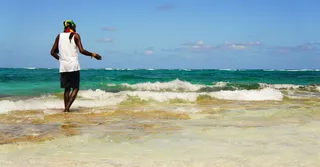
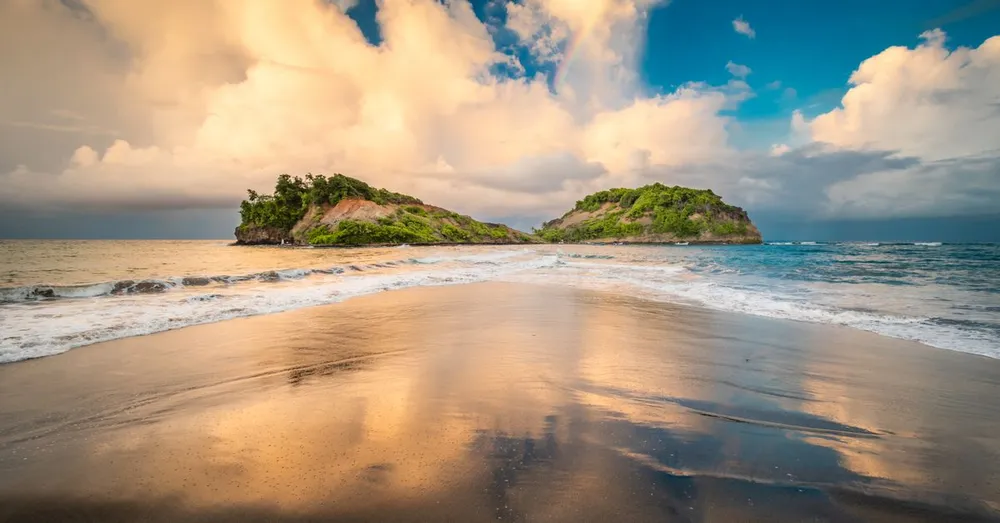
When people mention Le Diamant in Martinique, they immediately picture its vast pale-sand beach stretching more than three kilometres, swept by the trade winds, and its famous Rock standing on the horizon. Yet after several years spent exploring the south of the island, I can tell you this for certain: it’s when you leave your beach towel behind that this town reveals its deepest soul. Between a moving memorial facing the sea and a hill offering one of the finest panoramas in the Caribbean, Le Diamant is experienced as much with your legs and your heart as with your feet in the sand.
Here is my field guide to exploring Le Diamant differently, far from the well-trodden paths of seaside tourism.
The Cap 110 Memorial: a place of remembrance facing the ocean
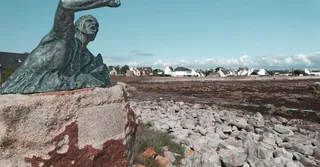
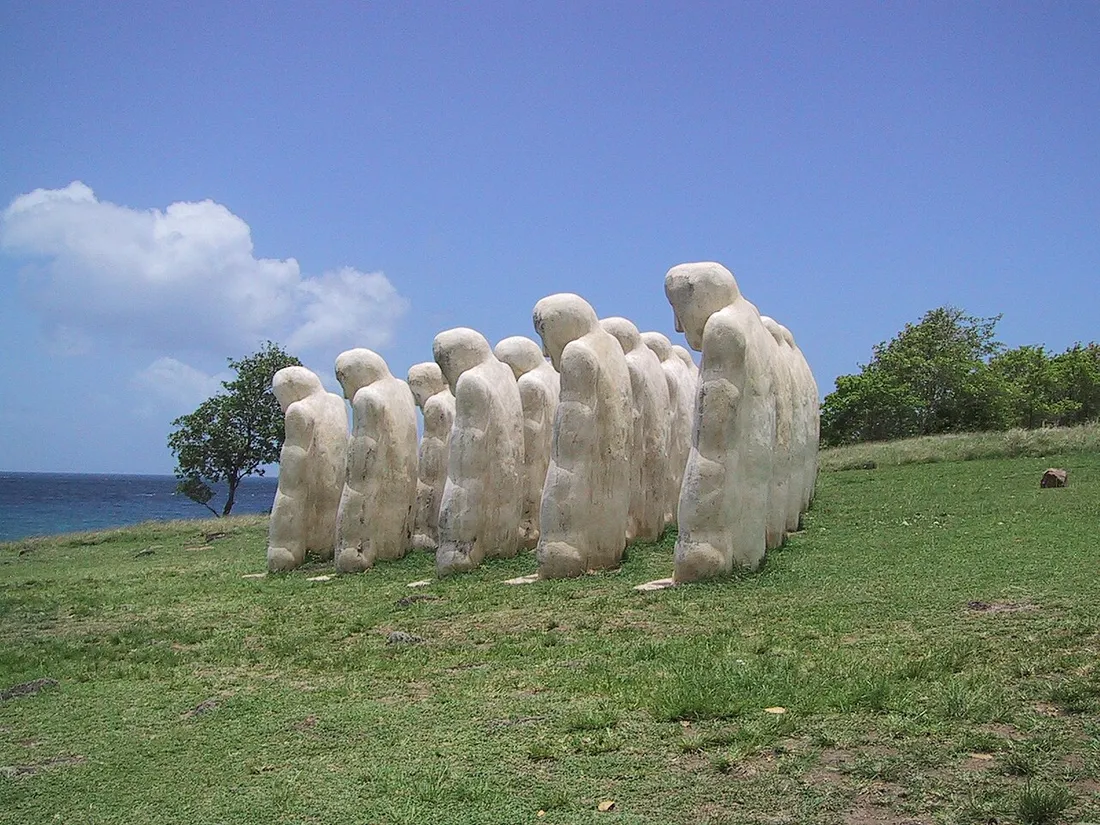
At the western edge of the town, on the site of Anse Caffard, stands one of the most moving works of art in all of Martinique. The Cap 110 Memorial is a group of fifteen monumental statues in white concrete, arranged in a triangle and facing out to sea, towards the Gulf of Guinea.
The story behind the statues
These solemn figures, heads bowed, pay tribute to the victims of a shipwreck that occurred in 1830: a clandestine slave ship ran aground at the foot of the cliffs, at a time when the slave trade had already been officially banned. Many of the captives chained on board perished. The work, created by Martinican artist Laurent Valère and unveiled in 1998 for the 150th anniversary of the abolition of slavery, takes its name “Cap 110” from the 110-degree bearing the ships followed towards this region.
On site, you immediately feel the particular silence that envelops the place. The statues seem to gaze at the horizon in a frozen state of waiting, and you quickly understand why so many visitors linger far longer than they had planned.
My practical tips for the visit
- Access and price: the site is open-air, free and unrestricted, accessible all year round. A small car park is right next to it.
- Duration: allow 30 to 45 minutes for the visit, or more if you take time to read the explanatory panels.
- Best time: come in the late afternoon, around 4–5 pm. The golden light sets off the white concrete beautifully, and the sunset behind the Diamond Rock is spectacular here.
- Respecting the site: this is a memorial, not just a backdrop for selfies. Respectful dress and behaviour are expected.
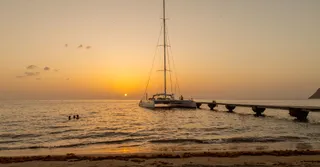
From the nearby viewpoint, the view sweeps down to the Diamond Rock, a 175-metre volcanic plug rising from the waves about 2 km off the coast. A panel tells its astonishing story: the British turned it into a fictitious warship, “HMS Diamond Rock,” in the early 19th century.
The Morne Larcher hike: the roof of Le Diamant
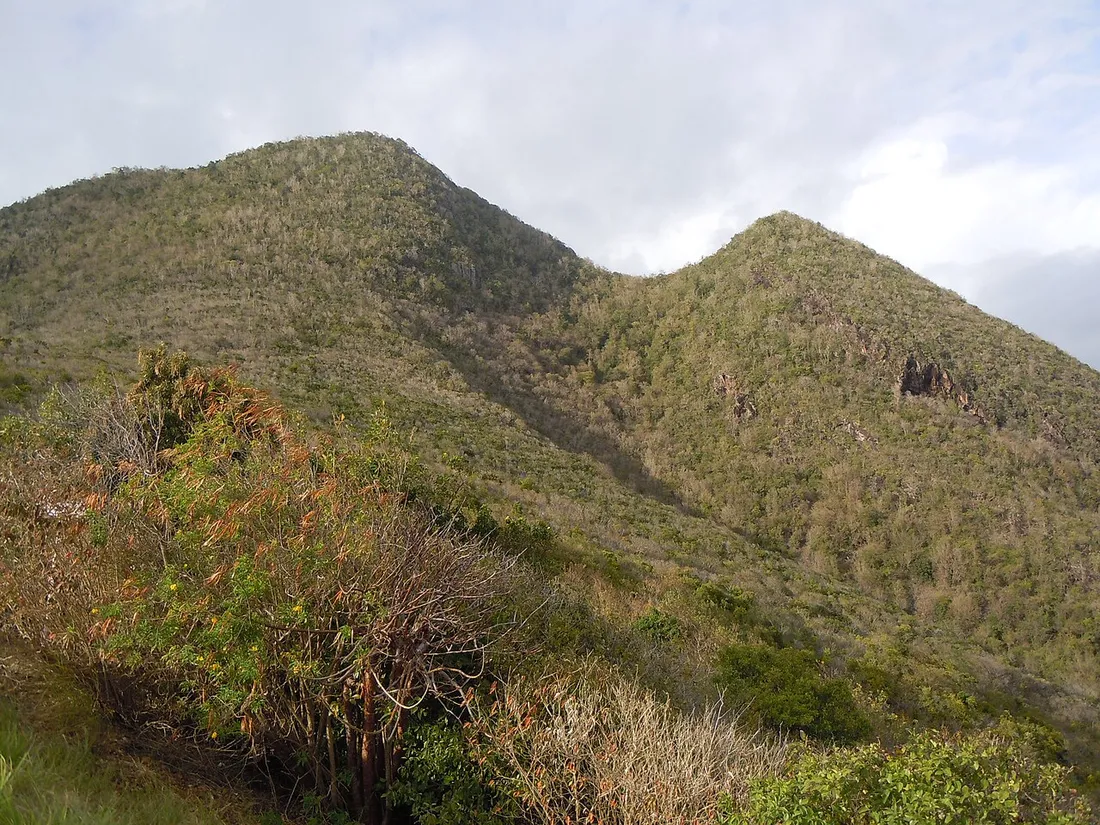
Just behind the memorial rises Morne Larcher, peaking at 478 metres. This volcanic dome, whose silhouette reminds some people of an elongated face turned skyward (it is sometimes called “the reclining woman”), offers the finest hike in the area.
What to expect on the trail
The Trace des Caps trail, in its Larcher section, generally starts from Anse Caffard, near the memorial. Here are the concrete figures you need to know:
- Distance: roughly 5 to 6 km as a loop or there-and-back, depending on the variant you choose.
- Duration: allow 2.5 to 3.5 hours of actual walking, not counting photo stops.
- Elevation gain: nearly 400 metres of climbing, on terrain that is sometimes steep and slippery after rain.
- Level: intermediate to demanding. This is no gentle stroll, but the summit is within reach of anyone in good physical condition.
The path first climbs through a dry forest, typical of the south of the island, before opening up onto the sea. At the summit and along the ridges, the reward is complete: a 360-degree panorama over the Diamond Rock, the great beach, Anse Cafard, and on a clear day all the way to the Sainte-Luce peninsula and the bay of Fort-de-France.
My recommended gear
Having seen too many visitors suffer in flip-flops, I never tire of repeating it:
- Closed hiking shoes with good grip.
- At least 1.5 litres of water per person: there is no water point along the route.
- Hat, sunglasses and sunscreen: shade is scarce on the ridges.
- An early start: aim for 7–8 am to avoid the crushing midday heat.
- A snack and your phone fully charged for photos.
Absolutely avoid this hike just after heavy rain: the clay slopes become dangerously slippery.
Planning your day in Le Diamant beyond the beach
Le Diamant lies about 40 minutes’ drive from Aimé Césaire airport in Le Lamentin and around thirty minutes from Les Trois-Îlets. As everywhere in Martinique, a rental car is strongly recommended: public transport serves these natural sites poorly.
An ideal one-day itinerary
Here is how I string together these must-sees with my guests:
- Morning (7:30 am): climb Morne Larcher in the cool of the day.
- Midday: lunch break in one of the Creole restaurants in the town of Le Diamant. Expect €15 to €25 per dish for local cuisine (accras, colombo, grilled fish).
- Early afternoon: relax on Le Diamant’s great beach, ideal for cautious swimming (mind the currents) and surfing.
- Late afternoon (4:30 pm): a moment of reflection at the Cap 110 Memorial and sunset over the Rock.
Combining with the surroundings
Le Diamant is an excellent base camp for exploring the south. Within less than 30 minutes you can reach the legendary beaches of Les Salines in Sainte-Anne, the black-sand cove of Anse Noire, or Anse Dufour, renowned for its turtles. The distilleries of the Rum Route (La Mauny, Trois-Rivières) are also within driving distance for a tasting of AOC agricultural rum.
The dry season, the Carême, from December to April, remains the ideal period: dry trails, calm seas and perfect light for hiking as well as for photographing the memorial.
Staying in Le Diamant with Hostel Toucan
To experience this authentic Martinique to the full, nothing beats well-located accommodation in the south of the island. At Hostel Toucan, we offer seasonal rentals managed through our concierge service, designed for travellers who want to explore off the beaten track.
Booking directly with us means:
- No platform fees: you pay the fair price, with no hidden commission.
- Free cancellation up to 7 days before arrival, so you can travel with peace of mind.
- WhatsApp assistance 7 days a week, in French and in Creole, for itinerary advice, activity bookings or the smallest unexpected hitch.
Our hosts know every trail, every cove and every good tip in Le Diamant. Discover our holiday rentals in Martinique and prepare your stay with our complete guide to Martinique. Do you own a property in the south and want to make the most of it without the hassle? Our concierge offer for owners is waiting for you.
Le Diamant is far more than its postcard beach. It is a land of remembrance, nature and breathtaking panoramas that deserves a full day of your time. Once at the summit of Morne Larcher, facing the Rock and the memorial, you will understand why this corner of southern Martinique remains my favourite.
FAQ
Is the Cap 110 Memorial in Le Diamant free?
No, the Cap 110 Memorial at Anse Caffard is an open-air site that is entirely free and unrestricted, open all year round. A small free car park is right next to it. Allow 30 to 45 minutes for the visit, ideally in the late afternoon to enjoy the golden light.
Is the Morne Larcher hike difficult?
It is intermediate to demanding: roughly 5 to 6 km, 400 metres of elevation gain and 2.5 to 3.5 hours of walking. The terrain is steep and becomes slippery after rain. Plan for good shoes, at least 1.5 litres of water, a hat and an early start around 7–8 am to avoid the heat.
How do you get to Le Diamant in Martinique?
Le Diamant is about 40 minutes’ drive from Aimé Césaire airport in Le Lamentin and 30 minutes from Les Trois-Îlets. A rental car is strongly recommended, as public transport serves the Cap 110 Memorial and Morne Larcher poorly.
What is the best time to visit Le Diamant?
The dry season, the Carême, from December to April, is ideal: dry trails for hiking, calmer seas and beautiful light for photographing the Rock and the memorial. Avoid days of heavy rain, which make the slopes of Morne Larcher dangerous.