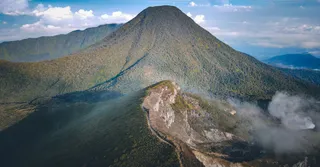
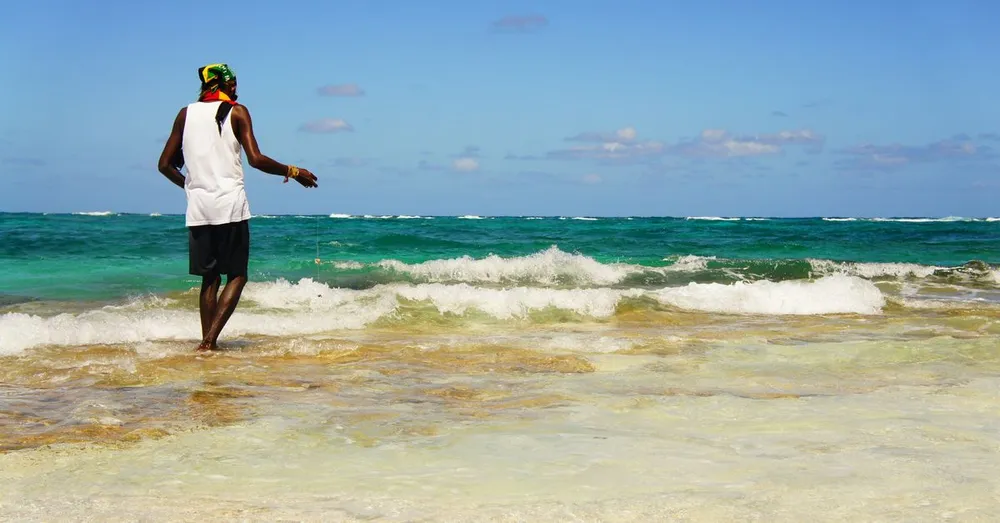
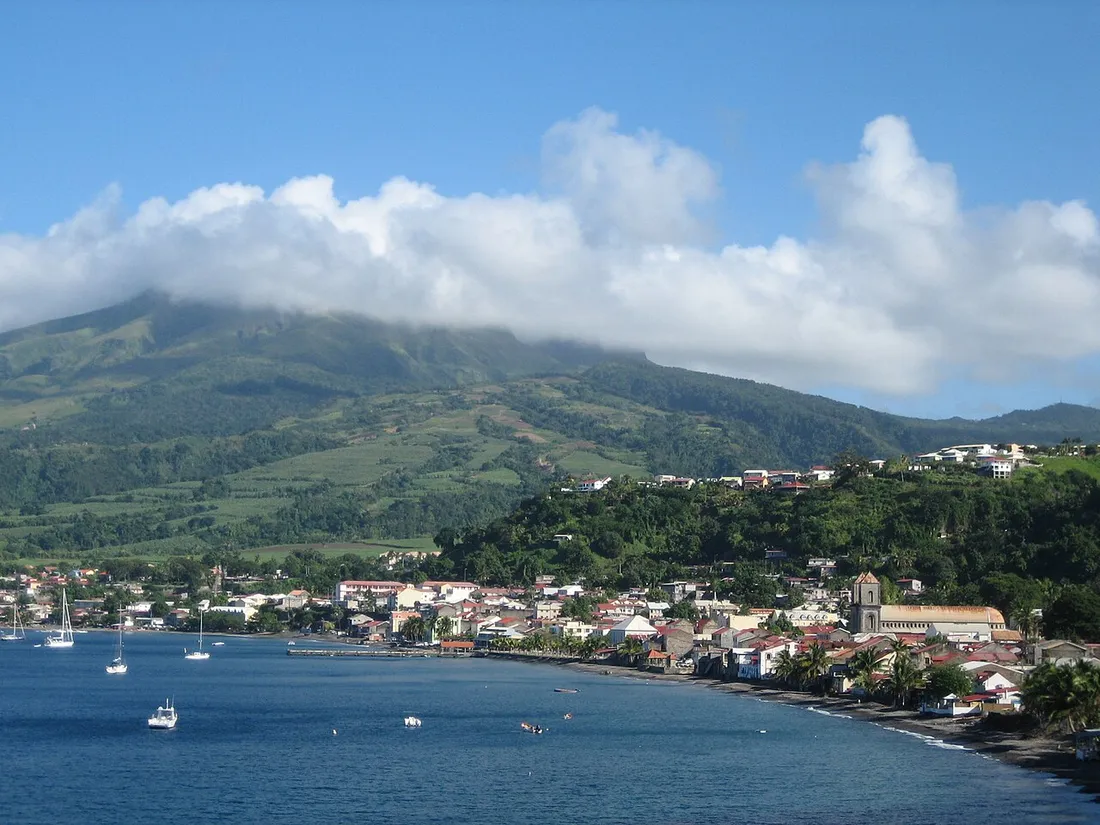
At the foot of Mount Pelée, on the northern Caribbean coast of Martinique, a small stone town tells the story of one of the greatest tragedies of the 20th century. Saint-Pierre is not just another seaside resort: it is an open-air history book, where every collapsed wall and every time-worn staircase carries the memory of 8 May 1902. That morning, in just a few minutes, a pyroclastic flow razed the city and claimed nearly 28,000 lives. Ever since, it has been known as “the martyr city,” and its heritage is now listed as a Historic Monument, in an area distinguished by UNESCO for its iconic volcano.
You don’t come here to sunbathe. You come to understand. Here is our memorial trail, tested and walked again season after season, to visit Saint-Pierre as a living place of remembrance — and to leave with a different vision of Martinique.
Why Saint-Pierre deserves a full day
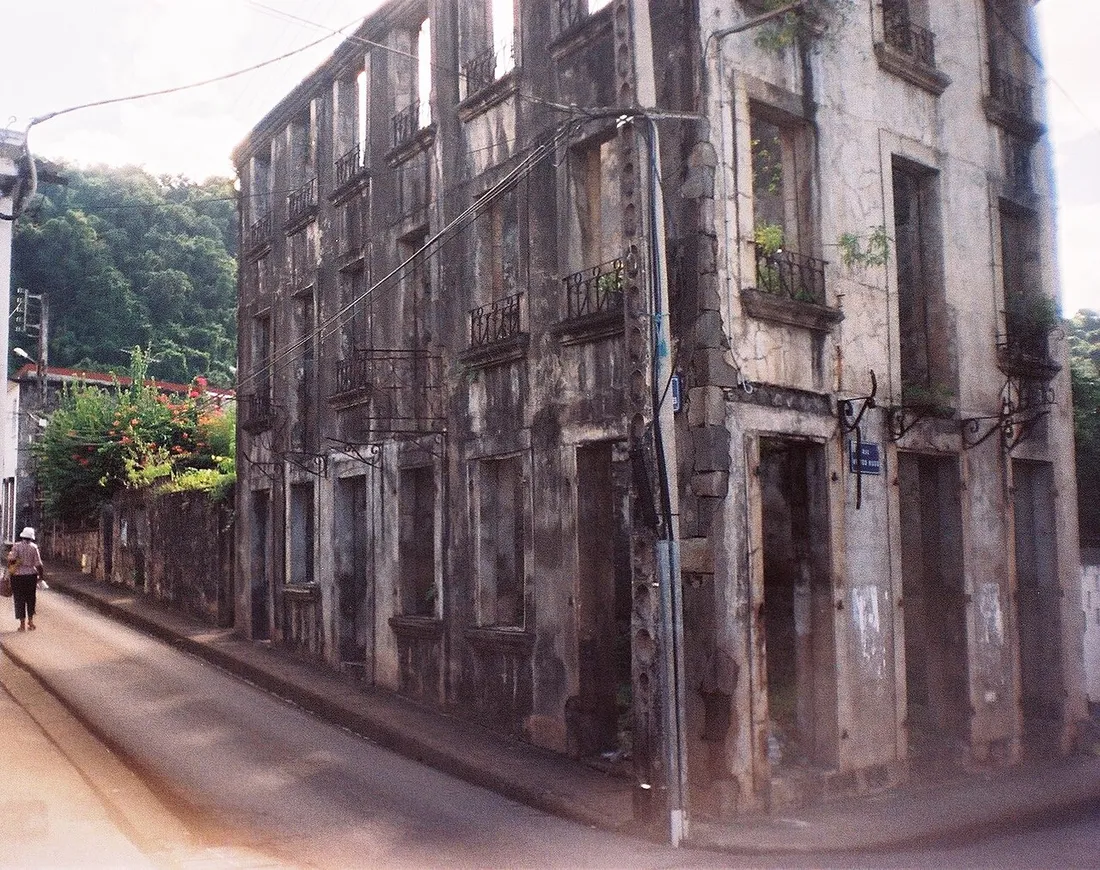
Before the disaster, Saint-Pierre was nicknamed the “Little Paris of the Caribbean.” The economic and cultural capital of the island, it boasted a theatre, a tramway, banks and one of the busiest ports in the Caribbean. The 1902 eruption swept everything away in less than three minutes. Today, the rebuilt town coexists with its ruins, and it is precisely this overlap that makes it so moving.
Allow a full day to take it all in without rushing. The town is essentially explored on foot: the major sites are concentrated within less than a kilometre, between the seafront and the heights of the Figuier neighbourhood. Bring good shoes, water and a hat: the north is more humid, but the sun beats down hard in the middle of the day.
Practical tips before you set off
- Distance from Fort-de-France: about 30 km, 45 min to 1 hr of driving depending on traffic leaving Le Lamentin.
- From Aimé Césaire airport: allow 50 min to 1 hr.
- A car is strongly recommended: the north coast is winding and poorly served by public transport. On an island 80 km long, a vehicle remains your best ally.
- Best time to visit: the dry season (the Carême), from December to April, offers clearer skies over the Pelée. During Carnival (February–March), the atmosphere is festive all over the island.
The ruined theatre: the heart of the trail
The trail often begins with the remains of the former theatre, the most photographed symbol of the town. Inspired by the theatre of Bordeaux, it could seat 800 spectators and embodied Saint-Pierre’s cultural prestige. Today, all that remains is the grand double-flight staircase and the bases of the columns, overgrown by tropical vegetation.
Climb the steps: from the upper terrace, the view plunges over the bay, and the silhouette of Mount Pelée rises behind you. The contrast between the lost elegance of the place and the present silence strikes you immediately. Take the time to read the explanatory panels scattered across the site: they place each stone back into the Saint-Pierre that existed before 1902.
Cyparis’s cell, just below
A few steps from the theatre lies one of the most incredible stories in the history of volcanoes: the cell of Cyparis. Louis-Auguste Cyparis, a prisoner locked in this half-buried, thick-walled cell, was one of the very few survivors of the pyroclastic flow. Protected by the thickness of the stone and the absence of an exposed window, he was found several days later, severely burned but alive. He would end his life in an American circus, billed as “the man who survived the apocalypse.”
The cell is tiny and takes only a few minutes to visit, but it is a powerful moment on the trail. Leaning toward the single opening, you grasp the magnitude of what unfolded outside.
The Frank Perret Museum: understanding the disaster
To make sense of all these ruins, head to the Frank Perret Volcanological Museum, perched on the heights facing the sea. Founded in the 1930s by the American volcanologist who studied Mount Pelée, it was completely redesigned and reopened a few years ago with a modern layout.
Here you discover:
- objects melted by the heat: warped bells, fused glass, unrecognisable utensils — witnesses to temperatures exceeding 1,000 °C;
- photographs from before and after the disaster;
- clear explanations of the pyroclastic flow phenomenon, that mixture of gas and incandescent ash that raced down the slopes at high speed;
- a perspective on the volcano’s current activity, which is still monitored.
Good to know: expect around €8 to €10 for adult admission, and about 1 hour for the visit. Prices and opening hours change; check before you come. The view from the museum terrace alone is worth the trip.
The shipwrecks of the bay: Saint-Pierre seen by divers
What many visitors don’t realise is that the 1902 tragedy also created one of the finest wreck-diving sites in the Caribbean. On the morning of the eruption, a dozen ships were moored in the harbour. Most burned and sank within minutes. They still rest there, at depths of 30 to 90 metres, transformed into living reefs.
Diving the wrecks
- The Roraima, an emblematic cargo ship, rests at around 50–60 m: reserved for experienced divers.
- The Tamaya and the Dahlia offer varied profiles, colonised by gorgonians and sponges.
- Several local clubs offer guided outings; expect around €50 to €70 for a wreck dive depending on your level and equipment.
Even without certification, you can get a taste of the underwater atmosphere by snorkelling near the shore, where the dark seabed recalls the region’s volcanic sand. For fans of Anse Noire or Anse Dufour further south, the spirit is different, but Martinique’s volcanic signature is everywhere.
Our recommended one-day itinerary
- 9:00 am — Arrive in Saint-Pierre, coffee by the sea to soak up the calm of the place.
- 9:30 am — Ruined theatre and Cyparis’s cell.
- 11:00 am — Frank Perret Museum and its panoramic terrace.
- 12:30 pm — Creole lunch on the seafront (accras, colombo, grilled fish).
- 2:00 pm — Free stroll through the alleys, the old cathedral, the remains of the Fort district.
- 4:00 pm — For the most active: diving or snorkelling in the bay, or a drive to a nearby distillery.
Just 5 minutes away by car, the Depaz distillery is the perfect way to extend the visit: nestled at the foot of Mount Pelée, it illustrates the region’s economic rebirth around AOC agricultural rum. A tasting is a must to end the day on a gentler note.
Insider tips for a successful visit
- Come in the morning: the light is more beautiful on the ruins, and Mount Pelée often clears before the high-altitude clouds arrive.
- Respect the site: Saint-Pierre remains a place of memory. Take photos, observe, but don’t climb just anywhere on the fragile ruins.
- Combine it with the north: Saint-Pierre fits perfectly into a Northern circuit with the Balata Garden, the Falaise gorges or the climb up Mount Pelée for seasoned hikers.
- Bring cash: some small shops and site entrances don’t always accept cards.
Where to stay to explore the north with peace of mind
To roam around Saint-Pierre and the north coast without piling up hours on the road, it’s best to settle into a well-located accommodation. At Hostel Toucan, we select lodgings designed for travellers who want to experience Martinique in depth, far from the all-beach approach.
Book directly, with no platform fees, enjoy free cancellation up to 7 days before arrival, and stay in touch with our 7-day WhatsApp support for your questions on the spot — itineraries, great Creole spots, dive bookings. Discover our accommodation in Martinique and our complete island guide to build your stay around Saint-Pierre. Do you own a property in the north and want to make the most of it? Our concierge service for owners supports you from A to Z.
Saint-Pierre is not so much visited as felt. Between the stones of the theatre and the silence of the cell, you touch the raw power of Mount Pelée — and the resilience of a people who rebuilt their town. It is, without a doubt, one of the most striking experiences Martinique has to offer.
FAQ
How long does it take to visit Saint-Pierre in Martinique?
Allow a full day to enjoy the memorial trail at a relaxed pace: the ruined theatre, Cyparis’s cell and the Frank Perret Museum take up a good half-day. Add lunch, a stroll through the alleys and a dive or a nearby distillery, and you’ll easily fill the day. Half a day is enough if you focus solely on the ruins and the museum.
How do you get to Saint-Pierre from Fort-de-France?
Saint-Pierre is about 30 km north of Fort-de-France, or 45 minutes to 1 hour of driving depending on traffic. A car is strongly recommended: the north coast is winding and poorly served by public transport. From Aimé Césaire airport in Le Lamentin, allow about 50 minutes to 1 hour.
What is the best time to visit Saint-Pierre?
The dry season, known as the Carême, from December to April, is ideal: the sky is clearer and Mount Pelée reveals itself more often. The morning remains the best time of day, before high-altitude clouds cover the summit. Avoid the hottest hours for exploring the ruins on foot.
Can you dive the shipwrecks of Saint-Pierre?
Yes. The 1902 eruption sank a dozen ships in the harbour, now a major dive site in the Caribbean. The Roraima, the Tamaya and the Dahlia rest at depths of 30 to 90 metres. Several local clubs offer guided outings, around €50 to €70 for a wreck dive depending on your level and the equipment provided.