Have you just been told you’re moving to Kourou to join the Guiana Space Centre (CSG), working for one of the sector’s employers such as CNES, Arianespace, ArianeGroup, Avio or one of the many space-industry subcontractors? Good news: Kourou is probably the town in French Guiana best organised to welcome newcomers from mainland France. But between waiting for permanent housing, relocation timelines, discovering a tight property market and the quirks of an equatorial climate, settling in takes a minimum of preparation.
This guide is aimed at employees and their families preparing to arrive in French Guiana’s space city. It brings together concrete pointers on neighbourhoods, the budget to plan for, the administrative steps and, above all, the key question of the first few months: where to stay while you look for your permanent home. The price ranges mentioned are indicative only: the market moves fast, and no rate is guaranteed.
Kourou, a town built around the space industry
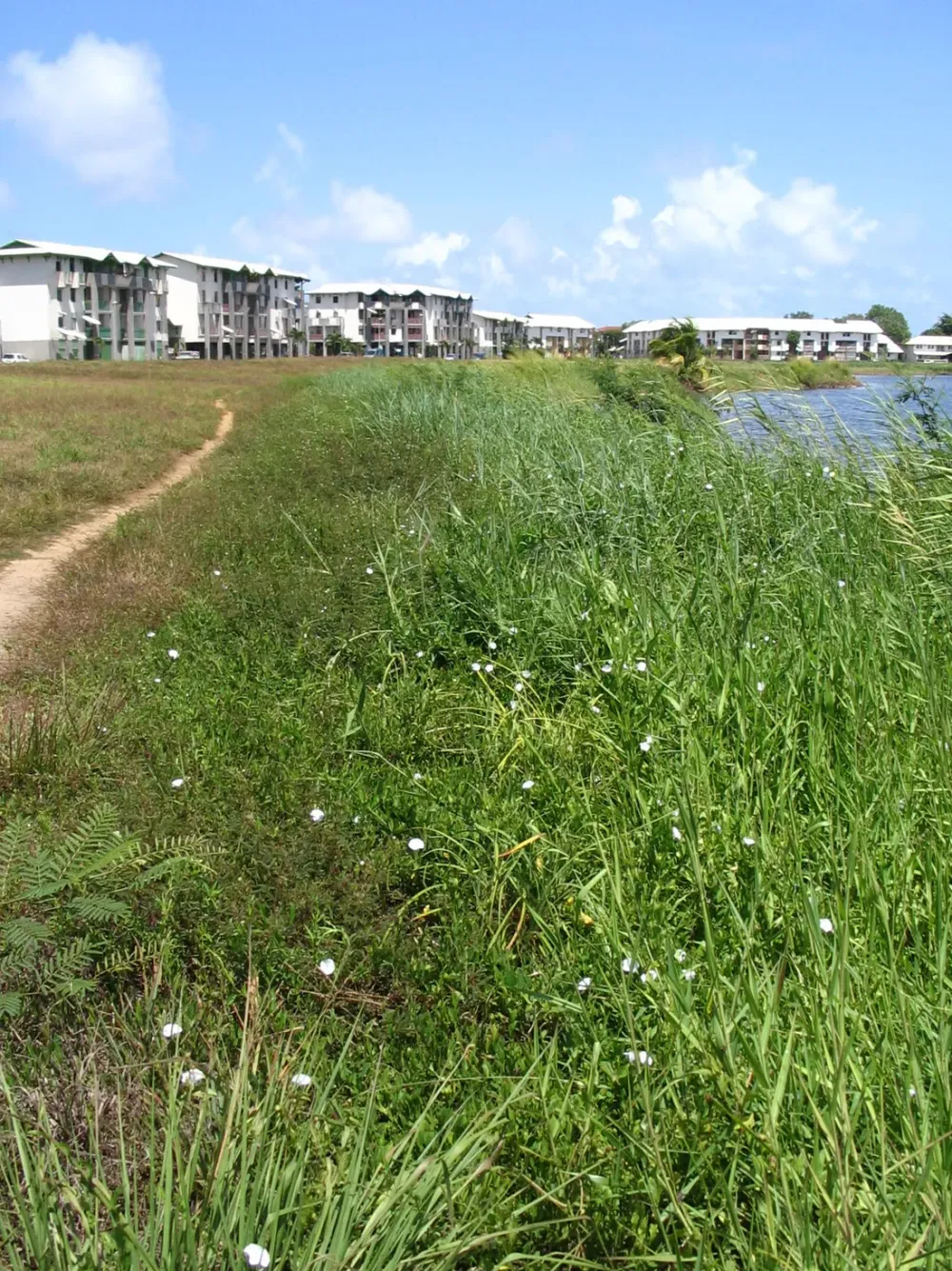
Kourou, French Guiana’s second town after Cayenne, has around 25,000 inhabitants. Located on the coast, some sixty kilometres west of Cayenne, it owes its modern development to the establishment of the Guiana Space Centre in the 1960s. The town was literally redrawn to house the engineers, technicians and space-industry staff who came to settle there.
That history explains an important particularity: a significant share of Kourou’s housing stock is occupied by employees of the sector, often on rotation, and many flats are managed by or on behalf of space companies. There is a genuine rental market, but also strong demand that tends to keep rents higher than in other French Guianese towns of comparable size.
How far is the commute?
The CSG covers a vast area to the west and north of the town. From Kourou’s residential neighbourhoods, expect a drive of anywhere from a few minutes to around twenty minutes depending on exactly where you work on the base (Ariane launch complex, Vega zone, technical centre, etc.). A car remains virtually essential day to day: public transport exists but is limited.
Understanding Kourou’s neighbourhoods
Before choosing a home, it helps to know the town’s geography. Kourou is organised into clearly distinct areas, each with its own atmosphere.
- The town centre and seafront: shops, market, administrative offices, close to the beach. Practical day to day and lively, though parking can be tricky.
- The residential neighbourhoods: houses and small developments, often popular with families, quiet and close to schools.
- The newer developments: new or recent builds, often with parking and sometimes a pool, favoured by space-industry managers.
- The more working-class and outlying areas: more affordable rents but quality and safety vary from street to street; visiting in person before committing is essential.
Our advice: don’t rely on an online listing alone. The reality of a neighbourhood in Kourou can vary sharply from one street to the next. A temporary stay on site, before signing a long-term lease, lets you scout out the areas that really suit you.
The crux of the matter: what budget for housing?
The cost of living in French Guiana is generally higher than in mainland France, and housing is no exception. In Kourou, demand linked to the space industry keeps a degree of pressure on rents.
Purely as an indication, and depending on condition, location and time of year:
- A studio or small one-room flat often falls within a monthly rent range of several hundred euros.
- A decent family three-room flat can mean a noticeably higher monthly budget, plus any service charges.
- Recent developments with amenities (secure parking, air conditioning, pool) sit at the top of the range.
These amounts vary with the season, the scarcity of available properties and negotiation. Also factor in the extras: security deposit, any agency fees, electricity (air conditioning weighs heavily on the bill in an equatorial climate), water, internet and home insurance.
Electricity and air conditioning
In French Guiana, heat and humidity are constant all year round. Air conditioning, at least in the bedrooms, is a real comfort for sleeping well. Expect a higher electricity bill than in mainland France if you air-condition several rooms. Well-designed homes (natural ventilation, ceiling fans, good orientation) help keep the cost down.
The real challenge: your first few weeks on site
This is the point many newcomers underestimate. Between setting foot in French Guiana and moving into your permanent home, several weeks often pass, sometimes more:
- the time needed to actually view properties (remote viewings are risky);
- the time needed to put together and get approval for a rental application;
- the shipping time for your furniture and container from mainland France, which can take several weeks by sea;
- any gap between your start date and the availability of a home.
Spending weeks in a hotel with your family and your suitcases is both uncomfortable and expensive. That is precisely where a furnished temporary housing solution makes all the difference.
Why choose furnished temporary accommodation
A furnished home rented for a few weeks offers several advantages during this transition phase:
- you’re comfortably settled, with a kitchen, bedding and equipment, without waiting for your container;
- you can explore neighbourhoods and view properties at your own pace, with full knowledge of the ground;
- you cut down on the stress of arrival, especially with children;
- you keep a stable base while your long-term rental application goes through.
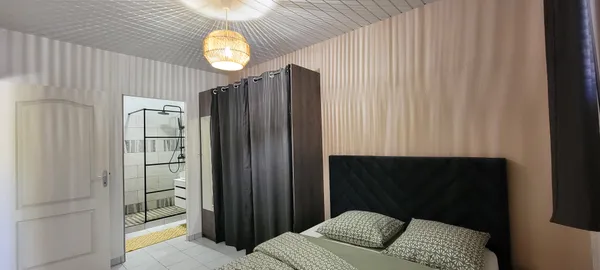
At Hostel Toucan, we offer exactly that: furnished accommodation suited to transitional stays in French Guiana. It’s a concrete answer to that tricky period between arrival and settling in permanently. For instance, Résidence Francis, with its air-conditioned studios and flats set around a pool in the Montabo district of Cayenne makes a steady base an hour’s drive from Kourou while you view properties. Feel free to contact us ahead of your relocation to lock in your dates.