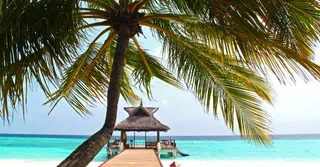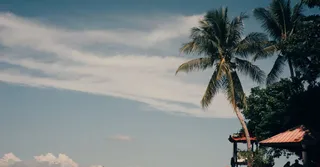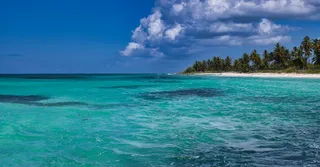
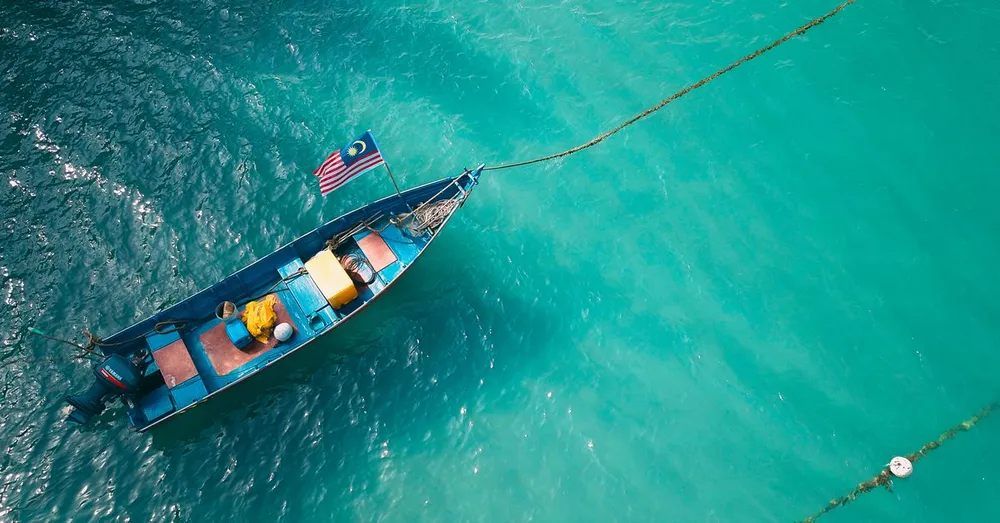
Cruising between the islets of the Grand Cul-de-Sac Marin or dropping anchor on a turquoise sandbank off Saint-François: it’s one of the most memorable experiences Guadeloupe has in store for its visitors. And here’s the good news—you don’t need a boating license to live it. On this limestone wing of Grande-Terre, several marinas rent out small motorboats you can pilot with no qualification required. The trick is choosing the right departure base, knowing exactly which zones you’re allowed to navigate, and understanding where you can legally anchor. Here’s a hands-on guide, tested on the water, to make your day a success.
Renting a boat without a license in Guadeloupe: what the regulations say
In France—and therefore in this Caribbean overseas region—you can pilot a motorboat without a license as long as the engine power doesn’t exceed 6 horsepower (about 4.5 kW). That’s the well-known regulatory limit. These small craft, often semi-rigid hulls of 4 to 5 metres, reach 8 to 12 knots and are perfectly suited to a day of coastal cruising in calm seas.
In practice, with an unlicensed boat you stay:
- Within 2 nautical miles of a shelter (port, beach, anchorage).
- Navigating by day only, returning before sunset.
- In sheltered waters, away from the Atlantic swell.
The marina gives you a 15- to 30-minute handover briefing: handling the engine, reading the chart, restricted zones, managing the anchor. It’s mandatory and reassuring. You’re also handed a waterproof phone or a VHF radio, life jackets, and a suggested route.
The best time to sail remains the dry season, from December to April: steady trade winds but a more manageable sea, with optimal visibility for snorkelling. In the wet season, squalls can catch you off guard, so set off early in the morning when the water is glassy.
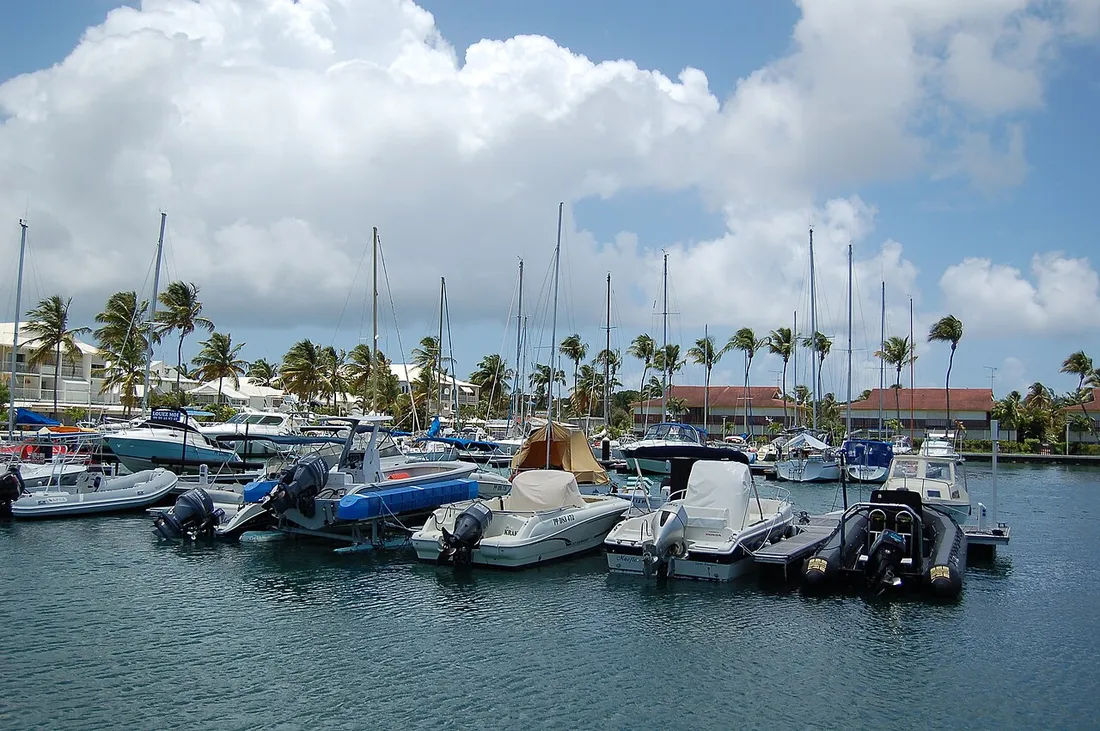
Comparing the marinas: Sainte-Anne vs Saint-François
The two flagship towns of Grande-Terre’s south coast hold most of the license-free rental offer. They open onto two very different worlds of navigation.
Sainte-Anne: protected lagoon and shallow waters
Sainte-Anne opens onto a lagoon enclosed by a reef barrier, which makes it the most reassuring playground for a first time at the helm. Caravelle Beach and its translucent water are within immediate reach.
- Navigation profile: very sheltered lagoon, white-sand seabeds, ideal for beginners and families with children.
- Typical distances: Pointe du Helleux, the offshore sandbanks, snorkelling spots 10 to 20 minutes away under power.
- Observed rates: from €180–250 for a half-day for an unlicensed hull (4–6 people), around €320–400 for a full day, fuel excluded.
- Strength: flat sea, perfect for building confidence; plenty of sailing and paddle clubs if you want to round out the day.
Saint-François: a springboard to Petite-Terre and Pointe des Châteaux
Saint-François, with its lively marina, is the most “adventure”-oriented base. This is where the excursions to the Petite-Terre reserve set off, even though that crossing often goes beyond the scope of license-free boating (a skipper is then preferable).
- Navigation profile: easy exit from the marina, access to the Saint-François lagoon, hugging the coast towards Pointe des Châteaux.
- Typical distances: inner lagoon 5 minutes away, the more exposed Anse à Caret on the east coast, Petite-Terre about 10 miles away (reserved for powerful boats with a skipper).
- Observed rates: €200–280 for a half-day without a license, €350–450 for a full day; Petite-Terre outings with a skipper run around €90–120 per person.
- Strength: lively marina, restaurants, paddle and kayak rental; a wider choice of operators.
Quick decision table
| Criterion | Sainte-Anne | Saint-François |
|---|---|---|
| Level required | Complete beginner | Beginner to intermediate |
| Sea | Very calm lagoon | Lagoon + exposed coast |
| Ideal for | Families, first-timers | Couples, explorers |
| Access to islets | Nearby sandbanks | Lagoon + coastal islets |
To go further into the distances between towns and planning a stay, our complete guide to Guadeloupe details the travel times between Grande-Terre and Basse-Terre.
License-free navigable zones and the most beautiful islets
The butterfly-shaped archipelago offers dozens of islets, but not all of them are reachable in a small hull. Here are the realistic areas depending on your base.
Departing from the south coast (Sainte-Anne / Saint-François)
- The sandbanks (fonds blancs): these shallow sandbanks, where the water reaches waist height in the open sea, are Guadeloupe’s postcard image. Anchor on a sandy bottom, swim and enjoy a floating aperitif.
- Pointe des Châteaux: to be skirted from a distance in calm seas; the cliffs sculpted by the Atlantic are spectacular from the water, but the area is exposed to swell.
- Îlet du Gosier: a small islet with its lighthouse, beach and snorkelling, accessible from nearby Le Gosier.
The Grand Cul-de-Sac Marin (north side)
This is the jewel for tranquil navigation, within the boundaries of the National Park. The mangrove, the coral barrier and several islets follow one after another:
- Îlet Caret: a crescent of white sand dotted with a few coconut palms, the most photogenic anchorage in the archipelago.
- Îlet à Fajou: a protected reserve, mangrove and birds; landing is regulated.
- The natural pool: a turquoise basin on the reef, where mooring on the buoys is mandatory.
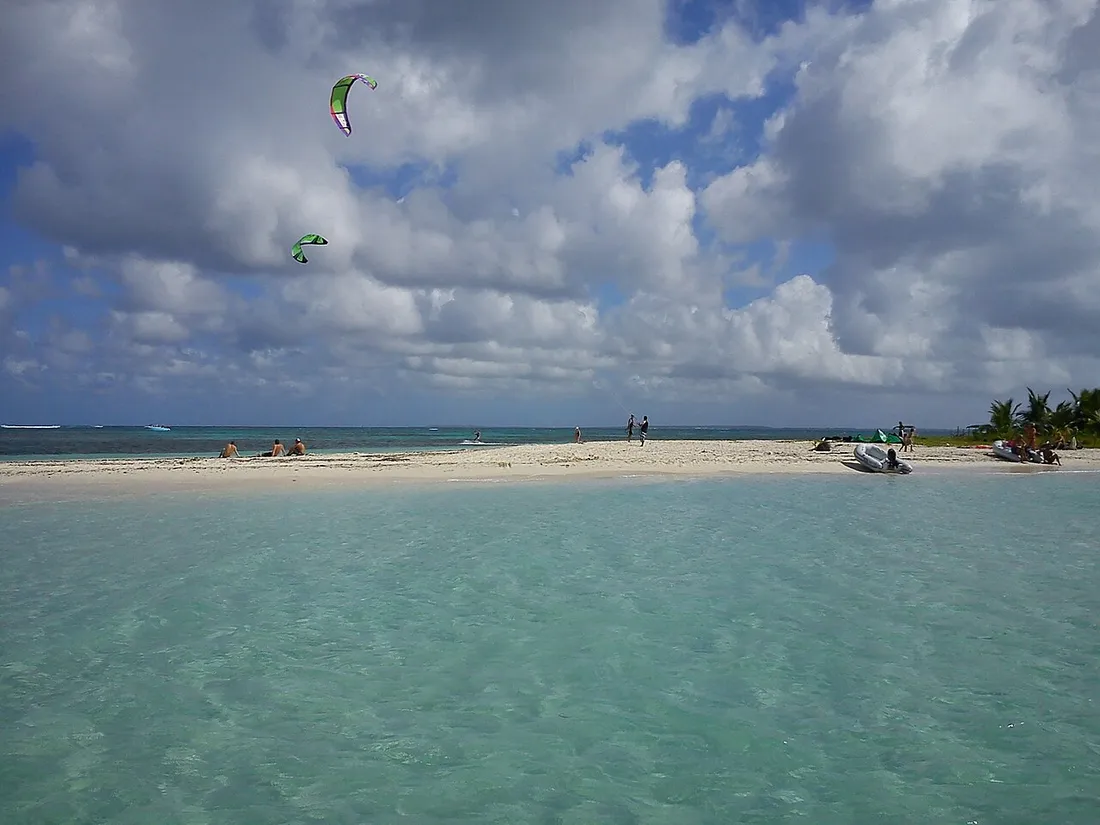
Authorized anchorages: the rules to respect on the islets
Anchoring just anywhere can cost you dearly and damages the seabed. A few principles make the difference between a local and a poorly informed tourist:
- Favour the eco-friendly mooring buoys where they exist (the natural pool, certain islets of the National Park). They keep the anchor from ploughing through the seagrass meadows and coral.
- Anchor only on sand, never on coral heads or seagrass beds, which are protected.
- Respect the strict reserve zones: at Fajou, as in certain parts of the Grand Cul-de-Sac Marin, landing and fishing are regulated or even prohibited.
- No fire, no waste, no removal of anything on the islets: most belong to the Conservatoire du Littoral or the National Park.
- Keep your distance from swimmers: a 300-metre coastal strip, reduced speed near the beaches.
For snorkelling, the Cousteau Reserve off Malendure and the Pigeon Islets (Basse-Terre side) remains the benchmark, but it’s best discovered on an organized excursion from Bouillante, not with a license-free boat from Grande-Terre.
Planning your day: insider tips
- Book the day before at the latest in high season (December–April, school holidays): unlicensed hulls go fast.
- Set off early, ideally before 9 a.m.: a smoother sea, soft light for photos, and you avoid the wind that picks up in the afternoon.
- Bring along: mineral sunscreen (to protect the seabed), plenty of water, a cooler, mask and snorkel, a waterproof bag, a cap.
- Fuel: often charged separately, count on €20 to €40 depending on the distance covered.
- Deposit: expect a card pre-authorization of €500 to €1,500 depending on the boat.
On the logistics side, staying right next to a base changes everything: you gain the flexibility to leave at first light and return without stressing about the drive. Our holiday rentals in Guadeloupe are hand-picked in Sainte-Anne, Saint-François and Le Gosier, just minutes from the marinas and the beaches.
Why book through Hostel Toucan
Our team lives here and sails on these waters. When you book your accommodation with us, you get a true local concierge service that points you towards the right nautical operators, warns you about sea conditions and steers you clear of the pitfalls.
- Direct booking, no platform fees: you pay the fair price.
- Free cancellation up to 7 days before arrival, because the Caribbean weather is hard to plan from afar.
- WhatsApp support 7 days a week: a question about a marina, an anchorage, a restaurant with your feet in the water? We answer.
Do you own a property on the south coast and would like to entrust it to a team that knows these nautical assets inside out? Discover our management offer for owners.
Book your waterfront accommodation with Hostel Toucan, and let us turn your day on the water into an archipelago memory.
FAQ
Do you really need a license to rent a boat in Guadeloupe?
No, not for small motorboats whose power doesn’t exceed 6 horsepower (about 4.5 kW). The marina provides a mandatory 15- to 30-minute handover briefing. Beyond that power, or to reach distant islets like Petite-Terre, a coastal license or a skipper is required.
How much does it cost to rent a license-free boat in Sainte-Anne or Saint-François?
Count on roughly €180 to €280 for a half-day and €320 to €450 for a full day for an unlicensed hull of 4 to 6 people, fuel not included (€20 to €40 on average). A deposit of €500 to €1,500 is generally required as a card pre-authorization.
Can you anchor freely on the islets?
Not everywhere. Favour the eco-friendly mooring buoys where they exist, and anchor only on sand, never on coral or protected seagrass beds. Some areas of the National Park, such as Îlet à Fajou, regulate or prohibit landing. No fire, waste or removal of anything is tolerated on the islets.
What is the best time to sail in Guadeloupe?
The dry season, from December to April, offers the best visibility and a more manageable sea. Set off early in the morning, before 9 a.m., to enjoy glassy water and avoid the wind that strengthens in the afternoon. In the wet season, watch for squalls and stick to the sheltered lagoons.