
Housing a construction crew for several weeks or several months in Martinique has nothing in common with booking two hotel nights for a one-off trip. The stakes change: keeping the budget under control over time, clean invoicing in the company’s name, recovering VAT where it applies, genuine comfort for workers who come home exhausted at night, and a single point of contact able to handle the unexpected. Whether you are a construction firm mobilised on a site in Fort-de-France, an engineering consultancy on assignment in Le Lamentin, a solar installer working across the whole island or a project manager over from mainland France for several months, long-term serviced accommodation answers constraints that neither a conventional hotel nor a mainstream holiday rental really covers.
This article sets out how to organise long-term construction accommodation in Martinique by the book: what serviced-accommodation status changes for your bookkeeping, how to obtain an invoice you can actually use in an expense claim, which areas to favour depending on where the site is, and what to check before signing. The goal: your purchasing department or site manager moves ahead with no nasty surprises.
Why the long term changes everything for a company
A long business stay cannot be managed like a short one. Over three, six or nine months, a few euros’ difference per night turns into several thousand euros on the final invoice. The logic shifts from a nightly price to an all-inclusive monthly cost.
In practice, several items become central when you house a team over time:
- Tiered pricing: beyond a certain number of nights, the nightly rate should drop appreciably compared with a tourist stay. As a guide, a “long-stay” rate is often well below the advertised public nightly rate, depending on the season and the length of commitment.
- Utilities included: water, electricity, internet, periodic cleaning. Accommodation where everything is bundled avoids juggling multiple bills and simplifies the accounts.
- Flexible dates: a site slips, gets extended or is halted. A provider who is flexible on extensions or early departures is worth its weight in gold.
- Rotating occupants: on a long project, the workers on site are not always the same. The accommodation must stay in the company’s name, regardless of who occupies it in a given week.
- Everyday equipment: a fully fitted kitchen for cooking your own meals (real savings compared with lunch and dinner out), a washing machine, decent bedding for proper rest.
Against these criteria, hotels quickly show their limits: high cost over time, no kitchen, night-by-night invoicing and little flexibility on extensions. Mainstream holiday rentals, meanwhile, often refuse long stays or cannot issue a compliant corporate invoice.

Serviced accommodation: the format built for business stays
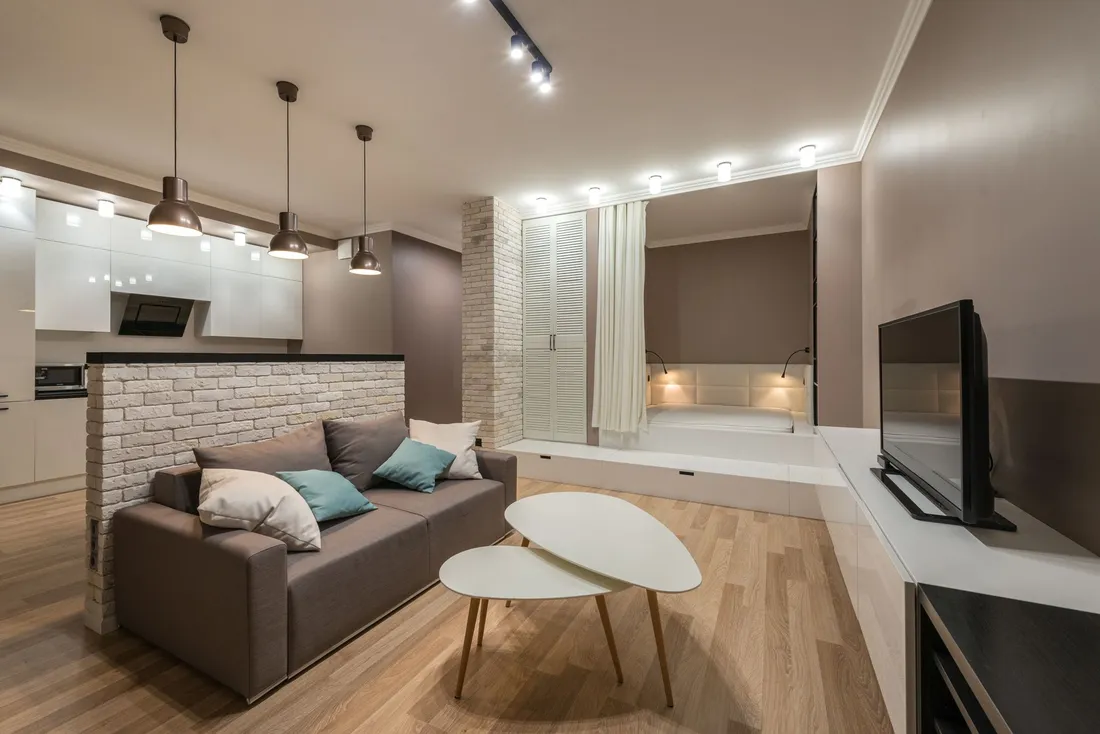
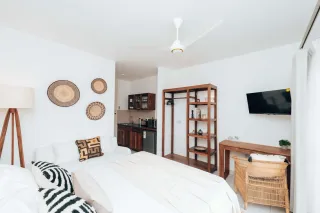
Serviced accommodation sits between the hotel and the standard furnished rental. It is a fully furnished property (villa, apartment, studio) offered with hotel-style services: linen provided, cleaning, equipment made available, a welcome on arrival. For a company, this category has one decisive advantage: the business operating it works as a genuine service provider, with all the accounting and tax obligations that entails.
A real supplier relationship
Booking serviced accommodation means dealing with a professional operator, not with a private individual renting out their home at weekends. In practice that means a clear contract, a named contact, regular invoicing and the ability to meet a purchasing department’s requirements: purchase order, negotiated payment terms, commitment over a defined period. For a site manager, having a single contact who handles the accommodation from A to Z (arrival, departure, technical issue, extension) frees up valuable time.
The comfort that makes the difference over time
On a stay lasting several months, comfort is not a luxury, it is a driver of productivity and team retention. A well-housed worker, with a proper bed, a kitchen, reliable internet and somewhere to unwind, turns up on site in far better shape. Serviced properties are designed for extended use, whereas a hotel room starts to weigh on people after a few weeks.
Invoicing, expense claims and VAT: the heart of the matter for your accounts
This is where the serviced-accommodation difference really counts for a company. A private individual renting out their home generally cannot issue an invoice usable in a professional expense claim, still less one with VAT. A professional serviced-accommodation operator can.
The invoice in the company’s name
Every stay results in an invoice made out in your company’s name, with its registered name, company registration number and address. That is the basis of any expense claim your accounts department will accept, and of any justification in the event of an audit. You are not producing a private landlord’s receipt, but a proper invoice for a service provided.
The compliant expense claim
A usable professional accommodation invoice must carry specific details. Here is a checklist to run through before validating an invoice for your accounts:
- Registered name and full address of the accommodation provider, with company registration number
- Registered name and address of your company (the customer)
- Invoice number and issue date
- Clear description of the service (accommodation, stay dates, property address)
- Amount excluding tax, VAT rate and amount, total including tax
- Payment terms and due date
VAT: when and how
Serviced accommodation bundled with services (like hotels) falls under a specific VAT regime, different from bare furnished rentals which are most often exempt. Depending on the operator and its situation, the service may be invoiced with VAT, which potentially opens up a right to deduction for a VAT-registered business. One caveat: the rules for recovering VAT on staff accommodation carry well-known restrictions under French law, and the position differs depending on whether it concerns directors, employees or third parties. This question deserves to be validated with your accountant on a case-by-case basis: we do not provide tax advice, but we issue a clear, detailed invoice that allows them to decide.
Payment by bank transfer
For a company, payment by bank transfer is the norm: traceability, simplified reconciliation, compliance with internal procedures. A professional provider accepts transfers, offers suitable payment terms (deposit then balance, or monthly invoicing on a long stay) and supplies bank details. It is a point to settle at the quotation stage.
Where to house your teams in Martinique, depending on the site
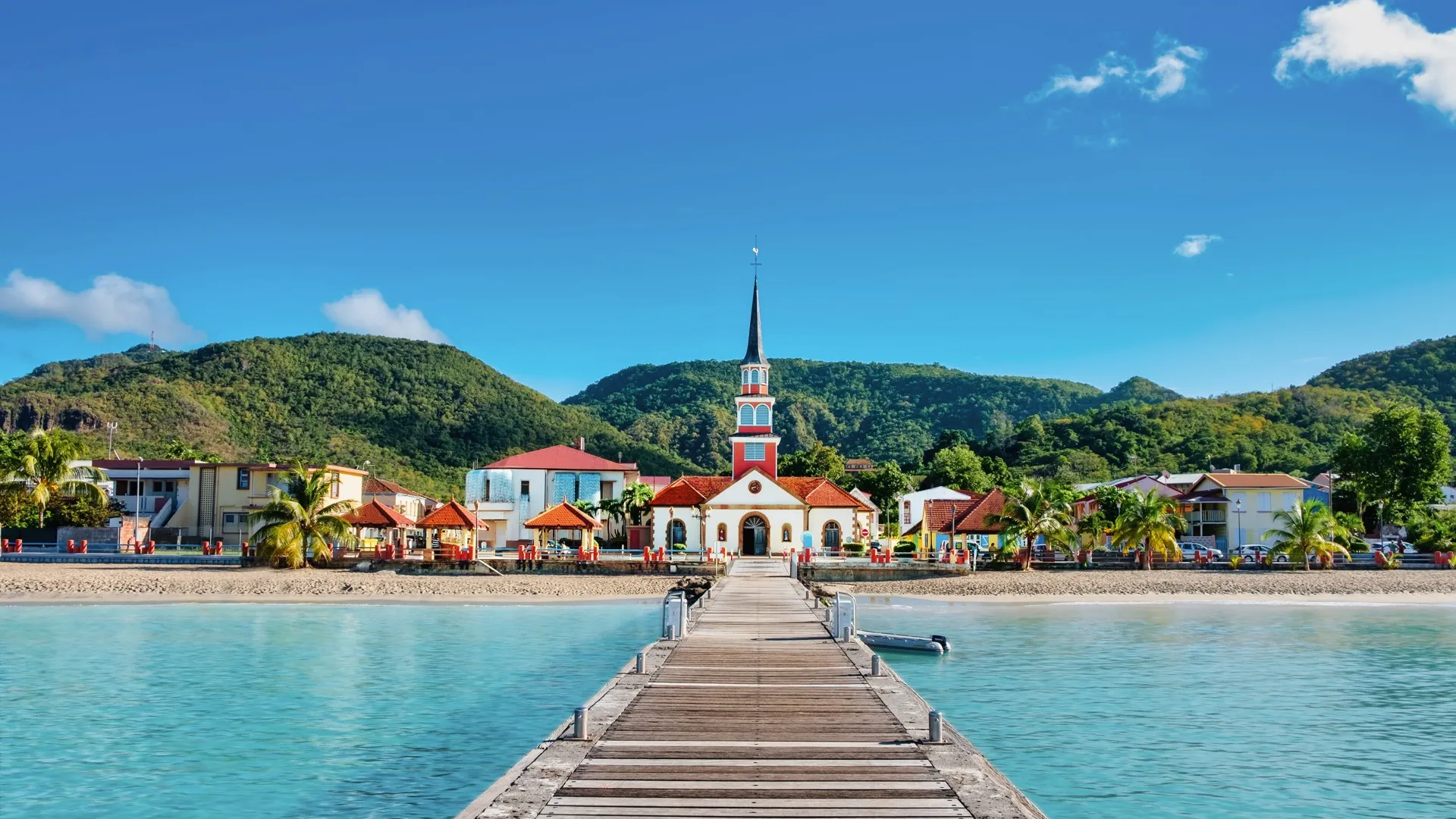
The right area depends first of all on where the site is and on the daily commute. Martinique is small, but its terrain and traffic jams, particularly around the Fort-de-France conurbation, quickly stretch journey times at peak hours. Here are the main zones to know.
The central conurbation: Fort-de-France, Le Lamentin, Schoelcher
This is the island’s economic and administrative heart. Le Lamentin concentrates the Jambette business park, Aimé Césaire airport and numerous industrial and commercial zones: it is often the most central base for a project covering the whole island. Fort-de-France offers proximity to government offices, the port and major facilities. Schoelcher, just to the north, is more residential and university-oriented, a good quiet compromise a few minutes from the centre. For a site within the conurbation, staying inside this triangle keeps travel to a minimum.
The north: Saint-Pierre, Le Carbet, the Caribbean coast
For a site on the north Caribbean coast (renovation, utility networks, tourism), Saint-Pierre and Le Carbet offer a quieter setting and often more affordable accommodation, at the foot of Mount Pelée. Do factor in the drive to the centre, though, if supplies or head office are based there.
The south: Le Marin, Sainte-Anne, Le Diamant, Rivière-Salée
The south is in high demand (tourism, Le Marin marina, residential). For a site in this area, staying locally at Le Marin, Sainte-Anne, Le Diamant or Rivière-Salée avoids the commute to Fort-de-France, which is particularly gruelling in the morning on the southern route. It is also a zone where tourist demand makes rates vary with the season, hence the value of a long-term commitment that smooths out the price.
The east: Le Robert, La Trinité
The Atlantic coast, around Le Robert and La Trinité, serves sites in the east of the island with generally quieter accommodation and good access to the Caravelle peninsula.
The right instinct: choose the zone that minimises the team’s daily mileage, not the lowest rate in absolute terms. One hour less on the road per day, per person, over several months, weighs far more than a few euros of rent.