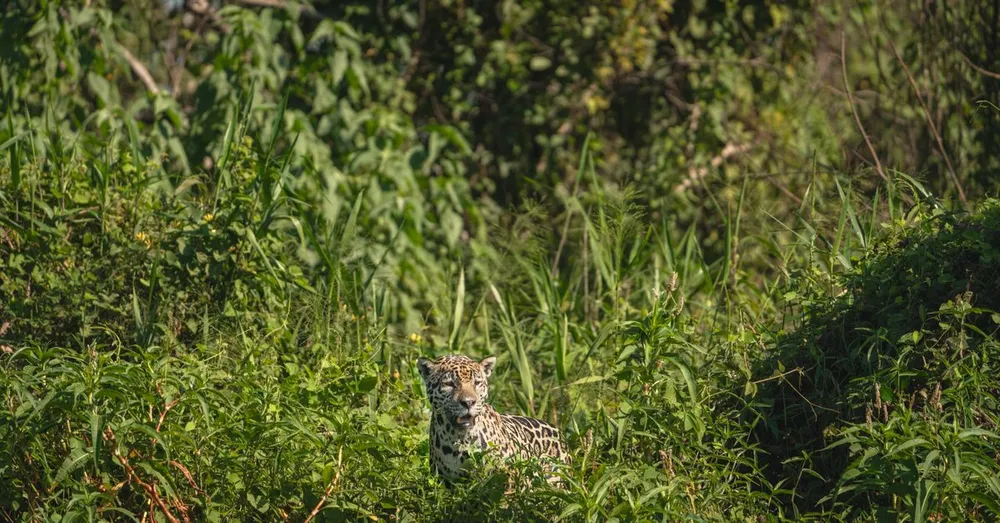
Spotting a jaguar ten metres away, crossing paths with a tapir wallowing in the mud, looking up to find a fierce harpy eagle perched on its branch: in French Guiana, the Amazon rainforest shelters fabulous wildlife, but it rarely reveals itself. After hours of dugout canoeing or trekking through the jungle, many families come back empty-handed, the children disappointed to have seen nothing but mosquitoes. That is precisely why the Zoo de Guyane, in Macouria, has become a stop I systematically recommend to the travellers we welcome. Here, wildlife is guaranteed.
Set about twenty minutes from Cayenne, along the road to Montsinéry, this 12-hectare animal park features exclusively species from the region: no lions or elephants, but howler monkeys, caimans, macaws and sloths. A concentrated slice of the Amazon, designed for beginner walkers and pushchairs alike.
Why the Zoo de Guyane is the safest wildlife option with children
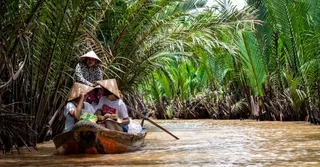
French Guiana is a biodiversity sanctuary, but it is also a land where nature refuses to be commanded. In the Kaw marshes or on the Maroni River, sightings depend on luck, patience and often absolute silence, two qualities rarely compatible with a six-year-old.
The zoo turns that logic on its head. In a two- to three-hour stroll, you are (almost) certain to see:
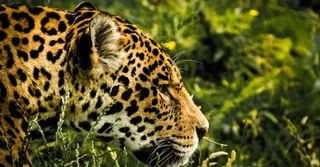
- jaguars and pumas, the emblematic big cats of the Guiana Shield;
- giant otters, playful and noisy, often the stars of the visit;
- tapirs, peccaries and agoutis on the ground;
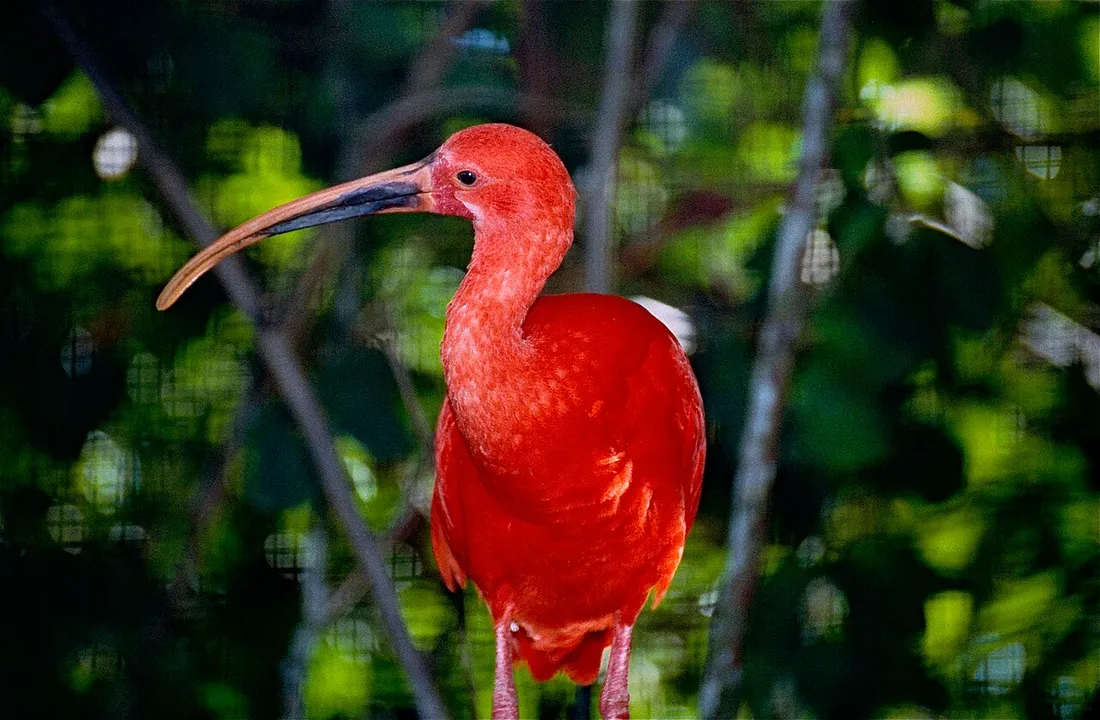
- dozens of bird species: macaws, toucans, scarlet ibises, raptors;
- caimans and anacondas in the reptile section;
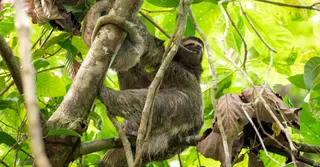
- monkeys (spider monkeys, sakis, tamarins) and the famous sloths.
For families with only a few days in the region, it is the assurance of going home with memories and photos, without depending on the weather or the season.
The canopy trail: the highlight of the visit
What truly sets the park apart from conventional zoos is its canopy trail. A suspended walkway winds several metres above the ground, at the level of the treetops, where most of Amazonian life is concentrated. You make your way along wooden boardwalks and platforms, level with the branches where birds and primates hide.
It is a gentle canopy experience, accessible without a harness or any particular fitness, ideal for helping children understand why the Guianese forest is so dense and so vertical. Allow 30 to 45 minutes for this section alone if you take the time to observe.
Practical information to plan your visit
Here are the concrete pointers to know before you set off. As opening hours and prices change, always check the latest information on the park’s official website before travelling.
- Address: route de Montsinéry, commune of Macouria, about 25 km from Cayenne.
- Getting there: a car is essential, as everywhere in French Guiana. Allow 25 to 35 minutes from Cayenne or Rémire-Montjoly, about 20 minutes from Félix-Éboué airport in Matoury, and 45 minutes to 1 hour from Kourou.
- Length of visit: plan for 2 h 30 to 3 h 30 to go round without rushing.
- Budget: expect a rough range of €16 to €20 per adult and €10 to €13 per child, with family rates commonly available. Check current prices online.
- Parking: free on site.
- Food: a refreshment point and picnic areas are available; a cooler in the boot remains a safe bet.
What time and what season to come
Under French Guiana’s equatorial climate, heat and humidity rise quickly. The best time to visit is the morning, right at opening, when the animals are at their most active and the light beneath the canopy is ideal for photos. Late afternoon also works well.
As for the calendar, the dry season, from mid-July to mid-November, offers the most comfortable conditions: less muddy trails, rarer downpours. But the zoo can be visited all year round; in the rainy season, a tropical shower rarely lasts long and a light poncho is enough.
A handy reminder for travellers coming from mainland France: French Guiana runs 5 hours behind in winter and 6 hours in summer compared with Paris. Make the most of the time difference in your first few days, when you naturally wake up early, to arrive right at opening.
What to bring
- Closed shoes or trainers: the boardwalks can be slippery.
- Effective (tropical) mosquito repellent, especially at the end of the day.
- Plenty of water, a cap and sunscreen.
- Light long-sleeved clothing for the canopy.
- A rain poncho, even in the dry season.
Don’t forget your health file either: the yellow fever vaccine is mandatory to stay in French Guiana. A formality to sort out before departure, unrelated to the zoo itself, but one that many people forget.
Macouria, much more than a zoo
Stopping in Macouria for the animal park alone would be a shame. This fast-growing commune, halfway between Cayenne and Kourou, makes an excellent base for exploring the western part of the metropolitan area. Its position on national road 1 makes it a strategic starting point.
From Macouria, you can easily combine, on a single day or a single stay:
- a morning at the Zoo de Guyane, then the afternoon in Kourou (45 min) to visit the Guiana Space Centre free of charge and, if the schedule allows, watch an Ariane 6 or Vega launch;
- a trip towards the Montsinéry-Tonnegrande road, with its crocodile farms and savannah landscapes;
- the return to Cayenne to wander the Place des Palmistes and the market, rich in Creole, Hmong and Brazilian flavours.
That is the whole appeal of a well-organised stay in French Guiana: from a central anchor point, you alternate guaranteed wildlife, space adventure and culture. To build this itinerary in detail, see our complete guide to French Guiana, which gathers our residents’ advice on every commune and every must-see, from the Salvation Islands to Saint-Laurent-du-Maroni.
Following up with the great classics
The zoo fits perfectly into a wider discovery loop. Once they have had their fill of captive wildlife, many of our travellers continue towards sightings in the wild: nocturnal caimans in the Kaw marshes, scarlet ibises at sunset, or a journey up the Maroni River by dugout canoe on the Saint-Laurent side. The zoo then plays the role of an introduction: children who have identified the species up close then spot them more easily in the wild.
Our local concierge advice
At Hostel Toucan, we know the ground because we live here. The Zoo de Guyane is one of those addresses we slip to our travellers with children as soon as they arrive, because it never disappoints and lends itself to a flexible schedule. To make the most of Macouria and the western part of the metropolitan area, the best option is to stay nearby rather than pile up long journeys.
Our properties for accommodation in French Guiana are selected for families: space, air conditioning, a fully equipped kitchen to prepare the zoo picnic, and locations designed to move easily between Cayenne, Matoury, Macouria and Kourou. By booking directly, you avoid platform fees, you benefit from free cancellation up to 7 days before arrival, and you stay in touch with WhatsApp assistance 7 days a week: handy for arranging a visit, asking for a route or reacting to a change of plan.
Do you own a property in French Guiana and want to make it profitable while offering this level of local service? Discover our dedicated support for owners.
The Zoo de Guyane is not just a zoo: it is the ideal gateway to the Amazon, the one that reconciles the parents’ thirst for adventure with the children’s shorter legs. A morning on the canopy trail, and the whole family leaves with the Amazon filling their eyes, before setting off to explore it for real.
FAQ
How much time should I plan for visiting the Zoo de Guyane in Macouria?
Allow between 2 h 30 and 3 h 30 to go round at a leisurely pace, canopy trail included. With young children or for photo and picnic breaks, a full half-day is ideal. The morning, right at opening, remains the best slot: the animals are more active and the heat more bearable.
Is the Zoo de Guyane suitable for young children and pushchairs?
Yes. The trails and boardwalks are passable with an all-terrain pushchair and the visit requires no particular fitness. The canopy trail, accessible without equipment, is a big hit with children. Bring water, mosquito repellent and closed shoes, as the walkways can be slippery.
How do I get to the Zoo de Guyane from Cayenne or the airport?
The park is located in Macouria, on the route de Montsinéry, about 25 km from Cayenne. Allow 25 to 35 minutes by car from Cayenne or Rémire-Montjoly, and about 20 minutes from Félix-Éboué airport in Matoury. A car is essential: no regular transport line serves the site conveniently.
What is the best time of year to visit?
The zoo can be visited all year round, but the dry season, from mid-July to mid-November, offers the most comfortable conditions: less muddy trails and rarer downpours. In the rainy season, the showers are brief and a light poncho is enough. In any case, favour the morning for the cooler air and animal activity.