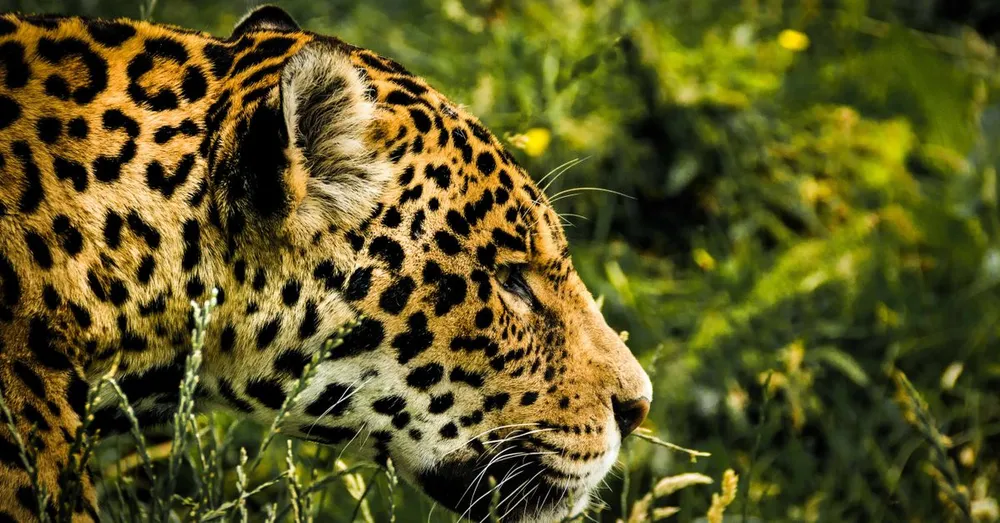
The first time someone told me about the jaguar of French Guiana, a Maroni boatman smiled at me: “He sees you long before you ever see him.” That sums up the whole magic — and the humility — of watching Amazonian wildlife in this French overseas department. Here, forest covers more than 90% of the territory, and every outing is a lottery in which patience is the only real winning ticket. In this guide, as a resident, I share where to maximise your chances of glimpsing the jaguar in French Guiana, the tapir and the howler monkeys, while staying respectful of the living world.
Why French Guiana is a paradise for wildlife watching
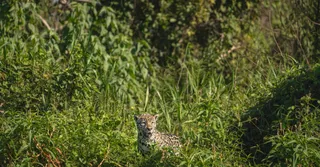
French Guiana has Cayenne as its capital, around 290,000 inhabitants, the euro in your pocket and one of the densest pockets of biodiversity on the planet. It is home to hundreds of mammal species, more than 700 bird species and a virtually untouched primary forest. The jaguar (Panthera onca), the third-largest cat in the world, reigns here as the apex predator.
Let’s be honest from the outset: seeing a jaguar in the wild is exceptional. Even the most seasoned local guides come across only a handful each year, often at the bend of a forest track at dawn. Spotting its tracks, however, listening to the living territory it inhabits, and crossing paths with tapirs, sloths, caimans, macaws and howler monkeys: all of that is well within reach if you go about it the right way.
When to come: the dry season changes everything
The ideal window runs from mid-July to mid-November, the dry season. The tracks are passable, the animals gather around the shrinking water points, and the night outings aren’t drowned in downpours. It’s also the period when your chances of an encounter climb sharply.
A few practical reference points before you set off:
- Time difference: -5h in winter, -6h in summer compared with Paris.
- Dialling code: +594.
- Yellow fever vaccination required to enter the territory.
- A car is essential: no serious natural site is accessible without a vehicle.
- Arrival: Félix-Éboué airport, in Matoury, about fifteen minutes from Cayenne.
Where to maximise your chances: the best spots
The Kaw marshes: the beating heart of the wildlife
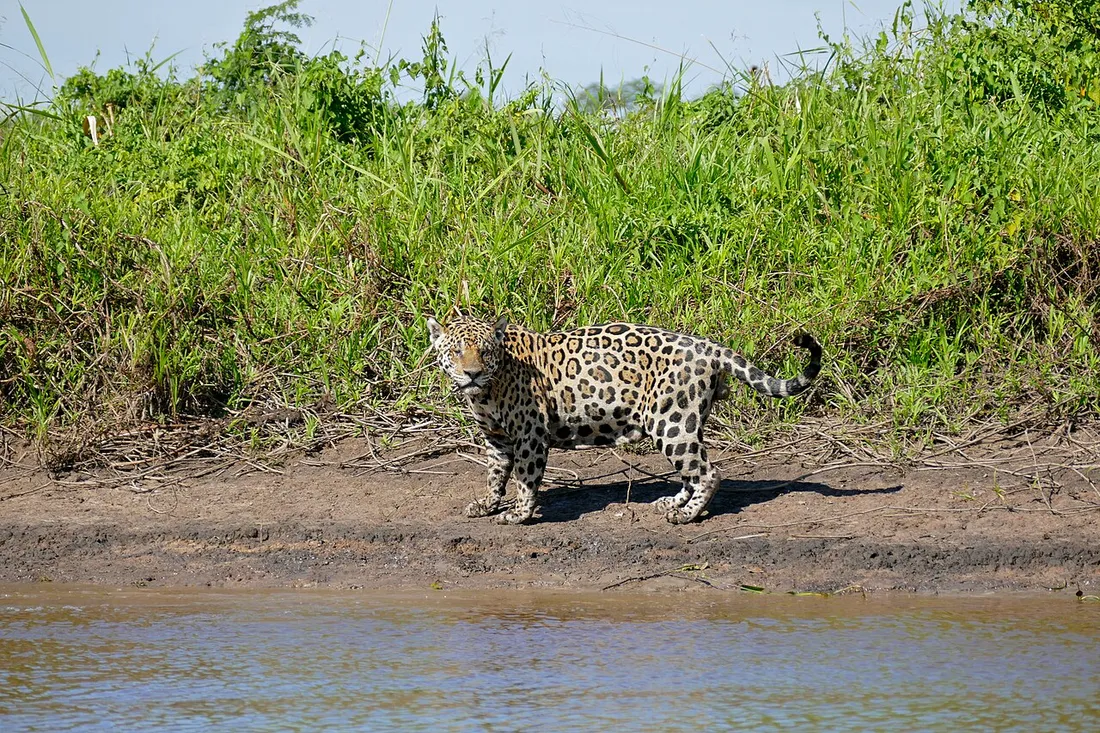
If I could recommend only one place, it would be the Kaw marshes, about 1h30 of road and then track from Cayenne. This vast protected wetland is one of the last refuges of the black caiman, which can exceed 4 metres. The night outing by pirogue, headlamp in hand, watching the red eyes of the caimans glint in the darkness, is unforgettable.
It’s also here that the chances of crossing paths with a jaguar coming to drink or hunt along the edge of the marsh are among the highest in French Guiana. Plan on spending a night on site in a carbet (a traditional shelter) to make the most of dawn and dusk, the two windows when wildlife is most active. A realistic budget for a guided excursion with an overnight stay: around €120 to €200 per person depending on the package.
The Maroni river by pirogue: total immersion
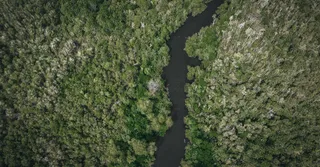
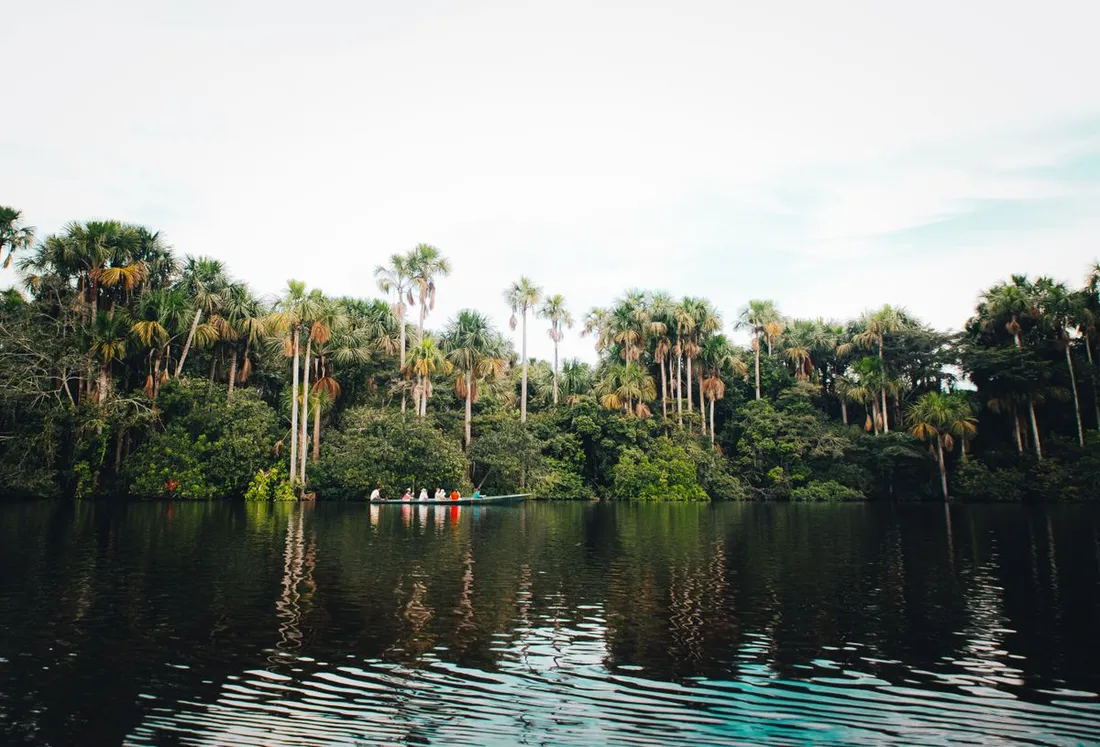
Heading up the Maroni river by pirogue from Saint-Laurent-du-Maroni (about 250 km and 3h of road from Cayenne) plunges you into another rhythm. As you drift along, you can observe red howler monkeys whose calls carry for several kilometres, agami herons, and sometimes a tapir swimming across. The banks, less frequented, raise the chances of discreet encounters at daybreak. Saint-Laurent is also worth the detour for its Camp de la Transportation, the famous penal colony.
The trails of Rémire-Montjoly and Matoury
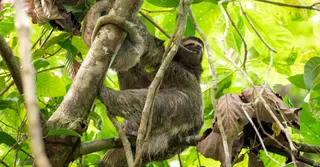
No need to travel far to get started. The Rorota trails in Rémire-Montjoly or the tracks around Matoury offer, from early morning, squirrel monkeys, three-toed sloths, iguanas and a generous bird life. It’s the perfect warm-up on your very first morning, before the more committing expeditions.
The Îles du Salut: accessible wildlife off Kourou
Off the coast of Kourou, the Îles du Salut combine penal history with surprisingly familiar wildlife: agoutis, monkeys, macaws flying over the archipelago. The catamaran crossing takes about an hour. It’s an easy outing, ideal for families, to pair with the free visit of the Guiana Space Centre in Kourou and, with a little luck on the dates, an Ariane 6 or Vega launch.
Watching the jaguar and the wildlife ethically
Seeing an animal never justifies harming it. Here are the rules I apply and ask of every traveller I guide:
- Never feed the animals: a jaguar or a monkey accustomed to humans becomes an animal in danger.
- Keep your distance: no close-up selfies, no chasing. We observe through binoculars.
- Limit noise and light: headlights and headlamps aimed too long stress nocturnal wildlife.
- Choose licensed local guides, trained to respect protected environments (Kaw, nature reserves).
- Leave nothing behind: we carry out all our waste, including organic waste.
- Refuse any contact with captive wildlife presented as an “attraction.”
The right mindset: you don’t “tick off” the jaguar like a box. You enter its territory as a guest. And paradoxically, it’s that humble posture that offers the most beautiful encounters.
Building a one-week wildlife itinerary
Here is a realistic outline for a week, keeping the car as the common thread:
- Days 1-2: arrival at Félix-Éboué, getting used to Cayenne (Cayenne market, Place des Palmistes), first wildlife morning at the Rorota.
- Days 3-4: road to the Kaw marshes, night in a carbet, night caiman outing and dawn over the marsh.
- Day 5: Kourou, the Guiana Space Centre and the Îles du Salut.
- Days 6-7: heading to Saint-Laurent-du-Maroni, pirogue on the Maroni and a visit to the penal colony.
To dig deeper into the logistics, the distances and the seasons, I’ll point you to our complete guide to French Guiana, which details every step.
Where to stay to roam easily
The crux of it all is having a comfortable, well-placed base to chain together dawn outings. At Hostel Toucan, we offer holiday rentals in Cayenne, Rémire-Montjoly, Matoury and Kourou, designed for nature travellers: easy early departures, parking for your rental car, and personalised on-the-ground advice.
Booking directly has real advantages:
- No platform fees: you pay the fair price.
- Free cancellation up to 7 days before arrival — handy when you depend on the weather.
- WhatsApp support 7 days a week: a reliable guide at Kaw, a question about a track, we answer you.
Discover our accommodation on accommodation in French Guiana. And if you own a property here, our concierge service is detailed on the owners page.
A word from the resident
The jaguar, you may not “win” it this time. But French Guiana will offer you a thousand other thrills: the call of a howler at dawn, the eyes of a caiman in the night of Kaw, a tapir surprised on the bank of the Maroni. Come in the dry season, with good guides, plenty of patience and a deep respect for the living world. The rest, the forest takes care of. And who knows — at the bend of a track, in the grey light of early morning, perhaps he, this time, will be willing to let himself be seen.
FAQ
Can you really see a jaguar in the wild in French Guiana?
Yes, but it’s rare. The jaguar is discreet and territorial: even local guides come across only a handful each year, mostly at dawn on forest tracks or along the edges of the Kaw marshes. Patience and a good guide are essential; you’ll more often see its tracks than the animal itself.
What is the best time to watch wildlife in French Guiana?
The dry season, from mid-July to mid-November. The tracks are passable, the animals gather around the water points and the night outings aren’t hampered by rain. It’s the most favourable window for the jaguar, the caimans and the howler monkeys.
Which animals are you most likely to spot?
Far more accessible than the jaguar: black caimans in the Kaw marshes, red howler and squirrel monkeys, sloths, tapirs, agoutis, iguanas, as well as a rich bird life (macaws, agami herons). The Rorota trails and the Maroni river are excellent observation grounds.
Do you need a vaccine or a vehicle for these excursions?
The yellow fever vaccine is mandatory to enter French Guiana. A rental car is essential: no serious natural site is accessible without a vehicle. Also plan for a licensed local guide for the Kaw marshes and the outings on the Maroni.