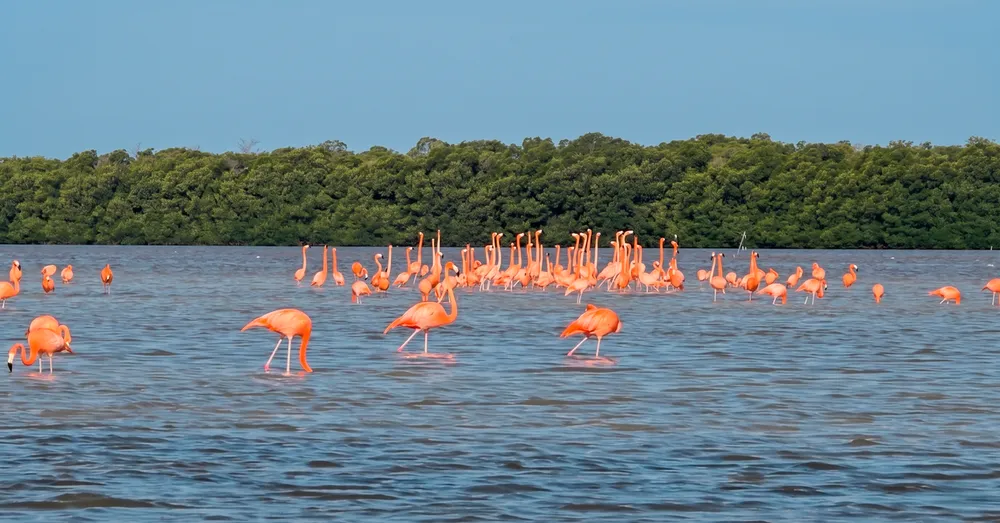
Paddling through the mangrove of the Grand Cul-de-Sac Marin means stepping into a world that no road will ever reveal. Here, between Grande-Terre and Basse-Terre, in the hollow of Guadeloupe’s butterfly shape, stretches the largest lagoon in the Lesser Antilles: 15,000 hectares of calm waters protected by the longest coral reef of the Antillean arc (about 25 km). When I guide travelers along these channels, I always tell them the same thing: switch off the engine in your head, let your arms work gently, and the wildlife will come out on its own. That’s exactly what I’m going to walk you through here, along with the right habits so you disturb nothing.
The Grand Cul-de-Sac Marin mangrove is the heart of a protected reserve, partly included in the Guadeloupe National Park and recognized by the Ramsar Convention for its wetlands. The kayak is the most respectful way in: silent, wakeless, able to slip through channels barely a meter wide where motorboats cannot follow.
Why explore the Grand Cul-de-Sac Marin by kayak
The lagoon is layered into several zones that you cross stroke by stroke. The deeper you go, the denser the living world becomes.
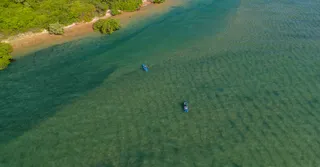
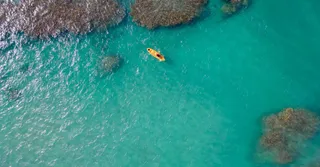
- The reef flat and seagrass beds: shallow turquoise waters (1 to 2 m), carpeted with seagrass where green turtles graze and which shelters juvenile fish.
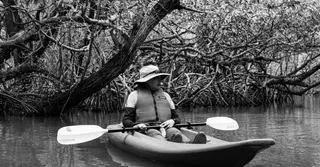
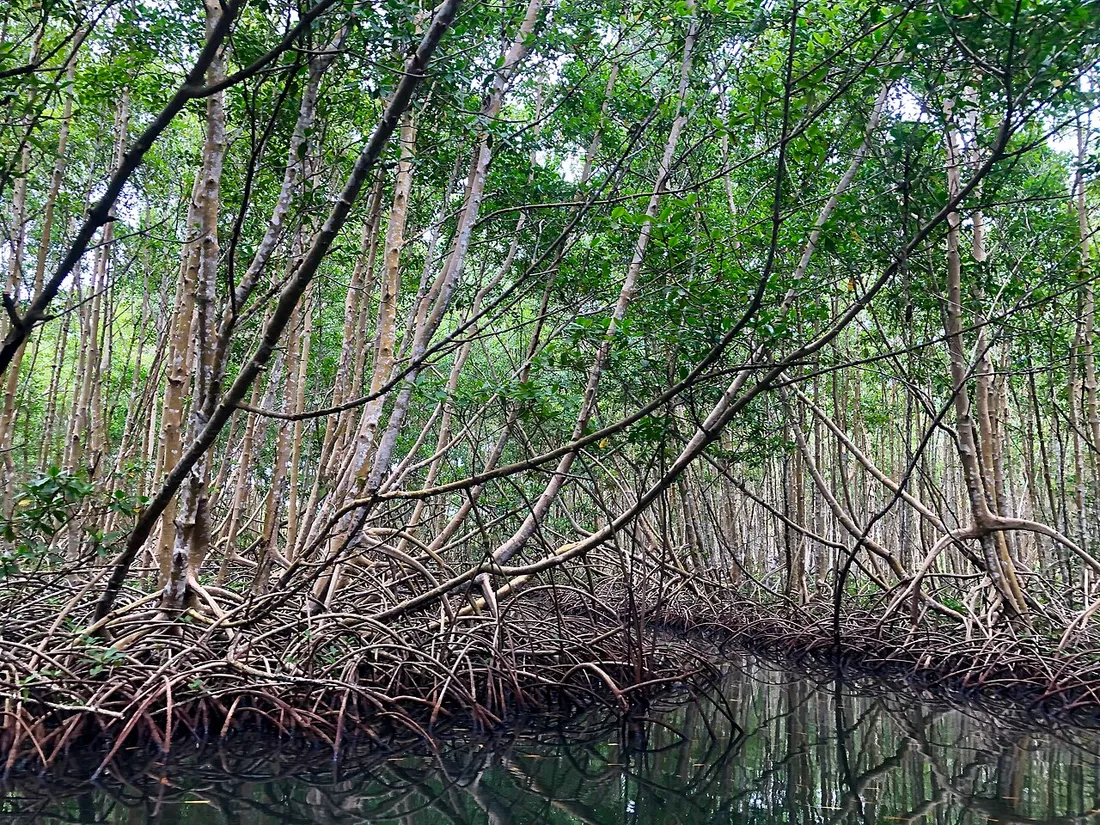
- The fringe of red mangroves: their stilt roots plunge into the brackish water and form a natural nursery for shrimp, crabs and fry.
- The inner channels: corridors of shade and silence where wildlife concentrates, such as the famous Belle-Plaine channel or the waterways behind Îlet Caret.
- The mangrove islets: these isolated mangrove islets, sandbanks fringed with mangroves, serve as roosting and nesting grounds for seabirds.
The kayak lets you string these habitats together seamlessly, self-guided, at the pace of your gaze. It is also the only mode that truly respects the animals’ peace: no waves, no noise, no pollution.
Three launch points
Most outings set off from the north coast of Basse-Terre or the east of Grande-Terre:
- Vieux-Bourg (Morne-à-l’Eau): the launch point closest to the mangrove channels, ideal for a first time.
- Sainte-Rose (northern Basse-Terre): access to Îlet Caret, Grand Îlet and the coral reef.
- Port-Louis and Petit-Canal: the Grande-Terre side, setting off toward the vast seagrass beds and the Babin mangrove.
Allow 25 to 40 minutes’ drive from Pointe-à-Pitre, a little more from the seaside towns such as Le Gosier, Sainte-Anne or Saint-François.
Mangrove wildlife: what you’ll really see
This is the heart of the experience. The Grand Cul-de-Sac Marin mangrove is a sanctuary of biodiversity, and the kayak is its floating observatory.
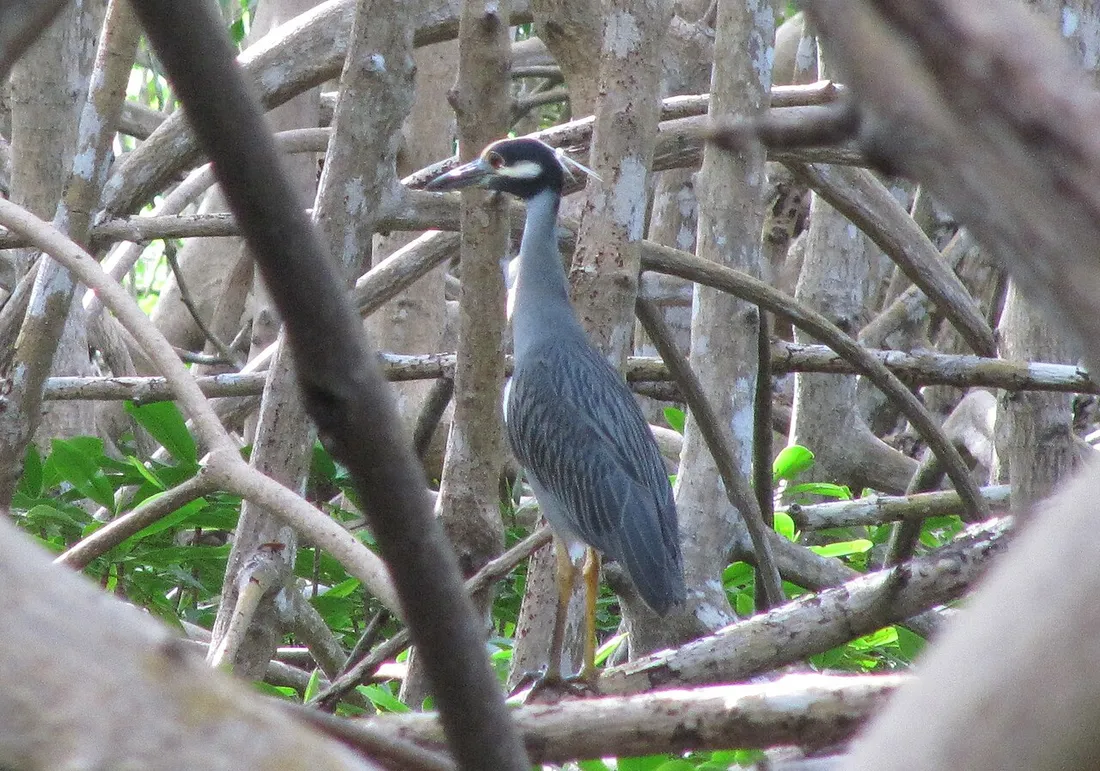
Birds, kings of the lagoon
Look up toward the low canopy of the mangroves:
- The magnificent frigatebird, a vast black glider with M-shaped wings, soaring without a single beat above the islets.
- The snowy egret and the green heron, standing motionless on the roots, lying in wait for fish.
- The brown pelican, diving in a steep plunge just a few meters from the kayak.
- The ringed kingfisher and the yellow warbler, more discreet, given away by their song.
- On the islets, colonies of terns and gulls nest in spring: we steer around them, never approaching.
The best time for observation remains early morning (before 9 a.m.) or late afternoon, when the heat eases and the birds feed.
Crabs, land crabs and the small wildlife of the roots
At water level, the show is just as alive. The land crab (cardisoma) hides in the burrows of the dry mangrove, while fiddler crabs wave their oversized claw over the mud. On the mangrove roots, fix your gaze on:
- the mangrove oysters, clinging to the submerged roots;
- the anoles and small lizards darting across the trunks;
- the silvery schools of juvenile jacks and snappers that find refuge in the tangle of roots.
Beneath the hull, in the seagrass beds, it’s not unusual to come across a green turtle rising to breathe, or a stingray gliding over the sand. Buttonwood and other coastal trees (sea hibiscus, the manchineel to avoid absolutely) make up the plant backdrop of these banks.
Routes and duration: what to choose for your level
The Guadeloupe mangrove kayak can be enjoyed at every level, provided you match the distance to the wind and the tide.
| Outing | Duration | Distance | For whom |
|---|---|---|---|
| Channels discovery | 1 h 30 - 2 h | 4-6 km | Families, beginners |
| Mangrove + seagrass beds | 3 h | 8-10 km | Intermediates |
| Îlet Caret / reef | half-day | 12-15 km | Strong paddlers |
Season and tide tips
- Best period: the dry season, from December to April, offers clear waters, little rain and manageable trade winds.
- Set off on a rising tide to enter the channels with water under the hull, and return with the current.
- Watch the wind: in the afternoon, gusts from the east can make the crossing toward the islets demanding. When in doubt, stay in the sheltered channels.
Realistic budget
For a simple kayak rental, allow 15 to 25 EUR for a half-day. A guided outing (the format I recommend for a first time) runs from 35 to 55 EUR per person for 2 to 3 hours, often with mask and snorkel provided for a snorkeling break over the seagrass beds. Sunset or clear-kayak outings come in around 45 to 60 EUR.
National Park rules for not disturbing the wildlife
The mangrove is fragile: it is a nursery, a roost and a natural filter. A few simple rules, applied by every local guide:
- Keep your distance from the birds and the nesting islets: no landing on occupied islets.
- Do not touch the roots, the corals or the animals; do not break off any mangrove branch.
- No waste is left behind, not even a core or a tissue.
- Mineral sunscreen only (without oxybenzone), to protect seagrass and corals.
- Silence: wildlife shows itself when we keep quiet. Turn off the speaker.
- Never feed fish, crabs or birds.
The manchineel, a toxic tree recognizable by its trunk marked with red, sometimes lines the banks: never take shelter beneath it, especially in the rain.
Preparing your kayak outing from your rental
A good half-day of paddling is prepared the evening before. My basic kit: water (1.5 L per person minimum), a hat, secured sunglasses, a UV-protection T-shirt rather than bare chest, closed sandals, a waterproof pouch for the phone, and a small dry bag for the camera. Set off early: the light is more beautiful, the sea flatter, and the wildlife more active.
To roam easily toward Vieux-Bourg, Sainte-Rose or Port-Louis, the best option is to stay in northern Grande-Terre or along the Pointe-à-Pitre axis. At Hostel Toucan, our accommodations are selected for their proximity to nature spots and their comfort after the effort. Booking is done directly, with no platform fees, with free cancellation up to 7 days before arrival and WhatsApp support 7 days a week: if the weather turns, we help you reschedule your kayak outing without stress.
To build the rest of your stay around this mangrove day, browse our complete guide to Guadeloupe: the Soufrière volcano, the Carbet Falls, the Cousteau reserve at Malendure, the beaches of Grande Anse at Deshaies and Caravelle at Sainte-Anne, getaways to Les Saintes and Marie-Galante. And if you own a property in the archipelago, discover how we make the most of it through rental management on our owners page.
FAQ
What is the best time for kayaking in the Grand Cul-de-Sac Marin mangrove?
The dry season, from December to April, is ideal: clear waters, little rain and manageable trade winds. Whatever the season, favor the morning before 9 a.m. for a flat sea and more active wildlife, and set off preferably on a rising tide to enter the channels easily.
Is mangrove kayaking suitable for beginners and families?
Yes. The inner channels are sheltered from wind and waves, which makes the activity accessible from age 6-7 when accompanied. Choose a discovery outing of 1 h 30 to 2 h (4 to 6 km) and, for a first time, a guided format: the guide handles the tide, the wind and shows you the wildlife without disturbing it.
What animals can you observe in the Grand Cul-de-Sac Marin mangrove?
Magnificent frigatebirds, egrets, green herons, brown pelicans and terns on the bird side; land crabs and fiddler crabs, mangrove oysters and schools of juveniles along the roots; green turtles and rays in the seagrass beds. Silence and slowness multiply your chances of observation.
How much does a kayak outing in the Grand Cul-de-Sac Marin cost?
Allow 15 to 25 EUR for a simple half-day rental, 35 to 55 EUR per person for a guided outing of 2 to 3 hours (often with mask and snorkel), and 45 to 60 EUR for a sunset or clear-kayak format. Remember to book the day before in high season.