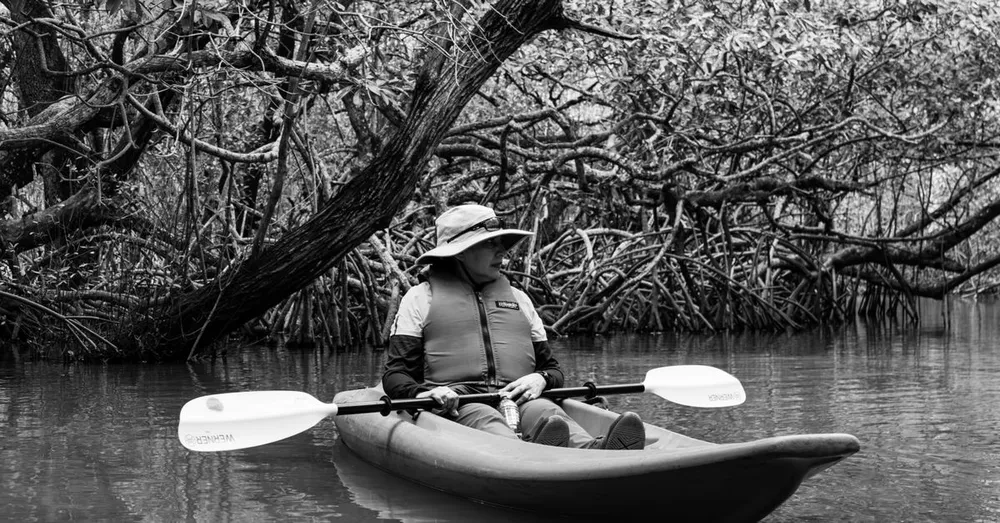
Paddling among the mangroves of the Grand Cul-de-Sac Marin remains one of the most memorable experiences Guadeloupe has to offer. Far from the turquoise beaches of Grande-Terre and the volcanic trails of Basse-Terre, this vast lagoon, classified as a National Nature Reserve, reveals a silent aquatic world sheltered by the longest coral reef in the Lesser Antilles. Here is our field guide to a successful mangrove kayaking outing in Guadeloupe, from choosing your launch point to reading the tides and watching the birdlife.
Why the Grand Cul-de-Sac Marin is unique
The Grand Cul-de-Sac Marin forms a bay of nearly 15,000 hectares, closed off to the north by a barrier reef more than 25 kilometres long. Between the land and the lagoon stretches the largest mangrove forest in the French Antilles: red mangroves with their stilt roots, along with black, white and buttonwood mangroves. This ecosystem lies at the marine heart of the Guadeloupe National Park and holds a Ramsar designation for wetlands of international importance.
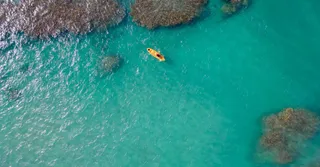
For the kayaker, the appeal is twofold. First, the waters are almost always flat: sheltered by the reef, they offer neither swell nor chop, making them accessible to beginners. Second, the channels that wind deep into the mangrove create a true living maze, to be explored by paddle where no engine can pass.
Sainte-Rose or Vieux-Bourg: choosing your launch point
Two gateways account for most kayak departures.
- The point at Sainte-Rose, on the eastern coast of Basse-Terre, gives access to the islets at the head of the bay (Îlet Blanc, Îlet à Fajou) and to wide channels lined with mangroves. It is the ideal starting point for combining mangrove and sandbank, with well-established operators around the marina and the river mouth.
- Vieux-Bourg, in the township of Morne-à-l’Eau on the Grande-Terre side, is the most intimate departure. You slip very quickly into narrow channels, right up close to the roots and the birds. It is the choice of birdwatching enthusiasts and of those seeking a wilder, less frequented atmosphere.
Our resident’s tip: Vieux-Bourg in the morning for wildlife watching, Sainte-Rose if you’re after the islets and a swim in clear water. Allow 35 to 40 minutes’ drive from Le Gosier or Sainte-Anne to Vieux-Bourg, and about 50 minutes to Sainte-Rose from Pointe-à-Pitre.
Reading the tides: the key to a successful outing
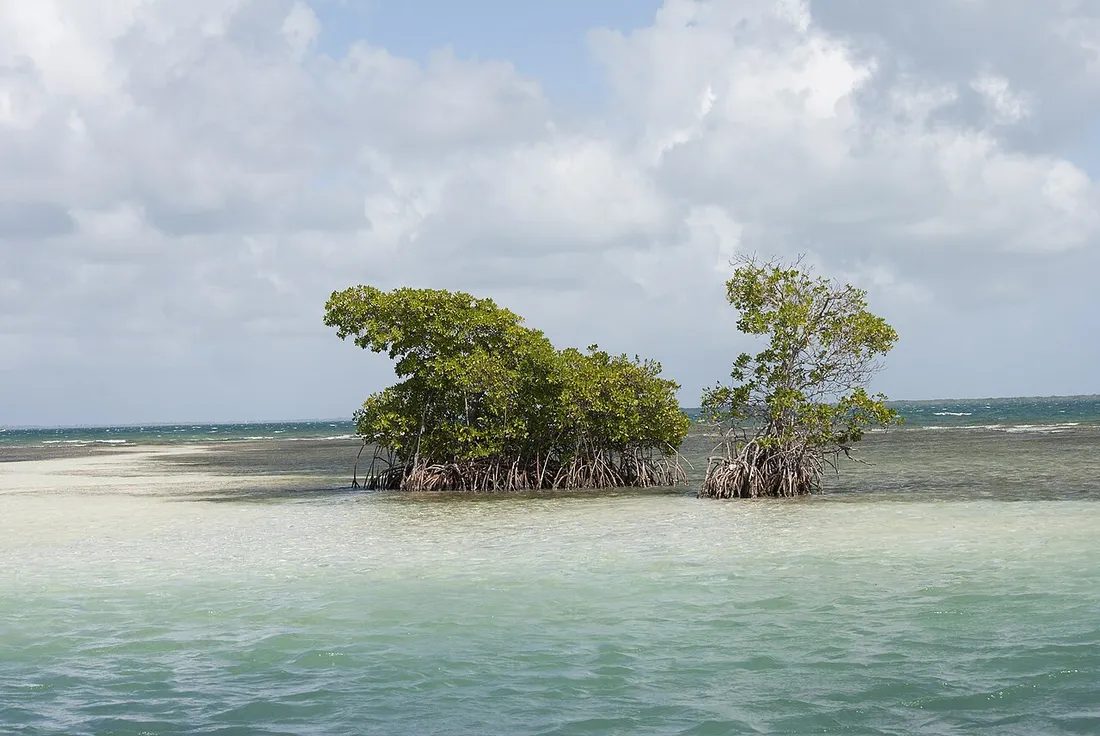
This is the point many visitors overlook, and the one that makes all the difference. The tidal range in Guadeloupe is small (often 30 to 50 cm), but in the shallow channels of the mangrove, those few centimetres decide whether you get through or scrape the bottom.
Rising tide, falling tide: our markers
- Paddle inland on a rising tide: the water climbs the channels, you carry less weight, and you reach the narrowest passages without dragging through the mud. It’s also when the water is at its clearest.
- Plan your return before the low-water slack: at too low a tide, some of the Vieux-Bourg channels turn into mud traps. We prefer to head in one to two hours before high tide and come straight back out.
- Avoid the peak of the ebb in the deeper channels: the outgoing current can be noticeable near the Sainte-Rose river mouths.
Check the tide schedule the day before (many free apps cover Pointe-à-Pitre, the local reference) and cross-reference it with the weather. In the dry season, from December to April, the trade winds are steady but the water stays clear; this is the best period. In the wet season, beware of late-morning showers and of turbidity after heavy rain.
Wind and time slot
The trade winds often pick up in the late morning. Set off early, ideally between 7 and 9 a.m.: mirror-smooth water, soft light, active birds and bearable heat. Remember the time difference if you’re coordinating with mainland France: -5 h in winter, -6 h in summer compared with Paris.
Watching the wetland birdlife
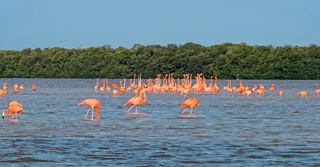
The mangrove of the Grand Cul-de-Sac Marin is a bird sanctuary. By paddling slowly and in silence, you observe a rich fauna that an engine would scare off.
- The magnificent frigatebird, soaring above the lagoon, the males displaying their red gular pouch.
- The herons (green heron, snowy egret, great egret) perched on the stilt roots.
- The osprey, a winter visitor, hunting over the shallow waters.
- The common gallinule, the ringed kingfisher and various waders on the mudflats exposed at low tide.
- At the water’s surface, crabs, fry and sometimes rays gliding through the clear channels.
Our rules for responsible observation
- Keep your distance from nesting colonies, especially on the islets.
- Only land in authorised areas; a large part is a strict nature reserve.
- No feeding, no noise, no litter: leave nothing but the wake of your paddle.
- Use light binoculars and a zoom camera rather than approaching too closely.
Preparing your outing: gear, duration, budget
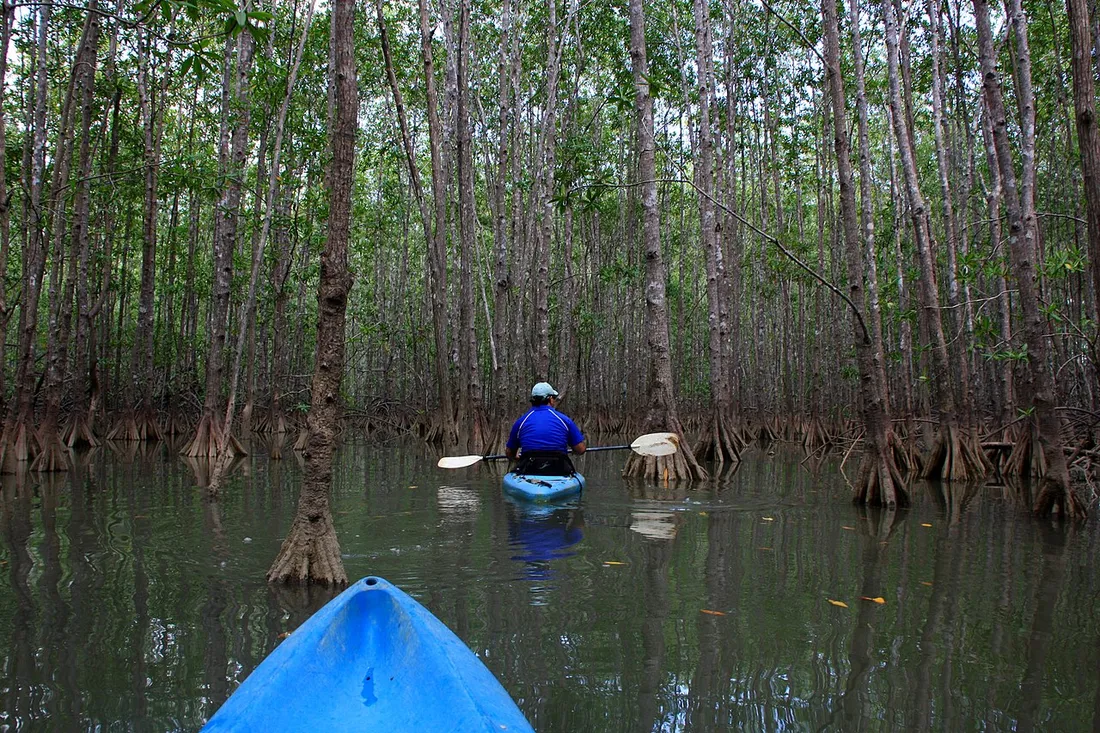
Half a day is enough for a fine immersion. Here are our concrete benchmarks.
- Duration: 2 to 3 hours for a wildlife-watching loop, 4 to 5 hours if you combine islets and a swim.
- Distance: 6 to 10 km by paddle depending on your pace, on flat water and therefore accessible.
- Indicative prices: single kayak rental €15 to €25 per hour; guided 2-3 hour outing around €45 to €60 per person; half-day with an islet often €55 to €75. Guided sunset trips are popular.
- What to bring: water (1.5 L minimum), a hat, sunglasses, mineral sunscreen that’s kind to the lagoon, a UV-protective shirt, water shoes, a waterproof bag for your phone, and a snack.
Guided or self-paddled?
For a first time, a guided outing is worth the price: the instructor knows the channels, reads the tides for you and points out the wildlife. If you go on your own, stick to the marked routes, don’t venture into an unknown channel on a falling tide, and tell someone your time slot. Mobile coverage is decent near the villages (dialling code +590) but weak in the heart of the mangrove.
Extending the experience around the bay
The north of Guadeloupe lends itself to a fine day out. After kayaking at Vieux-Bourg, you can go and enjoy grilled fish at a lolo in the village. On the Sainte-Rose side, it’s easy to follow up with a Basse-Terre waterfall or the Route de la Traversée towards the National Park. Many combine the mangrove with a day of snorkelling at the Cousteau Reserve (Pigeon Islets, Malendure) an hour’s drive away, or an excursion to Les Saintes or Marie-Galante from the marinas.
To roam easily between Grande-Terre and Basse-Terre, the simplest approach is to set down your bags in a well-located place and plan your outings around the tides and the weather.
Where to stay to explore the mangrove
Hostel Toucan offers vacation rentals hand-picked on both wings of the Guadeloupe butterfly, within easy reach of the launch points at Sainte-Rose and Vieux-Bourg. By booking directly, you benefit from no platform booking fees, free cancellation up to 7 days before arrival and 7-day WhatsApp support to schedule your activities around the tide times. Discover our accommodations at /location-guadeloupe and plan your stay with our complete Guadeloupe guide. Do you own a property on the archipelago? Our concierge service supports you at /proprietaires.
The mangrove of the Grand Cul-de-Sac Marin rewards a little preparation: a glance at the tides, an early start, silence and respect. At that price, it offers one of the most beautiful encounters with Caribbean nature. Happy paddling.
FAQ
Do you need experience to kayak in the Grand Cul-de-Sac Marin mangrove?
No. The waters of the Grand Cul-de-Sac Marin are protected by the coral reef and stay almost always flat, with no swell. It’s a practice accessible to beginners. For a first outing, go for a guided formula: the instructor reads the tides, chooses the right channels and points out the wildlife.
What is the best time of year to paddle in the mangrove?
The dry season, from December to April, offers the best conditions: clear water, little rain and steady trade winds. Whatever the season, set off early, between 7 and 9 a.m., to enjoy mirror-smooth water, soft light and more active birds before the wind rises in the late morning.
Why are the tides so important when kayaking in the mangrove?
The tidal range is small in Guadeloupe (30 to 50 cm), but in the shallow channels those centimetres decide whether you get through. Paddle inland on a rising tide to reach the narrow channels without scraping, and plan your return before the low-water slack to avoid the mudbanks, especially at Vieux-Bourg.
Is it better to start from Sainte-Rose or Vieux-Bourg?
Vieux-Bourg, on the Grande-Terre side, offers an intimate, wild atmosphere, ideal for watching birds in the narrow channels. Sainte-Rose, on the Basse-Terre side, gives access to the islets and to wide channels, perfect for combining mangrove and a swim in clear water. Vieux-Bourg in the morning, Sainte-Rose for the islets.