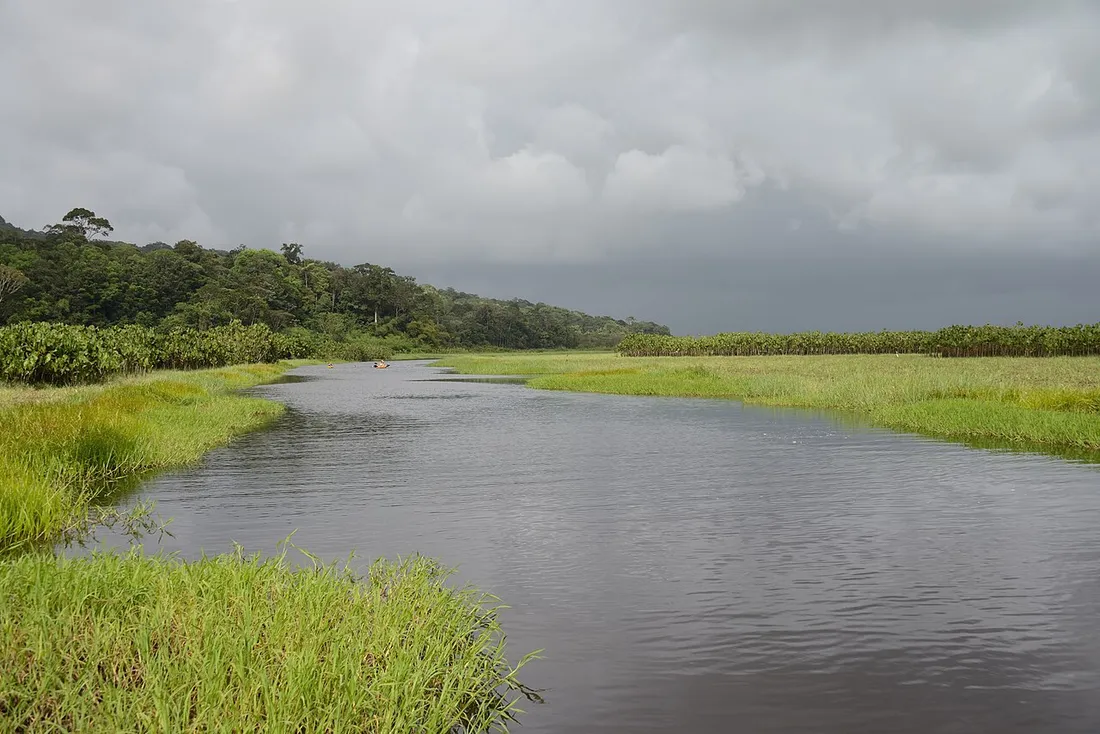
Picture yourself gliding in a dugout canoe across water as black as a mirror, the setting sun setting the horizon ablaze while hundreds of scarlet ibises return to their roosts. Later, in total darkness, the beam of a lamp catches two glowing orange embers just above the water: the eyes of a black caiman. Welcome to the Kaw-Roura Marshes Nature Reserve, one of the absolute jewels of French Guiana and one of the most beautiful wetlands in South America. Stretching across nearly 100,000 hectares, this labyrinth of channels, pripris (floating marshlands) and flooded forest is home to wildlife of dizzying richness. Here is everything you need to know to live this unforgettable adventure.
Why is the Kaw marsh so unique?
Classified as a national nature reserve since 1998 and listed under the Ramsar Convention (wetlands of international importance), the Kaw-Roura Marshes Reserve protects an Amazonian ecosystem of rare fragility and beauty. Wedged between the Kaw mountain range, cloaked in primary forest, and the mouth of the river, this mosaic of habitats concentrates a biodiversity that is hard to observe so easily anywhere else.
What makes Kaw unforgettable is the atmosphere: an almost total silence, broken only by the lapping of the paddle, the calls of birds and, at night, the chorus of frogs. You are not in a park laid out for tourists, but at the heart of wild, living, at times intimidating nature. That is exactly what makes it so precious.
What wildlife can you see in the Kaw marsh?
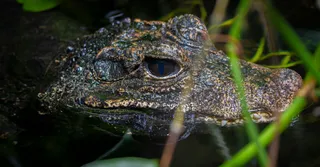
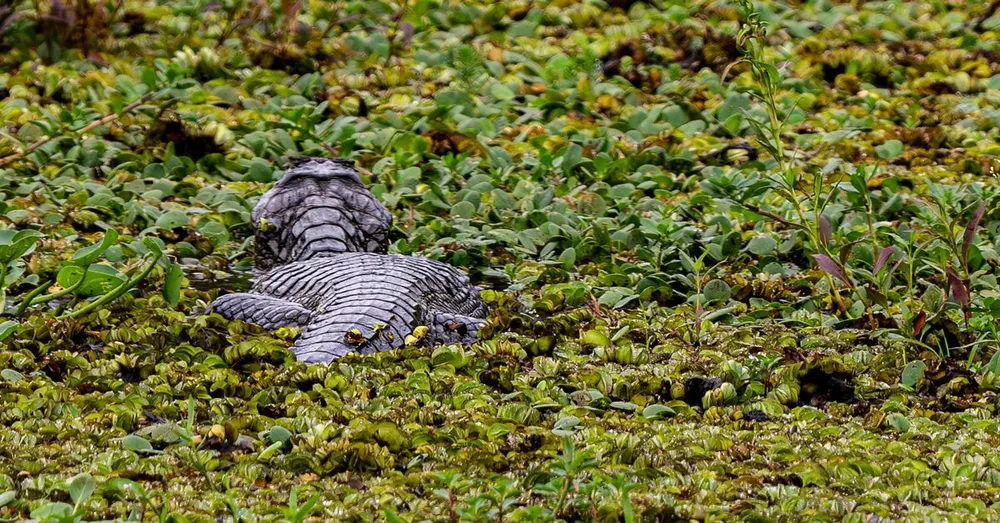
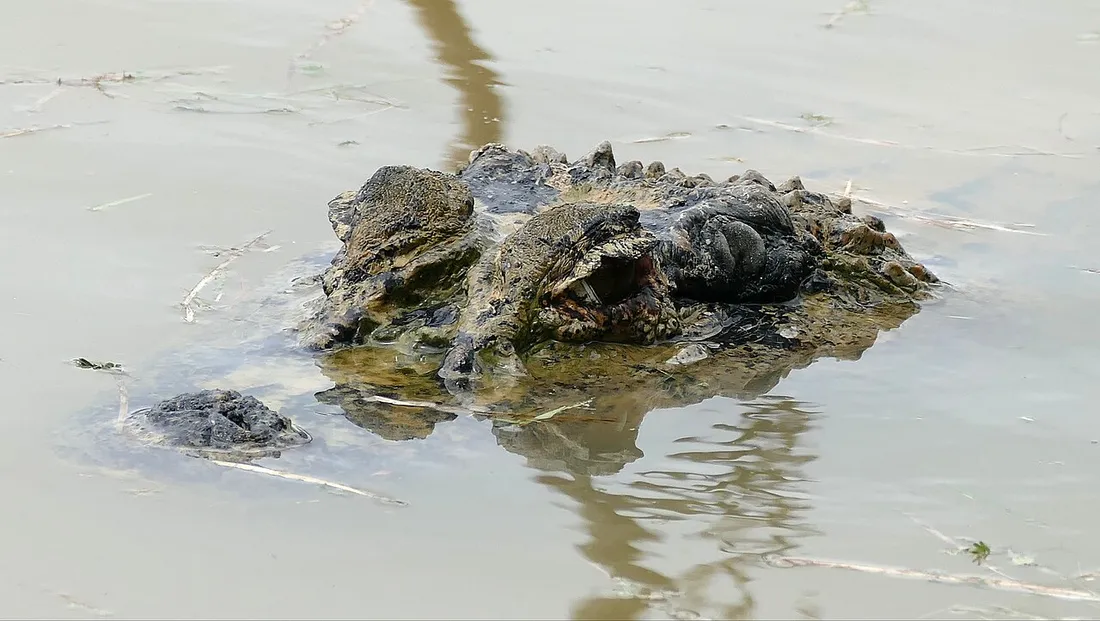
The undisputed star is the black caiman (Melanosuchus niger), the largest predator in the Amazon, which can exceed five metres. A protected species long under threat, it has found in Kaw one of its last great refuges. It is observed almost exclusively at night, when its eyes reflect the light of the lamps.
But Kaw is also home to:
- The scarlet ibis (Eudocimus ruber) — its crimson plumage forms spectacular flocks at dusk, one of the most iconic images of French Guiana.
- The green anaconda, the largest snake in the world, sometimes spotted coiled in the vegetation.
- The hoatzin, a prehistoric-looking bird with a ruffled crest, nicknamed the “stinkbird”.
- The giant otter, playful and noisy, more elusive but present.
- A teeming birdlife: jacanas, herons, jabirus, horned screamers, kingfishers, raptors.
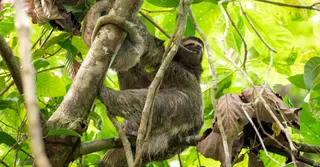
- Sloths, monkeys, bats and an endless variety of insects and frogs.
Keep in mind that no sighting is guaranteed: this is nature. A good local guide, who knows the hidden corners and the behaviour of the animals, will maximise your chances.
How to visit the Kaw marsh: the dugout canoe trip
Access to the heart of the marsh starts from the village of Kaw, perched on the riverbank. From there, everything is done by dugout canoe, as part of a guided excursion — there are no trails; the water is the only road.
Several options exist depending on your time and budget:
The late-afternoon and night tour
This is the flagship option. You set off in the late afternoon to enjoy the sunset and the return of the scarlet ibises, followed by nighttime observation of caimans as darkness falls. Count on two to three hours on the water. It is the best emotion-to-time ratio if you only have one evening.
A night in a carbet
To experience Kaw to the full, nothing beats an overnight stay in a carbet — these traditional stilt or floating shelters where you sleep in a hammock. You combine the night tour, waking up on the mist-shrouded marsh and an early-morning outing, a magical moment for birdlife. Some operators offer floating carbets right at the water’s edge.
The full-day tour
Ideal for exploring deeper into the channels and combining wildlife observation with a nature walk, often with a Creole meal included.
In every case, book ahead with a local operator: carbet places are limited and weekends fill up fast.
A night in a carbet: what to expect
Sleeping in a carbet is an experience in its own right. The comfort is rustic but authentic: a hammock with a mosquito net, basic facilities, limited electricity (often solar or a generator running for a few hours). Bring your headlamp, a towel and something to cover up a little at night, as the humidity can cool the air.
The real luxury here is the setting: falling asleep lulled by the murmur of the marsh and waking in a golden mist crossed by the first flights of birds. The meals, usually Creole and prepared on site, are part of the charm. Travel light, with an open mind, and you will leave with memories that few destinations can offer.
When is the best time to go to Kaw?
French Guiana has two main seasons. The dry season (August to November, and often a respite around March) offers more comfortable conditions: less rain, lower water levels that concentrate wildlife, and skies often clear for sunsets.
The rainy season (December to July, with a brief dry spell in March) should not be ruled out: the vegetation is lush, water levels let you venture deeper into the channels, and the showers are often brief. Mosquitoes, on the other hand, are more present.
Whatever the season, tours depend on the weather and the tides: a serious operator adjusts the schedule. Favour late-afternoon outings for the light and the wildlife activity.
How to get there from Cayenne and Roura
The village of Kaw lies about 1.5 to 2 hours’ drive from Cayenne. The classic route goes through Roura, then follows a forest road that climbs and descends the Kaw mountain — winding, sometimes narrow, to be driven carefully, especially after rain. The road ends at a landing stage where the dugout canoe sets off.
A car is strongly recommended: public transport to Kaw is almost non-existent, and the excursion times (late afternoon, night) do not match any potential shuttles. Rent a vehicle from the airport or Cayenne to stay completely independent. Remember to fill up before setting off, as petrol stations become scarce beyond Roura, and check the state of the road in the rainy season.
Discover our tips for organising your travel with our location de voiture and plan your days with our guide que faire à Cayenne.
What budget should you plan for an excursion?
Prices vary depending on the option, the operator and the season. As a rough and cautious guide:
- Late-afternoon / night dugout canoe trip: around 40 to 70 € per person.
- Full day with a meal: often 70 to 120 €.
- Night in a carbet (tours, hammock accommodation, meals included): generally 80 to 150 € depending on comfort.
These ranges are given for guidance only: always ask your operator for an up-to-date quote, and check what is included (meals, transfers, equipment). Booking directly with local providers supports the village economy.
What to pack in your bag
Good preparation makes all the difference. Slip into your bag:
- Powerful insect repellent (DEET-based) — essential, especially in the evening and the wet season.
- Long, light, covering clothing for your arms and legs.
- Headlamp (and spare batteries) for night observation and the carbet.
- Lightweight rain gear and a hat.
- Binoculars for distant wildlife.
- Waterproof bag or pouch to protect your phone and camera from the spray.
- Water bottle, snacks, sunscreen and a small sheet or sarong for the night.
- Closed shoes that can handle both mud and water.
Finally, respect the guide’s instructions: do not feed the animals, do not shout, leave no litter behind. This is a protected nature reserve.
Extend your adventure in French Guiana
Kaw pairs wonderfully with other experiences in French Guiana. Before or after your trip, explore the region’s trails, the swimmable creeks and the Creole culture of Cayenne. To go further, our selection of the best aventures et activités en French Guiana will help you build a rich and varied stay.
Where to stay to visit the Kaw marsh?
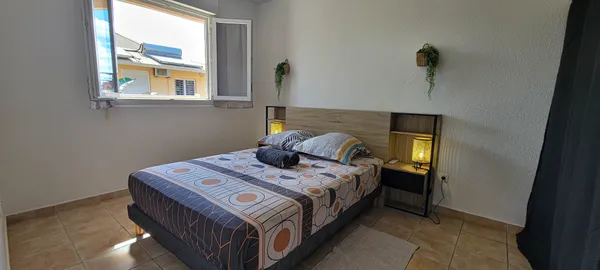
Most visitors base themselves in Cayenne, the ideal home base: less than two hours from Kaw, well connected and full of life. It is the perfect place to recover after a night in a carbet and to organise the rest of your explorations.
At Hostel Toucan, we offer comfortable, well-located logements en French Guiana, designed for nature travellers. Discover all of nos logements and turn your stay into a true expedition into the heart of the Amazon.
👉 Ready to watch black caimans and scarlet ibises? Book your stay with Hostel Toucan and set off to discover the Kaw marshes, a wild jewel of French Guiana.