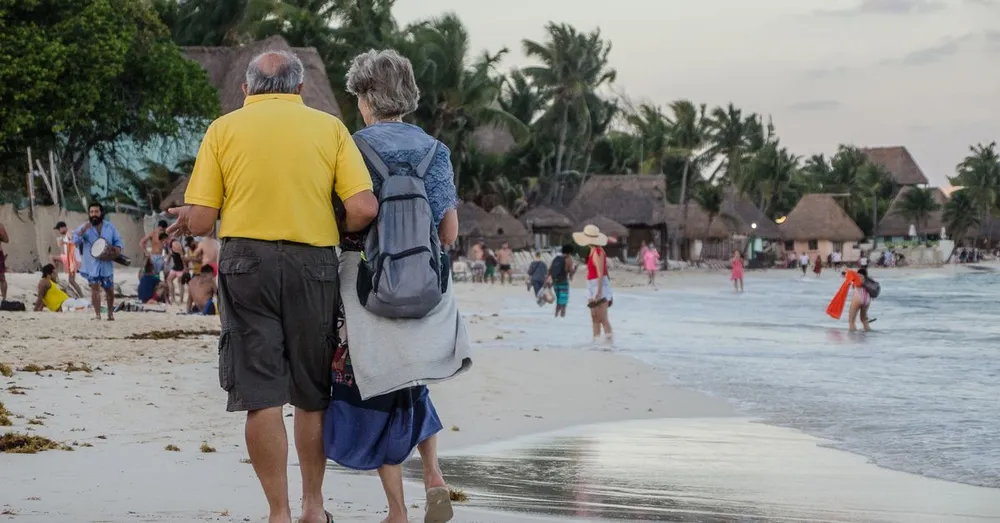
Heading to the Caribbean after 65 is no expedition: Martinique for seniors is, above all, a matter of finding the right balance. There’s no need to climb Mount Pelée or string together mountain roads to enjoy the island. Here, true luxury is a gentle pace, a flat and well-connected town, a calm beach ten minutes from your accommodation and a shaded terrace for the end-of-day ti-punch. After several years welcoming retired couples and travellers who watch out for their joints, I’ve learned one thing: a successful Martinique trip in your golden years depends far less on the miles covered than on the small comforts. Here’s my honest guide, from choosing the right town to single-level accommodation, for a peaceful stay with no unpleasant surprises.
Why Martinique is a great senior destination
Martinique ticks plenty of reassuring boxes when you’re travelling at an advanced age. It’s a French overseas department (DROM): you pay in euros, French is spoken (plus Creole), there are no passport or visa formalities for French nationals, and above all it has a mainland-standard healthcare system with the Carte Vitale, hospitals and pharmacies in Fort-de-France as well as in the smaller towns. Should anything go wrong, you’re looked after just as you would be on the mainland, with no complicated repatriation insurance or language barrier.
As for the climate, aim for the dry season (the Carême), from December to April: it’s the best time, with drier air, refreshing trade winds and a reduced risk of rain. This way you avoid the heavy heat of the wet season and the hurricane season (June to November). The time difference stays moderate: -5h in winter and -6h in summer compared with Paris. In practice, you go to bed early the first few nights and your body adjusts within two or three days, without the brutal jet lag of a flight to Asia.
A few useful pointers before booking:
- Direct Paris-Fort-de-France flight: about 8h30 to 9h of flying time to Aimé Césaire airport in Le Lamentin, non-stop.
- Population and atmosphere: around 360,000 inhabitants, a lively main town (Fort-de-France) but generally quiet living in the southern communes.
- Dialling code: +596, handy for calling a town hall, a doctor or a restaurant before setting off.
Choosing the right town: flat, calm and well-connected
This is the most decisive choice of the trip. Not all towns are equal when you’re looking to limit elevation changes and long journeys. The North (Saint-Pierre, Le Carbet, Grand-Rivière) is magnificent but rainier, steeper and farther from everything: I reserve it for active seniors and keen walkers. For a comfortable stay, the Caribbean South and the Bay of Fort-de-France remain my safe bets.
Les Trois-Îlets: the ideal base for a first stay
If I had to recommend just one town, it would be Les Trois-Îlets. The Pointe du Bout and Anse Mitan area is flat, well laid out and pedestrian-friendly, with a seafront where you can stroll without any climbing, restaurants right by the water and ice-cream parlours. A major plus for sparing yourself the drive: the ferry shuttle links Pointe du Bout to Fort-de-France in about twenty minutes (roughly €7 to €8 round trip), which avoids the city’s traffic jams and lets you visit the main town without a car. It’s also the land of Joséphine de Beauharnais (Musée de la Pagerie), for a gentle cultural outing.
Sainte-Anne and Le Diamant: the beach and tranquillity of the South
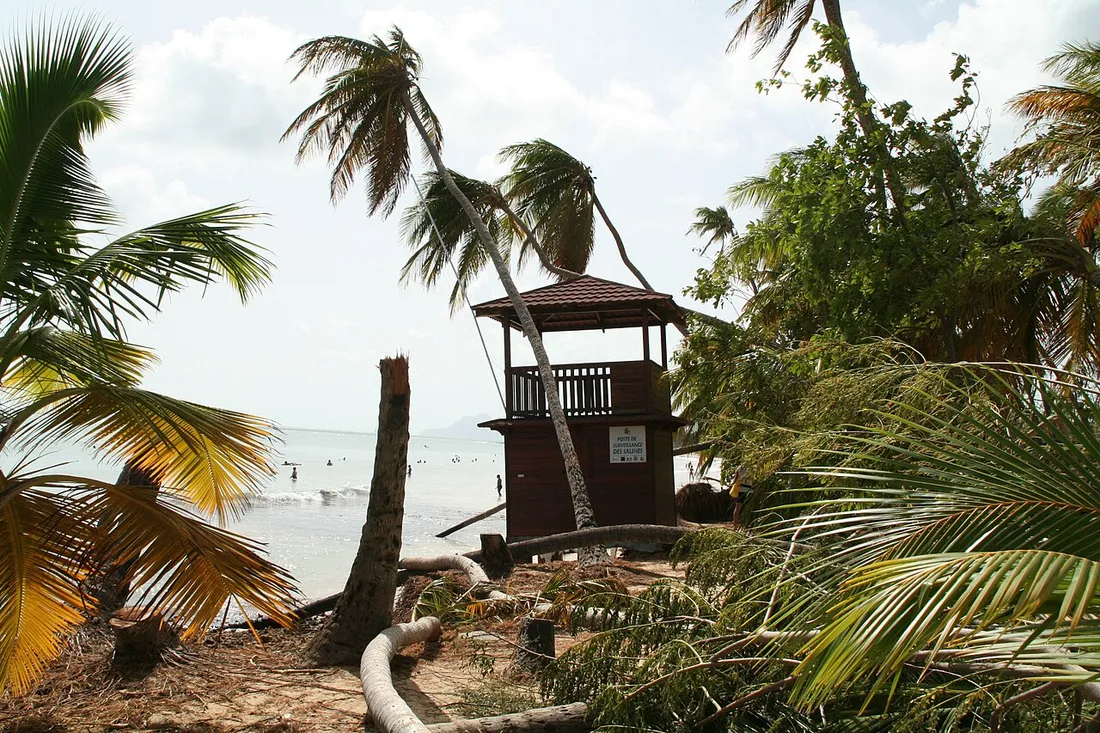
Sainte-Anne offers a charming village and large, very calm Caribbean beaches (Pointe Marin, Les Salines). Le Diamant appeals with its view of the Rock and its long beach, but beware: it’s a windier town, with currents on certain stretches — wonderful for a walk and a photo, but to be approached with caution for swimming. For a peaceful stay centred on the sea and rest, Sainte-Anne is my preference.
My resident’s tip: count on about 45 minutes to 1 hour of driving between the airport and the South (around forty kilometres). Plan a light first day, with no excursion, to recover from the flight and get your bearings.
Accessible beaches and gentle swimming
The golden rule for seniors: the Caribbean side (South and West) is almost always calmer and warmer than the Atlantic side, exposed to swell and currents. Here are my favourite beaches for getting into the water without battling the waves:
- Pointe Marin (Sainte-Anne): smooth, shallow water, a gentle sloping entry, showers, toilets, shade from the filao trees and dining nearby (a dish around €14 to €22). The most complete in terms of services.
- Anse Mitan (Les Trois-Îlets): a flat seafront, water sheltered by the bay, restaurants just metres from the sand — ideal when you want to do everything on foot.
- Grande Anse des Anses-d’Arlet: an authentic village, carbets for shade and calm water, perfect for a quiet swim followed by a local lunch.
- Anse Dufour: a small fishing cove where you sometimes spot green turtles at the surface; the neighbouring Anse Noire, with its volcanic black sand, is worth a look but its access staircase makes it less easy.
A few habits that change the day: arrive before 9:30 am (calmest water, bearable heat, parking still free, especially at Les Salines), bring a hat, high-factor sunscreen and a water bottle per person (tap water is drinkable almost everywhere), and slip a pair of water shoes into the bag, very handy near the rocks because of sea urchins. Also check the flags on supervised beaches and the day’s sargassum situation on the Atlantic side.
Finding the right pace: less driving, more pleasure
The classic mistake I see in travellers of all ages is wanting to “see everything” and spending the holiday in the car. Martinique is barely 70 km long, but the winding roads and the traffic jams around Fort-de-France quickly stretch out the journeys. For a relaxed senior stay, I advise spreading out the visits and keeping to one excursion a day, preferably in the morning.
Here are some comfortable, low-fatigue outings I happily recommend:
- Jardin de Balata (near Fort-de-France): laid-out paths and walkways through a lush botanical garden, to enjoy at your own pace (count on about €15 to €16 for entry). The suspended rope bridges remain optional.
- Route des Rhums: visiting distilleries such as Clément, Depaz, Saint-James, La Mauny or Trois-Rivières is largely done on a single level, with a tasting of AOC agricultural rum to finish. Cultural, indulgent and physically effortless.
- Ruins of Saint-Pierre (UNESCO-listed) at the foot of Mount Pelée: a leap into the history of the 1902 eruption, strolling through the “little Pompeii of the Caribbean”.
- Les Trois-Îlets: the Musée de la Pagerie, the Village de la Poterie and the Savane des Esclaves, all in a fairly level area.
Worth remembering: a car is strongly recommended for independence, but avoid driving at night on the small mountain roads and schedule your journeys outside rush hour (before 7 am or after 9 am in the morning). An automatic gearbox in your rental greatly simplifies the driving if you no longer do it daily.
To build a complete programme at your own pace — the southern beaches, the Caravelle peninsula, the Diamant Rock, the Jardin de Balata — rely on our complete Martinique guide.
Health and precautions: travelling with peace of mind
Nothing alarming, but a few common-sense precautions make the stay more serene. No vaccine is mandatory to enter Martinique, but remember to bring your usual medications in sufficient quantity (with the prescription), as an occasional pharmacy shortage is always possible on an island. Dengue circulates at times: a good tropical mosquito repellent and light covering clothes in the evening are enough as prevention.
Three other points deserve your attention:
- Heat and hydration: dehydration creeps up faster than you’d think. Drink regularly, avoid the full sun from 11 am to 3 pm and favour activities early in the morning or late in the afternoon.
- Chlordecone: this historic pesticide mainly affects certain fishing products and soils. Swimming in the sea carries no risk; on the plate, you can eat with confidence at restaurants and markets, which comply with the controls in force.
- Useful numbers: 15 (SAMU) and 112 work just as on the mainland. On arrival, locate the pharmacy and medical practice nearest to your accommodation.
Where to stay: the comfort of single-level accommodation
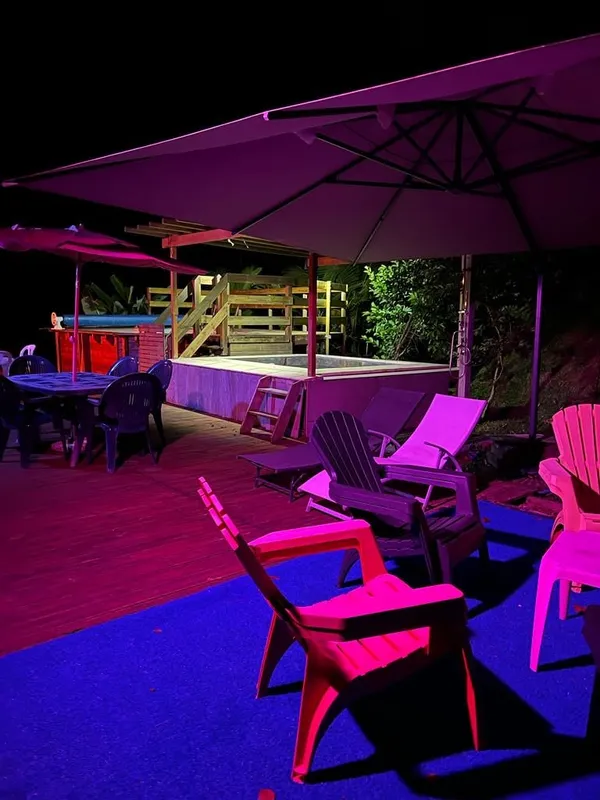
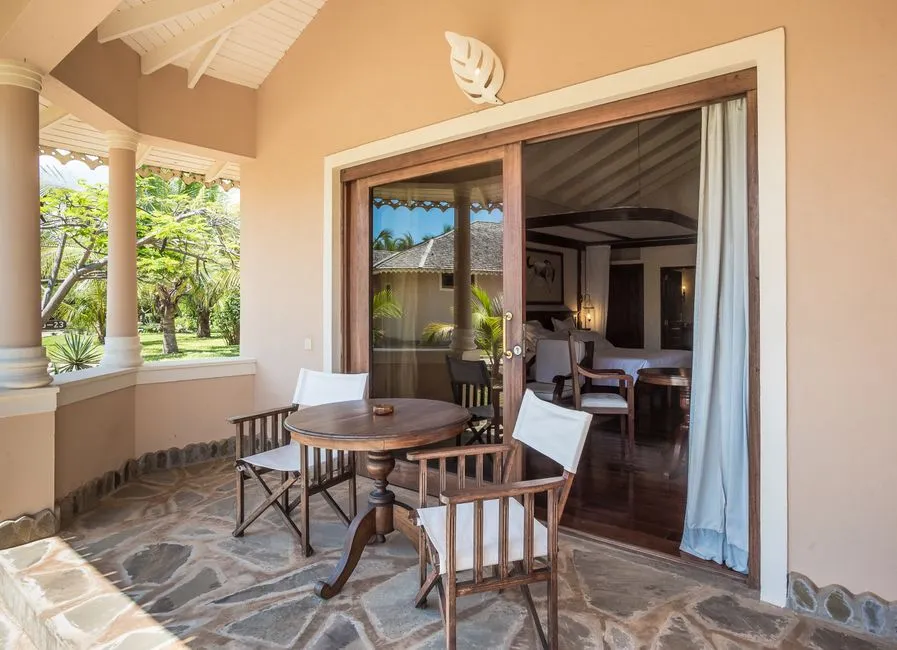
This is, along with the town, the second pillar of a peaceful stay. When you’re sparing your knees or your back, single-level accommodation with no stairs changes everything: no steps to climb with the shopping, an accessible bedroom and bathroom, a terrace at the same height as the garden. That’s exactly the kind of property we select at Hostel Toucan, a concierge and holiday rental service in the French overseas departments. From the studio to the villa with a garden, our Martinique accommodation is designed for experiencing the island simply, near the calm beaches of the South and Les Trois-Îlets.
When choosing, check these criteria that make for senior comfort:
- Single-level access or a limited number of steps, and a shower rather than a high bathtub.
- An equipped kitchen to prepare meals with market purchases, without depending on restaurant opening hours.
- Air conditioning in the bedroom and a shaded terrace for the hot hours.
- On-site parking and a calm beach a few minutes away by car.
Booking directly with us also means enjoying concrete benefits:
- Direct booking with no platform fees: you pay the fair price, with no hidden commission inflating the bill.
- Free cancellation up to 7 days before arrival — an unexpected health or family matter can always arise, and it’s reassuring to be able to adapt your plans.
- WhatsApp assistance 7 days a week, in French: a calm beach to confirm, a doctor to locate or a good lolo for lunch — we reply quickly.
Do you happen to own a single-level, peaceful and well-located property? Discover how we showcase it on the owners side, from personalised welcome to upkeep.
The right approach for a successful stay
Martinique for seniors isn’t a watered-down island: it’s the same beauty, savoured more slowly. By choosing a flat, well-connected town like Les Trois-Îlets or Sainte-Anne, a calm-watered Caribbean beach, single-level accommodation and a rhythm of one outing a day, you turn the trip into a genuine restful interlude. The rest — the ti-punch facing the sunset, the scent of spices at the market, the blue of the Caribbean Sea — will do the work all on its own. All that’s left is to choose your dates in the dry season and book.
FAQ
What’s the best time to travel to Martinique as a senior?
The dry season, the Carême, from December to April, is ideal: drier air, refreshing trade winds, a low risk of rain and heat that’s more bearable than during the wet season. This way you avoid the humid heaviness of summer and the hurricane season (June to November). If you’re wary of the big crowds and prices of Christmas or Carnival (February-March), aim instead for the first half of December or the month of May, still pleasant and quieter.
Which town should I choose for a comfortable stay without long journeys?
Les Trois-Îlets (the Pointe du Bout / Anse Mitan area) is my first choice: flat terrain, a pedestrian seafront, restaurants within walking distance and a ferry shuttle to Fort-de-France to avoid the traffic. Sainte-Anne is perfect for rest and calm beaches. I avoid basing a senior stay in the North (Saint-Pierre, Le Carbet), rainier and steeper, unless you’re a keen walker who came for the nature.
Should I rent a car in Martinique in retirement?
A car is strongly recommended for independence, as public transport remains limited. Favour an automatic gearbox, avoid driving at night on the mountain roads and schedule your journeys outside rush hour around Fort-de-France. If driving worries you, base yourself in Les Trois-Îlets or Anse Mitan, where you do a lot on foot and where the ferry shuttle replaces the car for reaching the main town.
Are there any particular health risks for seniors?
No vaccine is mandatory and the healthcare system is the same as on the mainland (Carte Vitale, hospitals, pharmacies). The real points to watch are the heat (stay hydrated, avoid the sun from 11 am to 3 pm), the mosquitoes (tropical repellent against dengue) and your usual medications, to be brought in sufficient quantity with the prescription. Swimming in the sea poses no chlordecone-related risk, as it mainly affects certain fishing products.