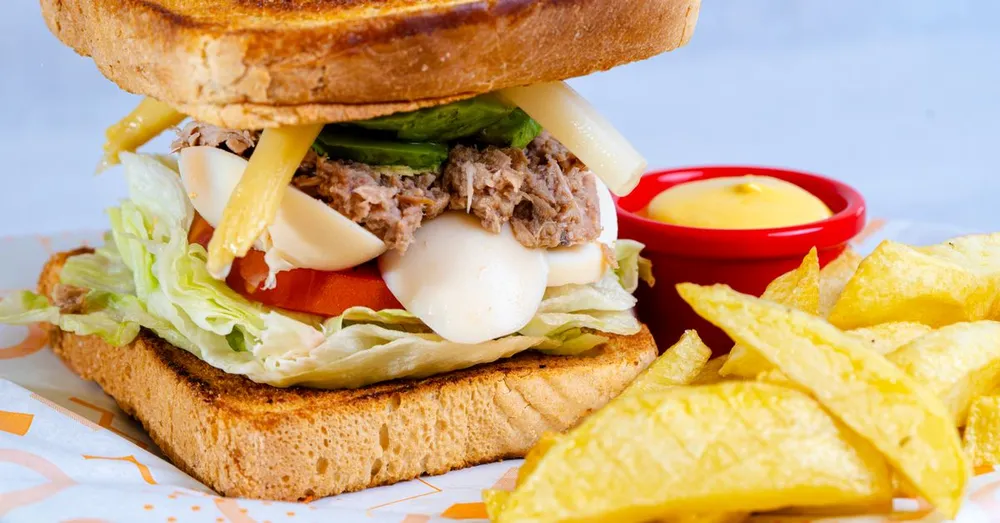
If there is one thing you absolutely have to taste the moment you land at Pôle Caraïbes airport, it’s this: the bokit. This puffy fried bread, stuffed to the brim, is the soul of Guadeloupean street food. And it’s in Pointe-à-Pitre, the economic heart of the butterfly-shaped archipelago, that the rivalry between food trucks and lolos is at its fiercest. As a resident who has lived here for years, I’ve been wearing out my sneakers in front of these counters for a very long time. Here is my personal map for tracking down the best bokit in Guadeloupe without falling into the tourist traps.
What exactly is a bokit?
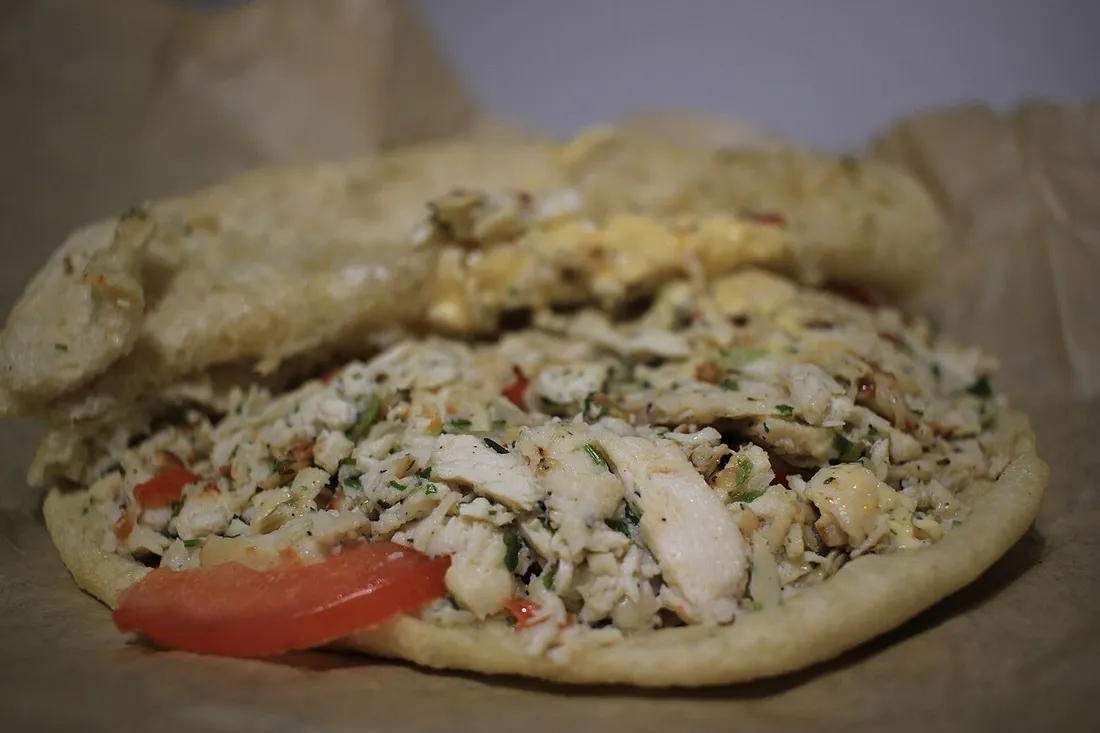
The bokit is a bread made from flour, water, yeast and salt, shaped into a flat round and fried in hot oil. The result: a golden, lightly crispy crust and an airy crumb that soaks up the sauces. A descendant of the “journey cake” (the travel bread of the maroon slaves), it has, over the decades, transformed into the king of Guadeloupe’s sandwiches.
You fill it as the mood strikes: salt cod, smoked chicken, tuna, ham and cheese, conch (a local shellfish), or the famous “complete” version. Expect to pay on average €5 to €9 for a filled bokit, €9 to €13 for the premium versions (conch, shrimp). A full meal in itself.
Lolo or food truck: what’s the difference?
- The lolo: a small fixed stall or kiosk, often family-run, open at lunchtime.
- The food truck: a mobile truck that parks in the evening on the squares or along the seafront, often until late.
Both serve excellent bokits. The golden rule: follow the local queue. Wherever Guadeloupeans are waiting in line, the bokit is good.
My map of the must-try spots in Pointe-à-Pitre
The centre of Pointe-à-Pitre is easy to explore on foot, but the best food trucks are spread between the town centre, Place de la Victoire, the waterfront and the area around Bergevin. Here are my go-to addresses, by area.
Zone 1 — Place de la Victoire and the waterfront
The historic heart. In the late afternoon, the trucks set up facing the flame trees and the harbour. This is the most authentic atmosphere: zouk music in the background, the smell of frying, vendors calling out to passers-by.
- The signature to try: the salt cod chiquetaille bokit (flaked cod livened up with chilli and lime). Crunchy outside, melting inside.
- Observed price: €6 to €7 for the cod, €8 for the smoked chicken.
- Tip: ask for the homemade sauce chien (onion, parsley, chilli, oil, lime). It changes everything.
Zone 2 — The Saint-Antoine market and the shopping streets
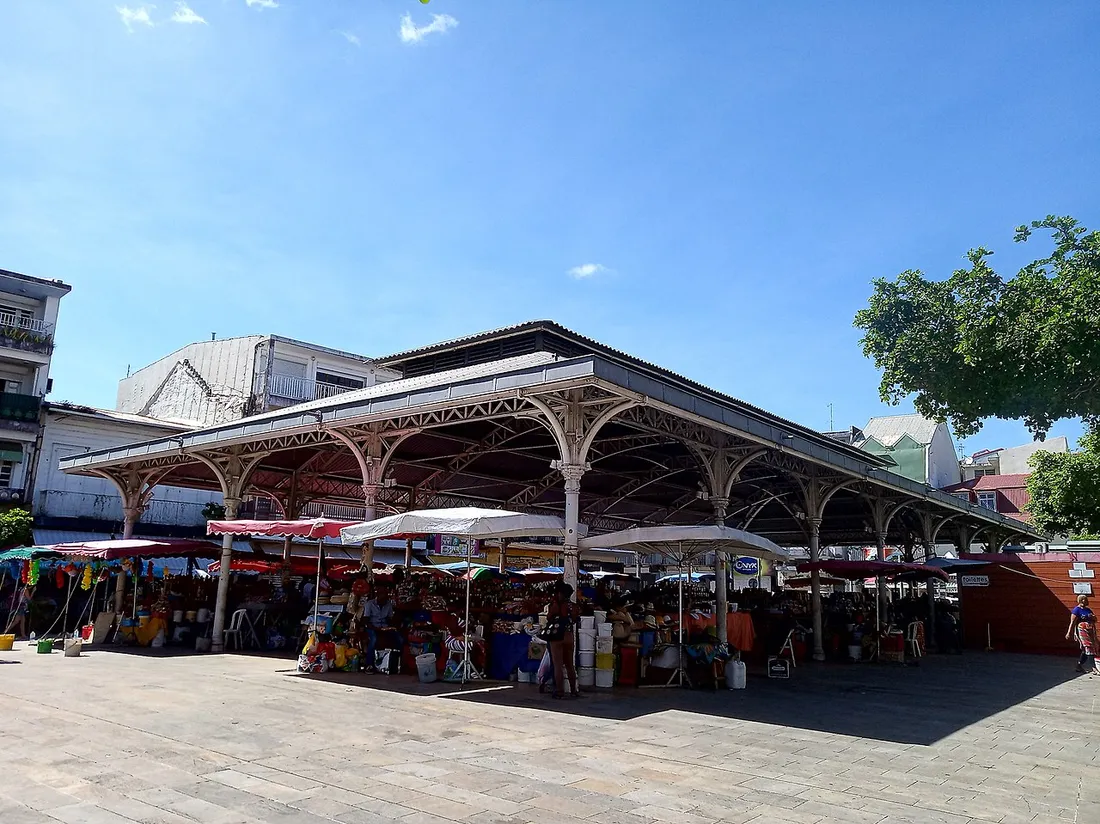
Around the covered market and rue Frébault, the lolos serve a crowd of workers in a hurry. This is the place for the lunchtime bokit, fast and filling.
- The signature to try: the complete bokit (chicken, ham, cheese, crudités, sauces). A heavyweight that keeps you going until evening.
- Observed price: €7 to €9 for the complete.
- Tip: arrive before 12:30 p.m. — the best stalls are stormed and the fresh dough goes fast.
Zone 3 — Bergevin and the area around the stadium
On the western side, near the business district, the evening trucks draw the regulars. Less touristy, more local: here you come for value for money.
- The signature to try: the conch bokit (local shellfish simmered in sauce). Rarer, pricier, but unforgettable.
- Observed price: €11 to €13 for the conch, €5 to €6 for the ham and cheese.
- Tip: if conch isn’t available (depending on the catch), fall back on the smoked chicken bokit, smoked over guava wood.
Zone 4 — Towards Le Gosier (10 min by car)
If you’re staying on the seaside Grande-Terre side, the road between Pointe-à-Pitre and Le Gosier has several beach trucks. The bokit there takes on a holiday feel, to be enjoyed almost with your feet in the sand.
- The signature to try: the grilled catch-of-the-day fish bokit or shrimp.
- Observed price: €9 to €12.
- Tip: perfect after a morning on the beach at La Datcha or before a sunset over the Gosier islet.
How to recognise an excellent bokit
After dozens of tastings, here are my resident’s criteria:
- Dough fried to order, never reheated. It must puff up when you order.
- Clean oil: no greasy smell, clear frying.
- Generous but balanced filling, with homemade sauces.
- Chilli on the side, so you can dose it yourself (West Indian chilli does not forgive).
- The local queue: the best indicator, I’ll say it again.
Beginner mistakes to avoid
- Ordering it “well spiced” before tasting: the bonda-man-Jacques chilli is fearsome.
- Eating a bokit while walking: it drips. Sit down.
- Having one in the blazing 2 p.m. heat when the morning dough is flagging. Aim for service time.
When and how to plan your bokit tour
The best time to visit Guadeloupe is the dry season, from December to April: clear skies, mild evenings ideal for strolling between the trucks of Place de la Victoire. During hurricane season (August–October), some trucks close earlier.
On the practical side: Pointe-à-Pitre is 15 to 20 minutes from Le Gosier or Sainte-Anne, and Pôle Caraïbes airport is 10 minutes away. Bring cash: many lolos don’t take cards. The euro is the currency, and a simple “bonjou, on bokit poulet souplé” in Creole will always earn you a smile.
A typical foodie tour (a half-day)
- 11:30 a.m.: complete bokit on rue Frébault (the hearty meal).
- 3 p.m.: cane juice or coconut water break at the market.
- 5:30 p.m.: salt cod chiquetaille bokit facing the harbour, for the sunset.
- 7 p.m.: a responsible ti-punch in a downtown bar.
Beyond the bokit: extending the experience
Pointe-à-Pitre is only the gateway. Once you’re full, the archipelago opens up to you: the turquoise beaches of Grande-Terre (Caravelle at Sainte-Anne, Pointe des Châteaux), the rainforest and La Soufrière (1,467 m) on the Basse-Terre side, the Cousteau Reserve at Malendure for snorkelling, or a getaway to Les Saintes and Marie-Galante. The Mémorial ACTe, a stone’s throw from the waterfront, also deserves a morning of your time.
To explore with peace of mind, it’s best to have a well-placed base. At Hostel Toucan, we offer accommodation in Guadeloupe ideally located to combine street food, beaches and excursions. Direct booking comes with no platform fees, with free cancellation up to 7 days before arrival and WhatsApp support 7 days a week for your questions — including our best bokit addresses of the moment.
Want to plan the rest of your stay? Check out our complete guide to Guadeloupe for the beaches, hikes and islands not to be missed. And if you own a property on the archipelago, find out how we make the most of it on our owners page.
The bokit is far more than a sandwich: it’s a ritual, a conversation, a piece of Guadeloupe in your hands. Follow the map, trust the queue, and you’ll have your best bokit in Guadeloupe. Bon appétit — or rather: bon appéti!
FAQ
What is the average price of a bokit in Guadeloupe?
Expect between €5 and €9 for a classic filled bokit (cod, chicken, ham and cheese), and €9 to €13 for premium versions like conch or shrimp. Bring cash, as many lolos and trucks don’t accept bank cards.
Which bokit filling is the best one to try first?
For a first time, the salt cod chiquetaille bokit (cod flaked with lime and chilli) or the smoked chicken are safe bets. If you like local sea flavours, try the conch bokit — rarer and pricier but unforgettable.
Where can you eat the best bokit in Pointe-à-Pitre?
The best spots are clustered around Place de la Victoire and the waterfront at the end of the day, the Saint-Antoine market and rue Frébault at lunchtime, and the Bergevin area for the regulars. Always follow the locals’ queue: it’s the best indicator of quality.
What time of year should you come to Guadeloupe to enjoy the bokit trucks?
The dry season, from December to April, is ideal: clear skies and mild evenings perfect for strolling between the trucks. During hurricane season (August to October), some trucks close earlier or intermittently.