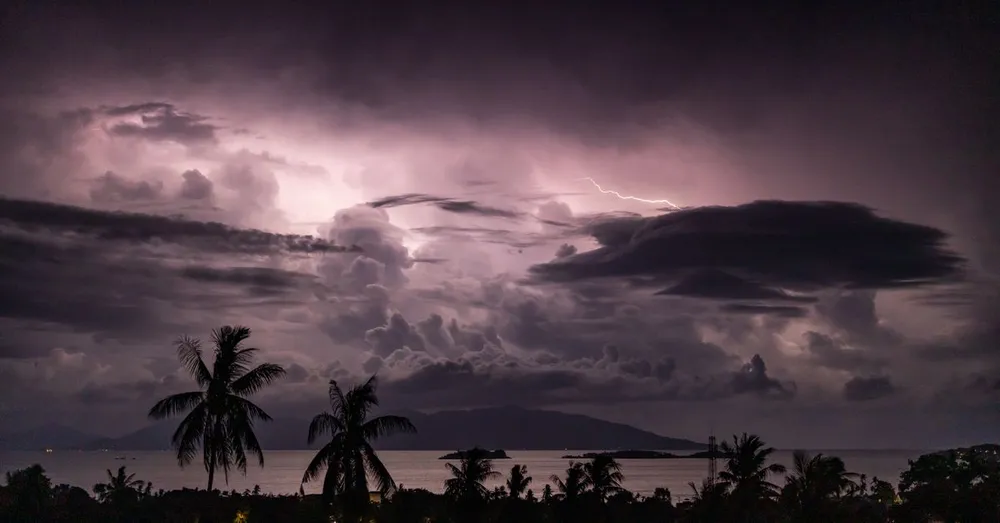
When a guest writes to me the night before arrival, “they’re forecasting rain all week, did we get it all wrong?”, I almost always give the same answer: don’t rely on a single app icon. Martinique’s weather can’t be read the way you’d read mainland weather. On an island 80 km long, the rain can come down in sheets on one slope while, twenty minutes’ drive away, you’re tanning with your eyes shut. After years of welcoming travellers to this French overseas territory of roughly 360,000 inhabitants, I’ve learned that understanding three mechanisms — the trade winds, the microclimates and the swell — beats any ten-day forecast. Here’s how it really works, seen from the ground.
The trade winds: the engine behind everything
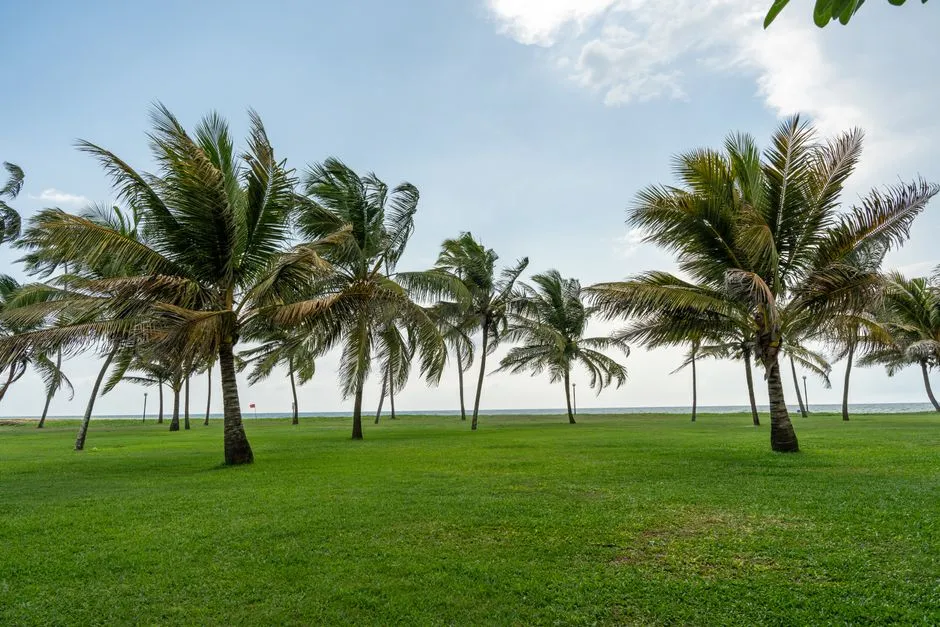
Martinique’s trade-wind climate starts with the wind. The trade winds are steady winds out of the east-northeast, blowing from the Azores High right across the Caribbean arc. They’re present almost all year round and explain most of what you’ll feel on the island.
What the trade winds actually do for your stay:
- They cool things down. Without them, 31 °C in the shade would be stifling. With them, the tropical heat becomes bearable, especially by the sea on the Caribbean side.
- They shape two coasts. Coming in from the east, they hit the Atlantic coast first (Tartane, La Trinité, Le François), windier and choppier, before dying out on the Caribbean side (Les Trois-Îlets, Le Diamant, Sainte-Anne), sheltered and calm.
- They make the rain in the mountains (more on that just below).
A practical marker: the trade winds are generally stronger from December to April, during the dry season (carême). This is the “wind season”: delightful on the southern beaches, but worth knowing if you’re after kitesurfing or sailing on the Atlantic side, where the water can quickly pick up. Martinique also runs on the euro, in French and Creole, with the +596 dialling code and a time difference of -5 h in winter, -6 h in summer compared with Paris: your weather app will show local time once you’re there.
Why the North gets far more rain than the South
Here’s the point the brochures gloss over and that changes everything: Martinique doesn’t have one climate, but a mosaic of microclimates. The culprit is called relief.
When the moisture-laden trade winds off the Atlantic run into Mount Pelée (1,397 m) and the Pitons du Carbet, the air is forced upward. As it rises, it cools, the moisture condenses, and it rains. This is the orographic effect, and it creates a spectacular contrast over just a few kilometres.
- North Atlantic and the heights (Saint-Pierre, Le Carbet, La Trinité, the interior): up to 4,000 to 5,000 mm of rain a year on the summits. Lush rainforest, waterfalls, but frequent showers.
- South Caribbean (Sainte-Anne, Le Diamant, Les Trois-Îlets, Le Marin): only 1,200 to 1,600 mm a year. Drier landscape, and this is where the postcard beaches are concentrated (Les Salines, Anse Dufour, the volcanic black sand of Anse Noire, Grande Anse).
The upshot is liberating for the traveller: a “rainy” day across the whole island almost never happens. If the sky clouds over on the Caravelle peninsula, head south; if the South is under a passing wave, the Jardin de Balata or the ruins of Saint-Pierre (UNESCO-listed) remain magnificent even under grey skies. That’s precisely why a car is strongly recommended: it lets you chase the sun.
Reading the sky over the course of a day
Rain in Martinique has a recognizable rhythm, especially during the wet season (hivernage, June to November):
- The morning is often the clearest. The best light and the calmest sea are frequently between 7 and 11 a.m. For hikes (Pelée, Trace des Caps) as for the beach, set out early.
- Showers fall mostly in the afternoon, in brief, intense bursts, then the sky reopens. People often talk about a “grain”: ten to thirty minutes and it’s gone.
- The clouds cling to the summits in the middle of the day. If you want to see Pelée’s crater clear, aim for early morning.
A local reflex: don’t look at the “Martinique” weather as a whole, but at the forecast for your specific town. Between the forecast for Fort-de-France, Le Lamentin (home to Aimé Césaire airport) and Sainte-Anne, the gap is real.
Saharan dust haze: the phenomenon no one warns you about
Here’s a subject almost absent from the standard guidebooks, yet I explain it to nearly all my summer guests. Several times a year, especially from June to September, a plume of mineral dust lifted by the winds over the Sahara crosses the Atlantic and reaches the Caribbean. This is the dust haze, or “dry haze”.
What you’ll notice:
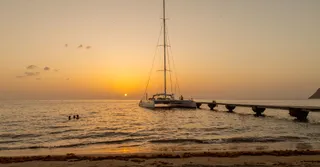
- A milky, whitish sky, a veiled horizon and slightly dulled colours. The sunsets, on the other hand, sometimes turn a spectacular orange.
- Reduced visibility: distant relief and neighbouring islands vanish into the haze. Bad news for panoramic photos.
- Degraded air quality during dense episodes: people with asthma or sensitive airways may be bothered. During a marked episode, you limit intense outdoor effort and follow local health guidance.
The good news: the dust haze stops neither swimming nor outings. It even sometimes dries out the atmosphere and pushes back the rain. If you hit an episode, favour nearby activities (the beach, the Route des Rhums distilleries such as Clément, Depaz, Saint-James, La Mauny or Trois-Rivières) over grand panoramas until it passes — usually a few days.
Swell: peaceful Caribbean, muscular Atlantic
Understanding the swell means choosing the right beach on the right day. And here again, the island’s two coasts are in different leagues.
Trade-wind swell, Atlantic side
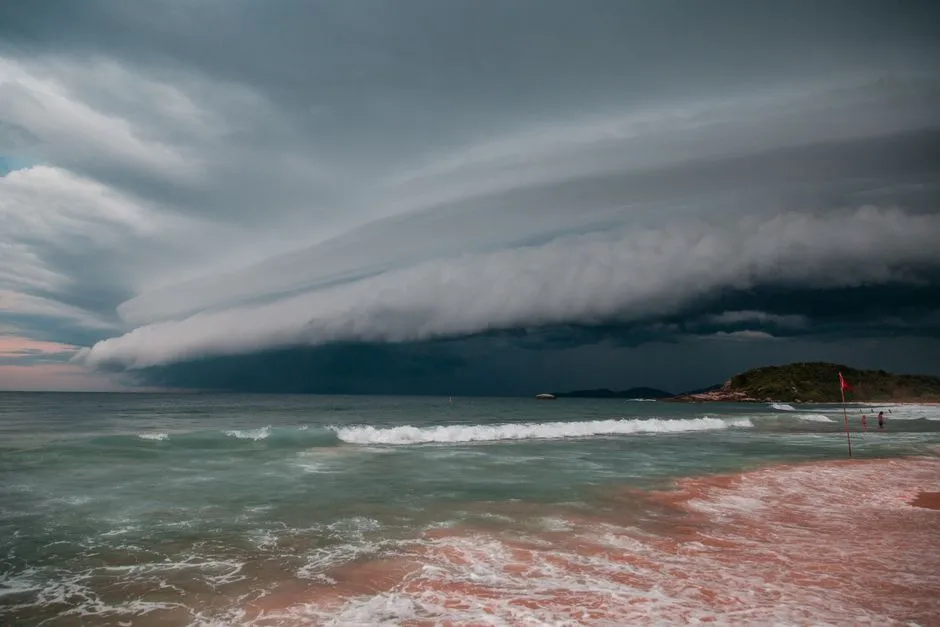
Driven constantly by the trade winds, the Atlantic coast (from Tartane to Le François via Le Robert) gets a steady swell and well-formed waves. It’s a paradise for surfers and kitesurfers, but also the territory of rip currents. Swimming there calls for caution: favour patrolled zones, read the flags and don’t venture far from shore with young children. For lazing and quiet family swimming, the South Caribbean remains the safe bet.
Cyclonic swell, the real wet-season issue
Martinique’s cyclonic swell is a distinct phenomenon, linked to the hurricane season (June to November, peaking in August-September). A low-pressure system located hundreds, even thousands of kilometres away can send a large swell that reaches the island several days before — or without — the bad weather itself ever arriving. The key things to remember:
- This swell generally comes from the north or northeast and so strikes normally calm coasts, including some Caribbean beaches little exposed the rest of the year.
- It translates into powerful waves, strong currents and a dangerous sea, even under a sky that may still be blue. It’s treacherous.
- The authorities issue “waves-flooding” (vagues-submersion) alerts: take them seriously, avoid swimming and the areas around the rocks, and postpone trips out to sea.
For the detail of this period’s climatic hazards and managing a stay calmly between August and October, I refer you to our dedicated article on the cyclone season. The idea isn’t to scare you: a cyclone striking Martinique directly remains rare from one year to the next. But the swell does deserve a daily glance at the bulletins during the wet season.
Planning your days with the local weather
Understanding the mechanisms is good; turning it into a plan is better. My local reflexes for setting up a week:
- Schedule sensitive activities in the morning: climbing Pelée, snorkeling, photogenic beaches. The sky is clearer and the sea calmer.
- Keep “all-weather” activities for the afternoon or grey days: distilleries, Fort-de-France’s covered market, the Trois-Îlets museums (land of Joséphine de Beauharnais), the Jardin de Balata in fine rain.
- Choose your beach according to the day’s wind and swell: sheltered Caribbean when the Atlantic picks up, Anses-d’Arlet or Anse Mitan during a northern cyclonic swell.
- Match the zone to the season. For a 100% beach stay in the wet season, base yourself in the South (Sainte-Anne, Le Diamant, Les Trois-Îlets), distinctly drier. For nature and full-flowing waterfalls, the North is best savoured precisely when it has rained.
If you want the month-by-month detail (dry season, wet season, shoulder seasons, prices and crowds), it pairs ideally with this reading of the weather mechanisms.
Choosing your stay well with Hostel Toucan
The real key to a successful weather experience in Martinique isn’t luck: it’s staying in the right zone and being able to adapt. At Hostel Toucan, a concierge service and specialist in seasonal rentals across the French overseas territories, we steer you toward the town that fits your dates — the dry South for beaches, the verdant North for nature — and your travel profile. Booking is done directly, with no platform fees, with free cancellation up to 7 days before arrival: real flexibility if you’re travelling in the wet season and keeping an eye on the swell or a haze episode. And our WhatsApp support 7 days a week is there for last-minute questions, from “which beach today with this wind?” to the timing of the showers.
To prepare your trip, browse our complete Martinique guide, explore our rentals in Martinique town by town, and if you own a property on the island, find out how we support owners all year round, dry season and wet season alike.
FAQ
What’s the weather like in Martinique right now?
It all depends on the place and the time. The temperature stays between 26 and 32 °C all year, with a sea above 26 °C. But always check the forecast for your specific town, not the island as a whole: it can rain on the North Atlantic coast while it’s bright sunshine in the South. If a shower hits, wait twenty minutes or move a few kilometres — that’s often enough.
What are the trade winds for in Martinique?
The trade winds are steady east-northeast winds present almost all year round. They cool a heat that would otherwise be stifling, make the Atlantic coast windier and choppier than the sheltered Caribbean coast, and bring rain by hitting the northern mountains. They are generally stronger during the dry season, from December to April.
Does Saharan dust haze spoil a stay in Martinique?
No, but it can disappoint on the photo front. From June to September especially, Saharan dust sometimes veils the sky and reduces visibility on distant relief. Swimming and activities remain possible; during dense episodes, people with sensitive airways limit outdoor effort. Favour nearby beaches and visits over grand panoramas until it passes, usually a few days.
Should you worry about the swell when swimming in Martinique?
On the Atlantic side (Tartane, Le François), the trade-wind swell creates waves and rip currents: swim in patrolled zones and stay close to shore. During the wet season, a cyclonic swell from the north can make even normally calm beaches dangerous, sometimes under a still-blue sky. Follow the “waves-flooding” alerts and, when in doubt, opt for a sheltered Caribbean beach such as the Anses-d’Arlet or Anse Mitan.