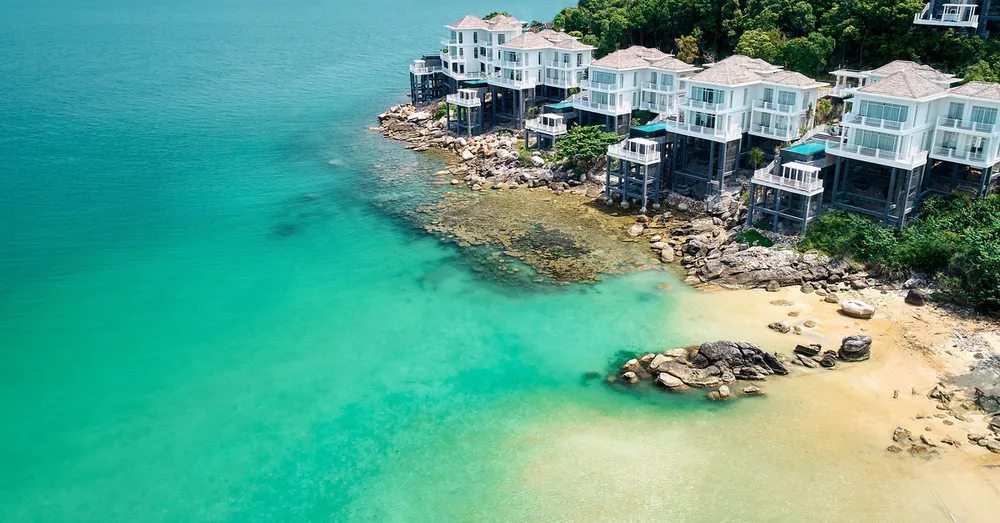
When an owner hands me their villa a stone’s throw from Les Salines or their one-bedroom with a view of the Diamond Rock, the same question always comes up: “Is it really worth getting my place classified?” After years managing seasonal rentals along the Martinique coast, my answer is crystal clear. Obtaining the classified tourist rental status in Martinique, especially for a property close to the beaches, is not an administrative luxury: it is one of the most profitable and easiest tax levers to pull.
What is a classified tourist rental?
A tourist rental is a villa, an apartment or a studio rented to a transient clientele who do not make it their main residence, for a maximum of 90 consecutive days per guest. This is the case for nearly all seaside rentals in Martinique: a couple for a week in Sainte-Anne, a family for ten days in Les Trois-Îlets.
The classification is a voluntary process that results in a star rating, from 1 to 5, based on a national grid of around 130 criteria: floor area, bedding, kitchen equipment, air conditioning, Wi-Fi, overall condition. It is valid for 5 years, then renewed.
Stars, labels and the Martinique reality
Don’t confuse the official star classification (overseen by the State) with the ratings from booking platforms or private labels. Only the star classification issued by an accredited body grants entitlement to the tax benefits detailed below.
On the ground in the West Indies, two or three stars are more than enough. Air conditioning, a mosquito net in good condition, sun loungers and a barbecue carry far more weight in traveller satisfaction than a fifth star.
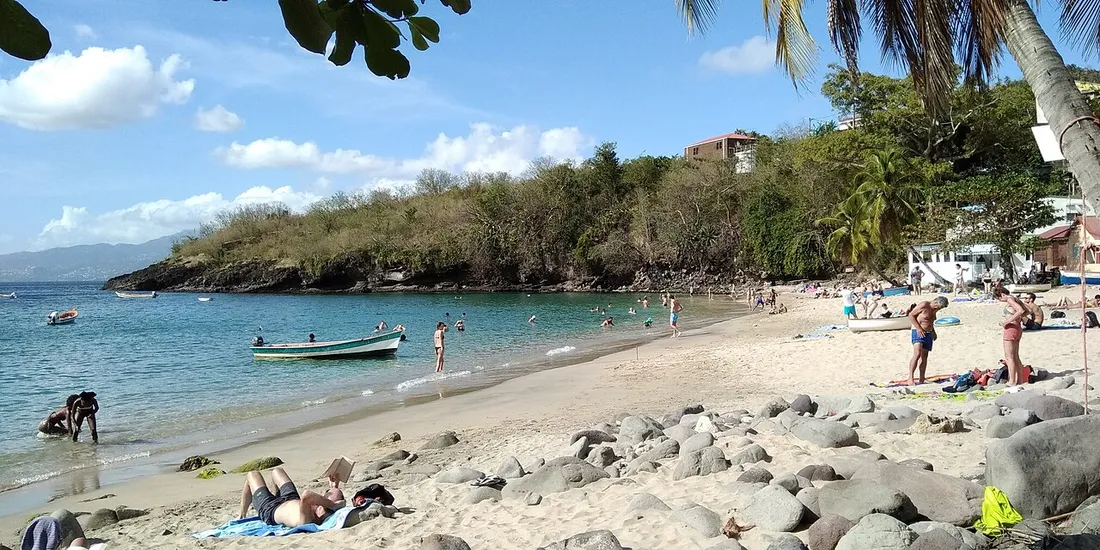
Why classification changes everything tax-wise
This is where the topic gets interesting for your wallet. Most Martinique landlords fall under the micro-BIC regime, the simplest one: you declare your income, the tax authority applies a flat-rate deduction meant to cover your expenses, and you are taxed on the rest. Now, the rate of this micro-BIC deduction depends directly on the classification:
- NON-classified rental: a 30% deduction, with an income cap of €15,000 per year. Beyond that, you switch to the actual-expenses regime, which is heavier to manage.
- CLASSIFIED tourist rental: a 50% deduction, with the income cap raised to €77,700 per year.
The difference is striking. Take a villa near Sainte-Anne that generates €40,000 in rental income per year. Without classification, you exceed the €15,000 cap and switch to the actual-expenses regime. With classification, you stay under micro-BIC: the 50% deduction brings your taxable base down to €20,000. Depending on your marginal tax bracket, the tax saving easily reaches several thousand euros per year.
An even stronger advantage for coastal properties
Why insist on proximity to the beaches? Because a rental a 5-minute walk from Anse Dufour, Grande Anse d’Arlet or Pointe Marin commands a higher price and shows a better occupancy rate. The more your income climbs, the more the enhanced 50% deduction saves you in absolute terms.
Another point often overlooked: in most municipalities (Le Diamant, Sainte-Anne, Les Trois-Îlets), classification allows you to fall under the tourist tax at the per-star regulated rate rather than the percentage-of-the-nightly-rate applied to non-classified accommodation. For an upscale property, this is often more advantageous for the traveller, and therefore easier to sell.
The tax specifics unique to the overseas territories (DOM)
Martinique is an overseas department and region (DROM), which opens up particularities absent in mainland France. The classification of a tourist rental in the DOM follows the same national grid, but on the taxation of seasonal rentals in the West Indies, three elements deserve your attention.
The tax reduction for overseas investment
Beyond the micro-BIC, the overseas territories have their own tax-relief schemes for rental investment (of the Girardin type) which can, under strict conditions, grant entitlement to a significant tax reduction. These arrangements remain technical: never embark on them without specialised overseas tax advice.
VAT and the “octroi de mer”
In Martinique, the standard VAT rate is reduced (8.5% versus 20% in mainland France). This matters above all when you furnish: furniture, bedding and air conditioners are subject to this local VAT, plus the octroi de mer (sea dock dues) that pushes up the price of imported goods. So budget more broadly for furnishing than in mainland France.
The LMNP status remains the backbone
The Non-Professional Furnished Rental (LMNP) status structures your activity as long as your income stays below €23,000 per year or lower than your other income. Classification grafts onto this status to improve its taxation; it does not replace it. To dig deeper into these regimes, see our complete Martinique guide.
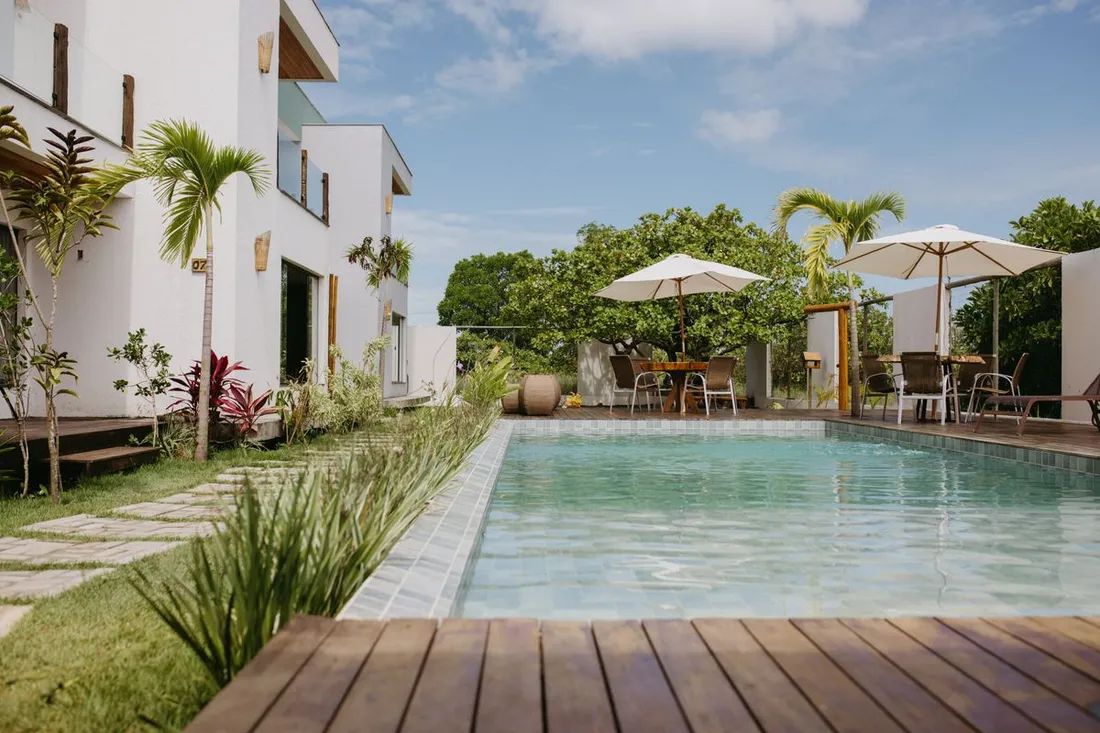
How to get your rental classified in Martinique, step by step
The process is more accessible than people think: allow 2 to 4 weeks and a budget of €150 to €350 depending on the body and the size of the property.
- Choose an accredited body: only firms accredited by Cofrac carry out the inspection visit. Several operate across the whole territory, from Saint-Pierre to Sainte-Anne.
- Prepare the property: get hold of the grid and check every line. A torn mosquito net, an under-equipped kitchen or a missing safety notice can cost you a star.
- The inspection visit: the inspector reviews the criteria on site, often in less than two hours for a studio or a one-bedroom.
- The classification decision: within 1 month, you receive your certificate and your stars. You can then display the official plaque and declare your property as classified to the tax authority.
What to anticipate on the coast
By the sea, salt air and humidity wear out furniture and appliances quickly. Before the inspection, check the bay windows, locks and air conditioning: these are the first things to deteriorate near the beaches. A well-maintained rental will reclassify without trouble in 5 years.
Delegating management to secure your profitability
Getting your rental classified is one thing. Running it all year round from a distance — late arrivals at Aimé Césaire airport, cleaning between stays, maintenance after a heavy swell or a sargassum episode — is quite another, especially from mainland France.
This is precisely our job at Hostel Toucan. As a concierge and seasonal rental management service in the overseas territories, we support Martinique owners from A to Z:
- Support with classification and bringing your property up to standard to secure your stars.
- Full rental management: listings, dynamic pricing according to the dry season (the Lent season, “Carême”, from December to April) and carnival, cleaning, guest welcome.
- Direct booking with no platform fees, with free cancellation up to 7 days before arrival and a 7-day WhatsApp support line that reassures your guests as much as you.
Discover our offer on the owners page, and browse our rentals in Martinique to see how beach-side properties position themselves.
Getting your rental classified near the Martinique coast means turning a geographic advantage into a lasting tax advantage. Between the doubled micro-BIC deduction, the optimised tourist tax and the overseas schemes, the return on a process costing a few hundred euros quickly runs into the thousands — provided you carry it out well and don’t let your sea-view villa sit idle the rest of the year.
FAQ
Is classifying a tourist rental mandatory in Martinique?
No, it is voluntary. You can legally rent out a non-classified furnished property, provided you have declared it at the town hall. But without classification, your micro-BIC deduction drops to 30% with a cap of €15,000 per year, versus 50% and €77,700 for a classified rental. For a well-let coastal property, not classifying it leaves money on the table.
How many stars should you aim for with a rental near the beaches?
Two to three stars are enough in the vast majority of cases. The tax benefit (50% deduction) is identical regardless of the number of stars: a single one is enough to qualify. The extra stars serve mainly to justify a higher rate. A flawless 3-star is better than a 4-star poorly maintained by the sea air.
Does classification affect the tourist tax the traveller pays?
Yes. In most Martinique municipalities, a classified rental falls under a fixed tourist tax rate per night and per person, based on the number of stars. A non-classified rental is often taxed as a percentage of the nightly rate, which costs the traveller more on high-priced accommodation. Classification therefore allows a clearer and more competitive total cost.
Can Hostel Toucan help me get my rental classified in Martinique?
Yes, it is one of the first services we offer. We assess your rental against the grid, point out the adjustments to plan for (furniture, safety, equipment) and direct you to an accredited body. After that, we handle everything: direct booking with no platform fees, free cancellation 7 days before arrival and 7-day WhatsApp support. Contact us via the owners page for an initial chat.