Renting out an apartment in Le Gosier, a villa in Saint-François or a bungalow in Deshaies on Airbnb or Booking? Then the tourist rental registration number in Guadeloupe applies directly to you. Since France tightened its rules on short-term rentals nationwide, every town in the archipelago is gradually switching to mandatory registration, and the platforms now block listings without a number in the towns that require one. Based in Guadeloupe and managing dozens of furnished rentals between Sainte-Anne, Le Gosier and the leeward coast, we guide property owners through these steps every week. Here is the complete guide, town by town, to obtaining your 13-character number stress-free.
What is the registration number and who is concerned in Guadeloupe?
The registration number is a unique identifier of 13 alphanumeric characters issued by the town where your property is located. It starts with the town’s INSEE code (for example 97128 for Sainte-Anne, 97113 for Le Gosier) and certifies that your tourist rental has indeed been declared.
In practical terms, the following are concerned in Guadeloupe:
- Second homes rented short-term: a studio in Le Moule, a villa in Saint-François, a one-bedroom in Bouillante, with no limit on nights but with mandatory declaration.
- Primary residences rented occasionally: capped at 120 nights per year (a cap the town can lower to 90 nights since the November 2024 law).
- Non-resident owners: if you live in mainland France and rent out a property in Pointe-à-Pitre, the landlord’s obligations are identical; the -5h time difference in winter (-6h in summer) exempts you from nothing.
Not concerned: bed-and-breakfasts (a separate regime) and long-term unfurnished or furnished year-round rentals.
Note: the law of 19 November 2024 (known as the Le Meur law) extends registration to every town in France, the overseas territories included, via a national online service. The transition is underway in 2026: even if your Guadeloupe town didn’t require it yesterday, get ahead of it now.
Furnished rental declaration in Guadeloupe: the town hall procedure step by step
Step 1: identify your town’s regime
Not all towns in the archipelago are moving at the same pace. From our experience on the ground:
- Le Gosier, Sainte-Anne, Saint-François: the three seaside towns of southern Grande-Terre concentrate the bulk of the tourist rental stock (Caravelle lagoon, marina, beaches). They are the ones structuring their registration services the fastest.
- Deshaies, Bouillante: the leeward coast of Basse-Terre, in high demand for Grande Anse beach and the Cousteau Reserve. Declaration there is still often done via a Cerfa form filed at the town hall.
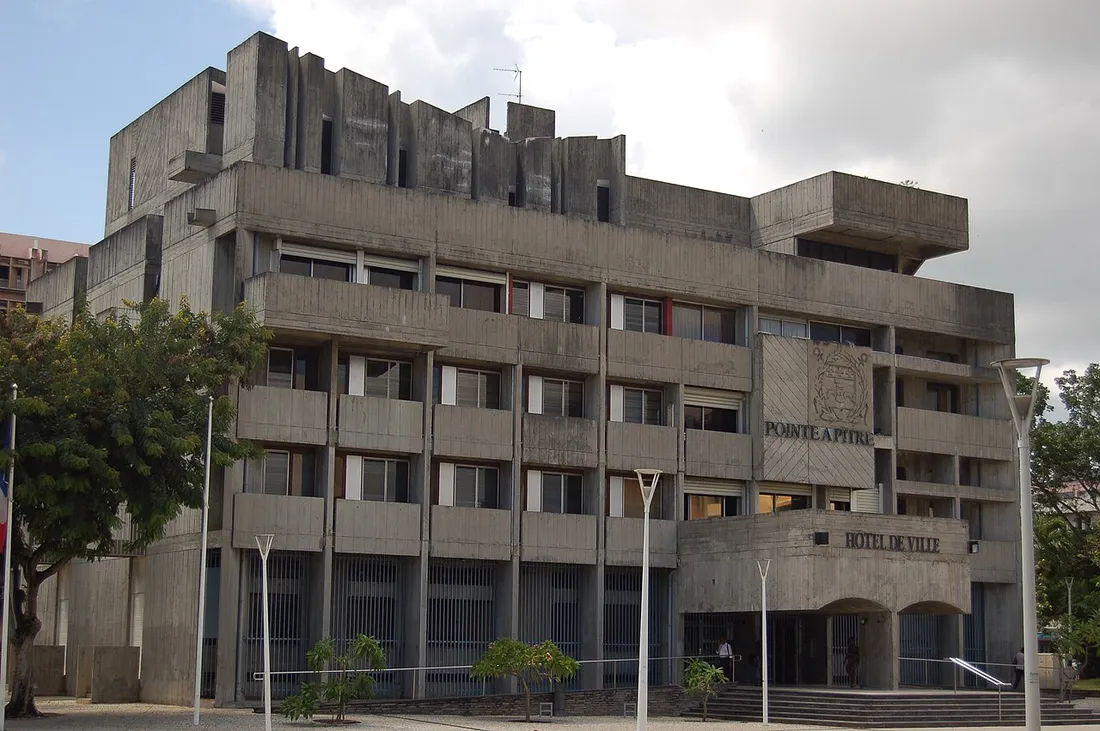
- Pointe-à-Pitre, Les Abymes: a dense urban area near Pôle Caraïbes airport, where the question of change of use can arise for homes converted into permanent tourist rentals.
A call to the town hall’s urban planning or tourism department (dialling code +590) is usually enough to find out the applicable regime. Expect 5 to 10 minutes on hold; call in the morning between 7:30 a.m. and noon, local time.
Step 2: tourist rental online service or paper Cerfa?
Two routes coexist in 2026:
- The online service: free online declaration, with the number issued immediately or within 48 to 72 hours. This is the route becoming the norm with the national online service set up by the 2024 law. Have ready: the exact address, cadastral references, surface area, number of rooms and sleeping spaces, and planned rental periods.
- The Cerfa form no. 14004: paper declaration of a tourist rental, to be filed or sent by registered mail to the town hall, which issues you a receipt. In towns without active registration, this receipt serves as proof of declaration while awaiting the switch to the 13-character number.
Our local manager’s advice: do both procedures in parallel if the town is in transition. The cost is nil, and you are covered whatever regime is enforceable on the day of an inspection.
Step 3: display the number on all your listings
Once you have obtained the number, it must appear on every online listing: Airbnb, Booking, Abritel, but also your direct booking website. The platforms have a dedicated field and remove non-compliant listings in registration towns. Also check that the address is consistent: a number issued for a studio in Sainte-Anne does not cover your second property in Le Moule; each home has its own number.
Penalties: what an undeclared landlord risks in Guadeloupe
The framework set out by the November 2024 law has seriously raised the stakes:
- No declaration or number: a civil fine of up to €10,000 per property.
- False declaration or use of a fake number: up to €20,000.
- Exceeding 120 nights on a primary residence: up to €15,000, with platforms now reporting night counts to the towns.
- Failure to provide the night count to the town hall upon request: €10,000.
On top of this come back-payments of uncollected tourist tax (from 1% to 5% of the nightly price depending on the rating, voted by each town or urban community) and a risk of tax reassessment if the activity has not been declared to the registry to obtain a SIRET. In a high-demand tourist zone like southern Grande-Terre, towns have a direct financial interest in enforcement: don’t gamble with this risk to save half a day of paperwork.
The landlord’s obligations beyond the number
Registration is only the first building block. A Guadeloupe tourist rental in good standing also means:
- A SIRET (free online registration, within 15 days on average) to declare income under the BIC regime, micro-BIC or the actual-expenses regime.
- The tourist tax collected from travellers and paid to the town, with an up-to-date night register.
- The energy performance assessment (DPE), progressively required for new rentals in zones subject to change-of-use authorisation.
- Suitable insurance (non-occupying owner cover and cyclone coverage, essential in an archipelago exposed from June to November).
- Safety equipment: smoke detector, posted instructions, emergency numbers.
Star classification (1 to 5) remains optional but grants entitlement to a more favourable micro-BIC allowance and reassures travellers who consult our Guadeloupe guide before booking.
Why delegate these procedures to a local concierge service
Between the town’s INSEE code, the inter-municipal tourist tax and the switch to the national online service, regulatory follow-up has become a profession in itself. At Hostel Toucan, a concierge service based in the overseas territories, we handle registration, displaying the number on listings, collecting the tourist tax and the night register on behalf of our owners. Our travellers book directly, with no platform fees, with free cancellation up to 7 days before arrival and WhatsApp assistance 7 days a week provided from the archipelago.
Do you own a property between Grande-Terre and Basse-Terre? Discover our full support on the owners page. Planning a stay instead? Our declared and verified properties are available on Guadeloupe rentals: every listing displays its registration number, a guarantee of legality for your holiday.
FAQ
Is the registration number mandatory in every town in Guadeloupe?
Not yet everywhere at the same pace, but the law of 19 November 2024 extends registration to every French town, Guadeloupe included, via a national online service currently being rolled out. In the meantime, declaring at the town hall (Cerfa form no. 14004 or the municipal online service) remains the legal minimum for any second home rented as a tourist rental.
How much does it cost to obtain the registration number in Guadeloupe?
The procedure is entirely free, whether via the online service or by Cerfa form at the town hall. Beware of private websites that charge €50 to €90 to “handle your declaration”: no paid intermediary is needed for this formality.
Do I have to register my primary residence if I rent it out during my holidays?
Yes, as soon as your town has set up registration. You can rent it out for up to 120 nights per year (the town can lower this cap to 90 nights), and the number must appear on your listings. Beyond the cap, the fine can reach €15,000.
What if I rent out several properties in different towns?
Each property must have its own number, issued by the town where it is located: a property in Le Gosier and another in Deshaies mean two separate declarations, two tourist taxes at potentially different rates, and two night registers. This is exactly the situation where a concierge service like Hostel Toucan centralises everything for you.