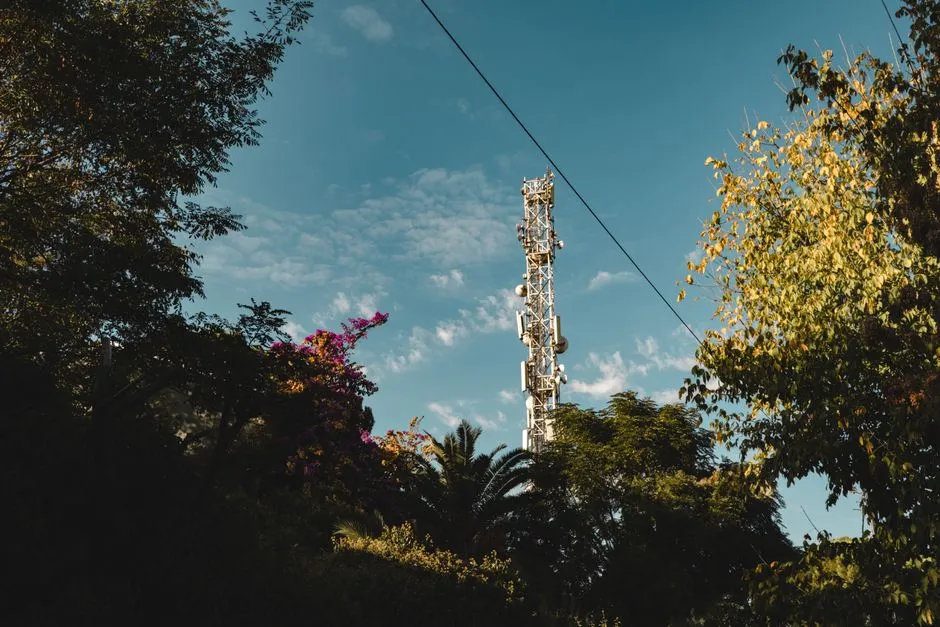
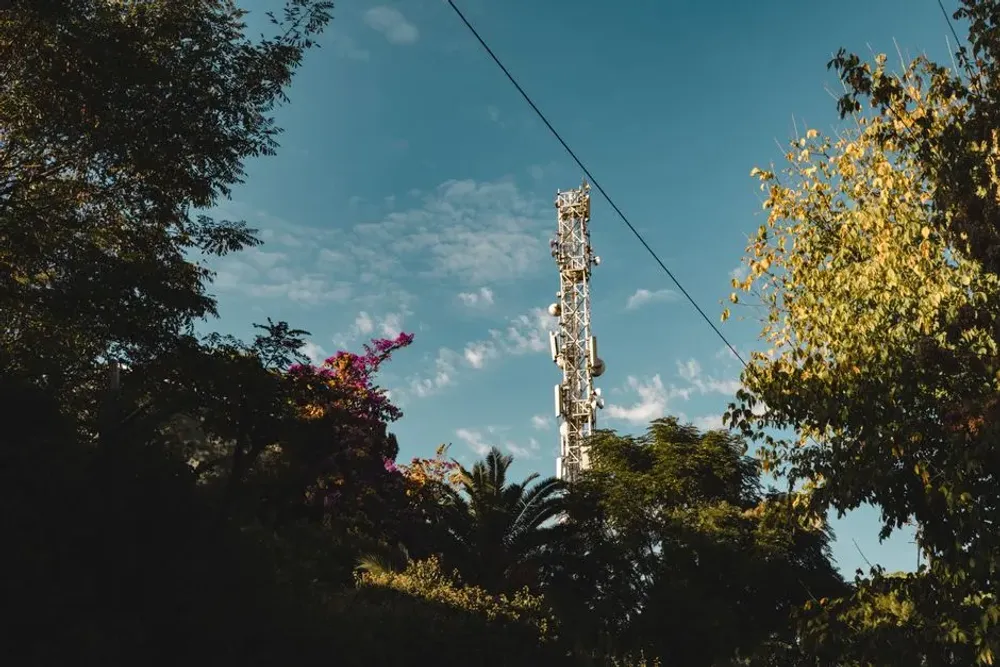
Planning a stay in French Guiana means anticipating a reality that few guides explain clearly: the territory lives at two digital speeds. Along the coast, between Cayenne, Kourou and Saint-Laurent-du-Maroni, you enjoy decent 4G coverage and a fiber network that is rolling out. But as soon as you leave the main road to head up the Maroni River by pirogue or dive into the Nouragues reserve, the signal vanishes completely. Understanding this geography of the network will spare you plenty of frustration and help you choose the right operator.
Here is our field experience, after years of welcoming travelers and managing accommodations across this Amazonian territory.
Understanding coverage: a territory at two speeds
French Guiana is a French Overseas Department and Region (DROM): you are in France here, with the euro, the +594 dialing code and French as the official language (alongside Creole, Bushinenge and Amerindian languages). In practical terms, your mainland plan works here with no roaming charges, just like in Paris. But the coverage itself is nothing like the mainland.
The coast: well connected
The coastal strip is home to the vast majority of the ~290,000 inhabitants, and therefore the antennas. You will find satisfactory mobile coverage in:
- Cayenne (administrative capital), Rémire-Montjoly and Matoury: 4G everywhere, 5G rolling out in some neighborhoods, fiber in many homes.
- Kourou: good coverage, useful around the Guiana Space Centre.
- Saint-Laurent-du-Maroni: reliable 4G in the town center, around the Camp de la Transportation.
- Macouria, Roura (village): decent coverage that deteriorates toward the isolated areas.
National road 1 (Cayenne–Saint-Laurent, about 250 km, 3 hours of driving) and national road 2 (toward Saint-Georges) are broadly covered, with a few signal gaps between the towns.
The interior and the river: the real dead zones
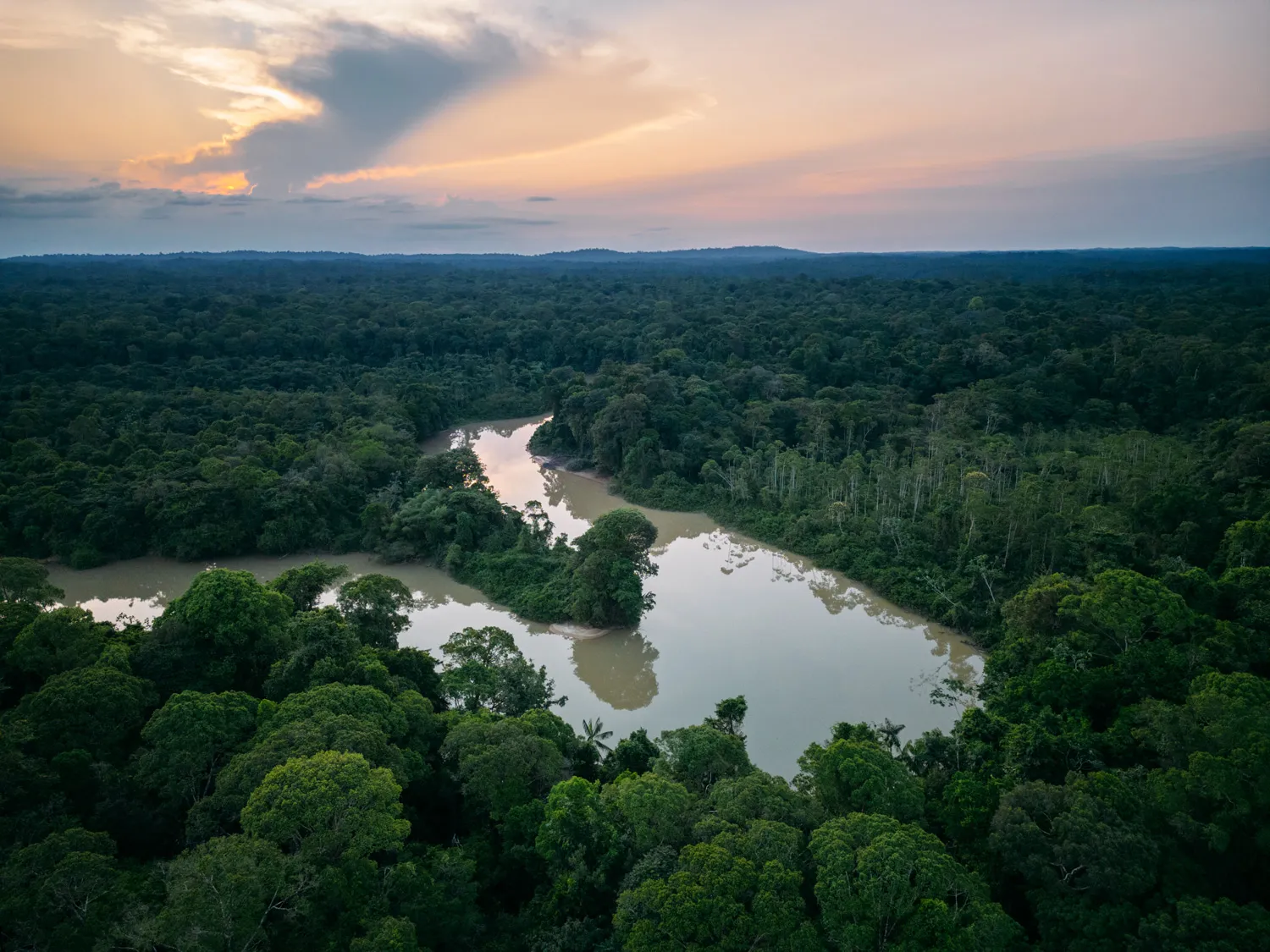
As soon as you leave the coast, the Amazon rainforest takes over again — and the network fades away. Be prepared to be completely disconnected in these iconic areas:
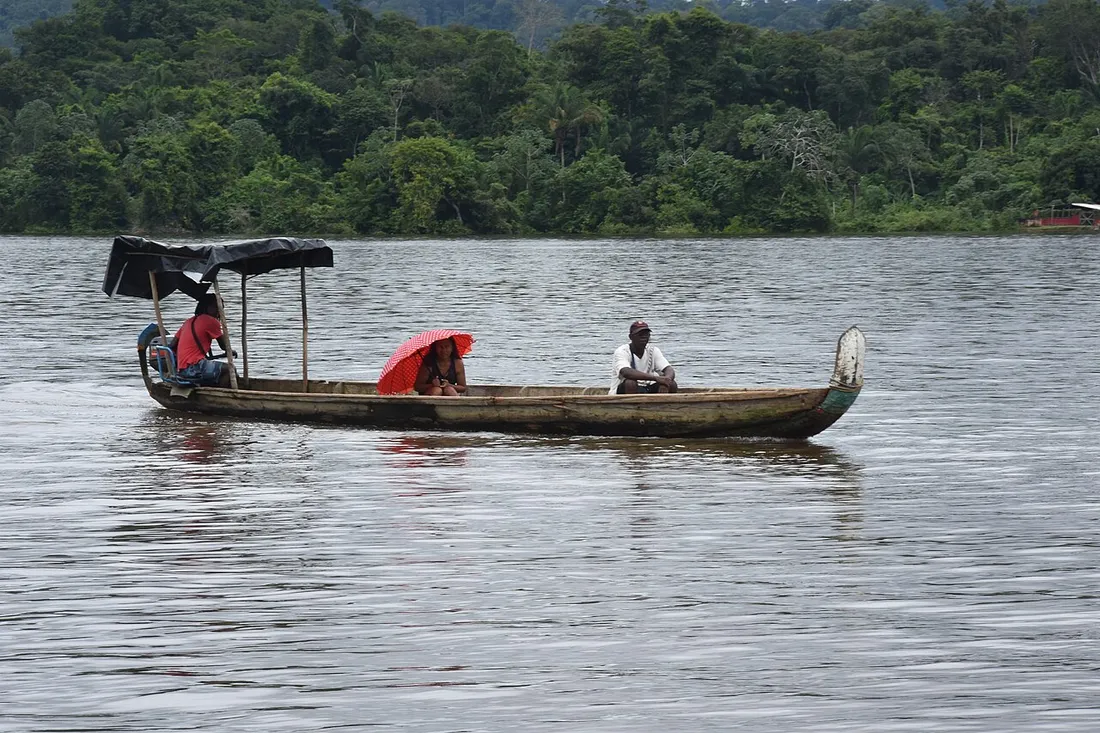
- The Maroni River by pirogue: beyond Saint-Laurent, toward Apatou, Grand-Santi or Maripasoula, the signal becomes sporadic and then nonexistent.
- The Kaw marshes: once on the water, do not count on a single bar.
- The Nouragues reserve: a protected area, completely off-network.
- Awala-Yalimapo (leatherback turtle nesting): weak and unstable coverage.
- The Salvation Islands: very limited signal, even none depending on the operator.
- The forest tracks toward Cacao (Hmong community) or Saül: expect to be cut off from the world.
This is a feature of traveling in French Guiana, not a flaw to fix: disconnection is part of the experience. But it should be prepared for.
Which operator should you choose for your stay?
The good news: no special plan is needed if you come from mainland France. The real question is the quality of coverage by operator on the ground.
If you already have a French plan
All the major mainland operators (Orange, SFR, Bouygues, Free) include French Guiana in their plans, data included, at no extra cost. Just check your data allowance for the overseas territories (usually identical to the mainland). Our field observations:
- Orange / Orange Caraïbe: historically the best network footprint, including in some interior towns. The safest choice if coverage is your priority.
- SFR / SFR Caraïbe: good presence along the coast.
- Bouygues and Free: decent roaming in urban areas, but a more limited footprint as soon as you move away.
If you are coming from abroad
For travelers outside the euro/EU zone, two options:
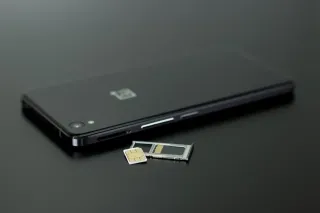
- Local prepaid SIM card: available from Caribbean operators in stores in Cayenne or at Félix-Éboué airport (Matoury). Expect around €10 to €25 for a SIM with data, to be activated with an ID.
- Travel eSIM: convenient, activatable before departure, from €5–15 for a few GB. Ideal for 3G/4G along the coast.
Our practical recommendation
For a stay combining the coast and excursions, assume that you will be connected half the time. Choose Orange if you sign up locally, and download everything you will need before heading out on an excursion.
Internet in your accommodation: what to expect
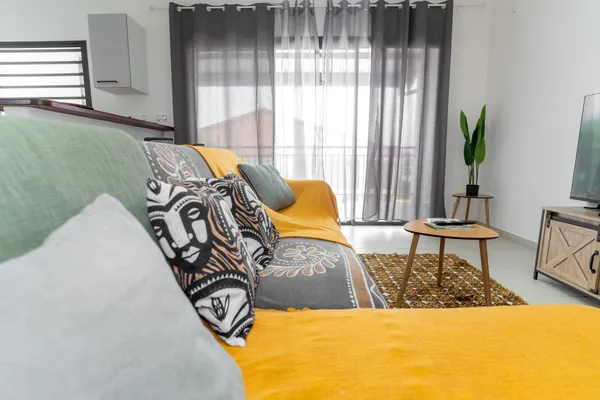
In vacation rentals along the coast, Wi-Fi is now a standard. Fiber is deployed across much of Cayenne, Rémire-Montjoly and Matoury; elsewhere, the connection runs over ADSL or fixed 4G, sufficient for streaming and light remote work.
A few concrete tips if you work remotely or need a reliable connection:
- Ask for the actual speed before booking, not just the mention “Wi-Fi.”
- Favor accommodation on the coast if you have video calls.
- Anticipate the time difference: French Guiana is 5 hours behind Paris in winter, 6 hours in summer. A 9 a.m. meeting in Paris falls at 3 or 4 in the morning here.
- Keep a mobile hotspot as backup: in case of an outage (tropical storms are frequent in the rainy season), your mobile plan takes over.
At Hostel Toucan, each accommodation specifies its actual connection, and our WhatsApp support 7 days a week replies within minutes if something doesn’t work — far more responsive than an anonymous platform.