“Will my plan work over there, or am I going to pay a fortune?” This is one of the worries that comes up most often with our guests, right before they leave. The good news, I’ll give it straight away: in the vast majority of cases, your phone and your plan in Martinique work exactly as they do in Paris, with no extra charge and nothing to set up. But there are a few on-the-ground nuances worth knowing, especially some very real dead zones in the North and in the mountains, and a few tips if you plan to work remotely from your rental. After years of living here and helping travellers out day to day, here’s the full picture, jargon-free.
Phone in Martinique: your mainland plan already works
This is the most important point and the one that reassures everyone: Martinique is a French overseas department and region (DROM). Since 2017, the European roaming regulation (“roam like at home”) has been extended to the DROMs. In practical terms, if you have a mobile plan taken out in mainland France with Orange, SFR, Bouygues, Free or a virtual operator, you’re at home:
- Calls, texts and mobile data are deducted from your usual allowance, with no roaming charges whatsoever.
- There’s nothing to activate: as you land at Aimé Césaire airport (Le Lamentin), your phone automatically switches to a local partner network.
- The local dialling code is +596 for landlines (and 0696 for Martinican mobiles), but to call mainland France or another French mobile, you dial as usual.
Just one habit to get into: check your “from the overseas departments” data allowance in your plan’s terms. Most recent offers include Martinique in the mainland volume, but some older or very low-cost plans cap the data usable overseas (for example 25 GB instead of the advertised unlimited). A quick look at your account before leaving avoids any nasty surprise.
And if you’re coming from abroad (Belgium, Switzerland, Canada)?
Here, “free roaming” doesn’t apply, as these countries are outside the European Union on this matter. You then have three options:
- Activate a travel add-on with your home operator: often €5 to €15 per day or per week, worth comparing carefully.
- Buy a local prepaid SIM card (Orange Caraïbe, Digicel, Free) at a shop in Fort-de-France or the shopping centre: expect €10 to €25 for a SIM with data, on presentation of ID.
- Go for an eSIM downloaded before departure: the simplest solution if your phone is compatible. Caribbean data plans start at around €10–20 for 5 to 10 GB.
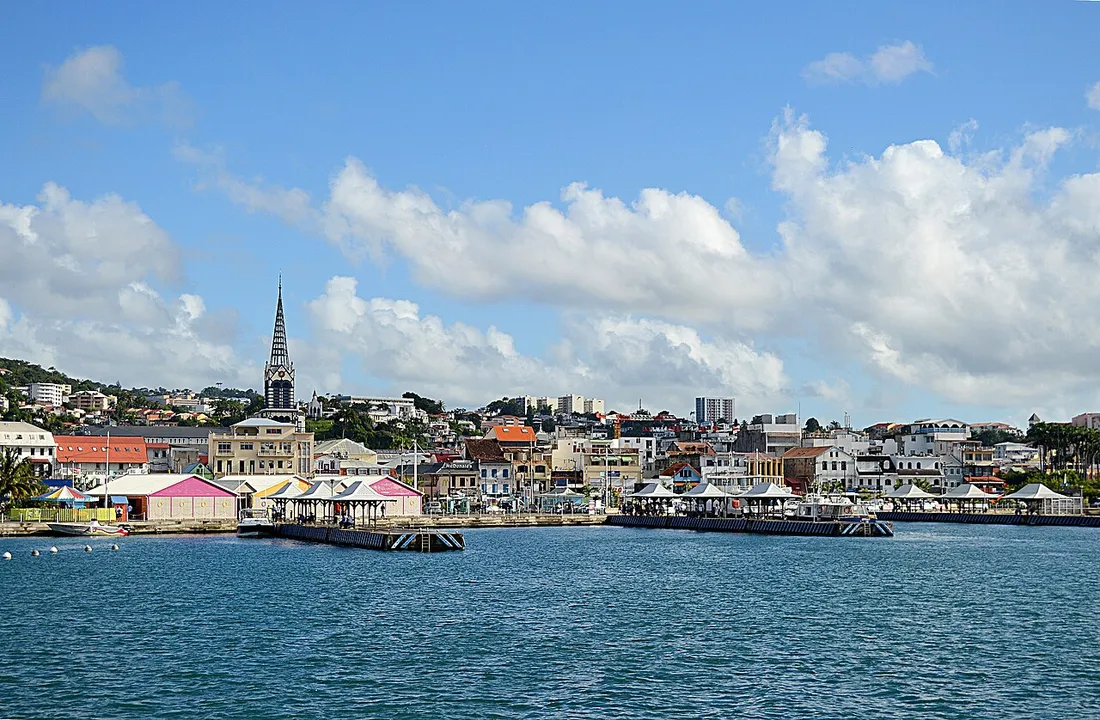
4G coverage in Martinique: very good in the South, more temperamental in the North
Let’s be concrete about 4G coverage in Martinique, because this is where on-the-ground experience counts. Overall, the mobile network is good to very good across most of the island, and 5G is now deployed in the Fort-de-France area and the main tourist towns. But the volcanic terrain creates sharp contrasts.
Where it works very well:
- The whole central agglomeration: Fort-de-France, Le Lamentin, Schoelcher, Ducos.
- The southern beach belt: Les Trois-Îlets, Sainte-Anne (all the way to Les Salines), Le Diamant, Sainte-Luce, Le Marin. You’ll post your photos from the beach without a hitch.
- The inhabited Atlantic coast: Le François, Le Robert, La Trinité.
Where it gets tricky:
- The North-Caribbean coast beyond Saint-Pierre: Le Carbet works fine, but between Le Prêcheur and Grand-Rivière the signal becomes intermittent, even absent in isolated coves like Anse Couleuvre.
- Mountain roads and hiking trails: on Montagne Pelée, in the Pitons du Carbet or on the forest tracks of the North, expect to lose the network in places. It’s also a safety point: tell someone your route before a big hike.
- The depths of the gorges and waterfalls (Saut Gendarme, the canyons of Fonds-Saint-Denis) where the terrain cuts the signal.
My local tip: for an outing in the deep North or in the mountains, download your offline maps (Google Maps, Maps.me) and your rental’s address before setting off. You’ll never get stranded.
4G or 5G: what speed to expect day to day?
Day to day in the South and Centre, 4G speeds are more than enough for browsing, streaming and video calls. On 5G in Fort-de-France, you easily exceed the speeds you need on holiday. The slowdowns sometimes seen in high season (the dry season, from December to April, and during carnival in February-March) are mostly down to crowding on certain very busy cells, like Les Salines on a Sunday, not to any structural network flaw.
Wifi in Martinique: what to expect in rentals and elsewhere
On the wifi in Martinique side, the standard has improved markedly. Fibre optic now covers a large share of the towns in the Centre and the South, and most serious holiday rentals offer a decent connection. Here’s what I see on the ground:
- In rentals: wifi is now almost standard in quality accommodation. The fibre areas (Trois-Îlets, Sainte-Anne, Fort-de-France, Le Diamant) often offer 100 to 300 Mbit/s, plenty for remote work. In the more rural towns of the North, you’re sometimes still on ADSL, so slower.
- In cafés and restaurants: many establishments in Fort-de-France and the tourist areas offer free wifi, but the speed remains variable. Count on it to check your emails, not for a big video conference.
- At the airport and in shopping centres: free wifi available, handy on arrival or departure.
A point of honesty: the quality of wifi in rentals varies enormously from one property to the next. This is exactly the kind of detail to check before booking, especially if you plan to work.
Working remotely from Martinique: it’s entirely doable
More and more travellers are extending their stay to work remotely, and Martinique lends itself well to it, provided you plan ahead. The time difference works in your favour for part of the day: the island is 5 hours behind Paris in winter and 6 hours in summer. When it’s 3 p.m. in Fort-de-France, it’s 8 or 9 p.m. on the mainland, which leaves a fine quiet morning to get ahead before France truly wakes up.
My recommendations for stress-free remote work:
- Choose a rental in a fibre area (South Caribbean or Centre) and confirm the real speed before booking.
- Have a plan B: your mobile plan in tethering mode (the South’s 4G network is reliable) will save you during an outage, common in the heavy-rain season.
- Anticipate power cuts: during stormy or cyclonic spells (June to November), the electricity can go out for a few hours. A power bank and a well-charged laptop avoid losing an important meeting.