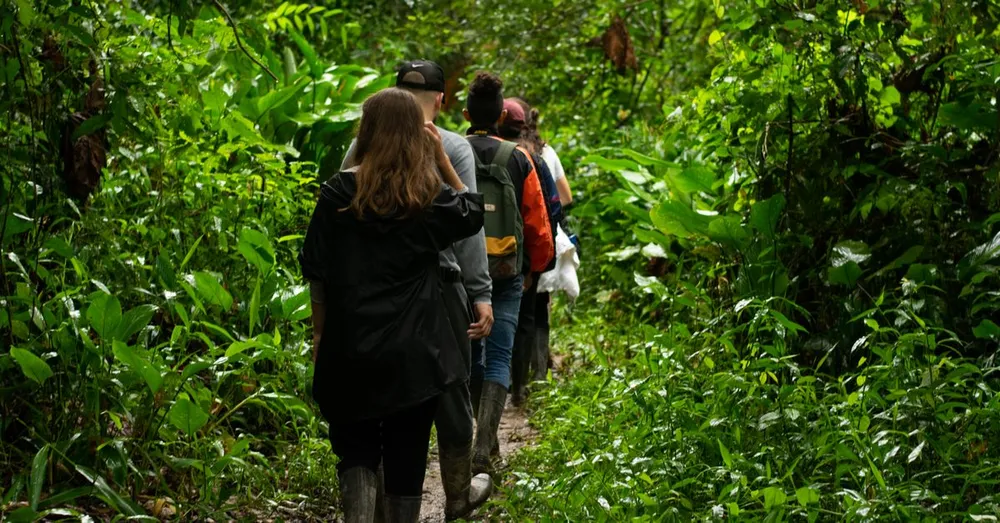
There are places in French Guiana where the asphalt simply stops and the forest takes over without warning. The Kaw Mountains are one of them. About a hundred kilometres east of Cayenne, this primary-rainforest-covered range looms over the immense Kaw marshes nature reserve. People come here to walk beneath an untouched canopy, to sleep in a carbet hanging over the void and to wake up in a sea of mist where toucans sing. Here, as a resident who has worn out his shoes on these trails, is everything you need to know before setting off.
Where the Kaw Mountains are
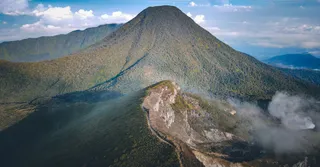
The Kaw Mountains are not a single peak but a long forested ridge that separates the coastal plateau from the marshes. They top out at around 300 metres, which may sound modest, but in equatorial forest every metre of elevation counts: the humidity, the heat and the clay soil quickly turn an ordinary slope into a serious effort.
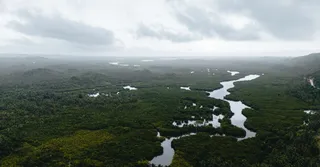
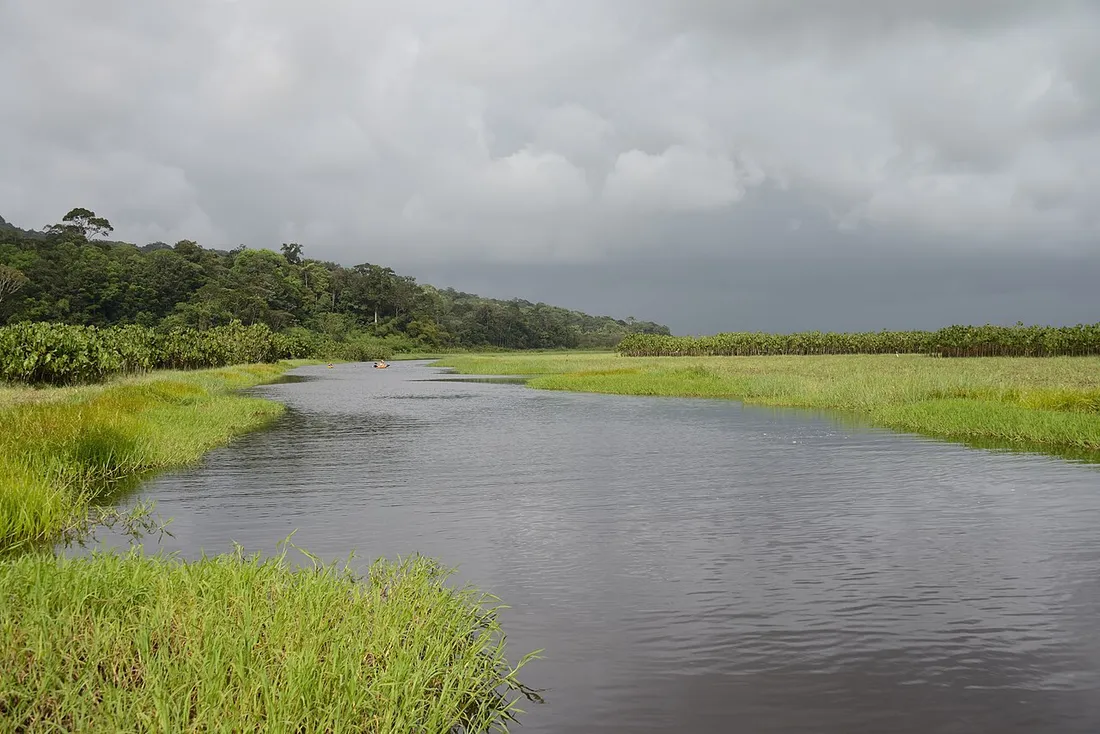
The area is part of the Kaw-Roura marshes nature reserve, one of the largest protected wetlands in France. It is a biodiversity sanctuary: black caimans, giant otters, hoatzins, elusive jaguars and a birdlife that would make any European ornithologist turn pale with envy.
How to get there from Cayenne
From Cayenne, allow roughly 1 hr 15 to 1 hr 30 of driving along the RN2 then the road to Kaw (the D6), about a hundred kilometres. The final stretch is a track winding along the ridge: stunning, but narrow and slippery after rain.
- A car is essential: no public transport serves the site. A 4x4 or a vehicle with good ground clearance is strongly recommended on the final track.
- From Félix-Éboué airport (Matoury), add 20 minutes to reach the RN2.
- Fill up in Roura: the last proper petrol station is upstream.
Local tip: leave early in the morning. The low light over the marshes below, seen from the ridge road, is one of the most beautiful in French Guiana.
The hike: what to expect
Several routes criss-cross the range. The most accessible links the welcome carbet to a viewpoint over the marshes in 2 to 3 hours round trip, on a marked trail of about 4 to 5 km. Experienced hikers can string together longer loops of 5 to 6 hours deep in the forest.
The trail profile
- Distance: from 4 km (discovery loop) to 12 km (grand loop).
- Elevation gain: 150 to 350 m cumulative depending on the route.
- Duration: 2 hr to 6 hr.
- Difficulty: moderate, but the heat and humidity (often 90%) make the exercise harder.
The trail crosses an authentic primary rainforest: giant kapok trees with spectacular buttress roots, lianas as thick as an arm, wassaï palms and a dark understorey where light struggles to reach. Silence does not exist here. It is replaced by the droning of insects, the distant cry of howler monkeys at daybreak and the hammering of woodpeckers.
What you’ll see along the way
- Columns of leaf-cutter ants carrying their neatly cut leaves.
- Blue morphos that burst out like shards of sky.
- With a little luck and a lot of silence, an agouti or a tamandua (anteater).
- In the early morning, the sonic ballet of toucans and macaws above the canopy.
The carbet at the end of the world: a suspended night
The heart of the experience is the night. On the heights of Kaw, a few equipped carbets let you sleep deep in the forest, a hammock slung under a roof of sheet metal or leaves, with no electricity or signal. This is what I call the “carbet at the end of the world”: a single point perched on the ridge, open to the void, where you fall asleep cradled by the forest.
How it works in practice
- A hammock is mandatory: you sleep in a hammock with a mosquito net, never directly on the ground. Many operators provide one; otherwise budget 30 to 50 € to buy one in Cayenne.
- A rain tarp: essential even in the dry season, a night-time downpour is always possible.
- Meals: often cooked over a wood fire by the guide (simplified awara broth, fish, Creole rice).
- Prices: a guided outing with a night in a carbet generally runs between 80 and 150 € per person, meals and guiding included. The carbet alone, self-guided, is sometimes available for 10 to 20 € a night.
Waking up in the canopy
This is the moment that justifies everything else. Just before dawn, mist rises from the marshes and drowns the forest below. The Kaw ridge then emerges like an island above a white ocean. The first rays set the treetops ablaze, the howler monkeys let out their cavernous roar and, within minutes, the whole canopy awakens. It is here, better than in any photo, that you understand why French Guiana is as much lived as it is visited.
When to go: the ideal window
French Guiana lives by the rhythm of two main seasons. For the Kaw Mountains, aim for the dry season, from mid-July to mid-November. The trails are passable, the track less treacherous and the nights in the carbet more comfortable. In the rainy season the experience is still possible, but mud, floods and mosquitoes seriously complicate the outing.
A few practical local pointers:
- Time difference: -5 hr from Paris in winter, -6 hr in summer. Handy for scheduling calls.
- Currency: the euro, as French Guiana is a French overseas department-region (DROM).
- Phone code: +594, but don’t count on any signal in the range.
- Yellow fever vaccination is mandatory to enter the territory: plan it before your trip.
Preparing your trek: the local’s checklist
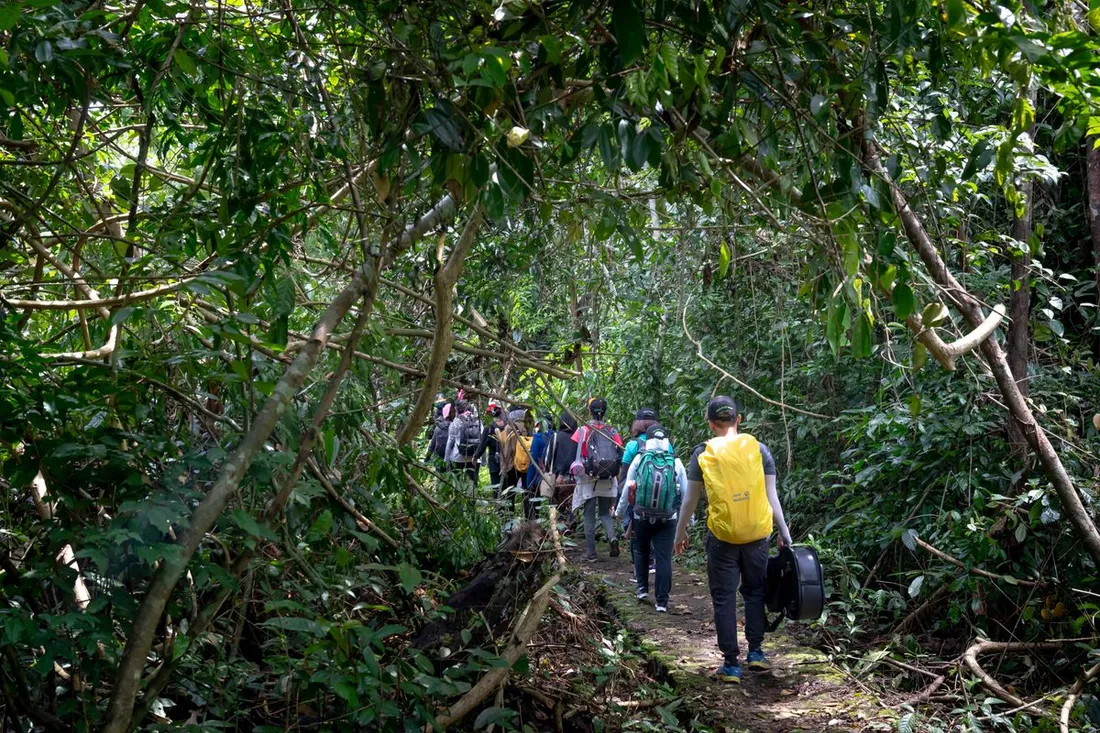
The Kaw forest does not forgive improvisation. Here is what I always pack.
- Water: at least 2 to 3 litres per person per day, there is no drinkable water point.
- High-cut hiking boots, already broken in, that hold up in the mud.
- Powerful mosquito repellent and light, long clothing.
- Headlamp + spare batteries: night falls fast and sharp around 6:30 pm.
- First-aid kit, antimalarial treatment on medical advice.
- Waterproof bags to protect electronics and documents from the humidity.
- A local guide: beyond comfort, it is a guarantee of safety and the assurance of understanding everything you walk through.
Do you need a guide?
For a first time, yes, without hesitation. A guide knows the trails that all look alike once under cover, reads animal tracks, knows where to sling the hammocks and turns the walk into a real lesson in living forest. Several Guianese operators offer day outings or overnight carbet trips departing from Cayenne or Roura.
Combining Kaw with the rest of French Guiana
The Kaw Mountains pair ideally with a pirogue trip into the marshes at sunset, to spot black caimans by lamplight. On a stay of around ten days, you can also link up with the territory’s must-sees:
- The Guiana Space Centre in Kourou (free visit, and with a bit of luck an Ariane 6 or Vega launch).
- The Salvation Islands, a former penal colony set on the Atlantic.
- Saint-Laurent-du-Maroni and its transportation camp, then a journey up the Maroni river by pirogue.
- The Cayenne market and Place des Palmistes for the Creole atmosphere.
To organise all of this stress-free, take a look at our complete guide to French Guiana: itineraries, budget and insider tips are detailed there.
Where to stay before and after the trek
Before heading up to the ridge and after coming back down, a comfortable base on the coast is best, in Cayenne, Rémire-Montjoly or Matoury, close to the airport and the shops.
At Hostel Toucan, we manage holiday rentals designed for adventure travellers: parking for your rental vehicle, space to dry your gear, and above all a deep knowledge of the terrain. Direct booking, no platform fees, free cancellation up to 7 days before arrival and WhatsApp assistance 7 days a week to guide you in real time on the weather, the state of the tracks or a trustworthy guide.
Discover our accommodation in French Guiana and book your base before the Kaw adventure.
Do you own a property in French Guiana and want to host these nature-seeking travellers? Our concierge service is detailed on the owners page.
The Kaw Mountains are not the longest or the highest hike in French Guiana. They are, however, probably one of the most intense: a raw plunge into the primary rainforest, a night suspended above the marshes and a wake-up you’ll remember for a long time. Pack your bag well, choose the dry season, and let the canopy do the rest.
FAQ
Is the Kaw Mountains hike difficult?
The difficulty is moderate from a technical standpoint, but the heat and humidity of the equatorial forest (often 90%) make the effort more demanding than it looks. The loops range from 4 km (2 hr) to 12 km (5-6 hr). Good physical condition, plenty of water and good shoes are enough for the discovery version.
What is the best time to do the Kaw trek?
Aim for the dry season, from mid-July to mid-November. The trails are passable, the access track less slippery and the nights in the carbet more pleasant. In the rainy season, mud, floods and mosquitoes greatly complicate the outing.
How much does a night in a carbet in the Kaw Mountains cost?
A guided outing with a night in a carbet, meals and guiding included, generally costs between 80 and 150 € per person. Self-guided, some carbet nights are available for around 10 to 20 €. Plan for a hammock with a mosquito net, provided by most operators.
How do you get to the Kaw Mountains from Cayenne?
Allow roughly 1 hr 15 to 1 hr 30 of driving, about a hundred kilometres along the RN2 then the road to Kaw (D6). No public transport serves the site: a car is essential, ideally with good ground clearance for the final track, especially after rain.