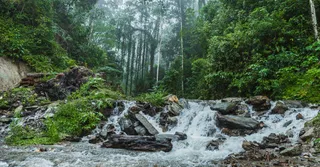
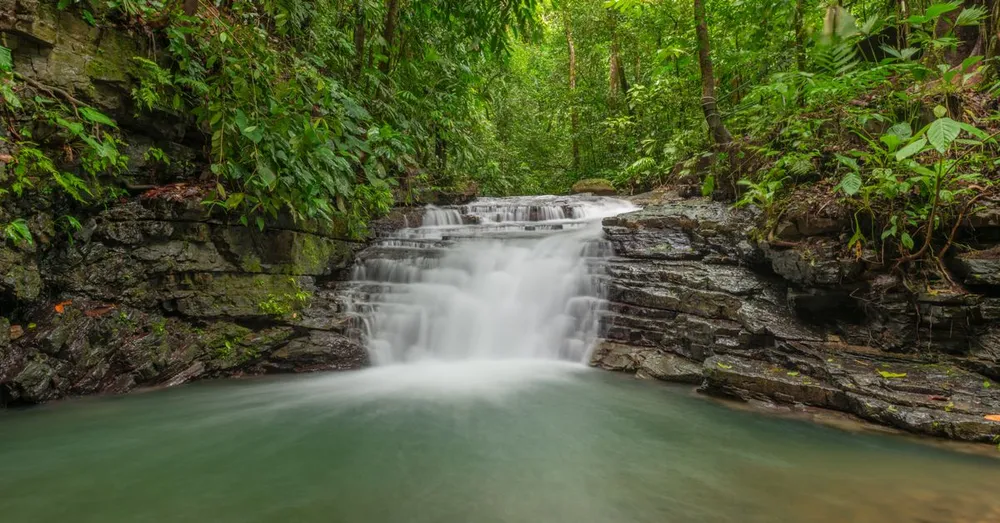
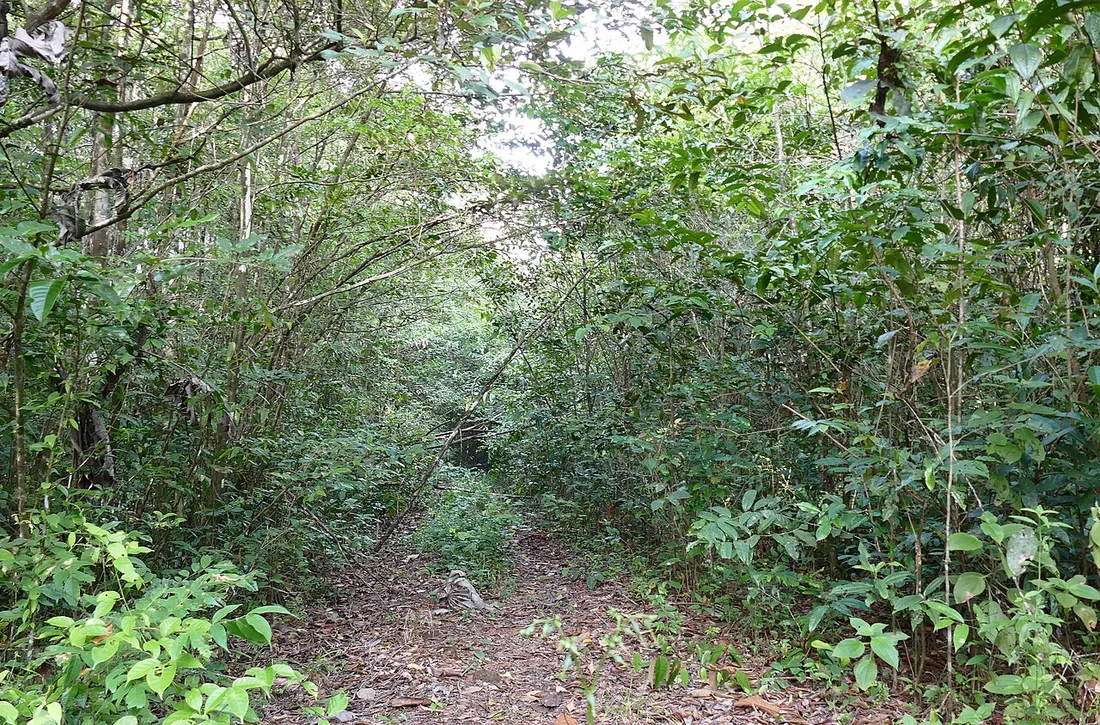
A forest hike in French Guiana has nothing in common with a trail in mainland France, or even with a Caribbean track. Here, 96% of the territory is covered by Amazon rainforest, much of it primary forest never logged. You walk beneath a closed canopy 35 metres overhead, in 85 to 95% humidity, on ground that alternates between roots, mud and creeks to ford. After several years tramping the trails between Roura, Kaw and south of Cayenne, here’s a simple method: honestly assess your level, decide whether a guide is essential, and pack a bag built against humidity rather than cold.
Choosing your forest hike in French Guiana by skill level
The first rule learned in the field: in equatorial forest, halve your distance ambitions. Count on a real average of 2 to 2.5 km/h, heat and terrain included. Here’s a proven selection, from the most accessible to the most demanding.
Beginner level: the waymarked coastal trails
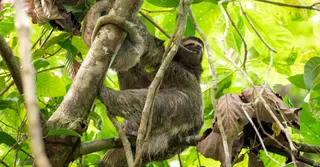
- Sentier du Rorota (Rémire-Montjoly): free 4.5 km loop, 2 hrs, 15 minutes from Cayenne. Lake, sloths often spotted in late afternoon, perfect for a first taste of the forest.
- Montagne des Singes (Kourou): 3 km to 5 km loop depending on the variant, 1.5 to 3 hrs, viewpoint over the Space Centre. Ideal the day before an Ariane 6 launch.
- Sentier de la Mirande (Matoury): 7 km, 3 hrs, dense-forest atmosphere 20 minutes from Félix-Éboué airport.
These trails can be done without a guide, self-guided, with at least 1.5 L of water per person and a start before 8 am to avoid the midday furnace.
Intermediate level: first immersion with a night in the forest
- Sentier Molokoï (Cacao, commune of Roura): 18 km loop, the great classic. Most walkers do it over 2 days with a night at the Patawa carbet (count on 10 to 15 € for a hammock spot). Modest elevation gain but mud everywhere outside the dry season.
- Montagne de Kaw: trails starting from the Kaw road, combinable with a night outing on the marsh to observe the black caiman.
At this level, a guide isn’t compulsory on waymarked routes, but a first night in a forest carbet calls for serious preparation (see gear below).
Advanced level: the real Amazon trek in French Guiana
- Saül, a landlocked village in the centre of the territory, reachable only by plane (Cayenne–Saül flight, about 55 minutes, 120 to 180 € one way depending on the season). An exceptional network of waymarked trails in the heart of the Amazonian Park: Gros Arbres and Roche Bateau loops, 3 to 6 days of star-pattern hiking possible.
- Nouragues Reserve: access by pirogue via the Approuague, only on a supervised outing, for a rare scientific immersion.
- Expeditions on unmarked trails (upper Comté, Oyapock basin): reserved for accompanied groups, 3 to 7 days, full carry.
On this segment, going alone is out of the question: no phone network, evacuation only by helicopter or pirogue, and impossible orientation without trail experience — under the canopy, GPS drops out regularly.
Do you need a hiking guide in French Guiana? The real calculation
The honest answer: no for the waymarked coastal loops, yes as soon as you leave the maintained trails or sleep more than one night in the forest.
What a good hiking guide in French Guiana brings in concrete terms:
- Reading the terrain: spotting a fire-ant tree before slinging your hammock on it, identifying a drinkable creek, anticipating rising waters after an upstream storm.
- Logistics: pirogue, carrying, tarp, meals — on an expedition, the guide handles what would turn your trek into a survival ordeal.
- The wildlife: alone, you see “nothing”; with a guide, you spot howler monkeys, agamis, poison dart frogs and tapir tracks.
On the budget side, the rates observed in 2026:
- Guided day outing: 45 to 80 € per person.
- 2-day / 1-night carbet trek with meals: 150 to 220 € per person.
- 4- to 6-day expedition (Saül, trails, pirogue): 400 to 750 € per person depending on the group.
Insist on a registered guide (professional licence or registered company) and satellite-beacon assistance such as an inReach on multi-day outings. The tourist offices of Roura and Saint-Laurent-du-Maroni keep up-to-date lists; we also recommend guides to our travellers through our French Guiana guide.
Anti-humidity gear: the list that changes everything
Forget the “mountain” reflex. In French Guiana, the enemy is neither cold nor the rain itself: it’s the permanent humidity that soaks everything. My list after years of fine-tuning:
- Footwear: draining trail shoes or light boots that dry fast. Gore-Tex is a trap: once water gets in (and it will), it never dries.
- The two-outfit system: a walking outfit that will stay wet the whole trek, and a strictly dry carbet outfit in a waterproof bag. Never mix the two.
- Waterproof bags: 2 to 3 dry bags (10-20 L, 15 to 25 € each) for a light sleeping bag, dry clothes and electronics. The backpack itself will be soaked.
- Hammock + integrated mosquito net + tarp: count on 80 to 150 € for a reliable set. It’s your bed for the entire trek.
- Tropical first-aid kit: antiseptic, hydrocolloid dressings (blisters get infected fast here), antihistamine, tick remover, saline solution.
- Repellent with 30-50% DEET or icaridin and long impregnated clothing for nightfall.
- Water: a Sawyer-type filter or tablets; creeks are plentiful but never guaranteed.
- Miscellaneous: head torch (mandatory, nightfall at 6:30 pm year-round), a backup lighter, a sachet of salt (leeches), a poncho.
Reminder: the yellow fever vaccine is mandatory in French Guiana; an antimalarial may be advised for the interior — see your doctor 4 to 6 weeks before departure.
When to go and how to organise from the coast
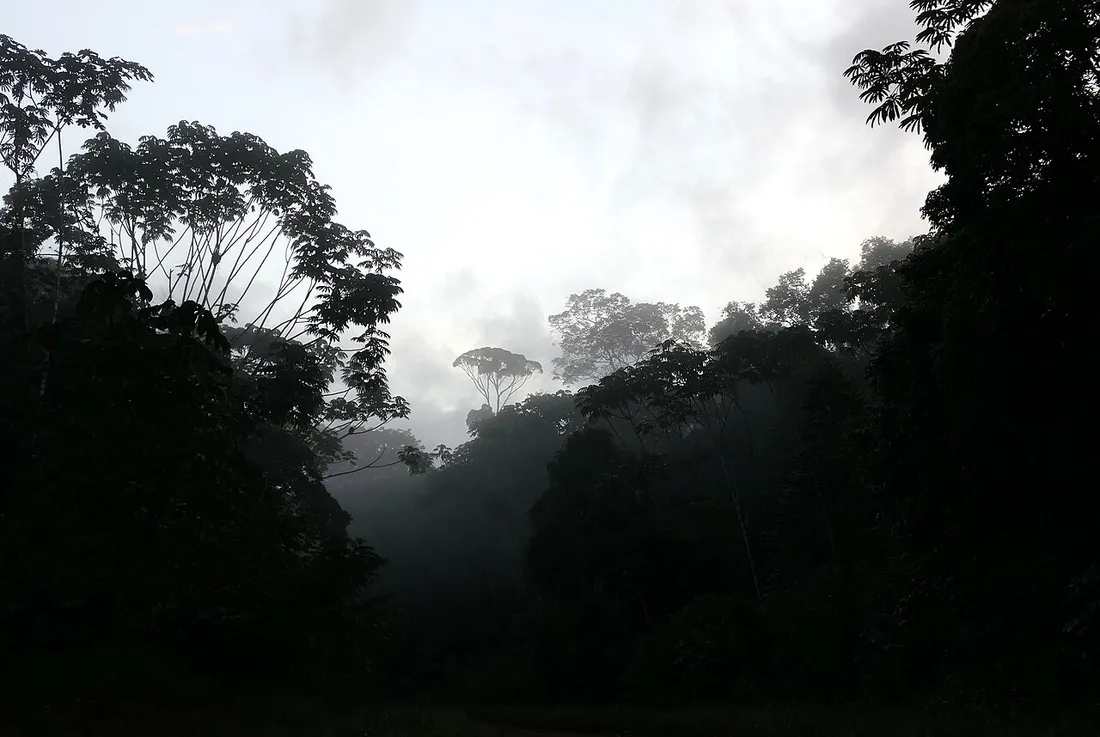
The ideal window for an Amazon trek in French Guiana is the dry season, from mid-July to mid-November: passable trails, creeks at reasonable levels, limited mud. The “little summer” of March can do in a pinch, but January-February and April-June turn certain trails (Molokoï first among them) into a clay skating rink.
On the logistics side:
- A car is indispensable to reach the trailheads: Cacao is 1 hr 15 from Cayenne, the Kaw road 1 hr 30, Kourou 1 hr.
- Always tell someone your itinerary and return time, even for the Rorota.
- Base yourself smartly: Cayenne or Rémire-Montjoly to fan out towards Roura and Kaw, Kourou for the Montagne des Singes and the Îles du Salut.
That’s why our travellers combine a Hostel Toucan accommodation on the coast with their nights in a hammock: a real shower, a washing machine for the forest outfit and air conditioning on the way back from the carbet. By booking directly through our selection of rentals in French Guiana, you avoid platform fees, you benefit from free cancellation up to 7 days before arrival — precious when an expedition depends on creek levels — and our 7-day WhatsApp assistance answers just as readily for an entry code as for a pirogue pilot’s contact. Own a property in Cayenne, Roura or Kourou? This flow of hikers is a regular clientele: see our owners page.
FAQ
Can you hike alone in the Amazon rainforest in French Guiana?
Yes on the waymarked coastal trails (Rorota, Montagne des Singes, Mirande, Molokoï), provided you tell a loved one and start early. No as soon as it involves unmarked trails or multi-day expeditions: without network or waymarking, a guide is indispensable.
What budget should I plan for a guided trek in French Guiana?
Count on 45 to 80 € for a guided day, 150 to 220 € for 2 days with a night in a carbet and meals, and 400 to 750 € for a 4- to 6-day expedition such as Saül or the interior trails. Add around 100 to 150 € of gear (hammock, mosquito net, dry bags) if you’re starting from scratch.
What’s the best time to hike in the Guianese forest?
The dry season, from mid-July to mid-November: less muddy trails, fordable creeks and more stable skies. The trails stay open the rest of the year, but the heavy rainy season (April-June) makes clay-rich routes like the Molokoï noticeably more punishing.
Are there dangerous animals during a hike in French Guiana?
The real risk doesn’t come from jaguars, almost impossible to encounter, but from snakes (watch where you put your feet and hands), ants and wasps near the hammock, and above all mosquitoes. The yellow fever vaccine, repellent and long trousers at dusk cover the essentials.