
Hostel Toucan — Apartments & Hotels
Menu

Settling in

Moving to Guadeloupe with your family: the complete guide

Published on July 30, 2026 · by Ismael Samuel

Moving to Guadeloupe with your family: the complete guide

Changing your life and unpacking your bags in Guadeloupe with children isn’t just a move: it’s a complete reorganisation of daily life. A job transfer, a longing for sunshine and nature, a career change or a family reunion — the reasons are many. But between choosing a town, enrolling in school, house-hunting from a distance and shipping your belongings by container, settling in requires planning ahead. Guadeloupe is an archipelago: life is not the same in Pointe-à-Pitre, Saint-François or Basse-Terre, and those differences count double when you have children to enrol in school. This guide brings together concrete benchmarks and practical advice to prepare your arrival calmly, bearing in mind that every family situation is unique and that the figures quoted here are indicative only.

Understanding the geography of the archipelago before choosing

Guadeloupe is made up of several islands, the two main ones forming the “butterfly”: Grande-Terre to the east and Basse-Terre to the west, linked by bridges across the Rivière Salée. Then come the dependencies: Marie-Galante, Les Saintes, La Désirade. This layout is not just a detail on a map: it determines your living environment, your travel times and the services available around you.

Grande-Terre concentrates most of the economic and administrative activity around the urban area of Les Abymes, Pointe-à-Pitre and Baie-Mahault, home to the vast commercial and industrial zone of Jarry, the archipelago’s leading employment hub. It is also the most touristy part, with the southern beaches (Le Gosier, Sainte-Anne, Saint-François). Basse-Terre, more mountainous and greener, is home to the Soufrière volcano, the National Park and spectacular nature; the prefecture is located there, in the town of Basse-Terre, quieter and further from major services.

For a family, this geographical choice shapes everything else: proximity to primary school, middle school or high school, the home-to-work distance, access to the teaching hospital (CHU) and to shops. Take the time to settle it before you even start looking for housing.

Famille avec un enfant portant des cartons de demenagement dans le sejour de leur nouveau logement
Le jour du demenagement en famille : porter les premiers cartons dans le nouveau logement — © MART PRODUCTION (Pexels, Pexels License)

Choosing your town according to your family plans

There is no “best” town in absolute terms: there is the one that matches your job, your children’s ages and your budget. Here are the main profiles.

  • Baie-Mahault: the economic heart with Jarry, practical if you work in the private sector, well served by roads, but more urban and sometimes congested at peak times.
  • Le Gosier: a residential seaside town in southern Grande-Terre, popular with families, close to Pointe-à-Pitre, with beaches and services, but with some of the highest rents.
  • Les Abymes and Pointe-à-Pitre: very close to major services (CHU, administrative offices), denser and more working-class, with widely varied neighbourhoods.
  • Sainte-Anne and Saint-François: a pleasant seaside setting to the east, appreciated for quality of life, but further from the main employment and healthcare hubs.
  • Petit-Bourg, Lamentin, Sainte-Rose (northern Basse-Terre): a good compromise between nature and proximity to Jarry, often more affordable, with quieter neighbourhood life.
  • Basse-Terre, Saint-Claude, Gourbeyre: on the prefecture side, greener and calmer, well suited if your job or posting is located there.

One concrete tip: start from your workplace (or your planned posting) and think in terms of actual travel time at peak hours, not kilometres. The routes around Pointe-à-Pitre and Jarry can be very busy in the morning and late afternoon.

Enrolling your children in school: timeline and procedures

Guadeloupe falls under the Académie de Guadeloupe. The school system is the same as in mainland France: same curricula, same qualifications, from primary through to high school. Your children therefore continue their schooling without any break in their course, which reassures many families.

Primary level (nursery and elementary)

Enrolment in nursery and elementary school goes through the town hall of your commune of residence, which assigns you a school according to the catchment map, then through registration with the school’s head teacher. You will generally need proof of address, the family record book (livret de famille), vaccination certificates and the deregistration certificate from the previous school.

Secondary level (middle school and high school)

Middle school and high school come under the Académie and the rectorate, with placement based on your residential sector. If you arrive mid-year, contact the rectorate and the relevant school quickly: places, particularly in certain high school streams, can be limited.

Anticipating the sensitive points

  • The calendar: the overseas school rhythm has some particularities (the holiday calendar differs in places from that of mainland France). Check the dates before fixing your moving date.
  • Deregistration: request the deregistration certificate from the previous school before you leave; it is essential for the new enrolment.
  • The file: gather report cards, the school medical file and any special arrangements (PAP, PPS) in advance to ensure continuity.

As a rough guide, it is best to start school procedures several weeks before arrival, especially if you are aiming for a September start when enrolments are busy.

Finding housing: renting, buying and searching from a distance

Housing is often the crux of the matter, all the more so as people frequently search from mainland France, sight unseen. Two main options are open to you.

Renting at first

This is the most prudent choice when you don’t yet know the archipelago. Renting first lets you try out a town before committing to a purchase, and discover real travel times and the atmosphere of neighbourhoods. Rents vary widely depending on the commune and proximity to the coast: the seaside areas of southern Grande-Terre and Le Gosier are among the most sought-after, hence pricier, while northern Basse-Terre and some inland communes offer gentler rates. These gaps are indicative and change with the season and the condition of the property.

Points to watch when renting:

  • Be wary of listings that look too good and of deposit requests before any viewing: remote rental scams do exist.
  • Where possible, favour a viewing (your own, that of a friend or relative on site, or a live video tour).
  • Check the orientation, ventilation and presence of mosquito screens: the tropical climate changes everything day to day.
  • Plan for the security deposit and the usual supporting documents (income, guarantor), as in mainland France.

Buying later

Many families choose to buy after an initial rental period, once the town has been “validated”. It is a project in its own right, with local specificities (earthquake- and cyclone-resistant building standards, exposure, sloping plots in Basse-Terre). Take your time, and don’t rush into it from mainland France.

The transitional solution: temporary accommodation

Between the day you arrive and the day your permanent home is ready (or while you are searching on site), short-term furnished accommodation is often the best bridge. It gives you time to visit without pressure, to wait for your container to arrive and to settle the children in gradually. That is precisely what we offer through our accommodation, designed for comfortable stays while you find your feet.
Rue residentielle calme bordee de maisons individuelles a Baie-Mahault en Guadeloupe sous un ciel bleu
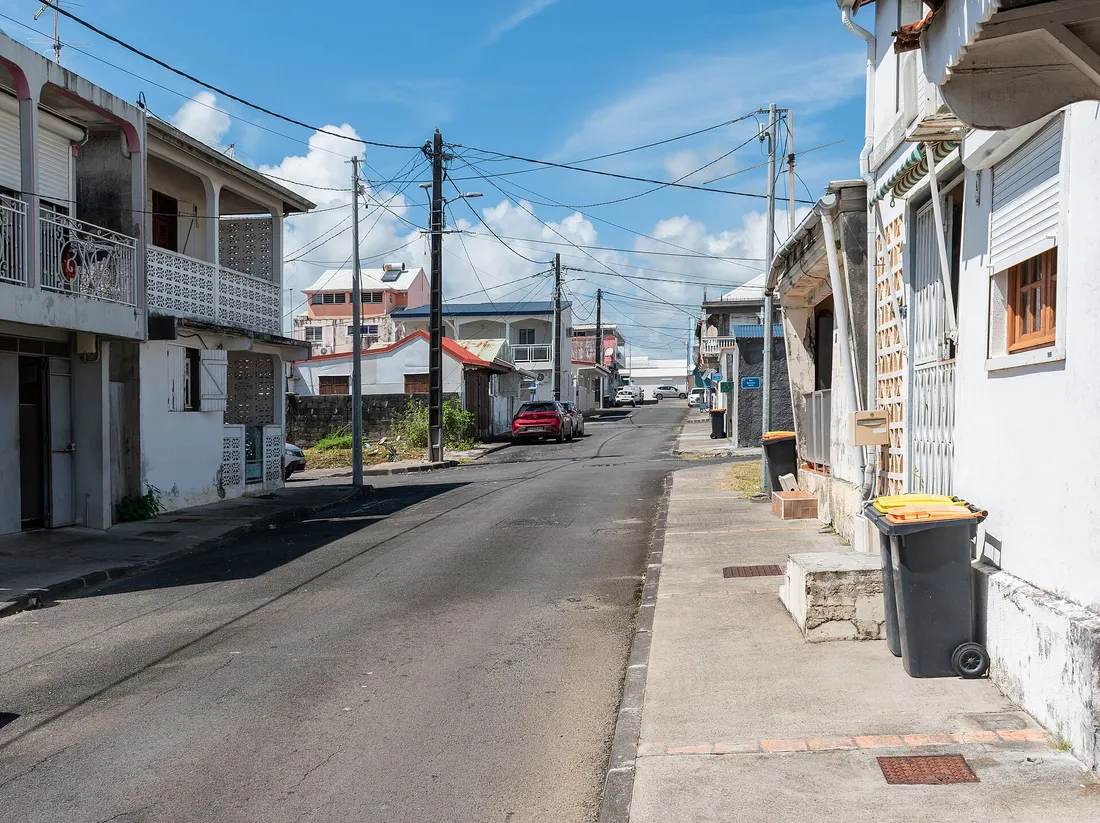
Une rue residentielle de Baie-Mahault : le type de quartier familial ou s'installer sur Grande-Terre — © Tournasol7 (Wikimedia Commons, CC BY 4.0)

Organising the move and your arrival

Moving overseas is not a matter of renting a van: it usually means shipping by sea container, with lead times counted in weeks. Planning ahead is therefore essential.

Freight: full container or partial shipment

Depending on the volume of your belongings, you will choose a full container (often 20 or 40 feet) or groupage (sharing a container). Sea transport time from mainland France is long (allow several weeks, as a rough guide, depending on the port of departure and the shipping company), plus preparation and customs clearance times. Ask for several quotes from movers specialising in overseas relocations and compare what is included (packing, insurance, home delivery, customs formalities).

What is best kept with you

Plan a “survival” suitcase for the first few weeks, as the container will arrive well after you do: light clothing, important papers, computers, a few of the children’s things (comfort toy, toys, school bags), a basic first-aid kit.

The pre-departure checklist

  • Request the children’s school deregistration certificates
  • Gather medical files and vaccination records
  • Obtain several quotes from movers specialising in overseas relocations
  • Book temporary accommodation for your arrival
  • Notify your bank, insurers, employer and the tax office of your change of address
  • Prepare the “survival” suitcase (papers, medication, children’s things)
  • Check vehicle procedures (import or local purchase)
  • Cancel or transfer subscriptions (energy, internet, phone)
  • Start school enrolment with the town hall and the rectorate

Practical day-to-day life with children

Healthcare

Guadeloupe has a teaching hospital (CHU, located in Les Abymes) and a network of healthcare professionals, maternal and child health centres (PMI) and school medical services. Make a point of identifying a family doctor and a paediatrician quickly, as well as the maternity unit and emergency department closest to your commune. As everywhere in France, your health insurance rights are transferable; just report your change of situation.

The climate and pace of life

The climate is tropical, hot and humid, with a rainy season (the “hivernage”, roughly June to November, a period also affected by cyclone risk) and a drier season (the “carême”). You quickly adapt your habits: light clothing, mosquito protection, hydration, activities in the morning or late in the day. Familiarise yourself with the guidelines in the event of a cyclone alert as soon as you arrive.

The cost of living

Some products, particularly imported ones, can cost appreciably more than in mainland France because of the distance and transport involved. Conversely, local produce (fruit, vegetables, fish) at the markets is often an excellent option, both economical and full of flavour. These gaps vary by spending category and are indicative only; drawing up a realistic provisional budget before departure avoids unpleasant surprises.

Transport

The car is by far the main means of getting around. Plan your mobility from the moment you arrive: importing your vehicle (procedures and lead times), buying locally, or renting while you get set up. Also look into the school transport offered by local authorities depending on your commune.

Fitting in and building connections

A successful move is not just about logistics: it also plays out through social connections. After-school activities, sports clubs, associations and neighbourhood life are excellent entry points for children and parents alike. Guadeloupe has a rich, living culture; letting yourself be carried along by the markets, local festivals, Creole cooking and the discovery of beaches and hiking trails makes adapting far easier. Give yourself time: the first few weeks are intense, but settling in happens gradually.

If your plans eventually include renting out a property (a second home, an investment, a place you don’t occupy all year round), be aware that managing it remotely or coordinating day-to-day matters can quickly become time-consuming. That is where a concierge service makes real sense: discover our concierge service to delegate guest welcome, cleaning and management with complete peace of mind. And to keep reading up before the big leap, the blog brings together other practical guides on life and accommodation in the region.

Frequently asked questions

Is it better to rent or buy when arriving in Guadeloupe?

In the vast majority of cases, it is wiser to rent first. That lets you try out a town, gauge real travel times and get a feel for neighbourhoods before committing to a purchase, which remains a major decision to make from mainland France.

How long does it take for a container to arrive?

Sea transport from mainland France is counted in several weeks (as a rough guide, depending on the port of departure, the shipping company and the type of shipment), not counting preparation and customs clearance. So plan for temporary accommodation and a “survival” suitcase for the first few weeks.

Can my children continue their schooling without changing curriculum?

Yes. Guadeloupe comes under the French national education system: same curricula, same qualifications as in mainland France. Educational continuity is guaranteed, provided you prepare the paperwork properly (deregistration certificate, report cards, medical file) and start enrolment in good time.

Which town should I choose with young children?

It all depends on your workplace and your budget. Families often appreciate the residential towns of southern Grande-Terre (such as Le Gosier) for their services and beaches, or the northern Basse-Terre communes (Petit-Bourg, Lamentin) for a good nature/proximity-to-Jarry compromise at more affordable prices. Above all, think in terms of real travel time.

When in the year is it best to arrive?

Many families time their arrival for the September start of the school year to make enrolment easier, but that means starting the procedures several weeks in advance since enrolments are busy at that point. Also factor the hivernage (rainy season and cyclone risk, roughly June to November) into your planning.

Ready to take the plunge?

Moving to Guadeloupe with your family takes preparation, but offers a wonderful quality of life once you’re settled. To give yourself time to find the right home and the right town, without pressure, book comfortable temporary accommodation from our properties: the best way to put down your bags and explore the archipelago before committing. And if you have the slightest question about settling in or managing a property, don’t hesitate to contact us: we know the ground and will be delighted to help.

🧭 Which stay suits you?

3 questions, 20 seconds.

Also read