Hostel Toucan — Apartments & Hotels
Menu

Settling in

Enrolling Your Children in School in Guadeloupe: The Complete Guide

Published on July 30, 2026 · by Ismael Samuel

Enrolling Your Children in School in Guadeloupe: The Complete Guide

Moving to Guadeloupe with children very quickly raises one central question: where and how do you enrol them in school? Whether you are arriving from mainland France for a job transfer, to be closer to family or for a whole new chapter of life, the Guadeloupean school system follows the same national curriculum as mainland France, but with local specifics worth knowing: the zone’s holiday calendar, what each town offers, transport, language, and a tight housing market that directly influences your choice of school. This article brings together the concrete steps, practical benchmarks and points to watch so you can approach this stage with peace of mind.

The framework: a fully fledged education authority

Guadeloupe falls under the académie de la Guadeloupe, an education authority in its own right, answering to the French Ministry of Education. In practice, this means your children follow the same official curriculum as in mainland France, sit the same exams (brevet, baccalauréat), and the qualifications they earn carry exactly the same value anywhere in France.

A few structural points to keep in mind:

  • Education is free and compulsory from ages 3 to 16, as across the whole of the national territory.
  • The rectorat de la Guadeloupe (based in Le Gosier) oversees secondary education (collèges and lycées) and coordinates the entire education authority.
  • Nursery and primary schools come under the town councils, as everywhere in France: the town hall where you live handles primary-level enrolment.
  • Guadeloupe follows the school calendar of its own zone: holiday dates (and in particular Carnival, widely observed locally) often differ from those in mainland France. Always check the académie de la Guadeloupe calendar before booking flights.

The language question

Teaching is delivered in French, the official language and the language of schooling. Guadeloupean Creole is very much present in everyday life and in the playground, but it is not an obstacle to schooling: children arriving from mainland France generally settle in without any linguistic difficulty. Creole is also valued as a regional language and culture in some schools.
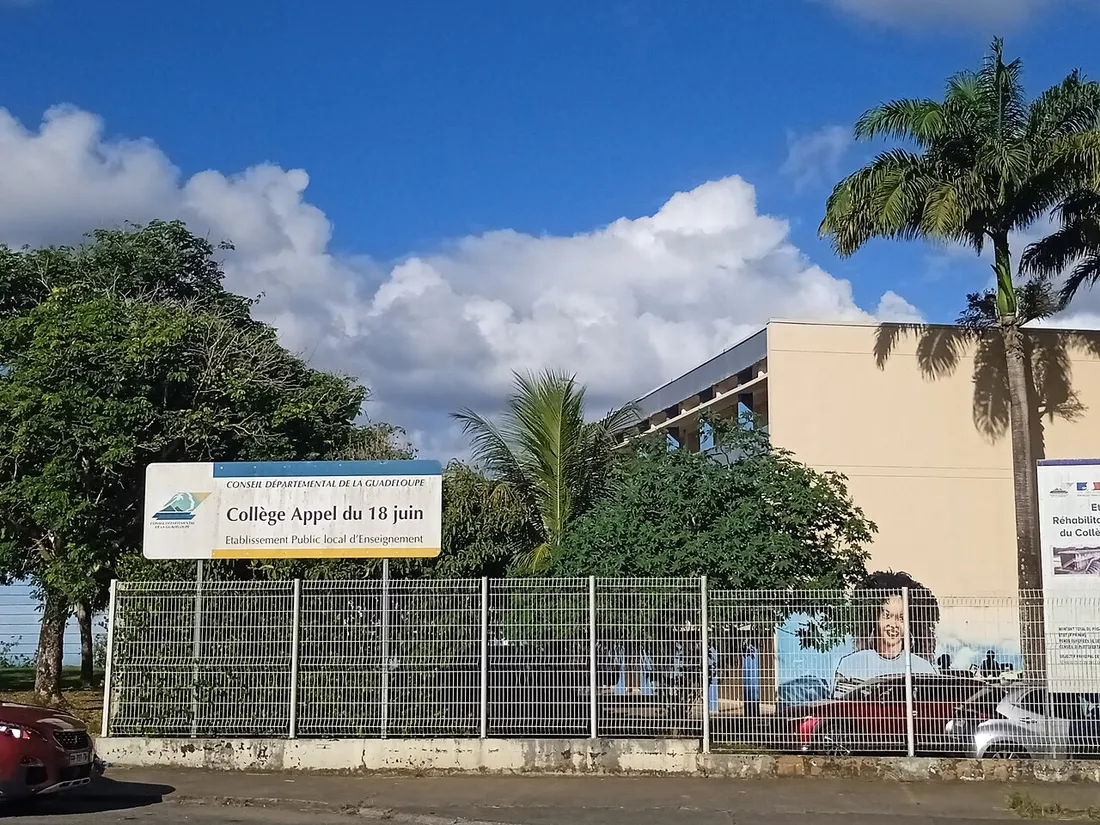
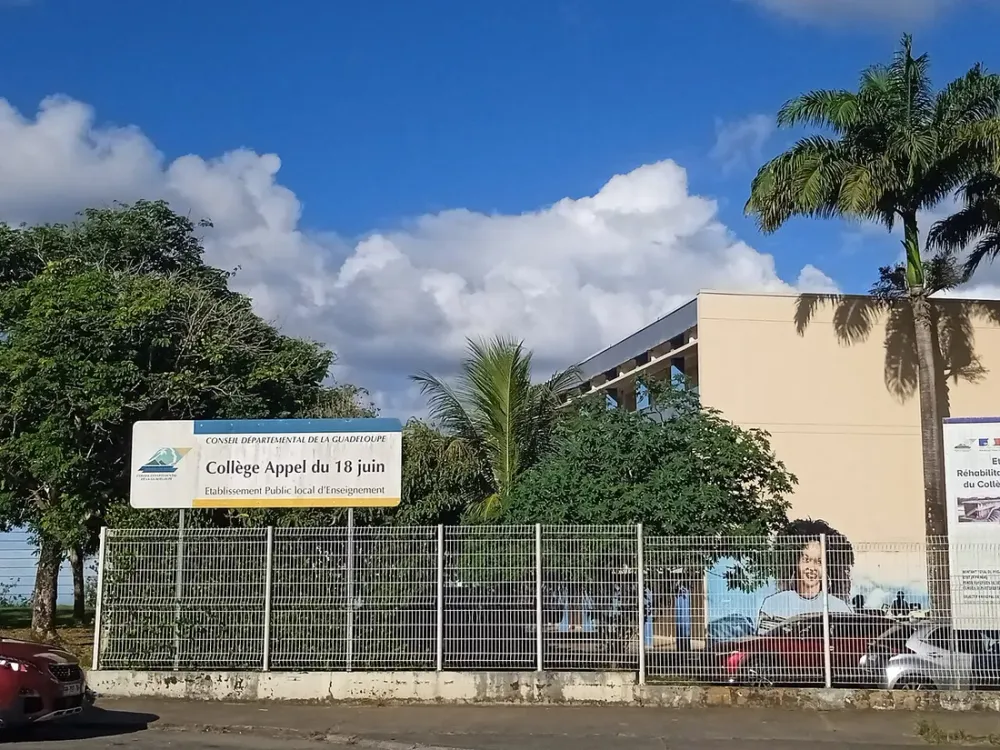
Panneau du Conseil départemental de la Guadeloupe devant le collège Appel du 18 juin, établissement public local d'enseignement au Lamentin, entouré de palmiers
Le collège Appel du 18 juin, au Lamentin : un des établissements publics du second degré de Guadeloupe. — © Enrevseluj (Wikimedia Commons, CC BY-SA 4.0)

Choosing your town: the school depends first on your home

In France, nursery and primary enrolment is tied to the carte scolaire (catchment map): the state school is determined by your home address. Your choice of town, and even of neighbourhood, therefore determines which school your children attend. This is why it is often wiser to secure housing first (even temporary) before finalising enrolment.

Here are a few benchmarks for the main areas:

  • Basse-Terre (the western wing of the “butterfly”): the greener, more mountainous half. The town of Basse-Terre is the administrative capital; Baie-Mahault, Petit-Bourg, Lamentin and Sainte-Rose account for a significant share of the population and of the schools.
  • Grande-Terre (eastern wing): more built-up and, in the south, more touristic. Les Abymes is the most populated town in the archipelago; Pointe-à-Pitre is the historic economic hub; Le Gosier, Sainte-Anne and Saint-François offer a sought-after seaside setting.
  • Baie-Mahault and the Jarry area: the archipelago’s leading employment hub (the Jarry business zone). Many families relocating for work settle in this central, well-connected sector.
  • The southern islands (Marie-Galante, Les Saintes, La Désirade): schooling options are more limited there, especially at collège and lycée level. Look into it well in advance if you are considering these territories, as boarding or a ferry commute may become necessary at secondary level.

State, private and catchment areas

As in mainland France, you can choose between state education (free, catchment-based) and private education (often under contract with the State, with tuition fees). Several well-regarded Catholic private schools exist, notably along the Pointe-à-Pitre / Les Abymes / Le Gosier corridor. For private schools, enrolment does not depend on the catchment map but on available places: contact the school directly.

Enrolment steps, one by one

The process differs depending on your children’s level.

Nursery and primary (first level)

  1. Pre-enrolment at the town hall: go to the schools department (“affaires scolaires”) of the town hall where you live. The town hall tells you which catchment school applies and issues an enrolment certificate.
  2. Final enrolment at the school: with the town hall document in hand, the school’s head teacher completes the child’s admission.

Documents usually requested (to confirm with your town hall):

  • Family record book (livret de famille) or the child’s birth certificate
  • Recent proof of address (lease, electricity or water bill)
  • Health record book / proof of compulsory vaccinations
  • Deregistration certificate from the previous school (if changing school mid-year)
  • Legal guardian’s ID

Collège and lycée (secondary level)

For secondary education, it is the rectorat / Direction des services départementaux de l’Éducation nationale (DSDEN) that handles placement, working with the receiving school.

  • If you already know your address, contact the catchment collège or lycée, or go through the relevant rectorat department to obtain a placement.
  • Always report a move between education authorities: the school file (report cards, any learning adjustments) must follow the pupil. Ask the previous school for a deregistration certificate.
  • For classes with special admission requirements (rare options, specialist streams, vocational courses), places may be limited: plan ahead.

The “before the first day of term” checklist

  • Check the Guadeloupe zone school calendar before buying flights
  • Obtain the deregistration certificate from the previous school, collège or lycée
  • Gather the family record book, proof of address and health record book
  • Contact the town hall (primary level) or the rectorat / school (secondary level)
  • Check that compulsory vaccinations are up to date
  • Find out about school transport and its timetables
  • Plan to buy supplies locally (some items may take time to arrive)
  • Open a school canteen account with the town council
  • Get in touch with the CAF about the back-to-school allowance, if eligible
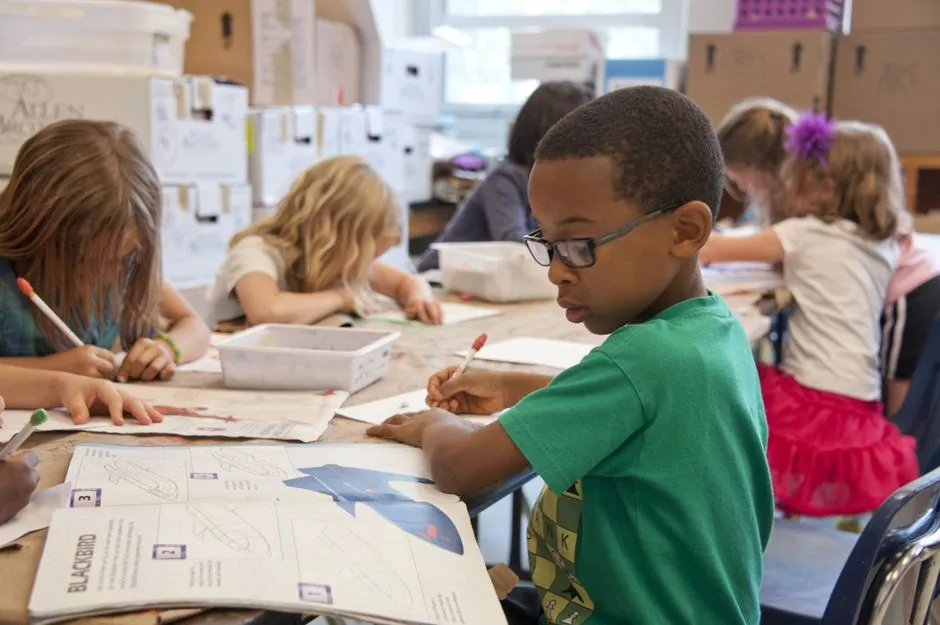
Élèves d'école élémentaire attablés en classe, occupés à écrire et dessiner sur leurs cahiers pendant une activité pédagogique
En classe : le quotidien des enfants scolarisés dans le premier degré. — © CDC (Pexels, Licence Pexels)

School transport and everyday life

In Guadeloupe, a car remains largely essential for family life: the home-to-school run, activities and shopping are usually organised around a vehicle. School transport does exist and is organised at local authority level; registration procedures and fares vary, so you need to check town by town and as soon as possible after moving in.

A few practical realities to factor in:

  • Traffic jams are frequent at peak times along the Baie-Mahault / Pointe-à-Pitre / Les Abymes / Le Gosier corridor. Actual journey times can be longer than the distance suggests.
  • School catering (the canteen) is run by the town councils; registration and billing go through the town hall.
  • School supplies are available locally, but some specific items can take longer to find or receive: buy your back-to-school kit early.
  • The climate (heat, rainy season from June to November) shapes daily organisation: light clothing, a water bottle, and extra care during heavy rain.

Budget benchmarks (indicative only)

The cost of living in Guadeloupe is generally higher than in mainland France for many imported goods, and this is felt in the family budget too. Purely as a guide, and varying from case to case:

  • State schools remain free; the main costs relate to the canteen, transport, supplies and after-school activities.
  • Private education under contract involves tuition fees that vary from school to school.
  • Supplies and back-to-school equipment can cost slightly more than in mainland France because of shipping costs.

These figures are given as indicative ranges: always check exact amounts with town halls, schools and the relevant bodies, as they change from year to year and from town to town.

Managing the transition period well

The trickiest part of relocating with children is often the gap between arriving and settling in permanently. Finding long-term housing in Guadeloupe can take time: the rental market is tight in the most sought-after towns (Le Gosier, Baie-Mahault, Sainte-Anne, Saint-François), applications are competitive, and it is rarely wise to sign a long-term lease remotely without having seen the property or the neighbourhood.

Since the catchment school depends on your address, it is often better to arrive on the island, house-hunt in person, then finalise school enrolment once your housing is confirmed. Hence the value of comfortable temporary accommodation for the first few weeks: it gives you time to view properties, compare towns, meet the schools and choose with full knowledge rather than under pressure.

This is exactly the kind of need we support at Hostel Toucan: places to stay suited to a smooth relocation, designed for families in transition. And if you are eventually considering renting out a property or getting support managing it, our property management service can point you in the right direction.

Tips for relocating families

  • Allow plenty of lead time: contact town halls and schools several weeks before your target start date.
  • Keep all school documents to hand (report cards, deregistration certificate, any learning adjustments).
  • Visit several towns before settling on housing: daily life (commute, atmosphere, services) matters as much as the school itself.
  • Look into after-school and extracurricular activities (sport, music, local associations), which are widespread and hugely helpful for children settling in.
  • Budget a financial cushion for the possible double cost of “temporary accommodation + moving in”.

Frequently asked questions

Is the curriculum the same as in mainland France?

Yes. Guadeloupe is a fully fledged French education authority: the same national curriculum, the same exams (brevet, baccalauréat) and the same qualifications as in mainland France. Moving from one education authority to another therefore involves no break in the curriculum.

When does the school year start in Guadeloupe?

Term starts at the same time as in mainland France (early September), but Guadeloupe follows the calendar of its own zone for holidays, including a break linked to Carnival. Always check the official académie de la Guadeloupe calendar before planning your travel.

Does my child need to speak Creole to fit in?

No. Schooling takes place in French, the official language and the language of instruction. Creole is present in everyday life, but children arriving from mainland France generally adapt quickly, with no language barrier.

How do I enrol my child if I don’t have permanent housing yet?

Since the catchment school depends on your address, it is often simpler to arrive on the island, secure housing first (even temporary), then finalise enrolment at the town hall or with the rectorat once your address is confirmed. Transitional accommodation gives you time to choose calmly.

Is school transport available everywhere?

School transport exists, but its arrangements (routes, timetables, fares, registration) vary by town and by school level. Check locally as soon as you move in, and bear in mind that a car is often still needed day to day.

In short: prepare your arrival, then choose

Enrolling your children in school in Guadeloupe is nothing insurmountable: the framework is that of the French national education system, the paperwork is standard, and there is a genuine offer of schools in most towns. The key is planning ahead (zone calendar, documents, choice of town) and a well-managed transition period, because the school depends on your address.

To give yourself time to view properties, compare towns and meet the schools stress-free, book comfortable temporary accommodation from our places to stay. Got a question about settling in Guadeloupe? Feel free to contact us: we will be delighted to help you prepare a smooth arrival. And for more practical advice on life and settling in across the French Caribbean and Guiana, browse the blog.

🧭 Which stay suits you?

3 questions, 20 seconds.

Also read