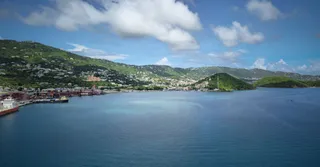
If I had to give just one travel tip to the guests I host in the South, it would be this one: forget the car for getting to Fort-de-France, take the boat. The water shuttle in Martinique is probably the bay’s best-kept secret. While drivers sit in traffic on the ring road for an hour and circle around looking for parking, you cross the bay in about fifteen minutes, dry-footed, with a breathtaking view of Fort Saint-Louis. Here’s everything you need to know to use the ferry like a local, straight from your rental in Trois-Îlets.
Why take the water shuttle instead of the car
On the map, Trois-Îlets and Fort-de-France face each other: barely 5 km as the crow flies. But by road, you have to loop around the entire bay via Rivière-Salée and Le Lamentin, which means 30 to 40 km and, at rush hour, easily 1 hour to 1 hour 15 minutes of driving. The Fort-de-France metro area concentrates most of the island’s traffic jams, and parking downtown is a headache (scarce spots, paid, and often full before 9 a.m.).
The bay shuttle solves all of this at once. The concrete advantages:
- Time: a 15 to 20-minute crossing depending on the pier, versus an hour or more by car at busy times.
- Budget: no fuel, no parking. You leave the rental car at the dock, usually free of charge.
- Comfort: no driving stress, a sea breeze, and an arrival right in the heart of Fort-de-France, on the waterfront.
- The view: the panorama over the harbor, Fort Saint-Louis and the inland hills is worth the ticket on its own.
This is the mode of transport I systematically recommend for a shopping day, a visit to the covered market or a trip into town without the fatigue of the road. For the rest of the island, however, a car remains essential: find our tips in the complete Martinique guide.
The routes and piers of the bay
The shuttle serves several piers on the Trois-Îlets side, all connected to the central pier in Fort-de-France, located on Boulevard Alfassa, facing Place de la Savane (so just steps from the market and the shops).
On the Trois-Îlets side: where to board depending on your southern stay
Three departure points structure the south shore, and the right choice simply depends on where you’re staying:
- La Pointe du Bout (Anse Mitan): this is the most frequent and fastest line (about 15 minutes). The pier is at the heart of the marina, surrounded by restaurants and shops. Ideal if your boat from Fort-de-France to Anse Mitan leaves from the liveliest tourist area of Trois-Îlets.
- L’Anse à l’Âne: a quieter pier, on the family-beach side, with a crossing of about 20 minutes. Perfect for a calmer, beachfront stay.
- The Trois-Îlets village center: a more occasional service, handy if you’re staying near the Creole village and the Marché square.
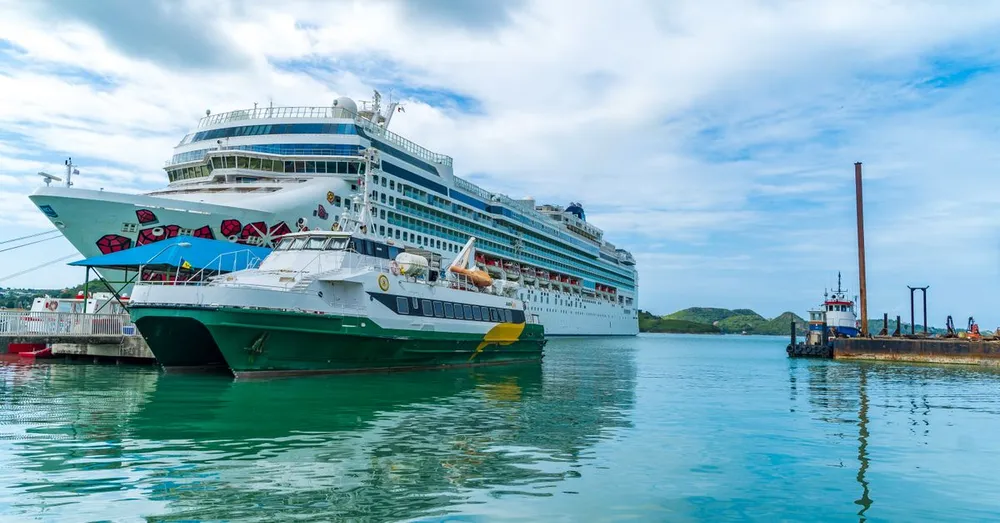
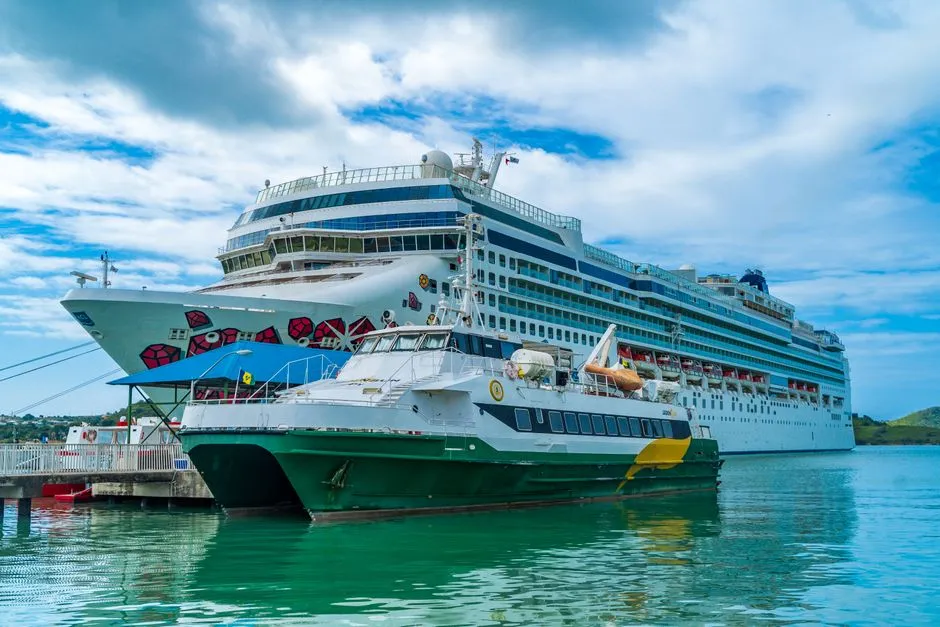
A Trois-Îlets ferry connects these points to Fort-de-France all day long. The boats are fast covered shuttles, accessible to strollers and folding bikes, but not always to wheelchairs depending on the pier (ask at the dock).
On the Fort-de-France side: a downtown arrival
You arrive directly on the waterfront, a few minutes’ walk from the Saint-Louis Cathedral, the large covered market, the Schoelcher Library and the shopping streets. No additional transfer is needed: this is one of the great advantages of the shuttle over a bus or car.
Timetables and fares: what to plan for
The bay shuttle timetables roughly run from 6 a.m. to 6–6:30 p.m., sometimes with a late rotation in high season. Here are the practical benchmarks to keep in mind:
- Frequency: a departure every 30 to 45 minutes during the day on the Pointe du Bout line, more spaced out on the Anse à l’Âne and the village center.
- First and last departures: count on a first boat around 6 a.m. from Trois-Îlets (handy for commuters) and a last return around 6 p.m. Never base your return on the final rotation: leave yourself some margin.
- Duration: 15 to 20 minutes depending on the pier.
As for prices, plan for a realistic range of €4 to €5 one-way and around €7 to €8 round-trip per adult, with a reduced fare for children (often half price, and free for toddlers). Payment is made in cash or by card directly at the pier or on board. A few on-the-ground tips:
- Buy a round-trip rather than two one-way tickets: it’s slightly cheaper.
- On Sundays and public holidays, frequency drops sharply: check the last departure before you leave.
- Avoid boarding between 7 and 8 a.m. on weekdays, popular with workers: the 9 a.m. boat is quieter for a day of sightseeing.
Local tip: in rough seas during swell episodes (especially in cyclone season, from June to November), some rotations may be canceled. Always keep a plan B by car if you have a flight or an unmissable appointment.
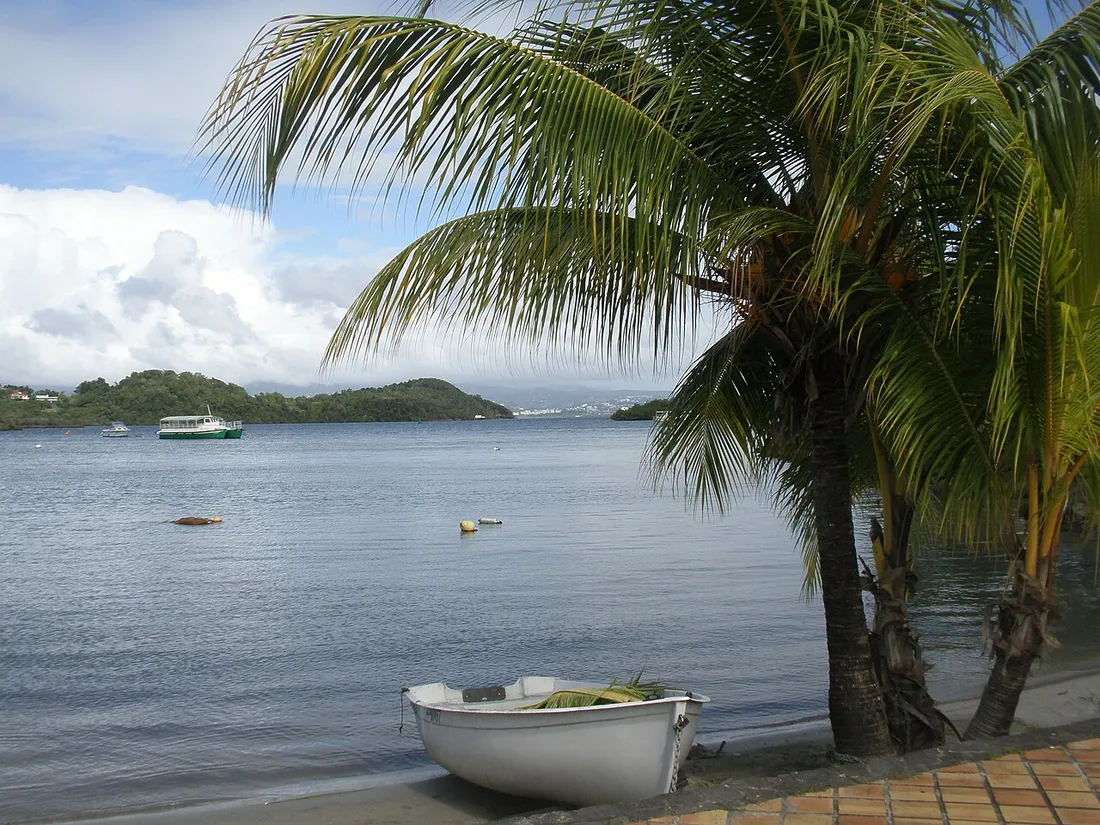
Planning your day from a rental in Trois-Îlets
Staying in the South and using the shuttle is the winning combination for enjoying the bay without enduring it. A typical day I often suggest: morning boat from Pointe du Bout, the covered market and a stroll in Fort-de-France, a Creole lunch in town, then a mid-afternoon return to finish on the beach at Anse Mitan, ti-punch in hand facing the sunset.
For everything to flow smoothly, the choice of accommodation matters as much as the choice of boat. Our rentals in Martinique are selected in the strategic towns of the South (Trois-Îlets, Sainte-Anne, Le Diamant), often just minutes from the piers. Discover our selection on the Martinique rental page.
Booking with Hostel Toucan also means:
- Direct booking, with no platform fees: you pay the fair price, with no hidden commission.
- Free cancellation up to 7 days before arrival, useful when tropical weather stays uncertain.
- WhatsApp support 7 days a week: a doubt about the last boat’s timetable or a pier closed for swell? We’ll answer, in French as well as in Creole.
And if you own a property in the area, the proximity of a water shuttle is a real rental selling point: we factor it into the promotion of your accommodation through our concierge service, detailed on the owners page.
In summary
The water shuttle between Fort-de-France and Trois-Îlets is not just transport: it’s one of the most beautiful ways to discover the bay, faster and more relaxing than the car. Choose your pier according to where you’re staying, keep an eye on the last departures, and savor the crossing. From a well-located rental in the South, you’ve got the best balance between freedom and peace of mind.
FAQ
How much does the water shuttle between Fort-de-France and Trois-Îlets cost?
Count on roughly €4 to €5 one-way and €7 to €8 round-trip per adult, with a reduced fare for children. Payment is made in cash or by card at the pier or on board. The round-trip works out a little cheaper than two separate tickets.
How long does the boat crossing in the bay take?
The crossing takes 15 to 20 minutes depending on the pier: about 15 minutes from La Pointe du Bout (Anse Mitan) and 20 minutes from L’Anse à l’Âne. That’s far faster than the car, which requires 30 to 40 km of road and often more than an hour at rush hour.
What are the shuttle’s timetables and how often do boats run?
The boats generally run from 6 a.m. to 6–6:30 p.m., with a departure every 30 to 45 minutes on the main Pointe du Bout line. Frequency drops on Sundays and public holidays. Always allow some margin and don’t count on the final rotation for your return.
Is the shuttle convenient for a car-free stay in Trois-Îlets?
To reach Fort-de-France, yes: the shuttle is ideal and drops you right downtown. However, to explore the rest of the island (southern beaches, Montagne Pelée, distilleries), a car is still highly recommended. The smart move is to stay in the South, use the shuttle for the city and keep a car rental for excursions.