You set your first bottle of water and a bag of coffee on the checkout belt of a supermarket in Fort-de-France, and the total makes you raise an eyebrow. The same items as in mainland France, sometimes 40% more expensive. For owners, it’s the same shock: when a mainland investor sends us the budget for turning their property into a furnished tourist rental, the “furnishing” line is almost always underestimated — the cart they validated on a certain large Swedish retailer’s website simply doesn’t ship to Martinique. In both cases, the answer comes down to three words you hear everywhere on the island: the octroi de mer. As residents and a property-management company based here, here is, with figures to back it up, what this tax changes for your vacation budget as well as for the real cost of furnishing a rental in the French overseas departments — and how, as an owner, you can turn it into a tax advantage.
What exactly is the octroi de mer?
The octroi de mer is a customs tax specific to France’s overseas departments and regions (DROM): Martinique, Guadeloupe, French Guiana, Réunion, Mayotte. It’s one of the oldest taxes in France, inherited from the colonial era, yet still very much alive and today regulated by the European Union. It applies to goods that enter the territory (imports) as well as to certain local products — and a sofa, a bed, a refrigerator manufactured in continental Europe or in Asia are, from a Martinican standpoint, imported goods.
In practice, two taxes stack on the same item:
- The octroi de mer itself, collected for the benefit of the municipalities, whose rate depends on the product category (from a few percent to over 30%).
- The regional octroi de mer, collected by the Territorial Collectivity of Martinique (CTM), which is added on top of the first.
For furniture and household appliances, the combined rate commonly runs around 20 to 30%, sometimes more on certain equipment. This tax does not replace VAT: it is added to it. And, a fact often overlooked, the octroi de mer applies to a value that already includes freight — so you pay a tax on the cost of maritime shipping. It’s the “tax on the tax” effect that surprises so many new owners.
Why does this tax exist? For two reasons: to fund the municipalities (the octroi de mer is their primary tax resource — roads, schools, waste collection, upkeep of the beaches you enjoy) and to protect local production by taxing certain imported products more heavily than their island-made equivalents. It’s a double-edged tool: useful for the island’s financial autonomy, but one that mechanically weighs on shelf prices.
Why Martinique costs more: the octroi de mer, but not only
It would be too easy to blame this single tax for everything. The high cost of living in the overseas departments is the result of a stack of factors.
Remoteness and the cost of transport
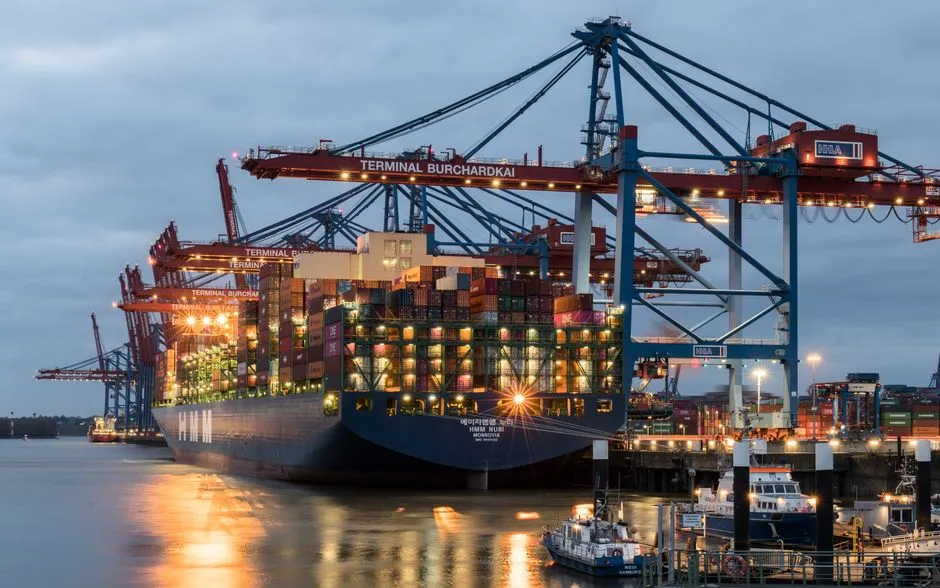
Martinique lies nearly 7,000 kilometers from mainland France. Almost all manufactured products, from appliances to industrial yogurt, arrive by ship (and sometimes by plane for fresh goods). Maritime freight, insurance, storage, and the transshipment break at the port of Fort-de-France inflate the final price well before any tax.
A narrow, low-competition market
With roughly 360,000 inhabitants, the Martinican market is small. Less volume means fewer economies of scale, and distribution is concentrated among a few large players. Less competition means, mechanically, less downward pressure on prices.
The stacking of taxes and margins
On top of the octroi de mer come VAT (at reduced rates overseas, fortunately) and the successive margins of importers, wholesalers, and distributors. Each link takes its share on an already inflated base.
The result: according to comparisons regularly published, supermarket food prices are on average 30 to 40% higher than in mainland France, and the gap can exceed 50% on certain imported brand-name products.
The concrete impact on your vacation budget
Enough theory. Here are a few price benchmarks observed in supermarkets in 2026 for a traveler’s everyday items:
- 1.5 L bottle of water: €1.20 to €1.80 (versus ~€0.70 in mainland France).
- Pack of 6 bottles of water: €4 to €6.
- Pack of brand-name ground coffee: €5 to €8.
- Block of butter: €3 to €4.
- Box of imported cereal: €5 to €7.
- Can of soda: €1.20 to €1.80.
- Brand-name sunscreen (200 ml): €18 to €28.
Conversely, some things stay reasonable, even cheap, because they are produced locally or lightly taxed:
- Local agricultural rum (70 cl): €12 to €20 at the distillery, excellent value for money.
- Seasonal fruit and vegetables at the market: often cheaper and infinitely fresher than in mainland France.
- Bananas, pineapples, breadfruit: produced locally, so very affordable.
- Fresh fish from the fisherman: an unbeatable starting price.
The lesson is clear: what costs a lot is the imported and the processed. What comes out of Martinique’s land and sea stays accessible. The whole art of a savvy stay lies in shifting your consumption toward local goods. To balance all your expenses (lodging, fuel, activities), also check out our complete Martinique guide.
Our local tips for spending less during your stay
Here are the habits we apply and pass on to our travelers. They can cut your grocery budget by 20 to 30%.
- Shop at the market, not just the supermarket. At the covered market in Fort-de-France, in Sainte-Anne, Le Marin, or Les Trois-Îlets, you’ll find fruit, vegetables, spices, and seafood at producer prices. Come early (before 9 a.m.), compare two or three stalls, and pay in cash.
- Buy directly from producers. Along the roads, especially in the North and center, roadside stands sell eggs, local vegetables, honey, jams, and cane juice; AMAP co-ops and cooperatives also exist.
- Favor rum and local products for your souvenirs. Bought at the distillery (Clément, Depaz, Saint-James, La Mauny, Trois-Rivières), AOC agricultural rum often costs less than at the airport shop, with a far wider selection.
- Cook in your rental. It’s the most profitable trick: a homemade chicken colombo or a grilled fish bought from the fisherman costs a fraction of a restaurant price. All our Martinique rentals come with a fully equipped kitchen, precisely so you can eat local and cheap.
- Compare chains and watch for promotions. The hypermarkets in the Génipa zone (Ducos) or in Le Lamentin are often more competitive than beachside convenience stores. Also look out for the BQP+ (Bouclier Qualité Prix Plus) scheme, which caps the price of a basket of everyday products.
- Stock up on basics as soon as you arrive (water, coffee, breakfast) at a hypermarket rather than making emergency purchases at a convenience store.
The hidden cost of furnishing an Airbnb in Martinique
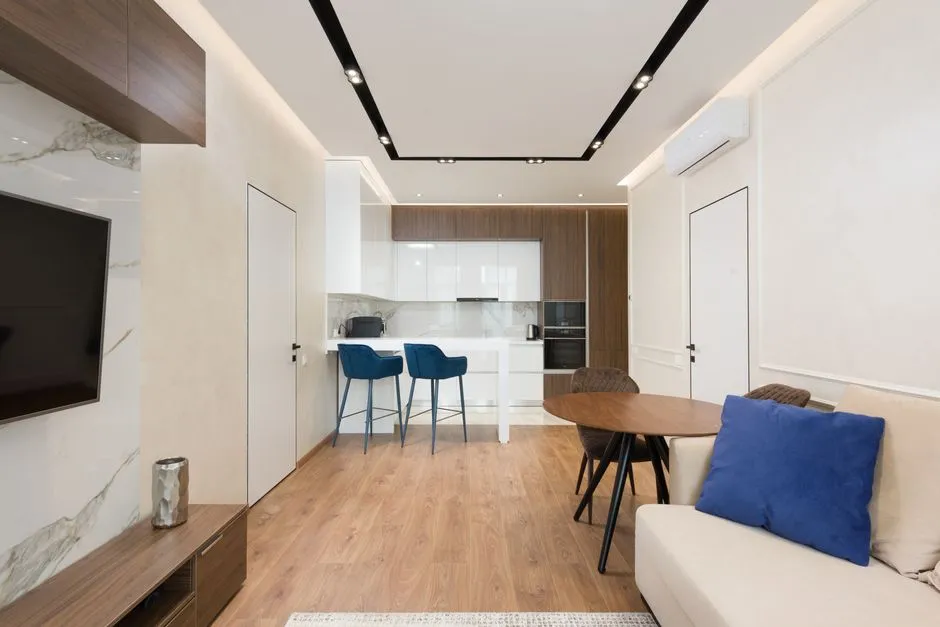
For owners, the octroi de mer doesn’t just affect groceries: it weighs heavily on the equipping of a rental. The same sofa as in Lille can cost 35 to 50% more once it’s sitting in your living room in Les Trois-Îlets. Many think they’ll dodge the problem by buying everything in mainland France before “having it shipped.” Bad news: a container landing at the port of Fort-de-France is also cleared through customs and subject to the octroi de mer on the value of the goods, except in special cases of residence and personal use. For furniture intended for rental, the authorities consider it professional equipment. Buying on site or having it shipped often comes out to a similar price range, once freight, port handling, and tax are added up.
The real budget to equip a furnished rental: 2026 figures
Here are realistic ranges we observe on the ground in 2026 to equip a property from A to Z, ready to welcome travelers. We base this on a typical two-room apartment of about 45 m² for a beachside rental (Les Trois-Îlets, Sainte-Anne, Le Diamant) intended for 4 people.
- Complete bedding (2 beds + 1 sofa bed, hotel-quality mattresses): €1,800 to €2,800
- Living room (sofa, coffee table, TV unit, television): €1,200 to €2,000
- Dining area (table, 4 to 6 chairs, complete tableware): €700 to €1,200
- Equipped kitchen (refrigerator, cooktop, oven/microwave, utensils, appliances): €1,500 to €2,500
- Air conditioning (1 to 2 split units, installation included): €1,800 to €3,500
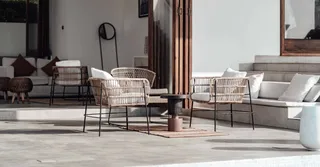
- Outdoor area (garden furniture, loungers, parasol — essential in the tropics): €600 to €1,200
- Linens, decor, small equipment (towels, utensils, Creole decor, fans): €800 to €1,500
This brings us to a realistic envelope of €9,000 to €15,000 for a two-room apartment, roughly 30 to 40% more than the same setup in mainland France. The octroi de mer accounts for most of this premium, with the rest coming from freight and a more limited choice of stores.
Where it really hurts: appliances and AC
Not every category is hit the same way. Flat-pack furniture carries the classic premium, but appliances and especially air conditioning are the real budget tipping points. A reversible split unit billed at €450 in mainland France quickly climbs to €650–750, plus installation, because it combines a high tax, bulky transport, and scarce labor. Yet under the Martinican climate — hot and humid year-round — AC is not a luxury: it’s a non-negotiable booking criterion, on par with linens provided or wifi. Skimping on it means sinking your future traveler reviews and your occupancy rate.
Three concrete levers to limit the bill
- Buy the bulky items locally. For cumbersome furniture, local chains in Fort-de-France and Le Lamentin are often the most sensible: the price already includes everything, with no customs surprises, plus accessible delivery and after-sales service. Compare several chains — the gaps are real.
- Ship in the small and the specific. Household linens, decor, small non-bulky objects: tuck them into your luggage or order online where freight stays reasonable. It’s also the category that personalizes your property.
- Take advantage of the local secondhand market. Peer-to-peer resale groups and clearance sales from closing rentals offer quality furniture already on the island, hence already cleared through customs. A secondhand sofa or garden table saves you the octroi de mer twice over.
A word on timing: avoid ordering everything in the middle of cyclone season (June to November). Port lead times stretch out, and ideally you want a property ready before the high tourist season kicks off in December, when booking demand explodes.
Octroi de mer and LMNP depreciation: the good tax news
Here’s the angle that many owners discover too late, and that changes everything. If you rent out as a non-professional furnished landlord (LMNP) under the real regime, the octroi de mer and the freight are part of the acquisition cost of your furniture — and that cost is depreciable.
In plain terms: the tax you paid is not money lost; it’s built into the value of the asset you’ll deduct from your rental income over several years. Furniture is generally depreciated over 5 to 10 years, appliances over about 5 years. A sofa paid €1,800 including the octroi de mer is depreciated on its total value, not on its “mainland price.” The overseas premium therefore inflates your depreciable base and reduces your taxable income in the early years — often to the point of canceling out the tax on rents.
That’s the whole point of the taxation of importing furniture in Martinique: what looks like a penalty at purchase becomes an advantage at tax time, provided you keep all your detailed invoices (octroi de mer line and transport cost) and maintain real-regime accounting. For the LMNP framework, micro-BIC, and the schemes specific to the overseas departments, see our resources dedicated to owners.
What to keep for the accountant
- Itemized invoices in your name listing the octroi de mer and VAT separately where possible.
- Freight and port-handling receipts if you shipped a container.
- Dated inventory of the furniture when it entered the rental, room by room.
- Distinction between immediately deductible expenses (small low-value equipment) and assets to be depreciated (large furniture, appliances, AC).
An accountant familiar with overseas LMNP very quickly earns back their fees on this single topic.
Delegate rather than underestimate
The cost tied to the octroi de mer — a traveler’s groceries or the furnishing of an Airbnb — isn’t a nasty surprise when you anticipate it: for the owner, it’s a business-plan line item like any other, and even a depreciable asset. The trap is to reason with mainland prices and discover the gap once on site, often from a distance, with no contact person.
That’s precisely where a local property-management company saves time and money. At Hostel Toucan, we know the right buying channels, the local suppliers, and the island’s logistics. We support owners from the equipping stage: sourcing, arbitrating between buying locally and importing, receiving and installing the furniture, then full management of the rental with WhatsApp support 7 days a week for you as well as your travelers. You also book your own scouting stays directly, with no platform fees, with free cancellation up to 7 days before arrival — a real comfort when planning a long-haul trip. A single message is enough to ask us where to find the best market near your rental. Discover our Martinique management offer, our service dedicated to owners, and prepare your project with our complete Martinique guide.
FAQ
Does the octroi de mer apply to tourists?
Indirectly, yes. The octroi de mer isn’t a tax you pay as an individual, like the tourist tax: it’s a tax on goods, already included in the price shown on the shelf. As a traveler, you therefore bear it with every purchase of an imported product, without seeing it appear separately on your receipt.
Is everything really more expensive in Martinique?
No, and it’s important to nuance that. Imported and processed products (brand-name groceries, appliances, cosmetics) are markedly more expensive, often by 30 to 50%. On the other hand, local products (seasonal fruit and vegetables, fresh fish, agricultural rum) remain affordable, even advantageous. By steering your purchases toward local goods, you greatly limit the impact on your budget.
Does the octroi de mer apply if I ship my furniture from the mainland in a container?
Yes, in the vast majority of cases. Furniture intended for a rental business is considered professional equipment: it is cleared through customs and subject to the octroi de mer on its value at the port of Fort-de-France, freight included. Exemptions exist mainly for the personal furniture of an individual transferring their residence, which does not match a furnished tourist rental. In the end, shipping it or buying it on site often comes out to a comparable cost.
By how much should you increase your furnishing budget compared with the mainland?
Count on average 30 to 40% more than an equivalent setup in mainland France, the premium coming mainly from the octroi de mer, then from freight and a more limited commercial offer. The most affected categories are appliances and air conditioning. For a 45 m² beachside two-room apartment equipped for 4 people, plan a realistic envelope of €9,000 to €15,000.
Can you deduct the octroi de mer from your taxes in furnished rentals?
Yes, indirectly and effectively. Under LMNP at the real regime, the octroi de mer and the freight are built into the acquisition cost of your furniture, which is depreciable over 5 to 10 years depending on the asset. The tax paid therefore increases your depreciable base and reduces your taxable rental income. The mandatory condition: keep detailed invoices and maintain real-regime accounting, ideally with an accountant well-versed in the specifics of the overseas departments.
Do you really need to install air conditioning in a Martinique rental?
Yes, it’s an almost unavoidable investment despite its high cost (often €1,800 to €3,500 for a two-room apartment, installation included). The climate is hot and humid year-round, and air conditioning has become a booking criterion expected by guests, like linens provided or wifi. Skipping it directly degrades your traveler reviews and your occupancy rate. Good news: like the rest of the furniture, the AC and its installation are depreciable under LMNP.