From the banks of the Maroni, you can see Albina with the naked eye: less than two kilometres of brown water separate French Guiana from Suriname. On paper, going to Suriname from French Guiana is one of the easiest cross-border getaways in South America — and one of the most confusing if you arrive unprepared. After several years spent in French Guiana and a good dozen crossings, here is the complete guide: ferry or pirogue, Suriname tourist card, and how to organise a two- to four-day extension to Paramaribo, the UNESCO-listed capital.
Why cross the Maroni into Suriname?
Saint-Laurent-du-Maroni is already a highlight of any French Guiana trip, with the Camp de la Transportation and the river’s unique atmosphere. But crossing the border completely changes the scenery in thirty minutes:
- A different cultural world: Dutch as the official language, Sranan Tongo in the streets, a blend of Javanese, Hindustani, Creole and Chinese heritages.
- Paramaribo, a wooden historic centre inscribed as a World Heritage Site, about 140 km from Albina.
- A markedly lower cost of living: a full meal for 5-8 €, a decent hotel night for 30-45 €.
- No time difference: Suriname runs on the same time as French Guiana (UTC-3), so the extension won’t disrupt your rhythm.
It’s the ideal mid-trip excursion, especially during the dry season (mid-July to mid-November), when the tracks on the Suriname side are in better condition.
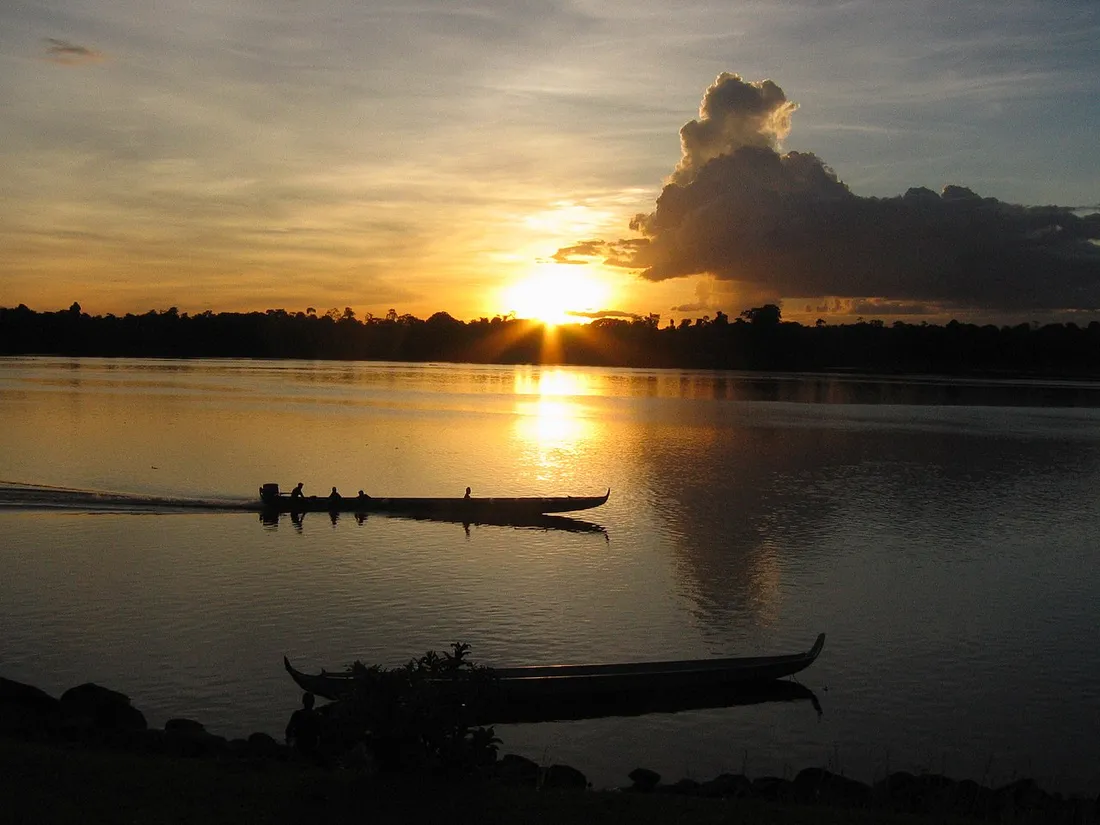
Going to Suriname from French Guiana: ferry or pirogue?
There are two options for crossing the Saint-Laurent Maroni border: the international ferry or the pirogue. Both leave from the town of Saint-Laurent, but they aren’t equal depending on your profile.
The international ferry La Gabrielle
The ferry links the Saint-Laurent landing to Albina in about 30 minutes. It’s the official option and the only one possible if you cross with a vehicle.
- Indicative fares: around 4-5 € per pedestrian, 35-45 € for a car (one way), a bit more for a loaded 4x4. Payment in euros on the French side.
- Frequency: 2 to 3 rotations a day on weekdays, reduced service on weekends and public holidays in both countries. Schedules change with the tides: check them the day before at the harbour master’s office or the Saint-Laurent tourist office.
- Time to allow: arrive 45 minutes before departure for the PAF (border police) check on the French side, then count on 20 to 40 minutes of immigration at Albina.
My field tip: if you plan to push on to Paramaribo, leave your rental car in Saint-Laurent. Most rental contracts in French Guiana forbid leaving the territory, and in Suriname you drive on the left — two good reasons to continue by local minibus.
The pirogue: fast, frequent, but one golden rule
Motorised pirogues shuttle back and forth all day between the two banks, for 3 to 5 € per person and about 10 minutes of crossing. It’s the everyday means of transport for residents of both banks.
The absolute golden rule: get your passport stamped before and after. The pirogue sometimes drops you at a jetty with no control point. But without an exit stamp from the French PAF and an entry stamp from Suriname immigration at Albina, you are in an irregular situation — with a fine and guaranteed complications on the way back or during a check in Paramaribo. Explicitly ask the boatman to drop you at the Albina control point.
Formalities: passport, tourist card and vaccine
This is the point that surprises travellers the most: French Guiana is French, but Suriname is a sovereign state with its own entry rules.
- Passport mandatory, valid at least 6 months after the date of entry. An ID card, sufficient to come to French Guiana from mainland France, does not allow you to cross the border.
- Suriname tourist card (e-Tourist Card): French nationals must obtain it online on Suriname’s official immigration portal, ideally at least 72 hours before the crossing. Count on about 50-55 USD (45-50 €) for a single entry valid for 90 days. Print it: the mobile network at Albina is unreliable.
- Yellow fever vaccine: already mandatory for French Guiana, it is also required by Suriname. Keep your yellow booklet with your passport.
- Return to French Guiana: frequent PAF checks on the RN1 between Saint-Laurent and Kourou (Iracoubo checkpoint). A stamped passport is essential.
Health-wise, antimalarial treatment is generally not necessary for a round trip to Paramaribo along the coast, but repellent and long sleeves in the evening remain the basics, as everywhere on the Guianas plateau.
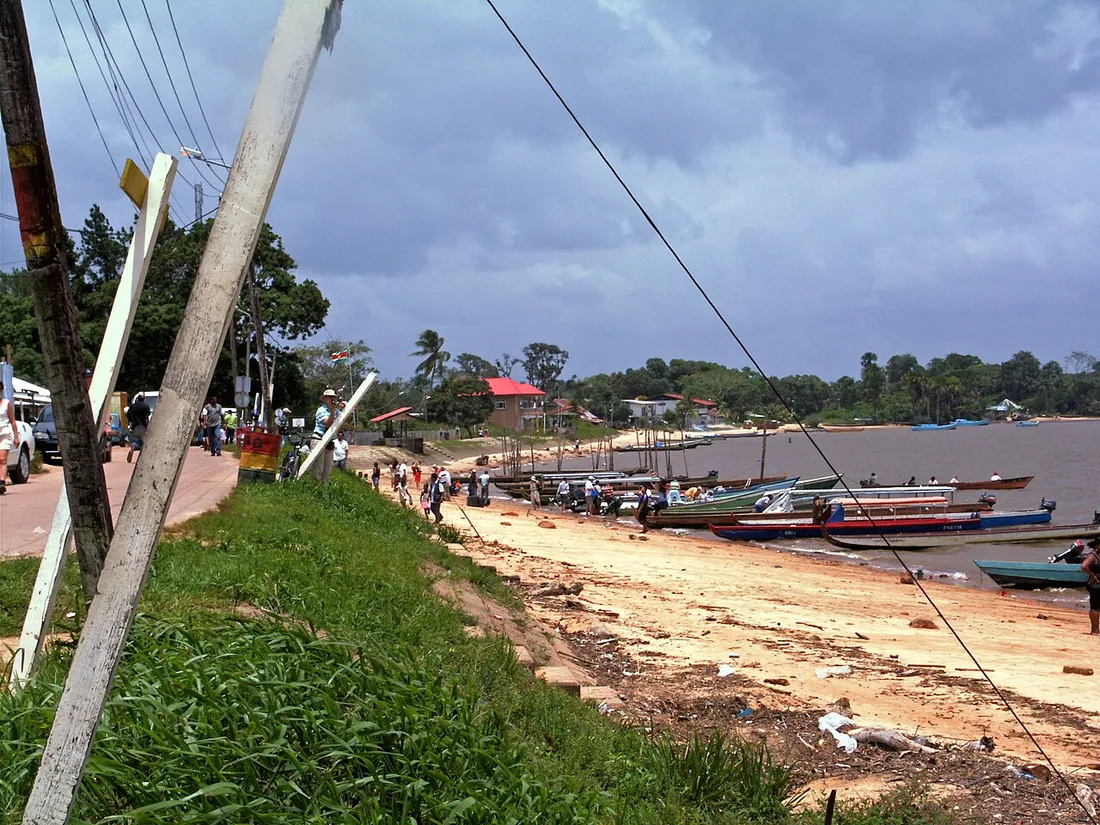
From Albina to Paramaribo: organising the extension
The journey: 140 km, 2.5 hours of road
When you step off the ferry or pirogue, collective minibuses wait right at the Albina landing.
- Shared minibus: 10-15 € per person, departure when the vehicle is full (rarely more than 45 minutes’ wait in the morning). A 2- to 2.5-hour trip to the centre of Paramaribo.
- Private taxi: 80-100 € for the ride, worthwhile for 3-4 travellers in a hurry.
- Timing tip: aim for the first ferry or a pirogue before 9 a.m. You’ll have lunch in Paramaribo and avoid driving at night, which I advise against (animals, vehicles without lights).
What to see in 2 or 3 days in Paramaribo
- The Waterkant and the UNESCO historic centre: rows of white and green wooden colonial houses, unique in the world.
- The Saints Peter and Paul Cathedral, one of the largest wooden buildings in South America.
- The Keizerstraat Mosque next to the Neveh Shalom Synagogue, a symbol of Suriname’s mixing of cultures.
- The central market by the river, early in the morning.
- Optional: a dolphin excursion on the Suriname estuary (about 30-40 €) or a day at the Peperpot plantation.
Realistic total budget for 3 days/2 nights from Saint-Laurent: 150 to 250 € per person all-inclusive when travelling by minibus, excluding the tourist card.
Practical tips from a resident
- Currency: the Surinamese dollar (SRD) fluctuates a lot. Bring euros in small denominations, exchange in Paramaribo at official cambios, and don’t count on your bank card outside hotels and supermarkets.
- Phone: your French plan (+594) switches to non-EU roaming as soon as you reach Albina, with steep rates. A local eSIM or hotel Wi-Fi is enough for a short stay.
- Language: English gets you by everywhere, and Sranan Tongo resembles the Taki-Taki spoken on the Maroni closely enough that those familiar with the river will find their way.
- Safety: Albina is a transit town, don’t linger there with your luggage; in Paramaribo, the usual urban precautions are enough.
Make Saint-Laurent your base camp with Hostel Toucan
The right logistical plan: two nights in Saint-Laurent-du-Maroni before the crossing (Camp de la Transportation, pirogue outing), three days in Suriname, then one night on the way back before heading down to Kourou and Cayenne via the RN1.
At Hostel Toucan, we manage travellers’ accommodation all along the French Guiana coast and we know these itineraries by heart. By booking direct, you enjoy rates with no platform fees, free cancellation up to 7 days before arrival — priceless when a ferry schedule changes — and WhatsApp assistance 7 days a week to check crossing times with you or recommend a reliable boatman. Browse our rentals in French Guiana and our complete French Guiana guide to build your itinerary. Do you own a property in Saint-Laurent or along the coast? Our owners’ service handles its full management.
FAQ
Do you need a visa to go to Suriname from French Guiana?
Not a classic visa, but an electronic tourist card (e-Tourist Card) is mandatory for French citizens: about 50-55 USD, to be requested online at least 72 hours before the crossing, valid 90 days for a single entry. A passport (valid 6 months) and the yellow fever vaccination booklet are also required.
How much does the Saint-Laurent — Albina crossing cost?
Count on 3 to 5 € per person by pirogue (10 minutes) or about 4-5 € per pedestrian and 35-45 € per car on the international ferry (30 minutes). The ferry only runs 2 to 3 rotations a day, set by the tides: check the schedules the day before.
Can you cross into Suriname with a French Guiana rental car?
In almost all cases, no: rental contracts in French Guiana exclude leaving the territory, and Suriname drives on the left. Leave the vehicle in Saint-Laurent-du-Maroni and continue by collective minibus (10-15 € to Paramaribo, 2.5 hours of road).
How many days to plan for the Paramaribo extension?
Three days and two nights is the right format: a morning crossing, an afternoon in the UNESCO historic centre, a full day for the market, the wooden cathedral and a dolphin excursion, then a return on the third day. Realistic budget: 150 to 250 € per person all-inclusive.