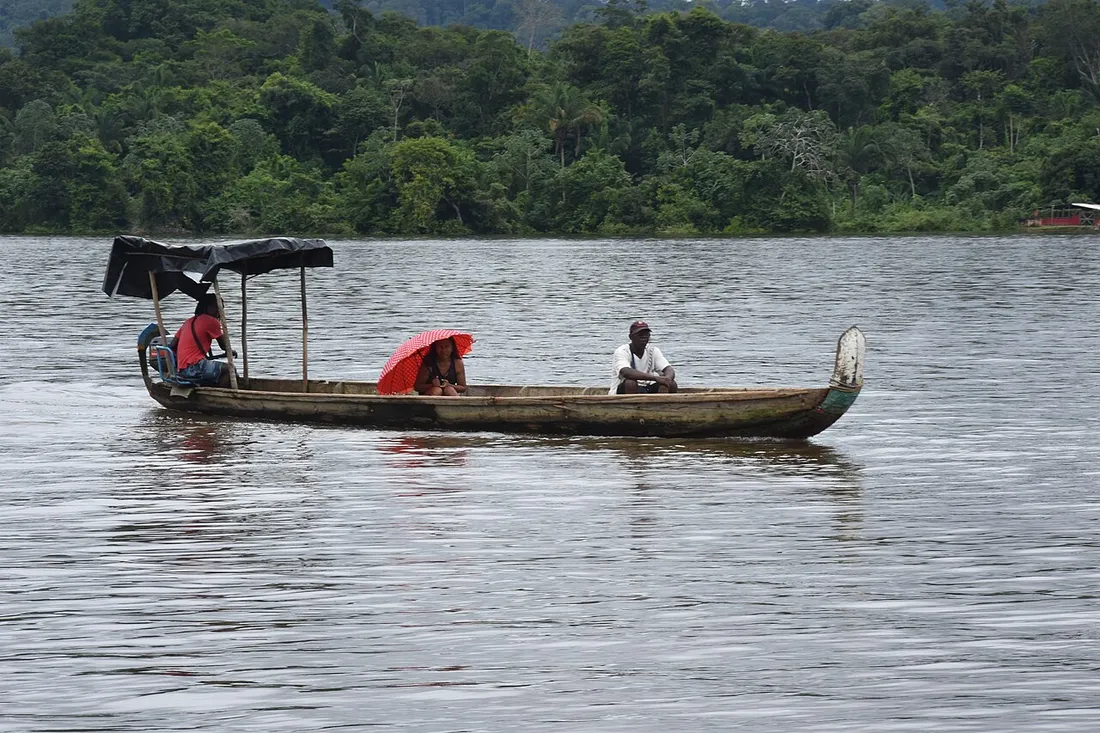
Along the western border of French Guiana, the Maroni River draws a line of brown water between France and Suriname. Here there are no bridges, no roads: the pirogue is the only true highway. From Saint-Laurent-du-Maroni, the former penal-colony capital, you can travel upstream toward the headwaters, encountering the Bushinengue villages tucked between the rapids. It is one of the most striking experiences French Guiana has to offer, and one of the most misunderstood by hurried travellers. Here is how to approach it with confidence, with concrete landmarks gathered over many trips upriver.
Why go up the Maroni rather than down it
People often speak of “going down the Maroni,” but the cultural adventure actually lies upstream, where the asphalt ends and the river takes over again. As you travel against the current, you gradually leave the town behind and enter Bushinengue country: these communities are the descendants of the “Maroons,” the enslaved people who freed themselves and took refuge in the forest in the 17th and 18th centuries. Four major groups live along the river: the Aluku (or Boni), the Ndjuka, the Saramaka and the Paramaka.
Going upstream therefore means crossing geographical thresholds (the famous rapids) as much as cultural ones. Each village has its own organisation, language, taboos and rhythm. The traveller is not a customer here: they are a passing guest.
When to go
The ideal window is the dry season, from mid-July to mid-November. The river runs lower, the sandbanks surface, and the boatmen read the rapids by sight. In the rainy season the flow swells and some passages become risky or off-limits. Keep the time difference in mind if you are coordinating with mainland France: -5h in winter, -6h in summer compared with Paris. And don’t forget that the yellow fever vaccine is mandatory to enter French Guiana.
Preparing your trip upriver from Saint-Laurent-du-Maroni
Saint-Laurent is the logical starting point. The town, about 250 km from Cayenne (3 to 3.5 hours by road on the RN1), deserves a day of its own: the Camp de la Transportation, where convicts once disembarked, can be visited on a guided tour for around 8 to 12 euros and sets the historical scene.
Finding a boatman
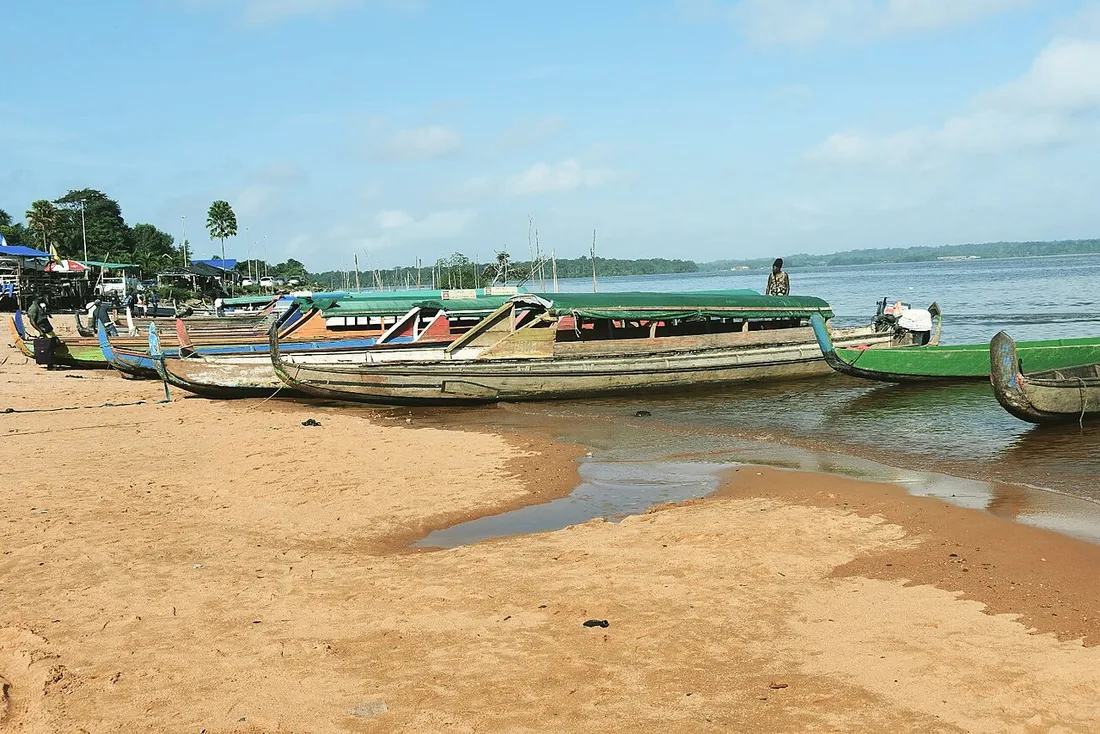
This is the key step. On the degrad (the landing stage) in the town centre and at the market, you will find independent boatmen, but to travel far it is safer to go through a local operator or a village that organises the welcome. A few realistic budget benchmarks:
- Simple crossing to Albina (Suriname), on the opposite bank: 5 to 10 euros one way, negotiated in a pirogue-taxi.
- Day trip to the first villages and one or two rapids: 60 to 90 euros per person, Creole meal included depending on the organiser.
- 2 to 3-day circuit with a night in a carbet (hammock), meals and guide: 180 to 350 euros per person depending on the group and the distance.
- Fuel: the price climbs quickly with distance, as petrol becomes scarce upriver. It is the main variable in the quote.
Gear and common sense
Bring a waterproof bag (the spray from the rapids soaks everything), sunscreen, a hat, plenty of water, a headlamp and an effective mosquito repellent. The hammock with mosquito net is often provided on organised circuits, but confirm it. Carry cash in euros: there are no ATMs upriver, and the network signal disappears fast.
The route stage by stage
Here is a classic upriver itinerary, adaptable to your time and budget. The distances are river distances, longer than “as the crow flies” because of the meanders.
Stage 1 — From Saint-Laurent to Apatou
The first leg, and the most accessible. Apatou, a sizeable town on the French bank about 60 km upstream, is also connected by road, which makes it a good gateway for those who want a taste of the river without going too far. There you encounter Ndjuka culture, colourful pirogues and a first riverside market. Allow 1 to 1.5 hours by fast pirogue from Saint-Laurent.
Stage 2 — The first rapids and the Aluku villages
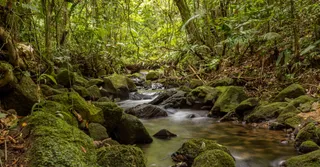
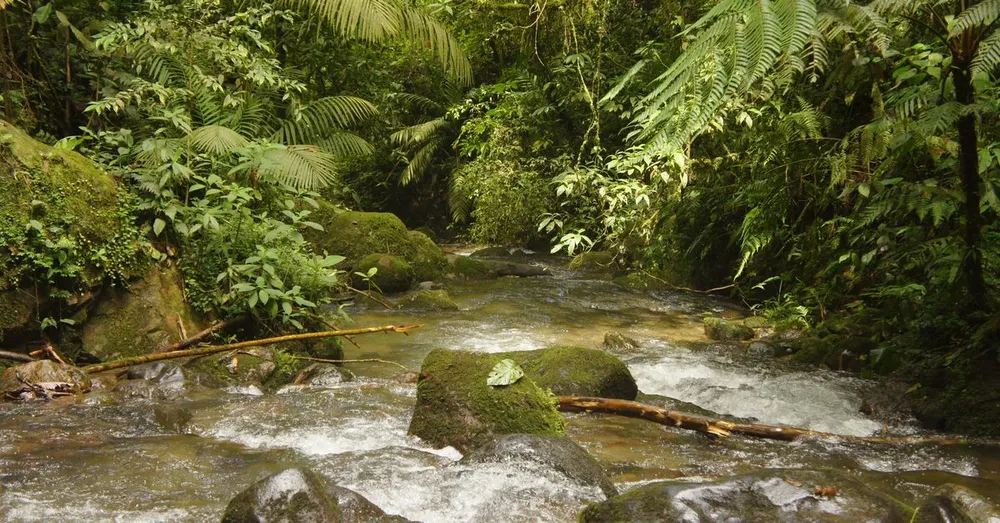
Continuing upstream, the river narrows and the rapids appear: these are stretches of white water where the river boils over the rocks. The boatman slows down, reads the current, and sometimes has passengers step out to lighten the boat. It is spectacular and completely safe in experienced hands. Here you enter Aluku land, around Maripasoula further upstream (reachable mainly by plane from Cayenne, but a junction point for long expeditions).
Stage 3 — Encounters in the Bushinengue villages
The heart of the journey. In a village, you discover tembe art: those brightly coloured geometric carvings and paintings that adorn pirogues, doors and benches. You taste kwak (cassava semolina), smoked fish, sometimes game. The language changes: here people speak Nengee Tongo, and French recedes.
A few essential rules of etiquette:
- Always ask before photographing a person; many refuse, and that is their right.
- Greet people on arrival: the greeting is central to these cultures.
- Respect forbidden places (certain sacred sites or ritual houses).
- Buy crafts on site: it is the best direct support for the community.
How long, how much it costs
For a traveller who really wants to “feel” the river without rushing, the right format is 2 to 3 days. A single day gives only a foretaste; a week lets you reach the most remote villages but demands organisation and a substantial fuel budget.
A general budget benchmark for a 3-day / 2-night circuit in a small group: expect 250 to 400 euros per person all-inclusive (pirogue, guide, carbets, meals), excluding transport to Saint-Laurent. With two or four people the price per head drops noticeably, since the pirogue and fuel are shared.
Where to stay before and after the adventure
A trip up the river is best prepared well-rested. Many travellers underestimate the fatigue of the road from Cayenne and want to set off the same morning: a bad idea. Sleep a night in Saint-Laurent or in the west before departure, and keep a comfortable night for the return to recover from the rapids and the mosquitoes.
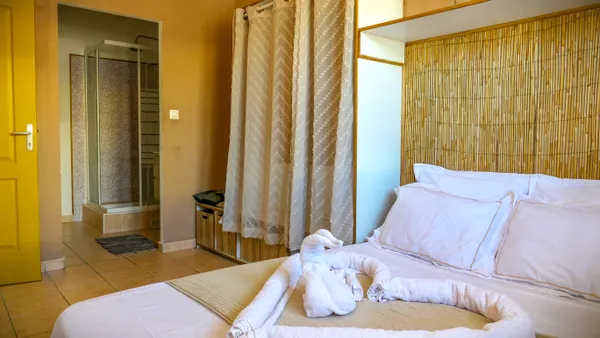
For that, Hostel Toucan offers handpicked accommodation in French Guiana, ideal as a base camp before and after your river expedition. Direct booking comes with no platform fees, cancellation is free up to 7 days before arrival (handy when the river weather is uncertain), and WhatsApp support 7 days a week helps you sort out logistics and connect with reliable boatmen. Book your starting base on our French Guiana rental offer and check out our complete guide to French Guiana to plan the rest of your stay.
Combining the Maroni with the rest of French Guiana
The river journey fits perfectly into a 10 to 15-day circuit. Before or after the west, plan for:
- Awala-Yalimapo, at the mouth of the Maroni, for the nesting of leatherback turtles (April to July).
- The Guiana Space Centre at Kourou, whose guided tour is free, with a bit of luck an Ariane 6 or Vega launch.
- The Iles du Salut, the Kaw marshes, the Cayenne market and the Hmong village of Cacao.
Note that in French Guiana a car is essential: no shuttle properly connects these sites to one another.
Do you own accommodation in western French Guiana and want to showcase it to travellers seeking river adventure? Discover our concierge offer for owners.
Going up the Maroni is not about ticking a tourist box. It is about entering, for the span of a few rapids, a living river world where history, the forest and people answer one another. Set off curious, set off humble, and the river will repay you.
FAQ
Do you need a passport to go up the Maroni River by pirogue?
To stay on the French side (the Guianese bank) and visit the Bushinengue villages, an identity card is enough. However, if you land on the Surinamese bank (for example at Albina, opposite Saint-Laurent), you leave French territory: a valid passport is required, and depending on your nationality a visa for Suriname. Check your situation before you go.
Is going up the Maroni by pirogue dangerous?
With an experienced boatman, no. The rapids are impressive but are crossed safely when you know the river. The risks come mainly from recklessness: setting off without a life jacket, overloading the pirogue, or venturing out alone in the rainy season. Always go through an operator or a village that organises the welcome, and prefer the dry season from mid-July to mid-November.
How much does an excursion on the Maroni River from Saint-Laurent cost?
Expect around 60 to 90 euros per person for a day trip to the first villages and rapids, meals included. For a 2 to 3-day circuit with a night in a carbet, a guide and meals, budget 180 to 400 euros per person depending on the distance and group size. Fuel, more expensive upriver, makes the quote vary. Bring cash in euros, as there are no ATMs upstream.
What is the best time to go up the Maroni?
The dry season, from mid-July to mid-November, is ideal: the river runs lower, the rapids are easier to read and travel is safer. It is also the most pleasant period for camping in a carbet. In the rainy season the flow swells and some passages become risky.