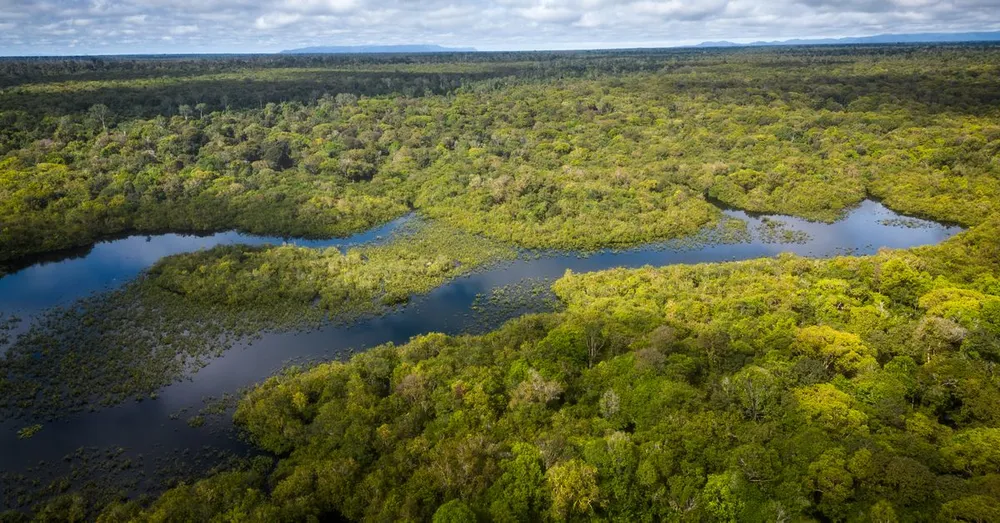
Off the coast of Cayenne, the Atlantic Ocean takes on an unusual colour: a milky ochre-brown, heavy with the silt that the Amazon and Orinoco rivers pour endlessly along the Guianas shelf. Many visitors see it as a “dirty” sea. Fishermen, on the other hand, know that these murky, nutrient-rich waters rank among the most fish-filled on the South American coast. Yet sea fishing in French Guiana remains confidential, almost secret, for lack of structured operators. Here is what you really need to know before stepping aboard.
Why offshore fishing remains rare in French Guiana
Unlike the French West Indies, French Guiana has never developed a true sport-fishing tourism sector. There are several reasons for this.
First, the geography. The continental shelf is vast and shallow: you often have to sail 30 to 50 nautical miles (sometimes more) before reaching the depths that hold big game. These are long crossings, hungry for fuel, which discourage improvised outings.
Next, the silting. The estuaries of the Mahury and the Cayenne fill with sand and mud, which limits departure windows to the favourable tides. A local skipper checks the tide tables the way others read the weather.
Finally, the regulations. Guianese waters are closely monitored (the fight against illegal fishing, plus the Kourou space-base zones occasionally closed during Ariane 6 or Vega launches). All of this explains why the serious operators can be counted on the fingers of one hand.
What the offer actually looks like
Don’t go looking for a catalogue of “charters” like in Florida. The Guianese offer comes down to:
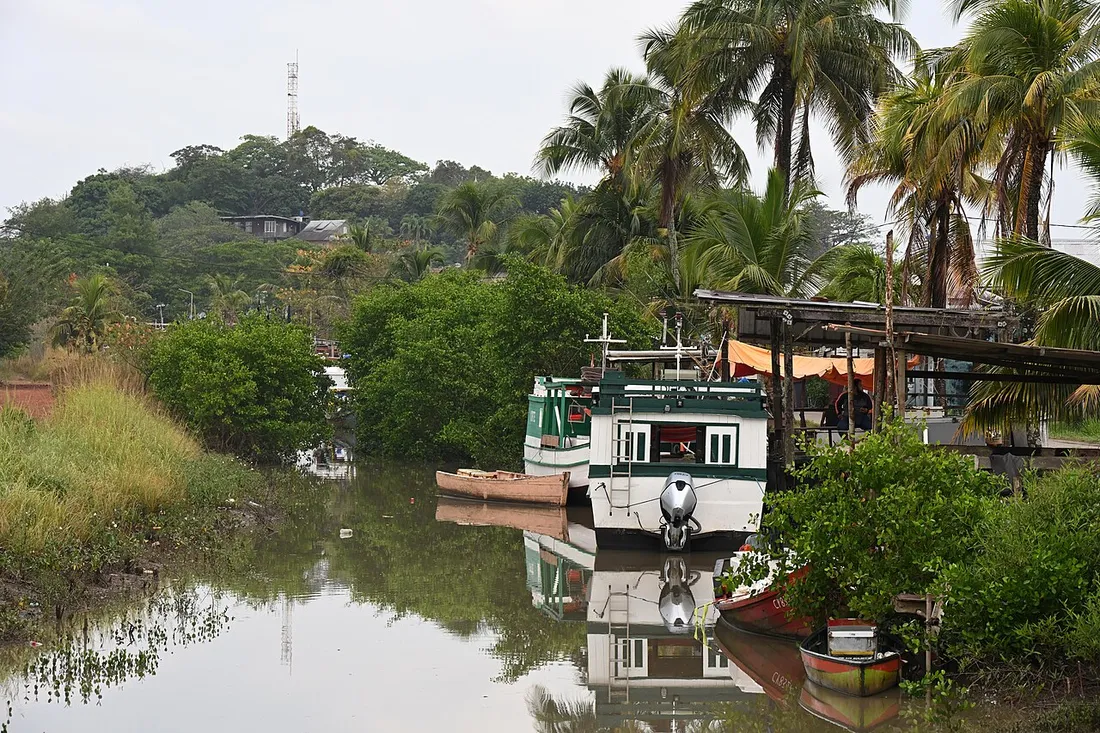
- A handful of professional fishermen based in Rémire-Montjoly, at Larivot (Matoury) or in Kourou, who agree to take individuals out between two working tides.
- Local fishing associations and clubs that organise occasional outings, often open to visitors accompanied by a member.
- A few rare tourist operators offering combined trips (coastal fishing + a stop at the Îles du Salut, for example).
Word of mouth remains channel number one. It’s far better to book your accommodation with a host who knows these contacts than to hope for a dedicated online booking site.
What you can hope to bring back
That’s the real question. And the answer depends heavily on the distance covered and the technique used.
Coastal fishing (under 15 miles)
Accessible in a half-day, this is the most realistic option for a first try. Here you go after:
- The red acoupa (the famous “machoiran” and the “croupia” are part of the local roster), the emblematic fish of the Cayenne market stalls.
- The silver tarpon, a spectacular fighter that runs up into the estuaries: specimens of 20 to 50 kg are not rare near the river mouths.
- The jack (carangue), a tireless brawler, ideal on a lure.
- Small sharks (to be released), barracuda and various marine catfish species.
Offshore fishing (beyond 30 miles)
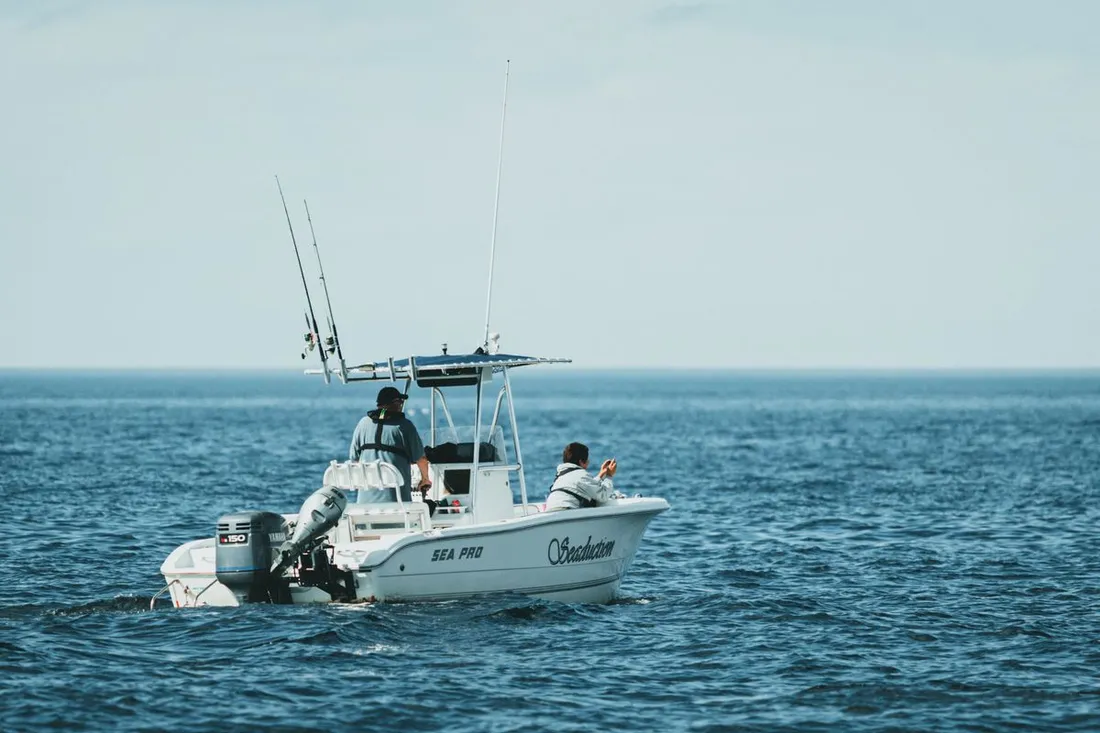
Here you enter big-game territory. It takes a full day, often a departure before dawn. Possible catches:
- The mahi-mahi (dorado), star of the trolling line, with electric colours.
- The kingfish (thazard) and the tuna, fast and powerful.
- The Atlantic sailfish and, more rarely, the blue marlin, the holy grail of any big-game angler, which frequents the edge of the shelf.
- The wahoo, one of the fastest fish in the ocean.
Let’s be honest: French Guiana is not a “record” marlin destination the way Senegal can be. But fishing pressure here is so low that the schools are barely educated and the bites generous. That’s the magic of a still-wild sea.
Season, prices and practical planning
When to come
The dry season, from mid-July to mid-November, is by far the best period. The swell calms, the sky clears, and trips are rarely cancelled. During the rainy season (December to June), the weather windows shrink and the state of the sea becomes capricious. To set your dates, our complete guide to French Guiana breaks down the climate month by month.
Budget to plan for
Rates vary widely depending on the formula and the number of participants. As a realistic indication:
- Half-day coastal trip (4 h): 90 to 150 € per person, gear provided.
- Full-day offshore trip (8-10 h): 200 to 350 € per person, or 800 to 1,500 € to privatise the boat.
- Bait, fuel, ice: generally included; always check before confirming.
Remember to ask whether you leave with part of the catch: some skippers share the fish, others keep it for sale.
What to bring
The equatorial sun is unforgiving. Slip into your bag:
- SPF 50 sunscreen, a cap and polarising sunglasses.
- Light long-sleeved clothing (UV protection) and a windbreaker.
- Plenty of water and seasickness medication if you’re prone to it.
- A waterproof bag for your phone and camera.
Administrative reminder: French Guiana is a French overseas department (DROM), you pay in euros, the dialling code is +594, and the yellow fever vaccine is mandatory to enter the territory. Félix-Éboué airport (Matoury) is your gateway, and a rental car is essential to reach the pontoons of Rémire-Montjoly, Larivot or Kourou.
Combining fishing with the rest of your stay
A day at sea fits perfectly into a wider itinerary. From Cayenne, you can chain together:
- The Îles du Salut off Kourou, sometimes accessible as part of a boat trip.
- The Guiana Space Centre in Kourou (free visit, plus the Ariane 6 / Vega launches not to be missed).
- The Kaw marshes to watch caimans and birds, an hour’s drive via Roura.
- The Cayenne market on Saturday mornings, to taste the local fish in awara broth or blaff.
This versatility makes fishing a perfect stage at the heart of a stay, neither the sole goal nor a mere afterthought.
Booking with peace of mind through a local host
In French Guiana, the crux of the matter is access to the right contacts. At Hostel Toucan, we live here and we know the fishermen who agree to take visitors out. When you book one of our properties for a rental in French Guiana, our 7-day WhatsApp support helps you organise your trip, check the tides and avoid the scams.
Our strengths:
- Direct booking with no platform fees: you pay the fair price.
- Free cancellation up to 7 days before arrival, ideal when the equatorial weather turns capricious.
- First-hand advice on the best spots, transfers and combined activities.
Do you own a property in Cayenne, Rémire-Montjoly or Kourou? Discover how we showcase it to travellers on our owners page.
Guianese big-game fishing is not a mass activity, and that is precisely what gives it its flavour. Murky waters, rare operators, abundant fish: for anyone who loves authentic adventure, it’s an experience you won’t live anywhere else. Get your rod ready, we’ll handle the rest.
FAQ
What is the best time to go sea fishing in French Guiana?
The dry season, from mid-July to mid-November, is ideal: the sea is calmer, the sky clear and trips rarely cancelled. During the rainy season (December to June), the weather windows shrink and the state of the sea becomes more capricious.
What fish can you hope to catch off Cayenne?
Inshore: acoupa, tarpon (up to 50 kg), jack and barracuda. Offshore, beyond 30 miles: mahi-mahi (dorado), kingfish, tuna, wahoo and, more rarely, Atlantic sailfish or blue marlin. The low fishing pressure makes for generous bites.
How much does a sea-fishing trip in French Guiana cost?
Expect around 90 to 150 € per person for a half-day coastal outing, and 200 to 350 € per person for a full offshore day. Privatising a boat for the day generally runs between 800 and 1,500 €, with gear and fuel often included.
Do you need a licence or a vaccine to fish in French Guiana?
The yellow fever vaccine is mandatory to enter French Guiana. For recreational fishing aboard, no licence is required from the passenger: the professional skipper handles the regulations. Just check for any zone closures linked to the Kourou space launches.