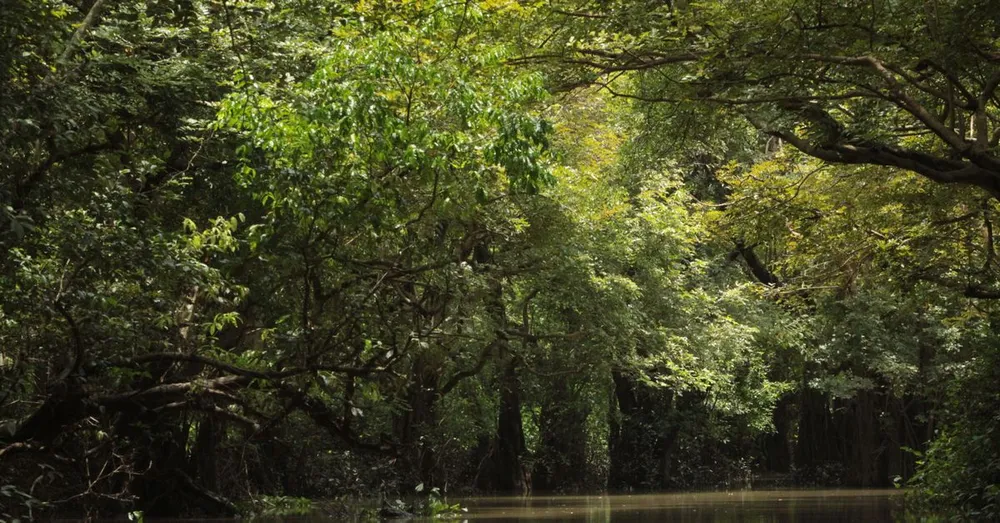
Let’s be upfront from the start: if you’re after the turquoise lagoons of the Caribbean, the beaches of French Guiana are going to surprise you. Here, the Amazon and Orinoco rivers pour millions of tons of sediment into the Atlantic, and the current pushes it all the way to our shores. The result: café-au-lait colored water, shifting mud banks, and a coastline that’s anything but a classic postcard.
And yet. After several years roaming this region between Cayenne and the Maroni, I can promise you that you fall in love with these beaches. For the evening light on the ocher sand, for the leatherback turtles that come to nest at night, for the granite coves hidden in the forest, and for that rare feeling of having an entire beach all to yourself. Here’s our honest overview, no Instagram filter.
Understanding the Guianese coastline before you go
French Guiana is a French overseas region of 290,000 inhabitants, with Cayenne as its capital. You pay in euros, you speak French (and Creole, Bushinenge, Amerindian languages), and Félix-Éboué airport in Matoury is your gateway. Expect -5h in winter and -6h in summer compared to Paris.
A few realities to keep in mind so you’re not disappointed:
- The water is rarely clear. Amazonian sediments give it that characteristic brown tint. You can still swim, especially at high tide.
- Tides matter enormously. At low tide, some beaches turn into hundreds of meters of mudflats. Check local tide schedules before setting out.
- The best season is the dry season, from mid-July to mid-November. Less rain, more walkable sand, clear skies for sunsets.
- A car is essential. No bus serves the beaches properly. And the yellow fever vaccine is mandatory to enter the territory.
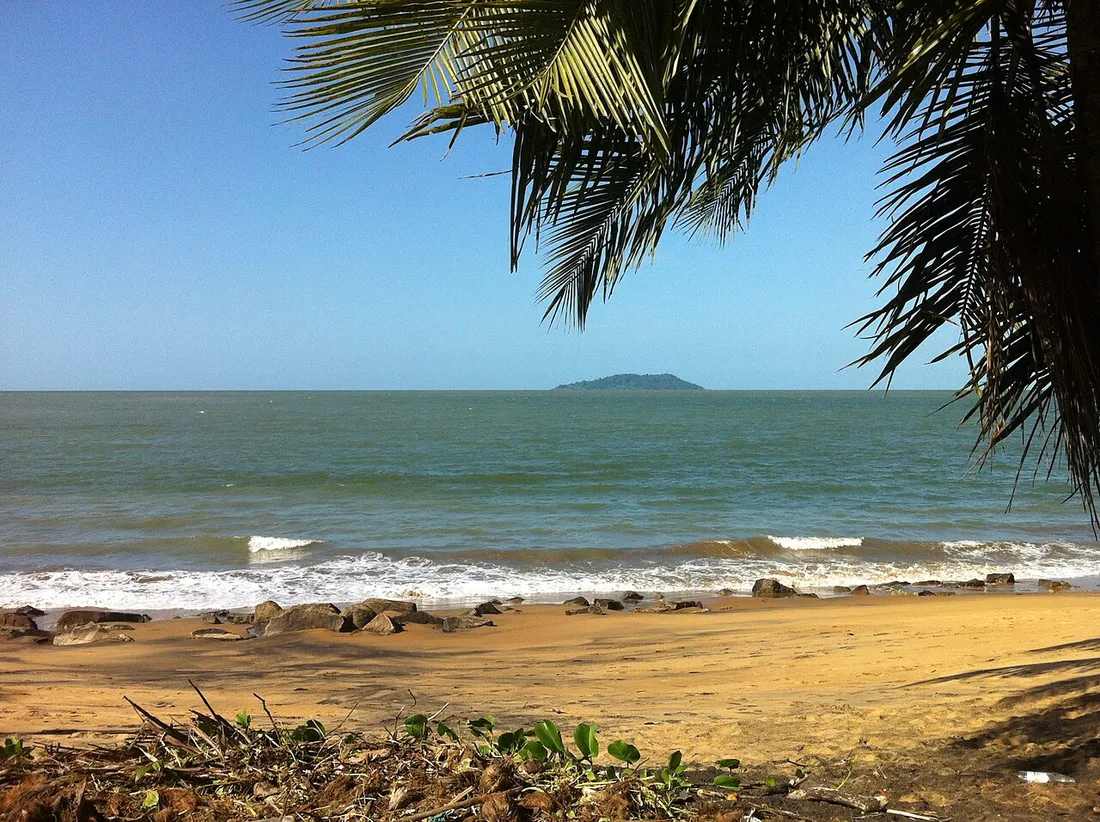
The beaches of Rémire-Montjoly: the locals’ spot
Just east of Cayenne, Rémire-Montjoly is home to the busiest and most accessible beaches. This is where Guianese families come on weekends.
Montjoly beach and Salines beach
The wide Montjoly beach stretches for several kilometers of light sand lined with coconut palms and sea grape trees. About ten minutes by car from downtown Cayenne, it’s the perfect place for a first taste.
- Distance from Cayenne: about 12 km, 15-20 min drive.
- Atmosphere: carbets (open-air shelters), cane juice vendors, joggers at sunrise.
- The highlight: between March and July, it’s one of the best sites in the world to watch the nesting of leatherback and green turtles at night. Follow the rules: no white light, keep your distance, never touch.
The Rorota trail
Above the beaches, the Rorota hiking trail (a loop of about 6 km, 2h) climbs through the forest to magnificent viewpoints over the ocean and the islets. Howler monkeys guaranteed early in the morning. It’s free, and it’s one of my favorite recommendations for combining beach and nature.
From Cayenne to Kourou: between beach and stars
Heading west, you reach Kourou in about 1h of driving (60 km). The town is world-famous for its Guiana Space Centre, where visits are free (by reservation) and, with a bit of luck, let you witness an Ariane 6 or Vega launch.
Kourou beach and the boat to the Salvation Islands
Kourou beach isn’t the prettiest in the region, but it has a unique asset: it’s the departure point for shuttles to the Salvation Islands (Île Royale, Saint-Joseph, Devil’s Island). Expect about 1h crossing and around 50 to 65 € round-trip depending on the operator.
Out there, the scenery changes radically: clearer waters around the islands, coconut palms, ruins of the penal colony, and coves where you can swim (watch out for currents between the islands, never swim outside supervised areas). For me, it’s the most exotic seaside experience in all of French Guiana.
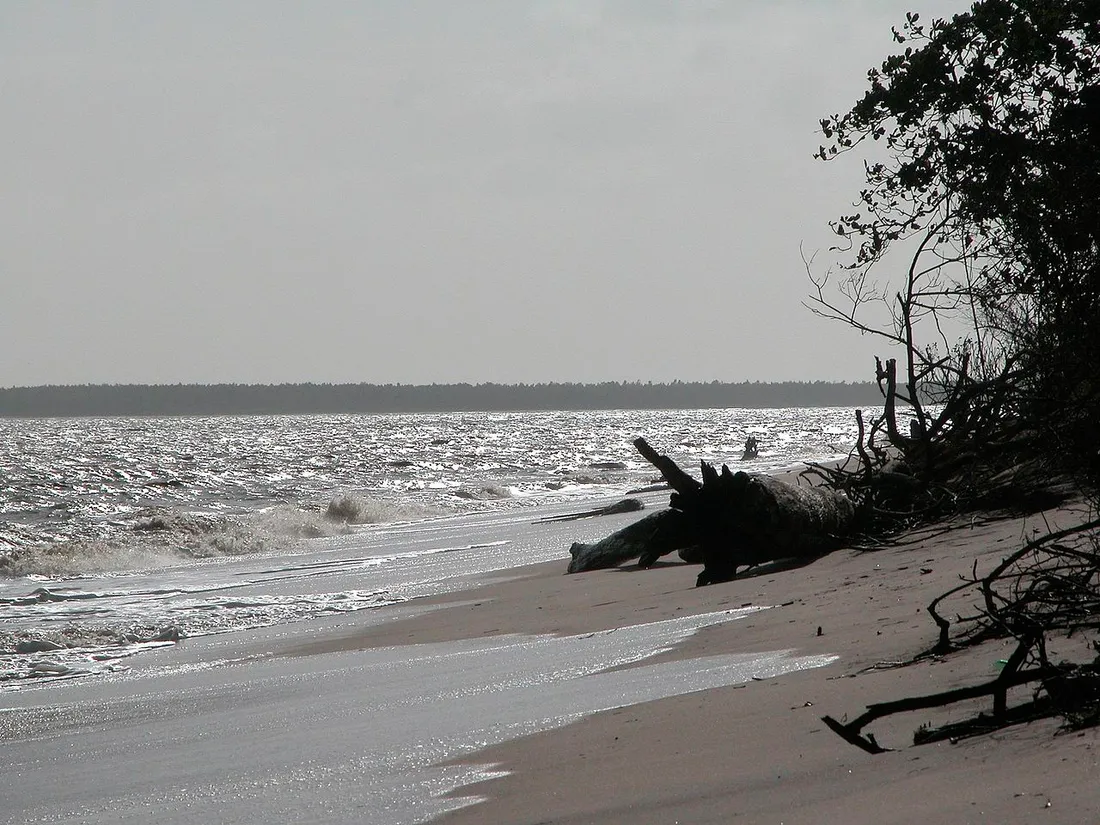
The wild west: hidden coves toward Saint-Laurent-du-Maroni
It’s in the West, heading toward Saint-Laurent-du-Maroni (about 250 km from Cayenne, 3h-3h30 drive), that my favorite spots hide. Fewer people, more nature.
Hattes beach and Awala-Yalimapo
At the far west, the Kali’na Amerindian village of Awala-Yalimapo is home to Hattes beach, one of the largest leatherback turtle nesting sites in the world. Between April and July, the nights there are magical. The sand is more golden, the atmosphere peaceful and deeply authentic.
- Distance from Saint-Laurent: about 45 km, 1h drive.
- Good to know: you’re on customary territory, and respect for the place and its inhabitants is essential.
The river rather than the sea
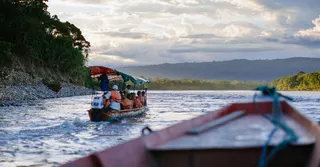
Let’s be honest: around Saint-Laurent, sea swimming is limited. But the Maroni river offers superb alternatives. An outing by pirogue (dugout canoe) toward the white-sand beaches of the river islets, on the Suriname side, is an unforgettable experience. Expect 40 to 80 € for a half-day depending on the boatman. It’s also a chance to discover the Saint-Laurent penal colony in the morning before heading out on the water in the afternoon.
Our practical tips as locals
After dozens of outings, here’s what I always slip to the travelers we welcome:
- Aim for high tide to swim, and sunset for photos. The late-day light on the ocher sand is spectacular.
- Mosquito repellent is essential, especially at the end of the day and near wetlands like the Kaw marshes.
- Not all beaches have facilities: bring water, a hat, and something to picnic on. Few shops outside Rémire-Montjoly.
- Combine experiences. A successful typical day: the Rorota trail in the morning, Montjoly beach in the afternoon, Cayenne market and Place des Palmistes in the evening.
- Don’t look for crystal-clear water, look for authenticity. That’s where French Guiana is unbeatable.
Where to stay to explore the beaches?
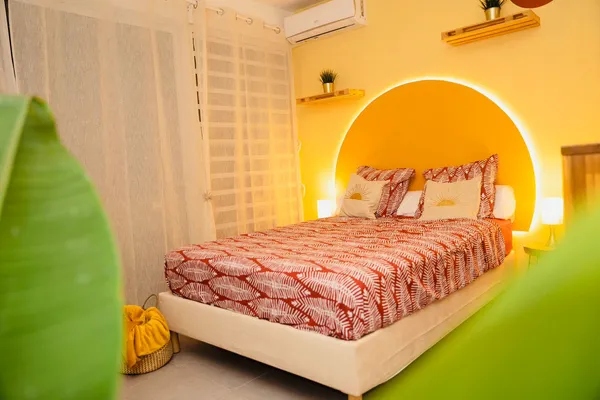
To get around easily, it’s best to have a well-located base in Cayenne, Rémire-Montjoly or Matoury, with a vehicle. At Hostel Toucan, we offer vacation rentals designed for travelers who want to explore the coast hassle-free.
- Direct booking with no platform fees: you pay the fair price.
- Free cancellation up to 7 days before arrival.
- WhatsApp support 7 days a week, from hosts who know every cove and every pirogue schedule.
Discover our vacation rentals in French Guiana and our complete guide to French Guiana to plan your stay. Own a property here? Let’s talk about our property management service.
The beaches of French Guiana are like no other. They ask to be tamed, to have their café-au-lait water and capricious tides accepted. But when a 600 kg leatherback turtle climbs the sand under the stars, or a granite cove reveals itself around a bend in the forest, you realize you’re holding a rare treasure. It’s your turn.
FAQ
Can you swim at the beaches of French Guiana despite the café-au-lait water?
Yes, you can absolutely swim, particularly at high tide when the water covers the mudflats. The brown color comes from Amazon sediments, not pollution. Favor the beaches of Rémire-Montjoly and the coves of the Salvation Islands, and always respect the designated swimming areas.
What’s the best time to enjoy the Guianese beaches?
The dry season, from mid-July to mid-November, offers the best compromise: less rain, more walkable sand, and beautiful sunsets. To watch leatherback turtles nesting, aim instead for April to July on Montjoly beach and Hattes beach at Awala-Yalimapo.
Do you need a car to visit the beaches of French Guiana?
Yes, a car is essential. Public transport doesn’t serve the coast properly, and the distances are great: count on 1h from Cayenne to Kourou and over 3h to Saint-Laurent-du-Maroni. Rent a vehicle as soon as you arrive at Félix-Éboué airport.
Where can you see sea turtles nesting in French Guiana?
The best sites are Montjoly beach near Cayenne and Hattes beach at Awala-Yalimapo, in the far west. Leatherback and green turtles nest at night, mostly from April to July. Stay discreet: no white light, keep your distance, and never touch the animals.