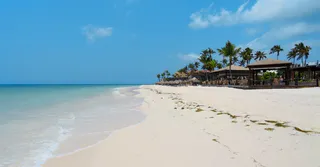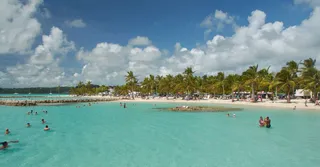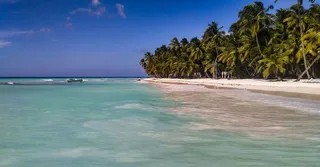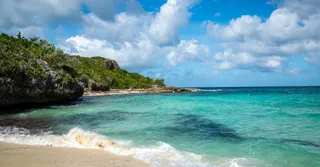
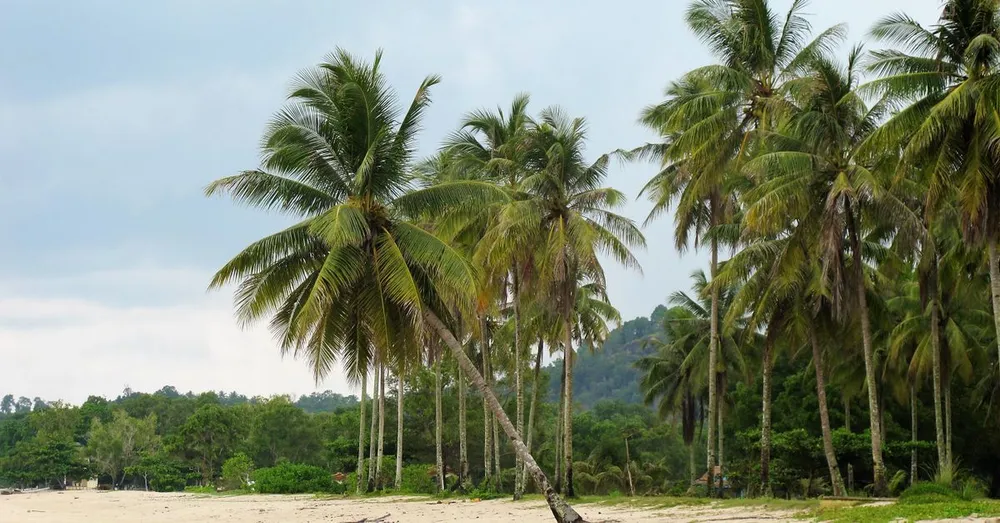
I know Grande Anse beach in Deshaies by heart: I swim here early in the morning several times a week. With its kilometre of golden sand, leaning coconut palms, and the green peaks of Basse-Terre as a backdrop, it’s probably the most photogenic beach in Guadeloupe—and one of the most misunderstood. Many visitors show up at 11 a.m., park badly, swim in the wrong spot, and leave disappointed. This guide brings together everything a local would tell you over a ti-punch: access, the real currents, the shade of the sea grapes, the best hours, and where to eat.
Why Grande Anse beach in Deshaies is worth the detour
Set on the north-west coast of Basse-Terre, a 5-minute drive from the village of Deshaies, Grande Anse is the longest beach on this wing of the archipelago: roughly 1 km of thick, golden-russet sand that bears no resemblance to the white coral sand of Sainte-Anne or La Caravelle in Grande-Terre. Here the setting is volcanic and lush: the forest tumbles almost down to the water’s edge.
Three reasons to make it an essential stop:
- The setting: no buildings along the seafront, no hotels with their feet in the water. The beach has stayed wild, lined with coconut palms and sea grapes.
- The space: even in high season (December to April), you only have to walk 300 metres north to be almost alone.
- The sunsets: the beach faces due west, looking out over the Caribbean Sea. Between 5:30 and 6:30 p.m. depending on the season, the show is guaranteed.
Fans of Death in Paradise: Deshaies serves as the backdrop for the series, and several shots are filmed at Grande Anse and in the village.
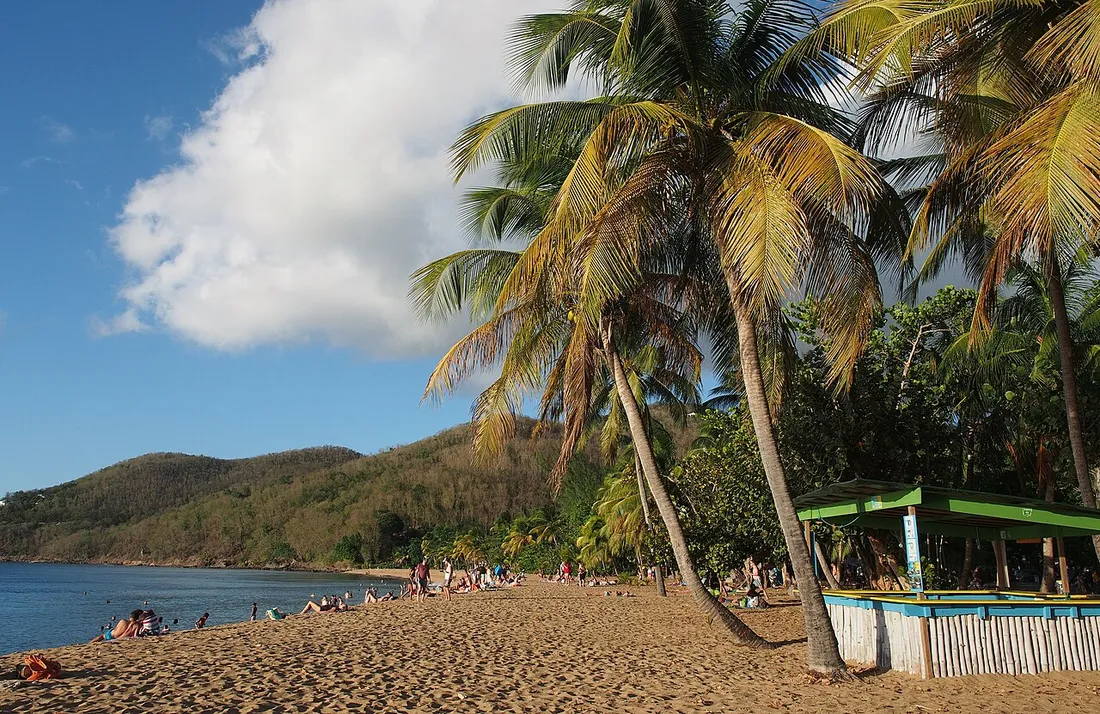
Access, parking, and the best hours
How to get there and where to park
From Pointe-à-Pitre and Pôle Caraïbes airport, allow about 45 minutes to 1 hour of driving (40 km) via the N2, passing through Sainte-Rose. From the village of Deshaies, it’s 3 km north, or a 5-minute drive.
For parking, you have three options:
- The main car park (south entrance, signposted from the N2): free, partly shaded, around 80 spaces. Full by 10–10:30 a.m. in the dry season and on Sundays.
- The north car park: smaller, often overlooked, and my favourite entrance for reaching the quiet end of the beach.
- The roadside verge: tolerated in places, but never leave anything visible in the car; make it a habit to keep the boot empty.
When the beach is at its best
- 6:30–9 a.m.: soft light, often calmer sea, ideal temperature (26–28 °C). This is the hour of the locals and the regular swimmers.
- 11 a.m.–3 p.m.: sun at its peak, scorching sand, maximum crowds. The slot to avoid—or the moment to go for lunch.
- 4–6:30 p.m.: the second magic window. The heat eases off, and you can combine a swim with the sunset.
Sundays are the day for the Guadeloupean family picnic: music, grilling, a convivial atmosphere. If you’re after peace and quiet, choose a weekday.
Swimming at Grande Anse: what you really need to know about the currents
This is THE point that guides skim over too often. Swimming at Grande Anse is superb, but the beach is open to the Caribbean Sea with no coral reef: the swell rolls straight in, unlike the protected lagoons of Grande-Terre.
Reading the beach like a local
- The southern end (by the main car park) is usually the most exposed: the shore break crashes directly onto the sand. Fun when it’s small, treacherous when the swell tops 1 metre.
- The central and northern stretch is often gentler, especially in the morning before the trade winds pick up.
- Rip currents form on swell days: if you see a darker channel of water with no breaking waves between two zones where the waves are breaking, don’t swim there. If you get caught in one, don’t fight the current: swim parallel to the beach, then come back in diagonally.
My simple rules
- Glassy sea (common from May to November and on many mornings in the dry season): swim anywhere, including with children under supervision.
- Visible swell, waves slapping down: stay where you can touch the bottom, and keep the little ones at the edge.
- From December to March, swells coming from the North Atlantic can make the sea powerful for 2–3 days. Check the swell forecast the day before, just as the locals do.
The beach is not permanently supervised: caution is up to each individual.
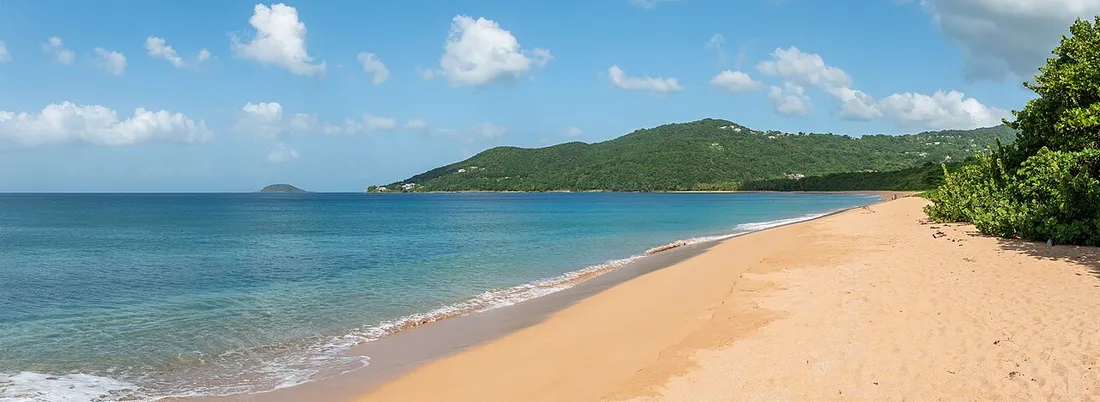
Sea-grape shade, comfort, and good tips on site
Where to settle in the shade
The sand at Grande Anse heats up fast from 10 a.m. The coconut palms of Deshaies are gorgeous in photos, but you never sit beneath them (falling coconuts: a real risk). The truly good shade comes from the sea grapes, those trees with large round leaves that line the back of the beach:
- The finest groves are on the northern third of the beach, with dense shade from 10 a.m. to 4 p.m.
- On the south side, the shade of the country-almond trees near the car park disappears quickly: arrive before 9:30 a.m. to grab a spot.
- There are no rental sun loungers everywhere: a few operators offer a lounger + parasol for around €10–15 a day near the south entrance.
Eating and drinking
The back of the beach on the south side gathers a few restaurants and Creole shacks, right in the sand:
- A full Creole menu (grilled fish, rice, chayote gratin): €18 to €28 at lunch.
- Bokits and sandwiches from the food trucks: €5 to €8.
- Fresh juices or coconut sorbet from the roving vendors: €3 to €5. The hand-churned coconut sorbet on Sundays is an institution.
The village of Deshaies, 5 minutes away, offers more choice for dinner, overlooking the fishermen’s bay.
To combine in the same area
- The Deshaies Botanical Garden (the former property of Coluche): around €16–17 for adult entry, allow 2 hours.
- La Perle beach, 3 minutes to the north: smaller and often calmer.
- The Deshaies river and the village for the market and fishing trips.
Where to stay near Grande Anse: the smart choice
Deshaies is an ideal base for exploring Basse-Terre: the Cousteau Reserve 30 minutes away, the Route de la Traversée and its waterfalls 40 minutes away, La Soufrière 1 hour 15. The secret to a successful stay: stay less than 10 minutes from the beach so you can enjoy the morning and evening windows.
At Hostel Toucan, a local concierge service based in the French overseas territories, we hand-pick villas and apartments around Deshaies and across Guadeloupe: direct booking with no platform fees, free cancellation up to 7 days before arrival, and 7-day WhatsApp support provided by a team that lives on the spot (and that can tell you whether the swell has rolled into Grande Anse). Browse our accommodation in Guadeloupe or our complete guide to Guadeloupe to build your itinerary. Do you own a property on the archipelago? Our owner services handle everything, from the listing to the cleaning.
Practical info at a glance
- Location: Grande Anse, commune of Deshaies, west coast of Basse-Terre.
- Access: 40 km / 45–60 min from Pôle Caraïbes airport; free parking.
- Best season: dry season from December to April; calm mornings all year round.
- Water temperature: 27 to 29 °C all year.
- Typical day budget: €0 access + €18–28 for a Creole lunch + €4 for coconut sorbet.
FAQ
Is Grande Anse beach in Deshaies suitable for children?
Yes, when the sea is calm: the sand slopes gently and the water is at 28 °C. As soon as the swell rolls in, the shore break and rip currents mean you must keep children at the edge, under constant supervision. Favour the mornings and the more sheltered northern end. There is no permanent lifeguard station.
Is there sargassum at Grande Anse?
Very rarely. Sargassum mainly affects the coasts exposed to the Atlantic (Le Moule, the east coast of Grande-Terre). Grande Anse, facing west onto the Caribbean Sea, is naturally spared: the water stays clear and the golden sand clean.
Can you snorkel at Grande Anse?
It’s not the best spot: a sandy bottom and often stirred-up water. When the sea is glassy, follow the rocky points at either end. For real snorkelling with turtles, head to the Cousteau Reserve at Malendure (Bouillante), 30 minutes to the south: a boat trip starts at €25–35 per adult.
When is the best time for the sunset at Grande Anse?
As the beach faces due west, the sun sets right in front of you all year, between 5:30 p.m. (December–January) and 6:45 p.m. (June–July). Arrive 45 minutes beforehand for one last swim in the golden light, and stay 15 minutes after: that’s often when the sky truly catches fire.